
‹ All movies
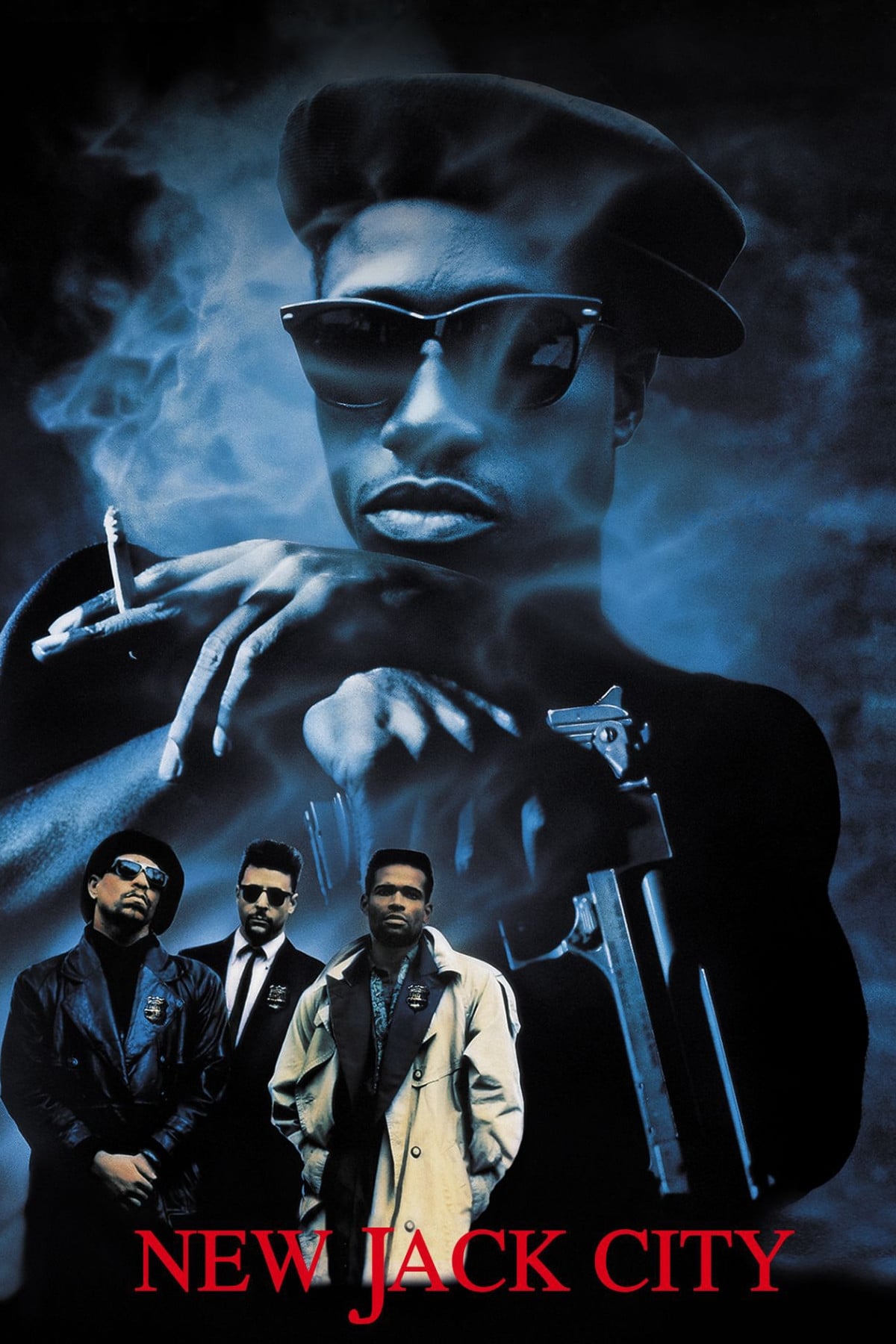
New Jack City poster

New Jack City

100 minutes

Cast

Selected cast credits · Film reference

Wesley Snipes Nino Brown
Ice-T Det. Scotty Appleton
Allen Payne Gerald "Gee Money" Wells
Chris Rock Benny "Pookie" Robinson
Judd Nelson Det. Nick Peretti
Mario Van Peebles Det. Stone
Michael Michele Selina Thomas
Bill Nunn Duh Duh Duh Man
Bill Cobbs Old Man
Christopher Williams Kareem Akbar
Thalmus Rasulala Commissioner Fred R. Price
Phyllis Yvonne Stickney Prosecuting Attorney Hawkins

New Jack City | The Rewatchables

Explore episodeClose episode

Producer credits not yet identified.

Roger Ebert's review

In the discussion (3)
Approx. transcript time · 00:20:04Read transcript
  • Ebert gave the film three and a half stars.
  • Ebert quoted Truffaut that an anti-war movie is nearly impossible because war scenes excite the audience, said an anti-drug movie is similarly hard because the dealers' lifestyle and money look like fun until they are killed, and said this movie pulls it off.
  • Ebert added that Nino, who laughs at the dead body of Scarface, does not get the last laugh.

Most Rewatchable Scene

Rooftop scene

In the discussion (19)
Approx. transcript time · 00:29:24Read transcript
  • A ruling is requested on whether the Chris Rock bike chase with Ice T chasing him counts; one objection is that it is short, and it is moved from aged-best into rewatchable scenes.
  • Riding the bike down the steps without flying over the handlebars is impressive.
  • The first scene with Nino, G Money and the stuttering guy (called Radio Rahim) in the Jeep, recalling playing ball as kids, lays out the relationships; a little hacky but liked.
  • Nino laying out the Carter complex leads into a money-making montage borrowed from Scarface; the best moment is holding up the vial and saying crack.
  • The plan for Fat Smitty and the Carter rollout is built like a real business, "Henry Ford type" and militant in its organization.
  • From the bridge-dangling opening credits through the money montage, the first 22 minutes are unassailably entertaining before the movie turns dark; the bridge drop with "wouldn't want to be you" is enjoyed.
  • Pookie explaining Nino's crack setup to Ice T's character is a really good scene.
  • The naked workers in the drug house were a first on film; the viewer, then in college in Massachusetts, was mesmerized, and the level of organization was new even to someone who knew dealers as a kid.
  • Nakedness in the movie is portrayed as stripping away humanity, including when Nino strips the Carter owner at gunpoint.
  • Pookie's cover getting blown after being placed around crack every day, followed by the building being blown up, is a good action sequence.
  • Nino and Ice T's character on the roof is a chess game with respect; an objection calls it hokey, Crash-level script cuteness that Nino killed the cop's mother, answered that the film had to establish a motive.
  • Nino's courtroom speech that the lawmakers, politicians and anti-legalization lobbyists are the guilty ones is played in full.
  • The raid scene where Nino, holding a dog, stabs Kareem Akbar is raised as missing from the list and possibly the coolest scene.
  • The omission of the raid scene is acknowledged as an accident. — Bill Simmons
  • In that meeting Nino requires everyone to wear black for the Carter's funeral and arrives with a chain and a sword in his cane, recalling Al Capone with the bat in The Untouchables and a Martin episode callback; Martin was supposed to be in the movie.
  • The rooftop is called the winner and an iconic, Oscar-level scene inside a pop movie, with G Money's tearful plea and Snipes crying well.
  • Killing G Money is the moment Nino stops being one of the community; Scarface had even less reason to kill Manny, and older relatives could not believe Nino did his partner like that.
  • A counterview says Nino believes his partner is after his place, and his face shows conflict as he hugs, kisses and almost spares him.
  • No character in the movie is redeemable, which makes it great; the rooftop scene is named the winner.

The most "year the movie came out" thing

G Money's green velour Adidas suit

In the discussion (6)
Approx. transcript time · 00:43:27Read transcript
  • Presented as a special category just for this movie: the most 1991 moment.
  • Nominees are G Money's green velour Adidas suit, Kangol hats, fat rope chains, Color Me Bad appearing while they were cool, and the opening credits with happy hip-hop, big graphics, news anchors and a helicopter.
  • The Kangols are crossed off because they are an 80s item and the movie is set in 1986 to 1989.
  • Flavor Flav as the club MC is added as a nominee.
  • Nino's first walk into the club, dapping people, skipping the weapons check and drinking champagne through a straw, is called the coolest 30 seconds and why people wanted to be Nino.
  • The green velour Adidas suit wins; it came back in style.

What’s Aged the Best?

Use of Scarface; character names; Nino's clothes; Kente cloth; Flavor Flav cameo; Michael Michele; Ice-T and Judd Nelson pairing; Ice-T as a cop; crooked-cop redemption story

In the discussion (8)
Approx. transcript time · 00:46:10Read transcript
  • The use of Scarface is mentioned again, and character names such as G Money, Pookie, Duh Duh Man and Frankie Needles are praised.
  • Nino's clothes are fantastic and possibly sampled by NBA players; lean, built Snipes could pull off the full suits.
  • Kente cloth, including Ice T's beanie in the beach scene, aged really well.
  • The unexpected Flavor Flav cameo, the Cash Money and Carter album tie-ins, and the "wouldn't want to be" line Snipes seems to say in three movies are cited.
  • The women feel early 90s in a good way, capped by Michael Michelle, later cast in Ali as someone extremely beautiful.
  • Ice T and Judd Nelson together were the CBS police show never made; Judd commentary is held until the end.
  • Ice T as a cop aged beautifully: he played a cop before Cop Killer and Law & Order and has a complicated pop-culture history with cops.
  • The crooked cop's redemption story, for Ice T's and Judd Nelson's characters, is a recurring 80s trope that seems retired, as in Cobra.

What’s Aged the Worst?

Italian mobsters; crack; end disclaimer; Ice-T's wig; drug-war advocacy

In the discussion (8)
Approx. transcript time · 00:50:07Read transcript
  • The Italian mobsters are terrible in every respect: the actors, the accents and the racism.
  • Yet this is the only movie where Italian mobsters get their comeuppance for racism, while racist lines in The Godfather, Goodfellas and The Sopranos get a pass.
  • Crack itself aged worst for everyone involved.
  • The end disclaimer is a bad choice; someone should have talked Van Peebles, who directed, out of it.
  • Ice T's wig was pretty terrible and unnecessary.
  • The movie advocates the drug war as winnable with a good and a bad side, which a full view shows is not true.
  • Women used as pawns felt unnecessary: G Money's betrayal of Nino could have been shown without bringing a woman into it; countered that something similar happened in real life with Nikki Barnes in New York.
  • Using a little girl as a human bullet shield is proposed, then questioned as still effective and possibly aged perfectly.

Casting What-Ifs

Martin Lawrence as Pookie; Oran "Juice" Jones as G Money; Tupac Shakur as G Money; Vivica A. Fox; Michael Wright; Vanessa Williams

In the discussion (9)
Approx. transcript time · 00:54:46Read transcript
  • The best what-if was already mentioned: Martin Lawrence was cast as Pookie and had the job; one view says he would have been better than Chris Rock.
  • According to writer Cooper, Martin Lawrence opted out after his mentor Robin Harris died, and Chris Rock was the backup.
  • A garbled passage concerns someone turning down Ice T's part; Michael Wright is named and would have killed the part, reuniting later for Sugar Hill.
  • Vibica A. Fox (transcribed form) auditioned for Selina and Keisha but did a 90210 episode that year instead; she would have been great as Keisha, as Set It Off showed.
  • The Vanessa Williams married to Rick Fox would have been a great girlfriend for Nino.
  • Allen Payne was a replacement: Orange Juice Jones was cast as G Money, filmed scenes and was fired, per research; his "Walking in the Rain" is called very 80s.
  • Tupac Shakur auditioned for G Money but was judged too young-looking to have grown up with Snipes.
  • Tupac could be both aggressive and vulnerable, as Birdie in Above the Rim; it would have been interesting, though Allen Payne was perfect.
  • A case that Tupac should have been cast, rewritten as the best friend's younger brother, and would have been better.

The Joey Pants “That Guy” Award

Bill Nunn; Bill Cobbs; the woman in Pookie's rehab meetings

In the discussion (6)
Approx. transcript time · 00:59:28Read transcript
  • Bill Nunn, recognized by most as Radio Rahim, is a that guy, even "that guy plus" or "supersized that guy".
  • His credits cited include He Got Game, Mo Better Blues, Do the Right Thing and the Spider-Man movies; he has passed away.
  • The man who shoots Nino at the end and the police sergeant are that-guy types.
  • The woman in Pookie's rehab meetings describing what crack did to her is an underrated that guy with a whole that-guy career, possibly also from Summer School.
  • After a mix-up with Walter Mosley, the old man is identified as Bill Cops (transcribed form), also in Demolition Man, who stays the same age in every movie.
  • Vanessa Williams is not a that guy because she went on to Melrose Place; the name conflict led the other Vanessa Williams to become Vanessa L. Williams.
In the discussion (4)
Approx. transcript time · 01:02:40Read transcript
  • Ice T dials it up in the finale with "I want to shoot you so bad, my dick's hard" and the pulsating eye.
  • His most overacted scene is at the beach with Pookie, repeating "you owe my mother".
  • He was early in his acting career and has had a legendary career, so it is not held against him.
  • A picking-nits note asks whether anyone could have done better than Ice T; he is all over the map but still enjoyable, perfect for the role though not great.
In the discussion (6)
Approx. transcript time · 01:04:33Read transcript
  • A one-person category: Tracy Camilla Johns, who is "sex, sex, sex" every moment she is on screen.
  • Her IMDb is called the weirdest: She's Gotta Have It as Nola Darling, a 1988 Nike ad with Spike Lee and Michael Jordan, a Wild Thing video, Family Ties, a Mo Better Blues cameo and this movie, then no credit for 21 years until Red Hook Summer.
  • Research found no explanation; speculation includes marriage and kids, a substance problem or quitting the business, though Spike Lee's patronage could have sustained a career.
  • Listeners who know what happened to her are invited to reply on Van and Logan's Twitter.
  • Her scene turning on music with the remote in another woman's face carries enormous tension.
  • Pookie is proposed but rejected as too big a part; Judd Nelson is ineligible because he gets his own category later.

Recasting Couch

Tom Sizemore as the Italian mobster

In the discussion (3)
Approx. transcript time · 01:08:56Read transcript
  • Better than Ice T may have been possible, but the easy recast is Tom Seismore (transcribed form) as the Italian mobster with the ponytail, a part that needed a real actor.
  • Eddie Murphy as Nino is floated because the project began at Paramount as the Nikki Barnes story with Murphy attached; rejected as too beloved to flip to villain, like John Cena or the Rock.
  • Denzel as Nino is a maybe; he could have pulled it off but is too good and regal, while Snipes fit better.

Half-Assed Internet Research

Botched sequel; Nino Brown name origin; Chris Rock crack-pocket anecdote; Sundance premiere; comic-book visual design

In the discussion (8)
Approx. transcript time · 01:09:27Read transcript
  • Ice T said the sequel was botched by his Cop Killer trouble and by Snipes getting $7 million for Demolition Man.
  • In the sequel idea Nino survived the shooting, which is doubted, though one participant says he would have been there opening weekend.
  • Simon Phoenix from Demolition Man is called one of the great movie villains.
  • The name Nino Brown came from Nino Gabriel, a storefront on Third Avenue where Harlem gangsters bought shoes, per Barry Michael Cooper.
  • According to Chris Rock on Inside the Actor's Studio in 1994, dealers put crack and cocaine in his pockets for three years afterward, joking they thought it was a documentary.
  • The film premiered at Sundance in January in only the festival's second year, after Sex Lise and Videotape (transcribed form).
  • According to Cooper, they intentionally used a comic-book look, making Nino's mansion like Dracula's lair to suggest he was sucking the blood out of the neighborhood.
  • A question whether Snipes played a vampire in Blade sparks a mock rebuke about asking "King nerd Van Lathan".

Apex Mountain

Wesley Snipes; human bullet shields; New Jack swing; Chris Rock's movie career; Mario Van Peebles

In the discussion (13)
Approx. transcript time · 01:15:35Read transcript
  • Wesley Snipes: yes, because the movie's success opened doors; he had bigger moments but not greater ones, and it is his signature performance.
  • Allen Payne is left unsettled: he worked a long time after, including Jason's Lyric and The Perfect Storm, but this was his biggest deal.
  • Ice T: no.
  • Human bullet shields: yes, over Heat and The Dead Zone as the more recognizable example.
  • New Jack swing is offered as an Apex Mountain. — Logan Murdock
  • In hindsight the moment is called the height of the genre, since it got so big it made a movie title and Hollywood.
  • Guy: no; their big cameo cannot be their apex, and pressing the point draws teasing.
  • Chris Rock's movie career: yes; it is the best he has been in a movie and his most recognizable role, with Head of State jokingly floated as an Obama precursor.
  • Box haircuts: Fresh Prince might be up there, but the movie plus the 1991 playoffs may be the peak for high tops; a flat top was kept until 1994.
  • Mario Van Peebles: 100% his apex; nothing hinted he would make a $50 million movie; later came Posse and Panther and a role in Ali, and his father Melvin Van Peebles was the architect of blaxploitation.
  • Bill Nunn: no, it has to be Radio Rahim; Judd Nelson: no, with discussion deferred.
  • Color Me Bad: no, because of their 90210 episode and a number-one record.
  • Zoot suits are left unresolved, perhaps some 1940s film.

Picking Nits

Six-month Pookie rescue; Ice-T undercover; belt camera; withdrawal stunt double; Selina's attraction to Nino; wedding-hit survival; the cop's apartment

In the discussion (8)
Approx. transcript time · 01:22:14Read transcript
  • Would a cop really spend six months, day after day, saving Pookie?
  • Defense: Scotty is like a cop version of Batman, driven by trauma to obsess over crime and help the kid he shot; consistent with the character if not realistic.
  • Ice T going undercover is implausible because he is too recognizable, and meeting cops in broad daylight near the Carter before a deal with Nino is a stretch.
  • Pookie's belt camera produces impossibly good video for 1991; countered that James Bond and Q gadgets get a pass.
  • Pookie appears to have a stunt double in the withdrawal scene.
  • Why Selina likes a man who treats her terribly is questioned, answered by Nino's charisma.
  • Nino survives the wedding hit despite machine guns 15 feet away, while the motorbike drive-by goes 10 for 10; great aim throughout, and a tough movie for Italians.
  • How does Ice T's character afford a Gordon Gecko-style high-ceiling apartment on a cop salary, around $10,000 a month?

The Neil McCauley “A Book about Metals” Award for Best Line from the Movie

"It's always business. It's never personal"; "Sit your $5 ass down before I make change"

In the discussion (1)
Approx. transcript time · 01:26:55Read transcript
  • Several lines are listed without a winner, including "it's always business, it's never personal", "sit your $5 ass down before I make change" and a line about robbing to get rich in the Reagan era; the movie has many high school yearbook quotes.

Probably Unanswerable Questions

The Wire's debt to the film; Pookie versus Bubbles; more Ice-T and Judd Nelson movies

In the discussion (4)
Approx. transcript time · 01:28:21Read transcript
  • The Wire's creators were shaped more by their police and newspaper careers than by any movie, but both works draw on the same reality of crews controlling project buildings, like Avon and Stringer. — Van Lathan
  • The Wire came only 12 years after this movie but feels 20.
  • Pookie versus Bubbles as the pop-culture crack addict you are most attached to; Erica Christensen in Traffic is added after a mix-up with Amanda Seafreed (transcribed form), and Bubbles had seasons of screen time, so the comparison is unfair.
  • Why were there no more Ice T and Judd Nelson movies? A spin-off could have escalated the stakes the way the Crocodile sequel did, and a Narcos season is still possible.
In the discussion (16)
Approx. transcript time · 01:31:27Read transcript
  • Chris Ryan joins for a cameo, credited as a reason the podcast started and a lover of this movie.
  • A new category is introduced, the Judd Nelson Award, for anyone who seems to be in a completely different movie than everyone else.
  • Nick Peretti is one of the all-time great jarhead cops, essentially John Bender as a narc; as a child this seemed the apex of undercover cops, so Pacino in Serpico seemed to bite Nelson's style. — Chris Ryan
  • Everyone asks what Judd Nelson is doing in this movie; the performance is a Russian nesting doll, with a favorite moment when he turns into a William Faulkner-style storyteller while drinking with Scotty after Pookie dies.
  • He is a weird racist ally who calls Scotty high yellow and lies on his bed in boots, yet kills someone for Scotty at the end; possibly made unlikable so he could be redeemed.
  • He delivers the key line that drugs are not a black or white thing but a death thing; the role feels like it could have been added in reshoots.
  • Johnny Depp was sought but too expensive; it was a comeback role for Nelson.
  • Peretti is either divorced or just out of a long relationship with a high school sweetheart, and lives in New York. — Chris Ryan
  • Imagined backstory: a cold-water apartment in Brooklyn, early retirement to fund an independent hip-hop label, an estranged daughter as an unfilmed deleted scene, and kinship with Jonah and Chelsea Peretti.
  • His introduction in untied boots and baggy jeans homages John Bender, and firing his gun in the man's house is baffling.
  • Making him literally John Bender would be amazing, with a sequel where Emilio Estevez's Andrew runs an HGH ring.
  • Estevez could also be the kid dangled off the bridge.
  • If Nelson had been going through a substance problem during filming, the performance would make the same sense. — Chris Ryan
  • He smiles at odd moments; the theory is he read the script and played a Martin Riggs type hoping for a Lethal Weapon-style spin-off with Ice T.
  • A recent Judd Nelson film about a man keeping his daughter in a basement was recommended after watching New Jack City.
  • The episode closes by congratulating Judd Nelson on whatever he was doing in this movie.

What Piece of Memorabilia Would You Want From This Movie?

Nino's dollar-sign chain; Nino's Rolex and cane knife; silk shirts

In the discussion (6)
Approx. transcript time · 01:41:26Read transcript
  • Nino's chain with the dollar sign, though a similar one could be bought at any Baton Rouge convenience store. — Van Lathan
  • Two-parter: Nino's Rolex and his cane that doubles as a knife. — Logan Murdock
  • The cane knife is also named by another participant, compared with a Rudger Hauer blind-swordsman movie and Ronald Isley's Mr. Biggs cane.
  • Bring back silk shirts: after quarantine and vaccines it should be billowing silk shirt season. — Chris Ryan
  • Silk shirts invite sweat stains, which are called part of the look.
  • A joke casts Chris as G Money.

More from the conversation

Cold open with the New Jack City trailer.
Approx. transcript time · 00:01:34Read transcript
Van Lathan and Logan Murdock join to discuss New Jack City, a movie from 30 years ago that feels both recent and 100 years old.
Approx. transcript time · 00:01:55Read transcript
The movie is far more political than remembered from cable viewings: an indictment of the Reagan era, one of the first films about crack destroying a generation, and basically a Scarface homage.
Approx. transcript time · 00:02:20Read transcript
In a making-of special, Mario Van Peebles said crack is not a black thing or a white thing but a death thing, an exact line from the movie, showing it was made with a specific anti-crack message.
Approx. transcript time · 00:03:27Read transcript
The movie is called copaganda: Nino Brown is a Satan-like villain, the cops are completely altruistic, there is little nuance, and it is very heavy on message.
Approx. transcript time · 00:04:02Read transcript
The movie tells a complete story of the crack epidemic in which no one wins: Nino and Pookie are killed, Nino gets about a one-year sentence, and Kareem Akbar takes the blame; the opening bridge shot with radio about Reagan-era poverty sets the political tone.
Approx. transcript time · 00:05:07Read transcript
Mid-1980s anti-drug PSAs were constant; J.A. Adande sent a Cosby Show-era PSA, and Len Bias, Don Rogers and Richard Pryor are cited as cautionary tales.
Approx. transcript time · 00:06:32Read transcript
The end disclaimer is called really bad and unnecessary; King of New York, Jungle Fever's drug subplot and Boyz n the Hood form an 18-month stretch that brought these experiences back to movies after the 1980s.
Approx. transcript time · 00:07:48Read transcript
Over later films drug dealers become more human as the epidemic becomes familiar; one view says good wins when the righteous figure kills Nino, contrasted with Menace II Society's protagonist.
Approx. transcript time · 00:08:41Read transcript
Pushback: the man who kills Nino had asked for more police presence, which led to the 1994 crime bill era, so the neighborhoods did not win; older relatives still want a cop on every block.
Approx. transcript time · 00:10:40Read transcript
The movie is simplistic: Scotty trusts an ex-crackhead inside a crack house while Nino shields himself with a child; the movie has many human shields, including Ice-T's character in the finale.
Approx. transcript time · 00:11:12Read transcript
In 1991 no movie with a black star was in the box-office top 15; Boyz n the Hood made $57 million (19th), New Jack City $47 million as the year's highest-grossing indie, and Jungle Fever $32 million (43rd).
Approx. transcript time · 00:12:46Read transcript
King of New York, covered earlier with Tarantino, is called the better movie, but New Jack City was far more successful, helped by a soundtrack whose listed artists include Ice-T, Johnny Gill and Guy.
Approx. transcript time · 00:13:47Read transcript
King of New York was a piece of cinema while New Jack City was a piece of culture; Mario Van Peebles (Sonny Spoon) was a crush of mothers and aunts, Ice-T was on the come-up, and Snipes finally grabbed a movie of his own.
Approx. transcript time · 00:14:22Read transcript
Every major participant took a career step forward; Chris Rock's performance is called his finest.
Approx. transcript time · 00:15:48Read transcript
Snipes grabs the mantle as the most important black movie star here, after supporting parts, leading into a seven-year run of Jungle Fever, White Men Can't Jump, Passenger 57, Sugar Hill, Demolition Man and Money Train; this is called his best performance, with Blade Trinity offered as a joke alternative.
Approx. transcript time · 00:16:09Read transcript
Neither Snipes nor Chris Rock got a Best Supporting Actor nomination in a field that included Jack Palance, Tommy Lee Jones, Michael Lerner, Harvey Keitel and Ben Kingsley; Bugsy is called a disaster that took spots from more deserving movies.
Approx. transcript time · 00:17:10Read transcript
The snub is called racism and a travesty that speaks to the early-90s Oscars.
Approx. transcript time · 00:18:12Read transcript
The screenplay was co-written by Thomas Lee Wright and Barry Michael Cooper, adapting Cooper's Village Voice reporting on Detroit crack gangs and moved to New York; budget $8 million, gross $47.8 million.
Approx. transcript time · 00:19:08Read transcript
DMC of Run-DMC said the film made drug dealing look good and gave dealers a black hero in Nino Brown; the film's hip-hop influence reaches Lil Wayne.
Approx. transcript time · 00:20:32Read transcript
The film's influence is attributed to people seeing few opportunities for those who walk the straight and narrow; the film makes Nino very bad, and his defiance of the Italians is intoxicating.
Approx. transcript time · 00:21:04Read transcript
Seeing the film young, from an Oakland vantage point, showed the downside of Nino's life: he looks fly but lives under constant threat, which argued for a longer life instead.
Approx. transcript time · 00:23:35Read transcript
A distinction is drawn between small-time hustling and being a ruthless kingpin whose business employs hundreds and cannot easily be left; The Wire's Stringer and the Avon-versus-Stringer debate are cited.
Approx. transcript time · 00:25:28Read transcript
The movie smartly uses Scarface, owning the comparison by showing clips and paralleling Nino's path, with G Money as Jiminy Cricket; the Scarface-viewing scene is called perfect.
Approx. transcript time · 00:27:27Read transcript
Guy and Aaron Hall appearing in the film is a favorite hip-hop influence; the New Jack era and Teddy Riley's sound represent a monoculture the internet has ended.
Approx. transcript time · 01:14:01Read transcript
Chris Ryan is told about the scrapped New Jack City 2 script, prompting jokes about snitching and Snipes's tax trouble.
Approx. transcript time · 01:44:36Read transcript
The movie is on HBO Max; complaints that streaming services lack everything, from Rock N' Jock to other titles, and a shout-out to Brian Hooks and E-40.
Approx. transcript time · 01:45:11Read transcript
A 2020 Rewatchables on Pump Up the Volume with Chris Ryan and Andy Greenwald is credited with bringing the movie back before Amazon Prime pulled it.
Approx. transcript time · 01:46:21Read transcript
Thanks to Logan, Van and special guest Chris Ryan; next week's episode is Inside Man.
Approx. transcript time · 01:46:45Read transcript