Before the category begins, the McConaughey sequence meeting Mark Hanna is flagged as the thesis statement of the movie: you are here to rob people and do cocaine while you do it; the body is a vessel for making money, jerking off and coke, and a wide-eyed 22-year-old from Queens with two accountant parents watching Hanna hoover martinis on a Monday morning could decide that is the lifestyle he wants.
The purpose of the Hanna sequence is pinned to the moment Leo's character offers that everybody wins if the clients make money and Hanna's answer is simply no: every warrior for himself, the thesis in the second paragraph.
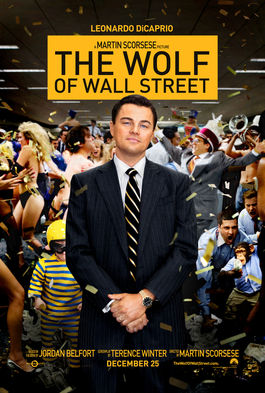
The opening, the life of Jordan Belfort with the unreliable narrator, the $49 million a year line and the car flipping from red to white in real time, shows a character at the prime of his life right as the fall is about to come, with Scorsese breaking his own rules; the fourth-wall breaks are never used in a moral way and the film never slows down to judge the characters or let the audience feel better than them.
The Mark Hanna lunch clip is played; McConaughey's four minutes are called the reconnaissance for his comeback between Dallas Buyers Club and True Detective, with the Hanna character and the hair having as much to do with it as the dialogue, which is so eighties and unbelievably bad; an ESPN-era interview anecdote recalls him answering a question about Interstellar by saying he needs a little freedom to do what needs to be done; the chest-beating was his warm-up that Scorsese and DiCaprio told him to keep, and it is good that the character never returns because it is unsustainable.
McConaughey is an amazing physical actor here, throwing his arms down in a thrust before lunch and peering in like a college football coach racing down the sideline; you can imagine him giving the masturbation speech at a bar in real life, and the 'all mustard up here' line gets quoted.
Donnie Azoff in the diner, 'show me a pay stub for $72,000' and quitting his job on the phone, reads as very Long Island, a wealthy guy weirdly having breakfast at a diner; the early run of back-to-back scenes, Donnie, Hanna, Spike Jonze, is remarkable in itself.
Jonah introduces the grotesque with the capped teeth and the shirt patterns, trading his life for a pay stub; the character should not work, marrying his cousin, selling children's furniture, smoking crack days after meeting someone, yet the bond between two weird animals is bought; the objection that DiCaprio would never hang out with him is answered with the cousin Greg Succession theory, that he should not be in the room but every Greg scene is funny, and these are guys who make bad decisions, like Charles Schwab needing a guy for the garage.
Meeting the Duchess of Bay Ridge: Margot Robbie was a lightning bolt, an Australian reportedly 23 at the time with some dispute about her real age, introduced as Jordan's dream girl coming out of the beach-house party with the douchebag boyfriend Blair and the jet-ski comeback.
The smokestack lightning bacchanalia, the office party with the marching band, throwing the little people, the head shaving and the strippers, is one of the most ecstatic pieces of filmmaking ever; then an old blues song with echo comes in, the lighting goes dark and strobe, and you realize they have created hell on earth and are demons who love it; the camera moves in on a despairing DiCaprio walking off the stage, a subtle moment beside the later aside about the man who married the woman they double-teamed and killed himself; the first impression was that it was too much, Braveheart lines of strippers advancing.
The research indicates the party combines things that did not all happen at once, and the absurdity is the point; a nitpick is raised that the film is over-scored, with too much music and a blues-to-eighties-to-Foo-Fighters run whose years do not add up; the defense is that the soundtrack runs the whole arc of pop music out of chronological order, with Robbie Robertson in Scorsese's ear, so that the music is about overconsumption like the movie, and its radio-dial flipping feels true to a coked-out perception, as opposed to the perfectly aligned Talking Heads cue in Wall Street.
The Steve Madden IPO speech, 'my killers, my warriors, my telephone terrorists', with Madden bombing and being thrown out; Madden is played by Jake Hoffman, Dustin Hoffman's son; the bachelor party and wedding dance is now a famous GIF and Leo is a genuinely impressive dancer, which drifts into public Leo with the dad bod, super soakers, the Vans and calf socks and the choice of college hat.
'Daddy doesn't get to touch mommy' is a good scene nobody puts on YouTube, and it apparently really happened, including Rocco watching; after the movie came out every NBA player followed Robbie on Instagram, the entire Central Division, with Hibbert still in the game, a pivot from the Christina Hendricks era.
Jordan invites the FBI onto his yacht, then 'I'm not leaving' is the clubhouse favorite, one of the more rewatchable scenes in any movie of the last decade, simultaneously disgusting and beautiful; the mid-speech realization that he cannot leave is the most honest part of the movie; it is the Field of Dreams heartstring moment that is also the most self-aggrandizing garbage of all time, since he forces Kimmy Belzer to tell a room of screaming dudes how much money he gave her; Aya Cash's snapping character is not meant to be liked, like nobody in the film.
The Lemon Quaaludes are still aging and have lost their potency; the hosts wonder whether a thriving lude community exists on the dark web, compare the finite supply to Honus Wagner cards and ask whether Gretzky has one.
The Naomi yacht capsizing is arguably the best scene, really fun and also true, as is the plane crash; 'I will not die sober' and getting the ludes while the boat goes down; the ultimate wake-up call compared to a country-club DUI; then the sober-at-the-pool scene with Donnie and the ankle bracelet and the O'Doul's exchange, some of the funniest writing in the movie, with 'it sucks, man' played as a clip.
Spike Jonze at the investor center selling AeroTine (as transcribed), two brothers making radar detectors or maybe microwaves out of a garage in Dubuque with their mom Dorothy answering the main line, six cents a share, and the cutaway to the shed.
The Stratton Oakmont cold-call script with Moby Dick and the harpoon, and everyone yelling about who Captain Ahab is, played as a clip; right before the boat leaves, finding out Aunt Emma is dead while freaking out about his money is loved too.
The Spike Jonze scene is perfectly executed: he gets the company name wrong, does not know whether it is microwaves or radar, knows what a clown he is, and the 'if you sell ten thousand dollars of stock I'll blow you' line; DiCaprio's reaction shows the difference between a good and a great actor; dudes eat pizza, a guy screams in a sweatsuit and the bathroom opens straight into the office; the cross-cutting between brokers delivering Jordan's script, his gestures on the answering machine, the 'vice president of Stratton Oakmont' walk-throughs and the later SEC interrogation montage are also singled out.
A correction for the sticklers: the plane that came to pick him up exploded a couple of days later, not in the same moment, and the real sinking is even crazier than the movie; listeners should tweet thanks to Russillo for getting it right.
The final pick: one host argues McConaughey should be ineligible like Shack (as transcribed) in early fantasy basketball because the Hanna lunch is the clear runaway; another narrows it to the lunch, the Lemon Ludes and 'I'm not leaving' and goes with 'I'm not leaving'; a third goes with McConaughey after watching the scene fifteen times that week, so the Hanna lunch takes it two to one.
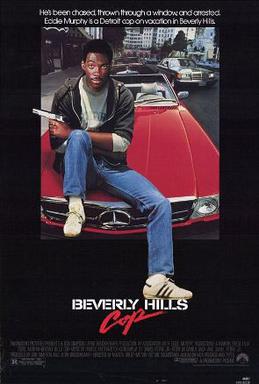
Mickey Rourke signed a $400,000 holding deal and left; Sylvester Stallone rewrote it as a straight action film with Axel Cobretti and quit two weeks before filming; Martin Scorsese was offered the director's chair and dismissed the script; Eddie Murphy was hired two weeks before shooting
Mickey Rourke signed a $400,000 holding contract and then left the project; a New York Times quote has Don Simpson tearing a picture of Rourke out of a magazine, holding it up and saying 'isn't he great', which the hosts attribute to all the cocaine, although one says you did not need cocaine to want Rourke in 1984.
This is the movie missing from Rourke's run before he started messing up his face: Heaven's Gate, Body Heat, Diner, Rumblefish, Pope of Greenwich Village, then the gap where Beverly Hills Cop could sit, followed by Eureka, Year of the Dragon and Nine and a Half Weeks; the holding deal's schedules did not work out.
Stallone was more extreme: he made it a straight action film with the lead renamed Axel Cobretti, Michael Tandino as his brother and Jenny as his love interest, an opening meant to be like Saving Private Ryan on the beaches of Normandy, ideas deemed too expensive, and a climax of him driving a Lamborghini down the train tracks at a freight train driven by the villain; an urban legend has him quitting two weeks before filming over orange juice in his trailer.
Scorsese was offered the director's chair while trying to get Last Temptation of Christ made, was bewildered by the script and dismissed it.
Earlier context: Eddie was hired two weeks before filming on a script kicking around since the 70s, a cop-comes-to-another-town movie set up for various stars and directors, and he transformed it with improv; it does not work with Sylvester Stallone, who would have made it a dramatic action movie, and if Stallone is in that cigarette truck the movie weighs 150 pounds more; with anyone else it would be actively bad because we know who killed his friend in the first 30 minutes.
The parts of Bogomil, Rosewood and Taggart were probably not rewritten after the casting changes, so the other actors are playing a script written for Mickey Rourke or Stallone with Eddie as the star; it was hard for them to handle his ad libs because takes got ruined by laughter.
Called the most anticlimactic final question of a podcast ever: an amazing actor giving an amazing performance in a role that should not work in movies, basically stupid and larded with existential questions, and the hosts get caught up every rewatch; Heath Ledger is then named as the conversation turns to what his career would have been.
He gave only two or three iconic performances across maybe 12 or 13 movies, good in all of them: Dark Knight, Brokeback Mountain, 10 Things I Hate About You, very good in only ten minutes of I'm Not There and in the not very important Lords of Dogtown, serious fare like Monsters Ball and The Four Feathers, and movie-star attempts like The Patriot; Brokeback and Dark Knight read as the start of what would have been an incredible run.