
Film credit
Martin Scorsese
Also referred to as Scorsese, Morton Scorsese, Marty, Big Bad Marty
Stats
- Episodes featuring their films
- 9
- Movies in this archive
- 12
Rewatchables episodes featuring Martin Scorsese’s films
The Wolf of Wall Street
2013 film
Sean Fennessey · Chris Ryan · Ryen Russillo
Aired December 3, 2019
Mentioned in discussions
In the discussion (2)
- Roger Ebert, called our guy, gave the film four stars. — Bill Simmons
- Ebert wrote that although many plot devices match the Hong Kong original, this is Scorsese's film all the way because of his understanding of guilt, the central subject of so much of his work; it is called a very Catholic movie. — Bill Simmons

In the discussion (3)
- Three audible choices explicitly select Martin Scorsese.
- Pesci, De Niro, and Liotta are discussed as plausible alternatives if the film were not itself one of the great American movies.
- The panel asks whether losing Best Director for Goodfellas helped build the later campaign to recognize Scorsese. — Sean Fennessey
Podcast choices
- Speaker not identified
- Martin Scorsese
- Speaker not identified
- Martin Scorsese
- Speaker not identified
- Martin Scorsese


Apex Mountain
Martin Scorsese, gangster movies, the 1990 Scorsese–De Palma rivalry, the Copacabana sequence, gangster names, razor-bladed garlic, the Lufthansa heist, Joe Pesci’s 1989–95 run, pistol-whipping, mobster wigs, prison tomato sauce, Ray Liotta, Lorraine Bracco, “fucko,” and Pittsburgh drug dealers
In the discussion (17)
- Scorsese is selected at his artistic apex, with The Departed raised as a later juice-based alternative.
- Goodfellas is called a capstone for gangster movies before the form moved to television.
- The Scorsese–De Palma rivalry is placed at its apex around November 1990. — Sean Fennessey
- The Goodfellas Copacabana sequence is favored over Barry Manilow’s song for the name “Copacabana.” — Bill Simmons
- Movie-gangster names are called an unquestionable apex. — Bill Simmons
- De Niro’s apex is debated between his late-1970s/early-1980s run and 1990-era juice. — Bill Simmons
- Razor-blading garlic is called a one-of-one apex.
- Goodfellas is treated as the apex for the Lufthansa heist.
- Joe Pesci is placed in an apex run spanning Lethal Weapon 2 through Casino.
- “It is what it is” from The Irishman is favored among mob murder-code justifications. — Bill Simmons
- The film is selected as an apex for pistol-whipping on film.
- Mobster wigs and prison tomato sauce receive affirmative apex rulings. — Bill Simmons
- Ray Liotta and Lorraine Bracco receive affirmative apex rulings. — Bill Simmons
- Paul Sorvino’s apex remains unresolved against his long career. — Bill Simmons
- Henny Youngman is rejected, while the word “fucko” receives an affirmative apex ruling.
- Cutty Sark is discussed as a once-prominent drink rarely seen now. — Chris Ryan
- Pittsburgh drug dealers receive a final joking apex nomination.

Half-Assed Internet Research
The Scorsese–Pileggi call, Henry Hill payment, a pistol-whip accident, filmmakers’ relationships, Imperioli’s injury, the painting, Oscar-winning killer roles, the closing shot, music planning, made-man rules, ratings edits, and profanity
In the discussion (13)
- Scorsese and Nicholas Pileggi’s reciprocal “waiting for this” phone-call lines are recounted. — Bill Simmons
- Henry Hill was reportedly paid $480,000. — Bill Simmons
- The actor pistol-whipped by Henry describes Liotta maintaining rage between takes and accidentally getting too close. — Bill Simmons
- Scorsese dating Illeana Douglas and Lorraine Bracco’s marriage to Harvey Keitel are discussed. — Bill Simmons
- Michael Imperioli broke glass in his hand, and hospital staff initially thought it was a gunshot wound. — Bill Simmons
- Scorsese predicted Imperioli would tell the injury story on Jay Leno, which he later did. — Bill Simmons
- Tommy’s mother’s painting was reportedly based on a 1977 National Geographic image. — Bill Simmons
- Five actors said to have won Oscars for portraying real-life killers are counted. — Bill Simmons
- Pesci shooting at the camera is connected to The Great Train Robbery and Henry always looking over his shoulder. — Bill Simmons
- The music editor said Scorsese planned songs years before shooting and included them in the script. — Chris Ryan
- A 2000 change to made-man ancestry rules is described. — Bill Simmons
- Scorsese reportedly removed ten frames of blood to secure an R rating. — Bill Simmons
- The movie is reported to contain 321 uses or derivatives of “fuck.” — Sean Fennessey
In the discussion (3)
- Ebert gave Goodfellas four stars and named it his best film of 1990.
- Ebert wrote that no finer film about organized crime had been made, including The Godfather. — Sean Fennessey
- He described Scorsese as America’s finest filmmaker at the peak of his form. — Sean Fennessey
In the discussion (4)
- Usually inclined to pick the director, this participant picks De Niro because 'Are you talking to me' is the film's most remembered moment, citing De Niro telling a 40th-anniversary audience he was sick of hearing it; Scorsese wins almost every other movie he makes. — Sean Fennessey
- Jodie Foster is picked because the Hinkley affair should have killed the movie and could have haunted her, yet her performance at 12 is unreal and layered, not merely a victim, and after an amazing career she remains a hero. — Bill Hader
- Scorsese is picked so each person is represented: after this movie anything seemed possible for him, and it became a go-to film for influential filmmakers. — Bill Hader
- Ending in three different places is called fitting for a perfectly directed, subjective movie. — Bill Hader
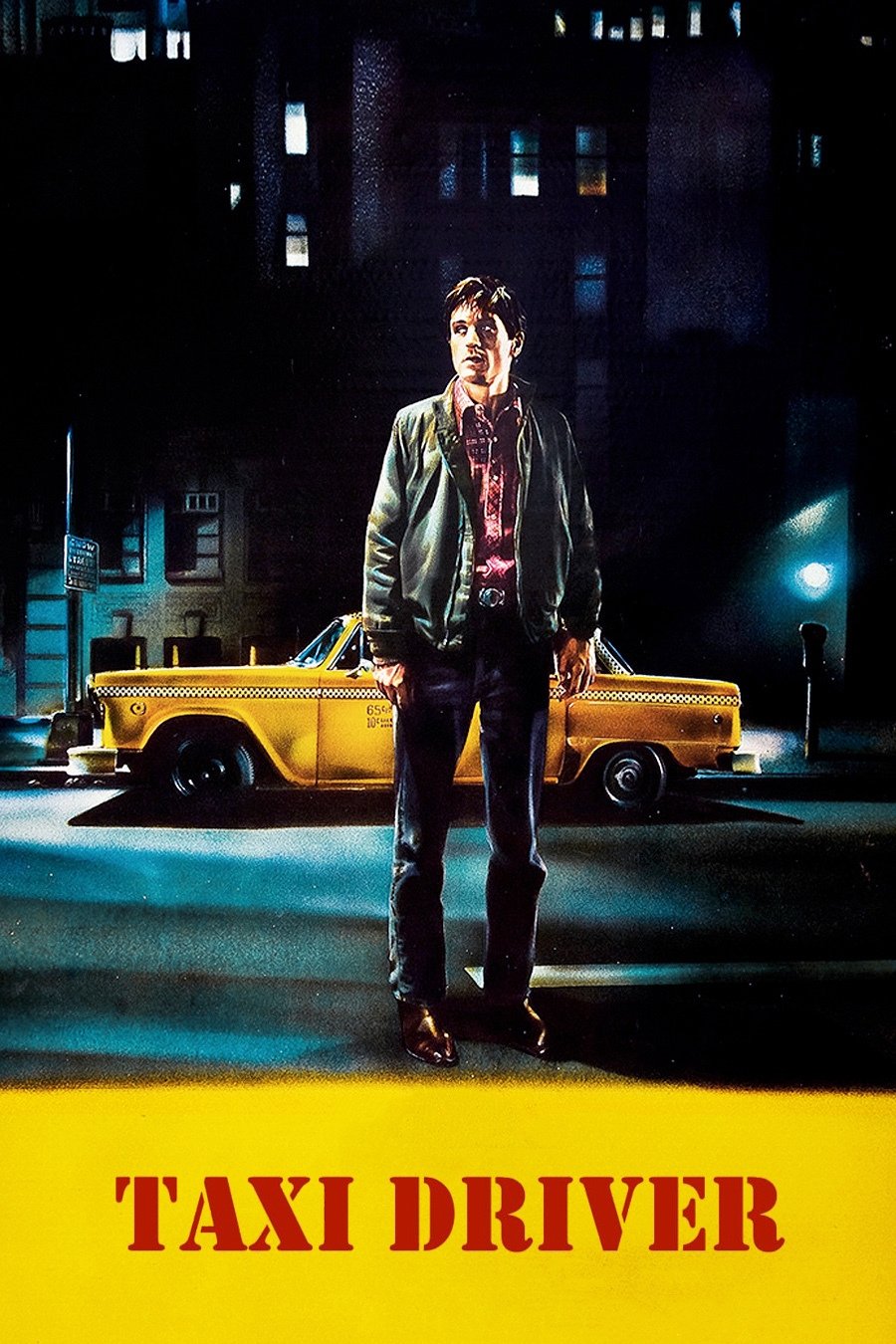
Probably Unanswerable Questions
Dream or fantasy reading; rearview-mirror sound sting; Travis Bickle in 2021
In the discussion (7)
- Though the creators reject it, how much of the ending or the film is a dream or happens in Travis's head is open to interpretation. — Sean Fennessey
- A reply says it is all happening, unlike Burning; it would feel unreal only if Betsy had been friendly at the end, and the sound over the rearview mirror shows the time bomb ticking again. — Bill Hader
- The meaning of the rearview sting is asked; Herrmann came up with the sound, played backwards, and it reads as Travis constantly watching his back. — Bill Hader
- Scorsese's and Calvinist-raised Schrader's religious streak suggests a heaven-and-hell reading, as with the burning flowers; Schrader's original ending was far bloodier, like a samurai movie or The Wild Bunch. — Bill Hader
- A 2021 Travis Bickle would be on the internet 19 hours a day, a less interesting movie. — Bill Simmons
- Incel comparisons do not fit because Travis has no sexualization, and online he would find a community that fed his disturbances rather than being God's lonely man. — Sean Fennessey
- He would find his people or curate his own reality; in the film he can't, and even at the late-night diner he spaces out. — Bill Hader
Apex Mountain
Clap pushups; mid-70s New York
In the discussion (5)
- This was not Apex Mountain for De Niro or for Scorsese. — Bill Simmons
- Scorsese's Apex is debated between Raging Bull and Goodfellas; Goodfellas is favored, while another view says he has not reached it and is still going, with a joke about his next film.
- Along with Rocky, 1976 was the apex for clap pushups, the first time one participant saw anyone work out in a movie, plus the hand over the burner.
- This is Apex Mountain for disgusting mid-70s New York, which no movie captured better. — Bill Hader
- It is not the Apex for taxis, which came with the late-70s TV show Taxi; DC Cab with Mr. T is raised and rejected. — Bill Simmons

In the discussion (3)
- Scorsese is first floated as a heat check for an indelible five-minute scene, followed by a question about any bigger heat check. — Bill Simmons
- This is Albert Brooks's first movie; Scorsese hires a comedian for a boring part and lets him vamp, and Brooks wrote or improvised material with Scorsese and Shepherd. — Sean Fennessey
- The role is the beginning of the Brooks movie persona, like a prequel to his Broadcast News character, and he is given the award with agreement. — Sean Fennessey

In the discussion (2)
- Scorsese is said to win the next awards; the Vincent Hanna award is for somebody who dialed it up a notch. — Bill Simmons
- Scorsese is given the Vincent Hanna. — Bill Hader

Clint Howard Award for the Director Loves This Guy
No nominee settled
The panel proposes a new category here.
In the discussion (2)
- Bill Lawrence, on the podcast last week, suggested a category for the director's or star's friend who appears in many of their movies, named like the Jack Haley or Eddie House Award after NBA players who follow a superstar; the Jack Haley name is called a good one. — Bill Simmons
- Asked who the guy in every Scorsese movie is, the answer offers Harry Northup or Vic Argo, saying both are in many of those films and it may be one of them. — Sean Fennessey

In the discussion (6)
- Joe Spinell is debated as a known name versus a that guy. — Bill Simmons
- Leonard Harris is named the answer because he had only two roles, Palantine and the John Ritter movie Hero at Large. — Bill Simmons
- Vic Argo, who beats up a man in the bodega, is in every Scorsese movie, including playing Peter in The Last Temptation of Christ.
- The weird cab driver Doe Boy with the bathtub story is liked; on the commentary track the director admits not knowing what the story is about, and the actor is also in Over the Edge and Mean Streets. — Bill Hader
- Steven Prince, the gun salesman and star of Scorsese's documentary American Boy, is offered as another interesting pick. — Sean Fennessey
- Diahnne Abbott as the concession girl is so good as Travis hits on her. — Sean Fennessey
Films in the archive

After Hours
1985


Cape Fear
1991


Casino
1995
Goodfellas
1990

Mean Streets
1973
Raging Bull
1980
Taxi Driver
1976

The Color of Money
1986

The Departed
2006

The Irishman
2019

The King of Comedy
1982
The Wolf of Wall Street
2013