‹ All movies
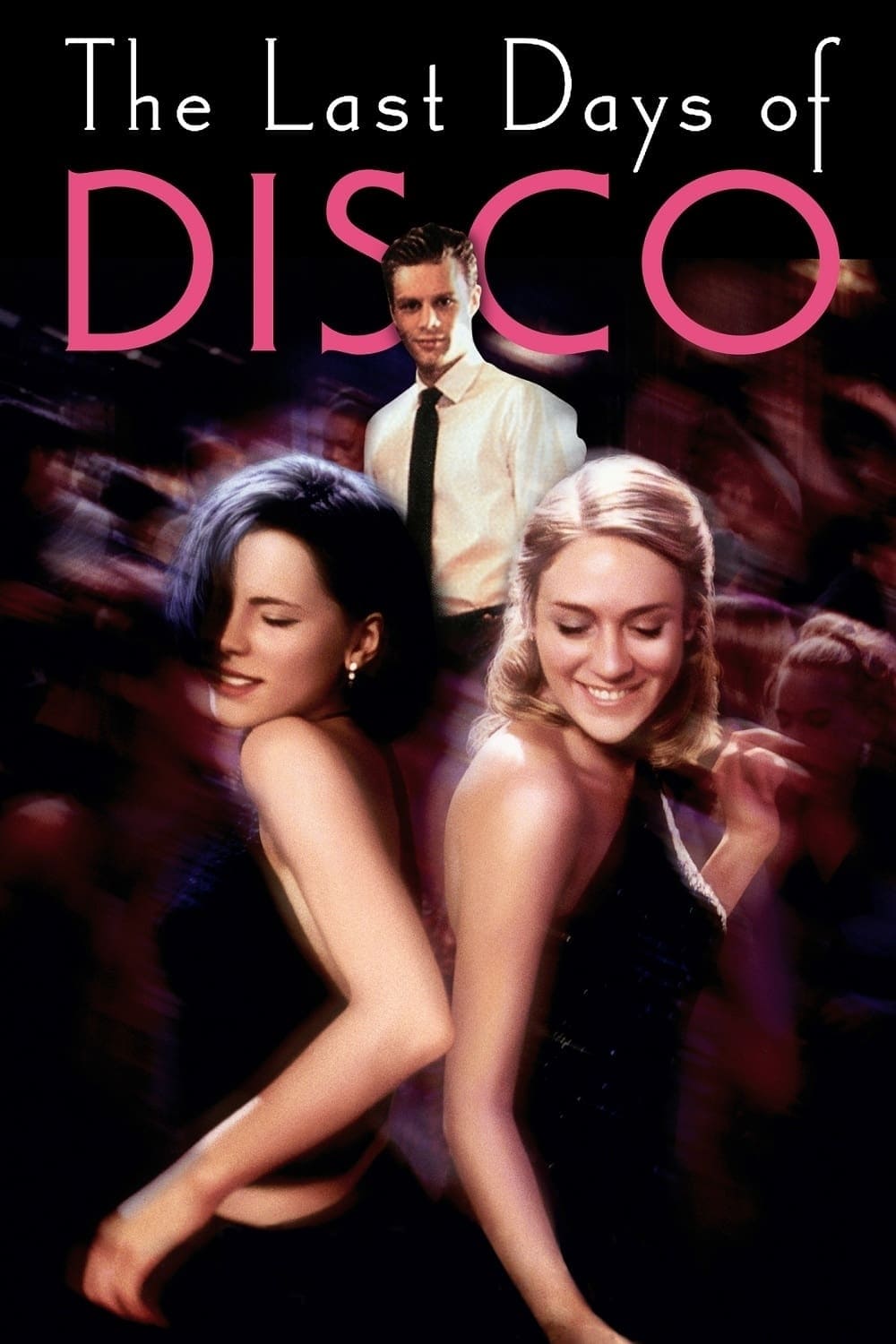
The Last Days of Disco poster

The Last Days of Disco

113 minutes

Cast

Selected cast credits · Film reference

Kate Beckinsale Charlotte
Matt Ross Dan
Tara Subkoff Holly
Sonsee Neu Diana
Jaid Barrymore Tiger Lady
James Murtaugh Marshall
Cate Smit Helen
Debbon Ayer Betty
Zachary Taylor Backdoorman
Carolyn Farina Audrey Rouget
Dylan Hundley Sally Fowler
Taylor Nichols Charlie / Ted Boynton
Amanda Harker Model 1
Brandi Seymour Model 2
Leslie Lyles Sally
Robin Miles Josephine
Linda Pierce Real Estate Lady
Carlos Jacott Dog Walker
Sharon Scruggs Justine Prashker
Ajay Mehta Pharmacist
Norma Quarles Anti-Disco Rally Reporter
George Plimpton Clubgoer
Kimball Chen Clubgoer
Bunny Beekman Clubgoer
Redman Maxfield Clubgoer
Jack Staub Clubgoer
Michael Albanese Creep on Subway (uncredited)
Michael E. Bell Disco Patron (uncredited)
Harry Tappan Heher Holly's New Boyfriend (uncredited)
Will Kempe Rick von Sloneker (uncredited)
Adrian Lee Heart Patient (uncredited)
Jessica Pimentel Clubgoer (uncredited)
Rio Puertollano Disco Dancer (uncredited)
Rohan Quine Marie Antoinette Clubgoer (uncredited)
Michael Rothberger Thug #3 (uncredited)
Jack Serra Cocaine Dealer (uncredited)
Nick Stellate Hot Rod Driver (uncredited)

The Last Days of Disco | The Rewatchables

Explore episodeClose episode

Half-Assed Internet Research

Budget and box office; audience recognition; novelization; shared theater location; nightclub filming

In the discussion (5)
Approx. transcript time · 00:25:13Read transcript
  • The stated budget is$8 million and box office$3 million, followed by a stronger repeat-viewing afterlife.
  • Sevigny reportedly says this is the film strangers mention most.
  • Stillman published a novelization in 2000.
  • The disco was a renovating Jersey City movie theater shared with a Turturro production, with refurbishment costs divided.
  • Stillman reportedly liked daytime shooting in a nighttime setting but regretted the large space because it was hard to fill convincingly.

Most Rewatchable Scene

Opening nightclub sequence (two choices); Rex’s sequence (one choice)

In the discussion (19)
Approx. transcript time · 00:46:34Read transcript
  • The opening twenty minutes introduce the whole nightclub ensemble over a succession of songs.
  • Jimmy tries to bring older business contacts past the doorman.
  • The women use a cab trick to gain admission.
  • Des tells the Jennifer Beals character he thinks he is gay.
  • Charlotte’s first backhanded compliments establish the frenemy dynamic.
  • The publishing-coverage template and formula argument with Dan are favorites.
  • Alice leaves the booth to dance while Robert Sean Leonard’s character watches from afar.
  • The harsh confrontation about Alice’s seductive routine is praised for its writing and restrained reactions.
  • The debate over whether yuppies exist rejects a label no one claims for themselves.
  • The unexpected breast-unveiling anecdote is praised as captivating storytelling.
  • Charlotte publicly deduces Alice’s infection from her refusal of alcohol, then offers an insincere apology.
  • The Lady and the Tramp analysis about women loving jerks is another favorite.
  • The nightclub bust is nominated.
  • Alice’s success, Charlotte’s layoff and the speech declaring disco dead form another favorite ending sequence.
  • The subway Love Train finale is praised, especially the cut to dancers on the platform.
  • The opening is one final choice, with the yuppie discussion as backup.
  • The Rex’s sequence is another final preference, contrasting a supposedly dull bar with its patrons’ genuine enjoyment.
  • The opening introduces existing conflicts rather than strangers meeting, creating the sense of entering established relationships.
  • A second final choice favors the opening twenty minutes, with Rex’s and the Radcliffe anecdote close behind.

What’s Aged the Best?

Indie films; Leonard; costumes; Sevigny and Beckinsale; soundtrack; gay-day joke; club outfit; Criterion; Dan; New York; unnamed club; railroad apartments

In the discussion (12)
Approx. transcript time · 00:59:36Read transcript
  • Late 1990 s independent films receive a choice.
  • Robert Sean Leonard remains a welcome performer despite not becoming the anticipated movie star.
  • Sarah Edwards’s costumes endure, especially Alice’s blue, striped, opening and subway red outfits; their contemporary appeal is praised.
  • Young Sevigny and Beckinsale are reiterated.
  • The soundtrack is called a first-ballot Hall of Famer, with the breadth of its playlist praised.
  • Wednesday being gay day remains a favorite joke.
  • A clubgoer’s bull’s-eye outfit is funny.
  • The Criterion release, Stillman commentary and matching illustrated trilogy packaging are appreciated.
  • Department Dan’s activism and remarks about bourgeois women working are praised.
  • New York functions as a living room for young people escaping cramped apartments.
  • The club evokes Studio 54 without naming it, avoiding the feeling of exclusion from a specific famous scene.
  • Railroad apartments and Alice’s noisy pots and toilet business evoke unpleasant shared-living realities.

What’s Aged the Worst?

Opening titles, disputed; demolition-night chronology; abrupt time jump, disputed; mental-health jokes, qualified; Subkoff performance

In the discussion (5)
Approx. transcript time · 01:08:18Read transcript
  • Flashy opening titles are disliked as hard to read, with a dissent liking them.
  • The 1979 Disco Demolition Night conflicts with the stated 1980 s setting.
  • The abrupt late jump to Alice’s success and unemployment feels like a missing scene, while another response likes its novelistic ellipsis.
  • Mental-health jokes might not be written now but fit the historical setting.
  • Tara Subkoff’s limited acting and apparent offscreen dubbing evoke an amateurish indie-film practice; the character’s intended nature offers partial defense.

The Neil McCauley “A Book about Metals” Award for Best Line from the Movie

Yuppies; bad versus weak men; conditional apology; not envying anyone; several new leaves

In the discussion (5)
Approx. transcript time · 01:12:32Read transcript
  • The yuppie argument is reiterated.
  • Women preferring bad men to weak, indecisive and unemployed men is nominated.
  • The apology for wrong actions but not non-wrong actions is nominated.
  • Not envying anyone or wanting to be anyone else is the strongest stated preference.
  • Turning over several new leaves in Spain is another favorite.

The Stephen A. Smith Hottest Take Award

Sevigny’s alternate star career; misplaced nightclub enforcement

In the discussion (2)
Approx. transcript time · 01:13:16Read transcript
  • Sevigny is imagined with a Paltrow-scale career, a cooler New York business and multiple Oscar nominations; both she and Mathis deserved more good films.
  • The district attorney’s attention to nightclub malfeasance is questioned amid larger New York problems.

Casting What-Ifs

Affleck wanted Des; Ryder delay led to Sevigny

In the discussion (3)
Approx. transcript time · 01:18:18Read transcript
  • Affleck reportedly wanted Des, but Stillman chose Eigeman.
  • Ryder was offered Alice, but a reported four-day agent delay allowed Sevigny’s audition and casting.
  • Sevigny is preferred because Ryder would have repeated familiar roles while the audience was still discovering Sevigny.

Recasting Couch

Josh: Norton or Hamilton; Jimmy: Affleck or Damon; Lee, Hauser, Casey Affleck and Sean Astin considered; star-casting jokes

In the discussion (15)
Approx. transcript time · 01:18:42Read transcript
  • Affleck is considered for Josh but may be too conventionally handsome; his Mallrats persona is closer to Des.
  • Norton is endorsed for Josh.
  • Jason Lee is considered closer to the Eigeman role.
  • Affleck is preferred over Mackenzie Astin despite praise for the existing performance.
  • Damon is another proposal for the Astin role.
  • Tom Hanks is a joking escalation of the star-heavy casting suggestions.
  • Denzel Washington is another joking escalation.
  • Cole Hauser is considered too gritty for the part.
  • Casey Affleck is proposed then dismissed as too young; the stated age is a conversational estimate.
  • Sean Astin is another suggestion.
  • Josh Hamilton is endorsed over Keeslar for empathy and a reunion with Eigeman.
  • Washington replacing Keeslar is a joking counterproposal.
  • Newman’s availability is jokingly raised.
  • Sidney Poitier as Josh continues the star-casting joke.
  • Denzel Washington in the Mackenzie Astin role continues the star-casting joke.

The Take I Would Have Redirected

Keeslar’s bust-scene delivery

The panel proposes a new category here.

In the discussion (1)
Approx. transcript time · 01:20:32Read transcript
  • The take I would have redirected is proposed after a wish to repeat Keeslar’s bust-scene delivery with more energy.

The Joey Pants “That Guy” Award

Carlos Jacott; Thornton and Weatherly mentioned; Ross and McKinney eligibility debated

In the discussion (5)
Approx. transcript time · 01:21:24Read transcript
  • Matt Ross’s eligibility is debated without a clear ruling.
  • Mark McKinney may be too recognizable to Kids in the Hall fans.
  • David Thornton as Bernie is suggested.
  • Carlos Jacott’s dog-walker cameo is the explicit winner, with Kicking and Screaming and Barcelona recalled.
  • Michael Weatherly as Hap is added belatedly, with Bull recalled.

Apex Mountain

Sevigny; Mackenzie Astin, qualified; money-losing Studio 54 movies

In the discussion (13)
Approx. transcript time · 01:26:09Read transcript
  • Sevigny receives yes for her New York It Girl moment before Boys Don’t Cry, with a joking Brown Bunny qualification.
  • Beckinsale’s peak is placed with Underworld rather than this film; Brokedown Palace and Instagram are alternatives.
  • Mackenzie Astin initially receives yes, then Facts of Life is raised as competition.
  • Robert Sean Leonard receives no.
  • Hatred of advertising people is proposed, with Mad Men as competition.
  • Vodka tonics are proposed without a definite peak ruling.
  • Book publishing’s peak is debated against its later film glamorization and the 2000 s as a last strong decade.
  • Gonorrhea movie references are suggested without a definite answer.
  • Eigeman’s Kicking and Screaming is preferred, while this film and Barcelona are treated as a shared strong run.
  • Yuppie scum is proposed without a clear ruling.
  • Railroad apartments are proposed without a clear ruling.
  • Stillman’s peak is debated between Barcelona and Metropolitan, with the latter’s Oscar nomination favoring it.
  • Money-losing Studio 54 movies receive an explicit yes.

Sequel, Prequel, Limited Series, or All-Black Remake

Sequel: later Des; mid-1980s ensemble; Alice’s Wall Street marriage

In the discussion (4)
Approx. transcript time · 01:31:09Read transcript
  • A spiritual sequel about Des’s later life is proposed; talk radio or podcasting suits his opinions, ambition and lack of ideas.
  • A mid 1980 s sequel following divorces and moves is enthusiastically preferred.
  • Des stays in New York and produces a Mets podcast in the imagined sequel.
  • Alice is imagined marrying a wealthy Wall Street figure who goes to prison, forcing a new life.

Picking Nits

Alice’s admirers; drugs and smoking; cocaine’s effects; quiet club conversations; subdued club; hit staging; Des and Alice; AIDS absence

In the discussion (8)
Approx. transcript time · 01:31:53Read transcript
  • Alice would attract more men while sitting alone; a defense says her restrained Connecticut persona may not be what this crowd seeks.
  • There is too little cocaine and cigarette smoking.
  • Cocaine seems to have no effect on Des, unless he is already constantly using it.
  • Quiet, nuanced conversations would be impossible at realistic nightclub volume.
  • The club lacks the wildness associated with Studio 54, though subdued dancing and sound may deliberately preserve legibility.
  • The distant staging of Jimmy being hit is questioned as an apparent way to avoid a blood effect.
  • Des and Alice seem implausible as a couple; cycling through the group is a defense, while Des and Charlotte seem better matched.
  • The lack of AIDS discussion is questioned, with herpes and G&H references possibly foreshadowing it.

Is This Movie Better With…?

Wayne Jenkins infection and Josh riffs

In the discussion (2)
Approx. transcript time · 01:37:09Read transcript
  • A Wayne Jenkins impression reworks the infection scene.
  • Wayne Jenkins riffs rework Josh’s breakdown and arrest dialogue.
In the discussion (3)
Approx. transcript time · 01:38:24Read transcript
  • Beckinsale is the first choice.
  • Eigeman is the alternative choice.
  • Beckinsale is proposed in place of Lynn Redgrave. The discussed supporting-actress field is winner Judi Dench for Shakespeare in Love,Kathy Bates for Primary Colors,Brenda Blethyn for Little Voice,Rachel Griffiths for Hilary and Jackie,and Redgrave for Gods and Monsters.

Probably Unanswerable Questions

Beckinsale’s career; modern Brown Bunny reaction; best bar-conversation actor

In the discussion (6)
Approx. transcript time · 01:40:09Read transcript
  • Why Beckinsale was not this good again is raised as a question.
  • A present-day Brown Bunny controversy might draw either harsher sexual conservatism or stronger opposition to shaming artistic choices; the discussion remains divided.
  • Eigeman is proposed as the best bar-conversation actor.
  • Liotta and the bar exchange opposite Falco in Cop Land are comparisons.
  • Newman in The Verdict is rejected because the listeners are tired of his stories.
  • Rapaport in Beautiful Girls is praised as another contender.
In the discussion (4)
Approx. transcript time · 01:43:57Read transcript
  • 54’s director’s cut is recommended first, followed by this film.
  • Barcelona is a strong pairing within the trilogy.
  • Metropolitan is another trilogy pairing, with returning performers linking the films.
  • Boogie Nights is proposed despite objections to the combined length.

The Andy and Red – Zihuatanejo Award for What Happens the Next Day?

Alice’s financial-district partner; Des and Charlotte’s drugs, rehab or Los Angeles careers

In the discussion (3)
Approx. transcript time · 01:45:01Read transcript
  • Alice meets a financial-district man in the imagined continuation.
  • Des gets Charlotte addicted to cocaine, leading to rehab and possibly his arrest.
  • Des and Charlotte move to Los Angeles, where her television career could involve drama production or news.
In the discussion (4)
Approx. transcript time · 01:46:14Read transcript
  • Stillman is rejected because the film failed commercially and preceded a long gap.
  • A wish to honor a prior Kicking and Screaming candidate trails off without an explicit completed choice.
  • Beckinsale receives one explicit final choice.
  • Sevigny receives another explicit final choice, with the two leads described as closely matched.
Podcast choices
Speaker not identified
Kate Beckinsale
Speaker not identified
Chloë Sevigny

Producer review

Adoration; relatable young characters; repeat-viewing improvement; EDM parallel

In the discussion (4)
Approx. transcript time · 01:47:55Read transcript
  • The inserted response adores the film, connecting it with Kicking and Screaming, Singles and a love of disco. — Craig Horlbeck
  • Characters sound older than their age while behaving like young adults, making them simultaneously unrealistic and relatable. — Craig Horlbeck
  • The film improved when revisiting clips and is a contender among favorite newly discovered films for the year. — Craig Horlbeck
  • Contemporary EDM club culture is proposed as the closest successor to disco, including remixed ABBA music. — Craig Horlbeck

More from the conversation

The episode introduces Simmons, Fennessey and Ryan amid discussion of theatrical releases and the upcoming basketball game.
Approx. transcript time · 00:01:20Read transcript
Turan’s description of clever, insecure young people frames enthusiasm for sophisticated characters who lack wisdom.
Approx. transcript time · 00:03:12Read transcript
The film is compared with Boogie Nights for nerds and the conversational worlds of Baumbach, Linklater and Anderson.
Approx. transcript time · 00:03:39Read transcript
Pre-internet bar conversations allowed unchecked cultural arguments, exemplified by the Lady and the Tramp discussion.
Approx. transcript time · 00:04:41Read transcript
Watching these films young helped shape personal styles of intellectual bluffing; Eigeman’s characters remain recognizable models.
Approx. transcript time · 00:05:24Read transcript
Identification with Eigeman and independent-film conversations connects this film to Barcelona and Kicking and Screaming.
Approx. transcript time · 00:06:11Read transcript
Silence of the Lambs jokes, an Elliott Gould answering-machine moment and Tarantino’s Top Gun speech illustrate recognizing private conversations on screen.
Approx. transcript time · 00:06:38Read transcript
The internet later made finding similar people easier, while Slacker and independent cinema had earlier represented overlooked everyday personalities.
Approx. transcript time · 00:07:18Read transcript
The film and Dazed and Confused feel timeless despite period settings because their conversations and relationship questions remain familiar.
Approx. transcript time · 00:08:46Read transcript
Postcollege friendships and roommates often formed through convenience rather than compatibility.
Approx. transcript time · 00:09:21Read transcript
Online writing helped create more deliberate friendships, including a connection through reading Ryan’s work.
Approx. transcript time · 00:09:52Read transcript
College ride-share bulletin boards illustrate the former reliance on unvetted chance connections.
Approx. transcript time · 00:10:55Read transcript
The apartment deadline and reluctance to live together dramatize accidental friendships.
Approx. transcript time · 00:11:35Read transcript
Female frenemies and uneasy male friendships are praised as truthful, with Dazed and Confused and Kicking and Screaming comparisons.
Approx. transcript time · 00:11:53Read transcript
The upbeat hit-filled soundtrack contrasts with depressed characters and stalled lives.
Approx. transcript time · 00:12:56Read transcript
The initially surprising subway dance ending becomes sweeter on repeat viewing; White Noise’s final dance recalls it.
Approx. transcript time · 00:13:10Read transcript
Boogie Nights, Summer of Sam and Dazed and Confused illustrate a nostalgia cycle that helped revive disco.
Approx. transcript time · 00:13:49Read transcript
Disco’s wedding popularity shifted from irony to sincere affection.
Approx. transcript time · 00:14:50Read transcript
Rap samples of Diana Ross and Sister Sledge, plus electronic dance music, created new connections to disco.
Approx. transcript time · 00:15:31Read transcript
The soundtrack inventory includes I Love the Nightlife; I’m Coming Out; Got to Be Real; Good Times; He’s the Greatest Dancer; I Don’t Know If It’s Right; More, More, More; Doctor’s Orders; Everybody Dance; The Love I Lost; Let’s All Chant; Got to Have Loving; Shame; Knock on Wood; The Oogum Boogum Song; and Love Train. Missing Bee Gees prompts a rights-cost guess.
Approx. transcript time · 00:16:03Read transcript
Stillman’s distinctive speech is compared with Mamet, Gilroy, Sorkin and Anderson: candid confrontations delivered flatly, with deception mostly offscreen.
Approx. transcript time · 00:16:41Read transcript
Stillman’s privileged background informs self-critical portrayals of young people supported by parents.
Approx. transcript time · 00:17:52Read transcript
The film’s white disco crowd is defended as an intentional account of appropriation and decline, rather than ignorance of the genre’s origins.
Approx. transcript time · 00:19:04Read transcript
Metropolitan and Barcelona establish the preceding trilogy; this film competed with 54 amid 1998 releases.
Approx. transcript time · 00:19:41Read transcript
Privileged school acquaintances seem destined to recover financially despite early unemployment.
Approx. transcript time · 00:20:22Read transcript
Des differs as a dropout in a nonprofessional job, with dubious income; Eigeman’s charm offsets his character’s faults.
Approx. transcript time · 00:20:53Read transcript
Stillman’s long gap is compared with Lonergan; his novel expands these characters through a self-referential adaptation story.
Approx. transcript time · 00:21:31Read transcript
Small-film home-video economics are contrasted with later financing limits; music cost is guessed rather than established.
Approx. transcript time · 00:21:57Read transcript
Unmade Jamaica and Paris projects precede later television and Damsels in Distress; Anderson’s rise is proposed as a market-correction explanation for Stillman’s absence.
Approx. transcript time · 00:22:27Read transcript
Baumbach’s wilderness period and more polished ensemble films such as Beautiful Girls suggest the conversational subgenre became overly professionalized.
Approx. transcript time · 00:23:39Read transcript
Autobiographical foundations are praised in Kicking and Screaming, The Squid and the Whale, Dazed and Confused and this film; Stillman’s publishing work informs it.
Approx. transcript time · 00:24:27Read transcript
Igby Goes Down is seen as a darker successor anticipating prestige television’s more flawed characters.
Approx. transcript time · 00:25:13Read transcript
Unclear elapsed time and minimal plot are accepted as features of a hangout film, compared with Holofcener’s conversational friendship movies.
Approx. transcript time · 00:26:16Read transcript
Conversational films may have migrated to television; Fleabag, Girls, The Cosmopolitans and the darker Your Friends and Neighbors provide comparisons.
Approx. transcript time · 00:27:05Read transcript
Adam Brody is compared with a sweeter Eigeman, especially in Fleishman Is in Trouble; acidic party conversationalists are personally appealing.
Approx. transcript time · 00:28:03Read transcript
Charlotte’s gaslighting and backhanded compliments provoke strong recognition from viewers who have cut similar friends out of their lives.
Approx. transcript time · 00:30:47Read transcript
Beckinsale’s American accent benefits from the milieu’s mid-Atlantic style; Steers has similarly unusual speech.
Approx. transcript time · 00:32:21Read transcript
Love & Friendship is praised as an underrated Beckinsale performance, alongside Brokedown Palace; her Underworld turn shifted her career toward action.
Approx. transcript time · 00:33:04Read transcript
Beckinsale’s public persona, social-media cats and eclectic dating history are discussed with some uncertainty about individual relationships.
Approx. transcript time · 00:33:26Read transcript
Sevigny’s restrained reactions reveal hurt, thought and growing recognition of Charlotte’s cruelty.
Approx. transcript time · 00:34:05Read transcript
The naive performance differs from Sevigny’s real club-kid reputation; Alice is considered equally ambitious but less overt than Charlotte.
Approx. transcript time · 00:35:10Read transcript
Kids is recalled as a startling theatrical experience and important 1990 s artifact, launching Sevigny and Dawson.
Approx. transcript time · 00:36:20Read transcript
The run through Boys Don’t Cry and American Psycho suggests near-star status before The Brown Bunny changed public perception.
Approx. transcript time · 00:36:49Read transcript
Sevigny’s career is compared with Claire Danes: recognizable and successful without the multiple-Oscar stature of Winslet.
Approx. transcript time · 00:37:37Read transcript
Supporting roles, Big Love’s central chaotic performance and Poker Face demonstrate sustained employment and screen presence despite the end of an It Girl era.
Approx. transcript time · 00:38:09Read transcript
The Brown Bunny controversy is recounted through its unsimulated sex scene, hostile Cannes reception, agency consequences and later reappraisal; these remain reported accounts.
Approx. transcript time · 00:39:35Read transcript
Sevigny’s retrospective denies simple career damage from The Brown Bunny, citing Zodiac, while acknowledging relationship strain; the discussion remains divided about lost star potential.
Approx. transcript time · 00:40:42Read transcript
The 1994 New Yorker profile Chloe’s Scene is recommended as evidence of consistent artistic interests before Kids.
Approx. transcript time · 00:41:16Read transcript
Her distinctive New York style and possible clothing-line success complicate comparisons with conventional stars.
Approx. transcript time · 00:42:25Read transcript
Winslet’s reinvention, Paltrow’s changed priorities and Ryder’s shorter star run illustrate different career trajectories.
Approx. transcript time · 00:43:09Read transcript
Hypothetical casting as Shiv Roy receives support; Skyler in Breaking Bad is less persuasive, with Big Love defended as an important television role.
Approx. transcript time · 00:44:16Read transcript
Moderate fame may provide restaurant access and privacy together; Mathis and Hamilton are contrasted as performers who never reached the same prominence.
Approx. transcript time · 00:44:56Read transcript
Sevigny’s connection to New York music and fashion culture reinforces the description of her as cool.
Approx. transcript time · 00:45:48Read transcript
Ebert’s Fitzgerald comparison leads to a Gatsby analogy in which everyone exaggerates personal success.
Approx. transcript time · 00:46:18Read transcript
Eigeman’s later work, including Gilmore Girls, is acknowledged, but his distinctive gift is thought to depend on excellent scripts and compatible directors.
Approx. transcript time · 00:53:56Read transcript
Disco’s death prompts comparisons with current media economics and the end of the Obama administration, with political teasing.
Approx. transcript time · 00:56:50Read transcript
Offscreen references to Harvard explain the ensemble’s preexisting connections.
Approx. transcript time · 00:59:19Read transcript
Leonard and Hamilton’s stage careers help explain their lower film profiles.
Approx. transcript time · 00:59:36Read transcript
The theatrical competition with 54 is connected to distributor pressure;54’s compromised release and more interesting director’s cut are contrasted despite a strong cast.
Approx. transcript time · 01:09:38Read transcript
The film’s afterlife includes anniversary screenings and younger admirers, exceeding its small original box office.
Approx. transcript time · 01:14:49Read transcript
Audience reactions to episode choices prompt joking about free podcasts and following personal taste.
Approx. transcript time · 01:16:10Read transcript
A coming Blackhat Blu-ray and possible Miami Vice revisit are discussed as future episodes.
Approx. transcript time · 01:17:19Read transcript
Eigeman’s casting is contrasted with Affleck’s eventual 1998 successes in Armageddon and Shakespeare in Love.
Approx. transcript time · 01:18:18Read transcript
The Astin brothers are compared through Rudy, Toy Soldiers and Lord of the Rings.
Approx. transcript time · 01:23:12Read transcript
Gummo’s loose narrative and appearance inside Belly prompt a possible Belly episode discussion.
Approx. transcript time · 01:24:27Read transcript
A signed Stillman novel and an absent friend’s enthusiasm lead to joking about who could have joined the episode.
Approx. transcript time · 01:25:15Read transcript
Young adults’ impressive drink choices include martinis, whiskey sours, Tom Collins, Long Island iced tea and vodka-Red Bull; a tequila-Red Bull anecdote follows.
Approx. transcript time · 01:27:49Read transcript
A return to nightclub movies might use early 2000 s New York, with jokes about digitally de-aged performers.
Approx. transcript time · 01:29:29Read transcript
Affleck’s actual 1998 choices are defended, then Eigeman is imagined in Armageddon or as a sarcastic action villain, including the fourth Die Hard.
Approx. transcript time · 01:30:09Read transcript
Personal memories of classmates with imprisoned financial-crime fathers extend the hypothetical sequel discussion.
Approx. transcript time · 01:36:37Read transcript
The 1999 supporting-actress field is reviewed: Dench, Bates, Blethyn, Griffiths and Redgrave; Beckinsale is argued to deserve a place.
Approx. transcript time · 01:38:24Read transcript
Oscars favoring Shakespeare in Love, Life Is Beautiful and Gods and Monsters are criticized, then compared with a disputed basketball championship.
Approx. transcript time · 01:39:10Read transcript
A bar-conversation movie or Continental bartender version of John Wick is imagined, followed by sports-talk and coach bar-companion jokes.
Approx. transcript time · 01:42:22Read transcript
The absent producer is impersonated before an actual separately inserted response; these impressions are not his words.
Approx. transcript time · 01:46:52Read transcript