‹ All movies
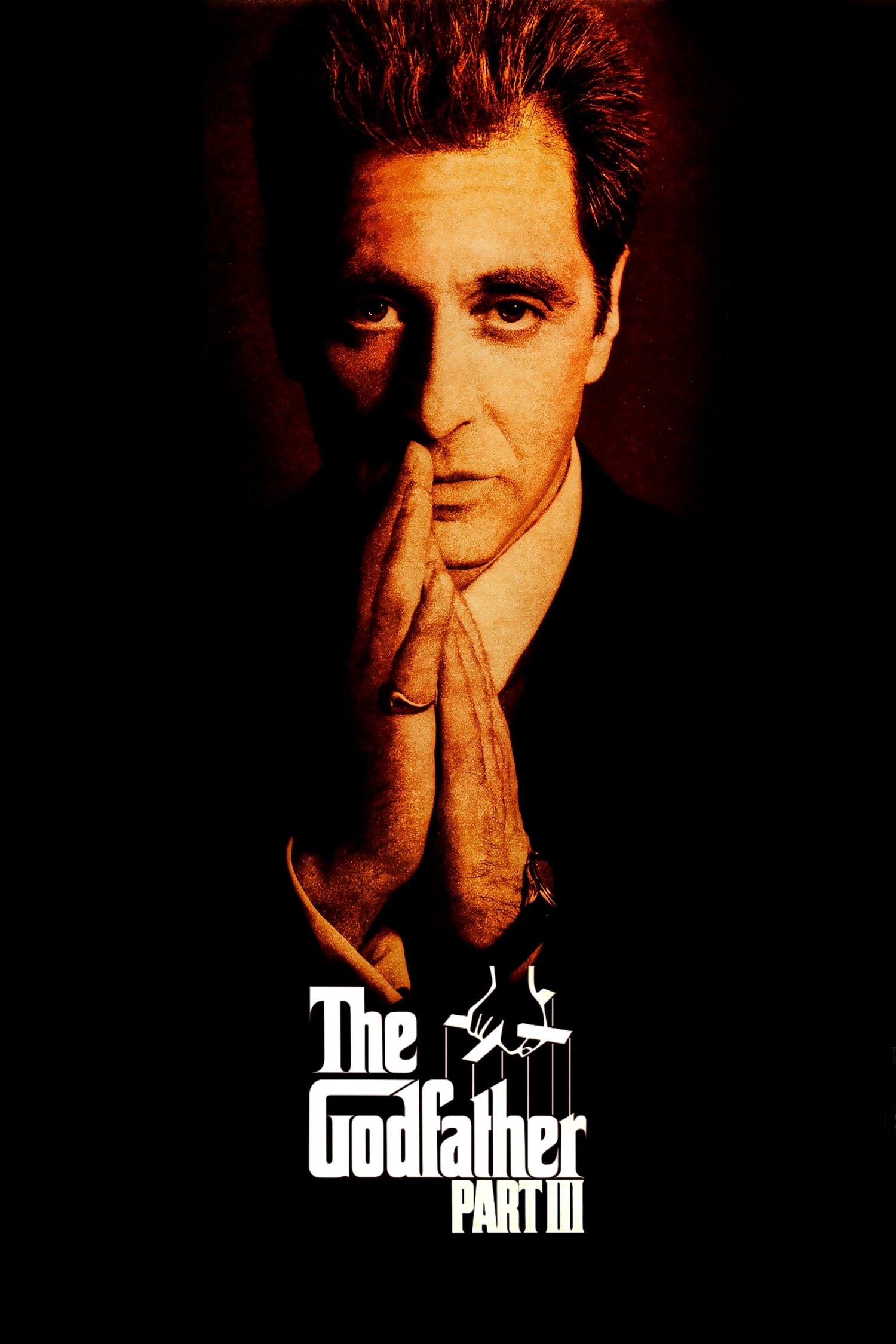
The Godfather Part III poster

The Godfather Part III

162 minutes

Cast

Selected cast credits · Film reference

Al Pacino Michael Corleone
Diane Keaton Kay Adams
Talia Shire Connie Corleone
Andy Garcia Vincent Corleone (Vincent Mancini)
Eli Wallach Don Altobello
Joe Mantegna Joey Zasa
George Hamilton B.J. Harrison
Bridget Fonda Grace Hamilton
Sofia Coppola Mary Corleone
Raf Vallone Cardinal Lamberto
Franc D'Ambrosio Anthony Corleone
Donal Donnelly Archbishop Gilday
Richard Bright Al Neri
Helmut Berger Frederick Keinszig
Don Novello Dominic Abbandando
John Savage Father Andrew Hagen
Enzo Robutti Don Licio Lucchesi
Jeannie Linero Lucy Mancini

The Godfather Part III | The Rewatchables

Explore episodeClose episode

Producer credits not yet identified.

Most Rewatchable Scene

First meeting of Zasa, Vincent and Michael in Michael's office

In the discussion (15)
Approx. transcript time · 00:37:00Read transcript
  • The category opens with the Zasa-Vincent showdown in Michael's office, with Garcia's leather-jacket wedding look and good drunk acting as Connie takes his drink.
  • Vincent is Sonny's son with the bridesmaid from the first film, Lucy Mancini, who is seen at the party; her description in the book is recalled.
  • Biting an ear to draw blood is described as a Sicilian custom meaning a fight to the death, prompting jokes about a later boxing ear bite.
  • "Say it to his face" and "all bastards are liars, Shakespeare wrote poems about it" are praised as stagey but great dialogue, with Mantegna doing Gotti in real time.
  • Mantegna's career is traced from House of Games through Bugsy and Searching for Bobby Fischer, originating Ricky Roma on stage, and Fat Tony on The Simpsons.
  • The penthouse commission scene is next: Michael's gifts, the helicopter attack, the oranges, Al Neri's return, and Altobello conveniently stepping out.
  • That scene feels like a crappy 70s exploitation movie but works, and it could be argued as the best stretch because it leads straight to the kitchen scene.
  • In the kitchen, Garcia's "I say we hit back" and Pacino's "just when I thought I was out" line paid off the trailers in theaters; the line is the one Silvio quotes on The Sopranos.
  • The feast set piece is praised: the raffle car, the Italian-Americans speech, and Garcia revealed as the mounted cop who kills Zasa.
  • The shaving scene, cross-cut with the Altobello and Lucchesi scenes, shows Michael warning Vincent off Mary without forbidding it; "when they come, they come at what you love" is singled out.
  • Michael making Vincent the new Don is abrupt but liked, including how everyone in the room reacts.
  • Vincent breaking it off with Mary is tagged as Sofia Coppola's only half-decent scene, though the pair's chemistry is not bought.
  • The extended opera murder montage is called unbelievable and gets a vote for most rewatchable.
  • The pushback is that the montage runs far too long with too much opera, even if it is well staged and a mother's favorite.
  • Asked for an alternative, another pick is the first meeting of Zasa, Vincent and Michael with the ear bite, the New York crime movie that was wanted instead of Sicily.

What’s Aged the Best?

Andy Garcia and the bastard-son concept; Pacino's 'It was not what I wanted' outburst; Al Neri; Italy; the Apollonia flashbacks

In the discussion (5)
Approx. transcript time · 00:49:49Read transcript
  • The Archbishop Gilday actor (transcribed "Donald Donnelly") is placed in both aged best and aged worst: bizarre, singular, acting from his tonsils; Albert Finney and Marcello Mastroianni were reportedly discussed for the part.
  • Andy Garcia and the bastard-son concept age best, because the son has something to prove.
  • Pacino's "I command this family, right or wrong... it was not what I wanted" followed by "understand" shows awareness of his own temper, unlike the later overacting.
  • Al Neri, Fredo's killer, is still kept around 20 years later.
  • Italy always ages best, and the Apollonia flashbacks are welcome as Michael's true love.

What’s Aged the Worst?

Kay Corleone's hair; the incest plot; the gnocchi scene; the running time; George Hamilton; the villains, including Eli Wallach as Don Altobello

In the discussion (10)
Approx. transcript time · 00:52:58Read transcript
  • Kay Corleone's hair is mocked as a poodle perm and more a 1990 haircut than a 1979 one.
  • The pushback defends Keaton and Kay: the Italy conversation is one of the great scenes and "I don't fear you, Michael, I dread you" lands.
  • The gnocchi scene is said to have aged just as badly as the incest.
  • The incest plot is the second worst thing: why not a third cousin, with Game of Thrones and Vincent's uncertain paternity raised.
  • Cousin prom dates and the Wolf of Wall Street cousin line come up; the kitchen seduction scene is its own awkwardness.
  • The two-hour, 50-minute running time ages worst, and George Hamilton gets another "why, why, why".
  • The film has a bad-guy problem: Altobello is no match for the first film's villain or Hyman Roth, and once Zasa is gone Michael faces ineffectual old men.
  • Lucchesi is introduced too late despite the "finance is a gun, politics is knowing when to pull the trigger" line and the message that the Vatican, the deal and the mafia are all connected.
  • The secret-society plot stays in the background and the characters are hard to keep apart even after several viewings, unlike the first film's cleanly set-up villain.
  • Eli Wallach as Don Altobello is a miscast moved here from casting what-ifs; Sinatra almost took the part and would have brought the needed charisma.

Casting What-Ifs

Alec Baldwin as Vincent; Robert De Niro as Vincent; Frank Sinatra as Don Altobello; Joe Spinell as Willie Cicci

In the discussion (7)
Approx. transcript time · 01:01:20Read transcript
  • Alec Baldwin as Vincent seems true and may have been his before he dropped out, part of a strange late-80s run of decisions.
  • Nicolas Cage, a family member, could have been good.
  • From internet lists, Tom Cruise, Matt Dillon and Val Kilmer are not believed; Charlie Sheen maybe; Vincent Spano makes sense; Billy Zane is listed; a Luke Perry audition is doubted; where they landed was right.
  • De Niro wanting to play Vincent, with Pacino aged up, seems true; Coppola did think about it.
  • Sinatra for Altobello is carried into the what-ifs alongside the names mentioned for Vincent.
  • The actor who played Willie Cicci (transcribed "Joe Spinelli") was supposed to work for Zasa but died before the movie, so the character was written out.
  • Paramount approached Sly Stallone, Scorsese, Cimino and Warren Beatty over the years; in the early 80s Stallone was to write and direct with John Travolta, and there is an internet rumor that Eisner took a run at the script.

The Joey Pants “That Guy” Award

The Ghost actor as one of the apartment assassins; Don Novello as Dominic Abondondo; Mario Donatone as the Sicilian assassin

In the discussion (5)
Approx. transcript time · 01:04:09Read transcript
  • The first pick is one of the two assassins in Vincent's apartment with Bridget Fonda, the actor who played Willie Lopez in Ghost; the scene is bad but lovable, with the most incompetent assassins ever.
  • Don Novello, Father Guido Sarducci, plays the PR man Dominic Abondondo, which is funny in a movie about the Pope and the Church.
  • John Savage is called kind of a That Guy, since The Deer Hunter was pretty big.
  • Mario Donatone is named as the Sicilian assassin (transcribed "Moscow").
  • The Archbishop Gilday actor prompts a repeated impression of "the power to absolve debt is greater than the power of forgiveness", and Pacino seems to be keeping a straight face.
In the discussion (3)
Approx. transcript time · 01:06:04Read transcript
  • Nominees are every Eli Wallach scene, Pacino's kitchen heart attack shouting "Fredo!", and Pacino at the end.
  • Garcia is defended as great in the movie, though he hits every line with an exclamation point; Internal Affairs is praised, drawing a complaint about hyping mediocre cop movies and a Proof of Life jab.
  • The award goes to Pacino's heart attack, where he really goes for it for 40 seconds.
In the discussion (10)
Approx. transcript time · 01:08:54Read transcript
  • A replacement for Altobello would need an Italian-American actor of the era with Sinatra-like charisma; Paul Sorvino is unavailable because of Goodfellas.
  • Casting Wallach may echo the Lee Strasberg gamble, but it telegraphs the villain because he has played so many heavies.
  • Dennis Farina, Mickey Rourke and John Turturro were apparently in talks for Zasa.
  • David Caruso as Altobello and the Gilday actor playing every part are joked about.
  • Laura San Giacomo as Mary is restated as an amazing recast.
  • For George Hamilton's part the runners-up are Richard Gere, Harrison Ford and Paul Newman; Newman as Altobello is floated and welcomed as a good spitball, and Newman as Archbishop Gilday gets laughs.
  • The winner for Hamilton's part is William Hurt, called a no-brainer who looks like Duvall and could be Hagen's Harvard son as the new consigliere.
  • Recasting Hagen himself with Hurt is rejected as anti-recasting, and a Hagen son working for Michael is questioned given Michael's record.
  • Keaton's hair is the only other recast.
  • Brando as Altobello is rejected as too distracting, being much older and heavier, though The Freshman is liked.

Half-Assed Internet Research

A 1979 first draft built around Anthony and a CIA plot; Sofia Coppola appearing in all three films; 2,000 auditions for Anthony; a planned fourth film with Garcia and DiCaprio

In the discussion (9)
Approx. transcript time · 01:13:31Read transcript
  • The first draft was written in 1979 by Dean Reisner from a Puzo story, built around Anthony as a naval officer working for the CIA in a plot to assassinate a Central American dictator; it came in too hot for the studio.
  • Making Anthony an opera singer is liked by one host, while whether Michael lets him sing is called a stupid subplot and his restaurant song does not move another.
  • The restaurant song works because of the Apollonia flashbacks, the only time Michael was truly happy. — Bill Simmons
  • Sofia Coppola played the infant in the first film's baptism and an immigrant child in Part II, making her one of the only people in all three movies.
  • About 2,000 people tried out for Anthony; nobody remembers the actor's name.
  • The hosts relay that Andy Garcia once described a planned fourth film with him as Vincent and DiCaprio as young Sonny, mirroring Part II; it would now be exciting, though one view is that once Michael is dead the Godfather is dead.
  • Rocky Balboa and Creed are cited as ways sequels ignored weak entries; De Niro and DiCaprio as young Sonny and Vito would be worth seeing, perhaps with Vincent facing Gotti in the late 80s.
  • Coppola made only six more movies; 30 years have now passed, nearly twice the gap between the second and third films.
  • Another Godfather movie would be watched if set now with grandchildren and new characters, though remakes are rejected.

Apex Mountain

Andy Garcia; the Archbishop Gilday actor; Sofia Coppola acting jokes

In the discussion (4)
Approx. transcript time · 01:18:24Read transcript
  • Andy Garcia is at Apex Mountain, with a yes and agreement; Internal Affairs and its cast are recalled.
  • The Archbishop Gilday actor is "definitely" at Apex, which is agreed.
  • Sofia Coppola acting jokes are offered and met with a "Yeah".
  • The Vatican, George Hamilton and women's hair are raised without an answer, and the segment closes on "not a lot of Apex Mountains".

Picking Nits

Nobody being horrified by the incest plot; Archbishop Gilday running the Vatican's finances; the hard-to-follow Vatican plot; the unresolved $600 million deal; no scene of Michael taking Kay to Apollonia's house

In the discussion (6)
Approx. transcript time · 01:19:35Read transcript
  • Why was nobody, Ebert included, more horrified by the incest plot?
  • What was the vetting process that put the nervy chain-smoking archbishop in charge of the Vatican's finances?
  • The Vatican storyline is so hard to follow that it needs a quiz on 40 characters and 19 subplots.
  • What happened to the $600 million Immobiliare deal after Mary dies, and did Michael end up running the Vatican Bank's finances?
  • The film should have had Michael take Kay to the house where he lived with Apollonia and come clean about the marriage; the idea is accepted as cool.
  • Apollonia is argued to be Michael's true love rather than Kay, while another host calls true love the 11th most interesting thing about the trilogy.

The Neil McCauley “A Book about Metals” Award for Best Line from the Movie

"Treachery is everywhere"; "Finance is a gun. Politics is knowing when to pull the trigger"; "It's dangerous to be an honest man"; "Never hate your enemies. It affects your judgment"; "He who builds on the people builds on mud"; "I don't need tough guys. I need more lawyers"; "Now they'll fear you" / "Maybe they should fear you"

In the discussion (3)
Approx. transcript time · 01:23:04Read transcript
  • The quote list: treachery is everywhere; finance is a gun and politics is knowing when to pull the trigger; it's dangerous to be an honest man; never hate your enemies.
  • "Never hate your enemies, it affects your judgment" is called a personal approach that sits behind a host's desk.
  • More quotes: he who builds on the people builds on mud; I don't need tough guys, I need more lawyers; "Now they'll fear you" answered by "Maybe they should fear you", delivered in a good Pacino voice.

Sequel, Prequel, Limited Series, or All-Black Remake

Not this movie; a series about the grandchildren

In the discussion (3)
Approx. transcript time · 01:23:51Read transcript
  • The movie should not be remade as a 10-episode show in the modern era, but a series about the grandchildren would work.
  • Netflix giving Coppola $200 million for a Corleone show is floated, joking that he would first have to go bankrupt again.
  • A life-and-times of Archbishop Gilday is also floated, noting Al Neri gets into the Vatican with little security.

Probably Unanswerable Questions

How Vincent became the Don so fast; how much time passes between Part II and Part III; how old Mary is

In the discussion (4)
Approx. transcript time · 01:24:26Read transcript
  • How did Vincent go from a hotheaded leather jacket to Armani-wearing Don in two scenes?
  • The timeline is worked through: Fredo is killed in the early 60s, the third film starts in 1979, so roughly 15 or more years pass.
  • Mary's age is estimated from her line that she was 8 when Vincent was 15 and her appearance in Part II.
  • A made-up claim about Michael and Al Neri discussing the 1961 World Series tests whether Chris is paying attention, leading to a Mazeroski and Pirates exchange.
In the discussion (2)
Approx. transcript time · 01:25:59Read transcript
  • Asked who won the movie, one answer is Pacino and another, asked whether he is going Garcia, also says Pacino; the point that only one of them got an Oscar nomination is waved off as not the be-all and end-all.
  • Garcia makes a better run than expected.
Podcast choices
Speaker not identified
Al Pacino
Speaker not identified
Al Pacino

More from the conversation

A State Farm ad is followed by a Godfather Part III trailer cold open featuring "just when I thought I was out, they pull me back in".
Approx. transcript time · 00:00:39Read transcript
The introduction names Chris Ryan and Sean Fennessey (transcribed "Sean Fetaceous"); a host recalls seeing the film in 1990 with his stepfather, the biggest Godfather fan, who refused to accept afterwards that it was not a masterpiece.
Approx. transcript time · 00:01:24Read transcript
The anticipation is compared to a Pulp Fiction 2 or Boogie Nights 2, and to Star Wars; Coppola, Lucas and Spielberg all went back to their great trilogies, mostly for money.
Approx. transcript time · 00:02:35Read transcript
The hosts say Coppola made the film because he needed money and plowed ahead to hit December 1990 instead of postponing when actors dropped out, and that one paycheck and two more months might have made the difference.
Approx. transcript time · 00:03:37Read transcript
This is called a flawed rewatchable; Pacino's performance is argued to belong in the same conversation as his earlier Michael and to be his last with real nuance, though Part II is on separate territory.
Approx. transcript time · 00:04:30Read transcript
Pacino was nominated that year for Dick Tracy instead; his Part III snub is called obscene, while Garcia and the film got nominations.
Approx. transcript time · 00:05:42Read transcript
The original reviews are called mostly good: Ebert at three and a half stars, Janet Maslin's New York Times review nearly a rave except about Sofia Coppola, and the EW critic (transcribed "Owen Glyberman") praising the final 30 minutes of cross-cutting; critics may have been intimidated by the legacy.
Approx. transcript time · 00:06:44Read transcript
Reviewers may have shot higher on Part III because of how they had treated the first two films, though the film has major flaws.
Approx. transcript time · 00:07:27Read transcript
The 1990 Best Actor field is reviewed (Jeremy Irons won; Costner, De Niro, Depardieu and Richard Harris were nominated); Pacino should have taken De Niro's or Depardieu's spot, and Gere, Ray Liotta and Swayze are floated.
Approx. transcript time · 00:07:42Read transcript
Coppola's finances: One From the Heart and The Cotton Club bankrupted him; his studio venture is joked to be like LeBron and Maverick's Uninterrupted; his career parallels Michael going legitimate, finally getting rich from wine and travel.
Approx. transcript time · 00:09:59Read transcript
A "bet on yourself" autobiography cover is riffed on, and Coppola is called the bet-on-yourself guy of all time.
Approx. transcript time · 00:11:46Read transcript
Coppola never wanted to make this and wanted to call it The Death of Michael Corleone as an epilogue; the studio refused.
Approx. transcript time · 00:12:35Read transcript
Paramount was going to make it with or without Coppola, with a dozen scripts dangled over the years; it is dedicated to Charles Bluhdorn (transcribed "Bluedhorn") of Gulf and Western; without Coppola it would not have been taken seriously or kept the original actors.
Approx. transcript time · 00:13:11Read transcript
The biggest casting what-if is taken up before the categories, with more casting deferred to Casting What-Ifs; the 1990 disappointment is traced to two casting problems.
Approx. transcript time · 00:13:34Read transcript
Pacino's 80s drift is traced through Cruising, Author! Author!, Scarface and Revolution, then four years off before Sea of Love, his comeback with a changed face.
Approx. transcript time · 00:14:36Read transcript
His early-90s performances are all good, but from Scent of a Woman on they get bigger without subtlety, though Glengarry's best scenes are quiet persuasion.
Approx. transcript time · 00:16:16Read transcript
For Gen X, Pacino and De Niro were the two actors, kept alive by video stores and cable like classic rock radio, so Pacino returning as Corleone felt like the biggest holiday event, and it wasn't.
Approx. transcript time · 00:17:05Read transcript
Premiere, Goldman's New York columns and EW's Sofia Coppola piece reflected a candid behind-the-scenes journalism era that would not happen now, alongside books about Bonfire of the Vanities, Heaven's Gate and Biskind's histories.
Approx. transcript time · 00:18:57Read transcript
The first is Duvall's absence: the hosts say he wanted parity with Pacino, who got about five million while Keaton got about a million and a half, and refused an offer of around 1.2 to 1.5 million; he told 60 Minutes in 2004 that twice Pacino's pay would have been fine, but not three or four times. The budget is put at $55 million and the gross at about $140 million.
Approx. transcript time · 00:21:09Read transcript
Losing Duvall is called the dumbest money decision in sports and entertainment until the Red Sox traded Mookie (transcribed "Mookie Biscuit"); according to Coppola, as relayed by the hosts, Hagen would have run the charities, and an aging Michael and Tom, including a conversation about Fredo, would have made a richer movie.
Approx. transcript time · 00:21:54Read transcript
Without Hagen, Connie becomes a manipulative matriarch, which one view calls unrealistic for the character; the counterpoint is that she was evolving toward protecting the family legacy and positioning Vincent. Her line that Zasa turned the neighborhood into a sewer prompts a wish for more about how the mafia exploited a changing New York by 1979.
Approx. transcript time · 00:22:45Read transcript
The film is called too Shakespearean and on the nose: Michael as King Lear, Connie as Lady Macbeth, Vincent and Mary as star-crossed lovers.
Approx. transcript time · 00:24:44Read transcript
The drop-off from Duvall to George Hamilton is called brutal, with a joke about replacing Chris with a handsome actor who says nothing; in the breakfast scene the John Savage character's father is praised as a great lawyer and Hamilton just answers "I know".
Approx. transcript time · 00:24:55Read transcript
Coppola's stated reason for Hamilton was wanting a waspy, handsome lawyer; the hosts say a better dramatic actor was needed, joke about Harry Hamlin, and one argues the Hamilton decision is a bigger distraction than Sofia Coppola.
Approx. transcript time · 00:26:06Read transcript
For Mary, the hosts say Julia Roberts was originally cast but dropped out over scheduling, Madonna wanted the part but was too old, and Rebecca Schaeffer (transcribed "Schaefer") of My Sister Sam was murdered by a stalker on the day she was to audition.
Approx. transcript time · 00:26:54Read transcript
Winona Ryder, who got the part, is called perfect: she could credibly be Pacino and Keaton's child, play 17 or 30 and hold her own with the leads and Garcia; she dropped out citing exhaustion.
Approx. transcript time · 00:27:26Read transcript
The producer quoted in the EW piece (transcribed "Ruse") says that after Ryder dropped out they reviewed Annabella Sciorra (transcribed "Siora") and Laura San Giacomo (transcribed "Sanjaco") before Coppola decided to try Sofia; Sciorra would have been good and San Giacomo fantastic, because the part needs a femme-fatale pull.
Approx. transcript time · 00:28:42Read transcript
The hosts call Sofia Coppola one of the worst actresses and the performance as bad as remembered, distracting every time she is on screen; one view is that Mary's importance is overemphasized in the criticism, and the reply is that she is the emotional crux and the story ends with her death.
Approx. transcript time · 00:29:38Read transcript
Craig is asked to look up the rules on cousins and agrees.
Approx. transcript time · 00:31:08Read transcript
She won a Razzie but later became one of the most important filmmakers of her generation and won an Oscar for screenplay; the hosts say she was pulled from a normal life into the role and that Eleanor Coppola's journals, as paraphrased by the hosts, questioned whether it was right.
Approx. transcript time · 00:31:26Read transcript
Criticizing the performance is defended as fair: some people should not be actors, and in scenes with Keaton, Pacino and Garcia she is likened to a beginner playing the 96 Bulls.
Approx. transcript time · 00:32:44Read transcript
The other Mary candidates are deferred to Casting What-Ifs; the film got seven Oscar nominations, with Garcia nominated and Pacino not, and 68 percent on Rotten Tomatoes.
Approx. transcript time · 00:34:06Read transcript
Roger Ebert is cited again at three and a half stars and quoted saying Sofia Coppola brings a quality of her own to Mary, an upfront vulnerability and simplicity appropriate for the role; the hosts call it the worst take in the history of movie criticism.
Approx. transcript time · 00:34:34Read transcript
Some argued her valley-girl persona suited a privileged daughter of a distant father; the hosts relay the legend that at least 30 percent of her dialogue was redubbed and that she could not say Corleone properly.
Approx. transcript time · 00:34:54Read transcript
At the break, a plug for the roughly 105-movie library, Binge Mode's Game of Thrones, Star Wars and Harry Potter series, and The Book of Basketball as evergreen content with no sports on.
Approx. transcript time · 00:35:40Read transcript
A running bit pitches an office barbershop interview show called The Shop, presented by American Zoetrope.
Approx. transcript time · 00:45:13Read transcript
Making Vincent the Don is joked to be like making Craig the Don; 21 Jump Street in June, Forgetting Sarah Marshall and Sicario are mentioned as upcoming picks.
Approx. transcript time · 00:46:52Read transcript
At 47 minutes the hosts note they have not yet mentioned Diane Keaton or the Catholic Church, and "International Immobiliare" becomes a running bit.
Approx. transcript time · 00:49:24Read transcript
A host insists he has always respected Sinatra after pushback from Sinatra Twitter over remarks on the Godfather podcast.
Approx. transcript time · 01:00:42Read transcript
Eli Wallach is called a beloved, influential character actor repeatedly cast outside his ethnicity, from Leone bandits to a mafia Don; a famous story has him first meant for the From Here to Eternity role Sinatra played.
Approx. transcript time · 01:07:42Read transcript
Re-editing to a coherent two hours would cut Vatican material, trim the opera by 20 minutes and cut a lot of Mary, adding more New York; de-aging Winona Ryder into Mary is floated.
Approx. transcript time · 01:26:24Read transcript
Garcia's 1986-1990 run is listed, a Garcia Month is floated, and his career is said to stall after the nomination, including scenes cut from Dangerous Minds.
Approx. transcript time · 01:27:00Read transcript
A Dangerous Minds Rewatchables is slated for the summer, prompting a Michelle Pfeiffer tangent.
Approx. transcript time · 01:27:58Read transcript
The closing argument is that Apollonia, not Kay, was Michael's true love; the sign-off names Chris Ryan and Sean Fennessey (transcribed "Sean Fettison").
Approx. transcript time · 01:28:35Read transcript