
‹ All movies
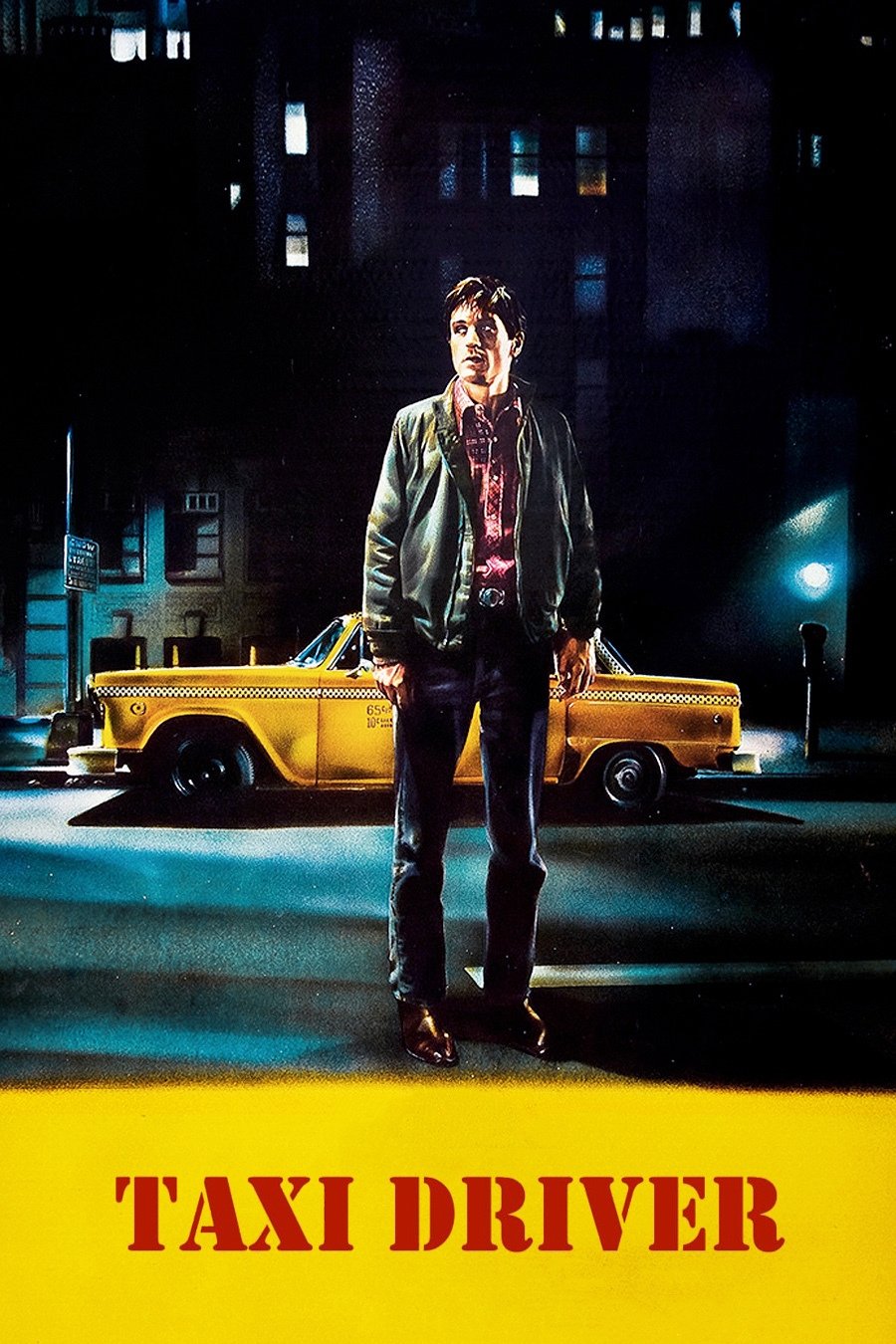
Taxi Driver poster

Taxi Driver

114 minutes

Cast

Selected cast credits · Film reference

Robert De Niro Travis Bickle
Jodie Foster Iris Steensma
Harvey Keitel Matthew "Sport" Higgins
Peter Boyle Wizard
Leonard Harris Senator Charles Palantine
Victor Argo Melio, bodega clerk
Harry Northup Doughboy
Joe Spinell Personnel Officer
Steven Prince Andy, Gun Salesman
Diahnne Abbott Concession Girl
Martin Scorsese Passenger

Taxi Driver | The Rewatchables

Explore episodeClose episode

Producer credits not yet identified.

Most Rewatchable Scene

No scene selected

In the discussion (20)
Approx. transcript time · 00:35:34Read transcript
  • Most Rewatchable Scene feels odd for this film, which is rewatchable because it is great and important rather than for one scene watched 120 times, so the segment becomes a run through the best scenes.
  • First up is Travis driving around and describing decrepit New York City at night; the drive is only about two minutes but grim.
  • Producer Michael Phillips is quoted that the whole West Side was bombed out with condemned buildings, Times Square was disgusting, and they did not know they were documenting the dying gasp of New York.
  • Travis asking Betsy out after going into the office is a really good scene that hinges on believing she might go out with him, which seems ridiculous given where the movie goes, though she kind of buys him.
  • Travis comes in with confidence and reads Betsy well only because he has been stalking her; a high shot of his hand passing over her desk, amid traditional coverage, makes the scene unsettling.
  • That overhead 'priest's view' shot returns when he buys the guns and in the long overhead pullback after the shootout, signalling something deeper, insane and spiritual in Travis.
  • The actor who played Palantine made only two movies and was a culture critic brought in because the filmmakers wanted someone who did not seem like an actor rather than a Hal Holbrook type; this prompts a joke about a critic getting pulled into a Scorsese movie.
  • In the Palantine cab ride the actor waits a beat to find the right politician response to Travis, and Travis knows he is being condescended to and blew it.
  • Scorsese as the crazy cab passenger is a fun, weird five minutes, not politically correct in 2021; it is judged to work because it feels honest and nothing about it is gratuitous.
  • Travis mastering his gun-and-knife routine shows weeks of De Niro's practice; it was filmed in one shot, ran too long in a rough cut and was cut in half around the rally scene, and the 'You talking to me' portion originally ran about 10 minutes, a smart edit followed by the name Marshall Lucas.
  • In the breakfast scene with Iris, her putting sugar on the jam and toast is the lasting detail, read as a callback to Travis pouring brandy and sugar on his cereal, as if they were souls meant for each other in a messed-up way.
  • The botched assassination is short but gripping because first-time viewers assume it will be the climax; the boom and dolly shots are impressive given how big the equipment was then.
  • When directing, he photo-boards all the coverage on an iPhone because a 30-minute TV show lacks time and money; as an actor he can bristle at storyboards and likes that Scorsese told actors to speak up if something did not work for them. — Bill Hader
  • A joke says the podcast is storyboarded over Zoom with pictures sent to the producer but not shared with the co-host.
  • The final shootout is really cool filmmaking: the X rating forced changes, some color was taken out to make it more palatable, and the wide overhead shot goes on for about two minutes.
  • The shootout has no music telling viewers it is an action scene; the wide shot down the hall as Travis finishes off Keitel's character feels like security-camera footage from someone trapped in the hallway.
  • A better example is Travis first shooting Keitel's character, seen from the point of view of someone on a stoop who is left alone with the gunman after he sits down.
  • The suicide attempt with no bullets left is played straight, with no music and no cut and crying heard off camera, compared to films by a director transcribed as Rainer Fast Thunder, where what is off camera matters as much.
  • The film was an unexpected hit, likely because of its cathartic violent ending, which some read as Travis devolving and others celebrated as a Death Wish-style revenge; it is contrasted with Schrader-written Rolling Thunder as a more complex, sad picture of what a gunfight would look like.
  • No most rewatchable scene is picked because that would be weird for this movie.

What’s Aged the Best?

Mid-70s New York City; Joe Spinell's job interview; God's lonely man line; Harvey Keitel's pimp look; Travis and Wizard scene; De Niro's preparation; Bernard Herrmann's score; cinematography; Jodie Foster's career

In the discussion (16)
Approx. transcript time · 00:53:37Read transcript
  • The mid-70s New York setting holds up, as does the opening job interview in which Joe Spinell sizes Travis up as a lunatic.
  • Spinell's 1970s run, including Godfather 2, Taxi Driver, Rocky, Sorcerer and Big Wednesday, is compared to De Niro's.
  • The 'loneliness has followed me my whole life... God's lonely man' line is Schrader writing about loneliness after almost losing his mind.
  • Keitel's sleeveless-shirt, hat, hair and muscles look is floated as something that should have become a Saturday Night Live character.
  • Keitel reportedly based the pimp on a real pimp he worked with at the Actors Studio; the pimp originally had five lines and Keitel added more, and the 'I'm hip / You don't look hip' exchange is loved.
  • Travis telling Wizard he has bad ideas in his head is short but pivotal; Peter Boyle is great as a man who knows he doesn't know what he's saying yet is weirdly right.
  • 'You talking to me' was an omnipresent catchphrase for 15 or 20 years, though probably not as big a deal in 2021.
  • De Niro's preparation, including 15-hour days driving cabs, studying mental illness, recording Midwestern soldiers for the accent and losing 35 pounds, felt like the first time an actor's commitment was almost part of the marketing.
  • The method line runs from Brando to Dustin Hoffman in the same era, as in Marathon Man, and on to later method actors; De Niro's work is honed into behavior where others' choices show.
  • Asked about riding with cops for eight months for a Superbad cop role, the reply says they did have to ride with a cop in South Central and calls it the dumbest thing of all time.
  • Bernard Herman, arguably the most important film composer and known for Psycho, Vertigo and Citizen Kane, wrote his last score here; Scorsese, who mostly uses needle drops, begged him to do it, and the composer said 'all I hear is brass'. — Sean Fennessey
  • An editor on Barry dislikes the score and the bluesy saxophone gets a reservation, but it works and the opening music hits like a giant wave; hearing it reportedly made Scorsese feel Travis's doom and fate.
  • The composer died right after recording the score, at 64.
  • The cinematography is composed, natural-light and beautiful in a style rarely seen now.
  • The shoot came during a hot summer and the garbage strike with wet streets, and according to the cinematographer a lack of time and money forced them to let New York light itself, which turned out right.
  • In most versions of her life Foster might not have become one of the most celebrated actors of a generation and an accomplished filmmaker; a reply praises her acting and directing.

What’s Aged the Worst?

John Hinckley; Palantine campaign posters; porn-theater date scene; porn theaters; Jodie Foster playing a 12-and-a-half-year-old prostitute; taxis

In the discussion (12)
Approx. transcript time · 01:02:01Read transcript
  • John Hinkley became anchored to the film: five years later he tried to kill President Reagan to impress Foster after seeing the movie many times, and it postponed the 1981 Oscars, where De Niro was about to win for Raging Bull, by a day.
  • The idea of blaming culture for horrible events has not faded; Schrader and Scorsese argue that blaming the movie evacuates everyone else's responsibility. — Sean Fennessey
  • An uncomfortable Matt Lauer interview around an anniversary had Foster decline to talk about Hinkley; it messed her up and she stepped back for a couple of years; Hinkley is called maybe the best example ever of aged worst.
  • The Palantine 'We Are the People' posters are almost intentionally bad and maybe go too far, answered with a 'make America great' joke.
  • Asked what happened when he took his future wife to the porn film on a date, the reply jokes that they got married that night. — Sean Fennessey
  • The porn-theater date scene has aged worse and is skin-crawling; one participant goes to the bathroom whenever it plays in a theater.
  • The camera dollying away down the hallway during Travis's call to Betsy felt like the movie could not bear to watch, and seeing it in sixth grade turned one participant into a full movie fanatic.
  • Porn theaters where strangers watched together in the 70s and 80s are impossible to explain to people under 25.
  • Foster playing a 12-and-a-half-year-old prostitute is handled well, but the Keitel dance scene is uncomfortable from a parent's view; the next year's Pretty Baby with Brooke Shields raised the same question.
  • The girl who grabs Iris near the cab was the real teenage prostitute who served as her technical advisor, part of the film's honesty.
  • Taxis may not exist in 10 years; Schrader recalled a New York audience cheering the title, but with ride-sharing taxi drivers no longer hold the same place, like making a movie about a samurai.
  • The film made another taxi-driver movie nearly impossible, likened to how The Shining ruled out a hotel-caretaker story.
In the discussion (6)
Approx. transcript time · 01:13:25Read transcript
  • Joe Spinell is debated as a known name versus a that guy.
  • Leonard Harris is named the answer because he had only two roles, Palantine and the John Ritter movie Hero at Large.
  • Vic Argo, who beats up a man in the bodega, is in every Scorsese movie, including playing Peter in The Last Temptation of Christ.
  • The weird cab driver Doe Boy with the bathtub story is liked; on the commentary track the director admits not knowing what the story is about, and the actor is also in Over the Edge and Mean Streets.
  • Steven Prince, the gun salesman and star of Scorsese's documentary American Boy, is offered as another interesting pick.
  • Diahnne Abbott as the concession girl is so good as Travis hits on her.
In the discussion (3)
Approx. transcript time · 01:16:31Read transcript
  • Scorsese is first floated as a heat check for an indelible five-minute scene, followed by a question about any bigger heat check.
  • This is Albert Brooks's first movie; Scorsese hires a comedian for a boring part and lets him vamp, and Brooks wrote or improvised material with Scorsese and Shepherd.
  • The role is the beginning of the Brooks movie persona, like a prequel to his Broadcast News character, and he is given the award with agreement.

Apex Mountain

Clap pushups; mid-70s New York

In the discussion (5)
Approx. transcript time · 01:20:35Read transcript
  • This was not Apex Mountain for De Niro or for Scorsese.
  • Scorsese's Apex is debated between Raging Bull and Goodfellas; Goodfellas is favored, while another view says he has not reached it and is still going, with a joke about his next film.
  • Along with Rocky, 1976 was the apex for clap pushups, the first time one participant saw anyone work out in a movie, plus the hand over the burner.
  • This is Apex Mountain for disgusting mid-70s New York, which no movie captured better.
  • It is not the Apex for taxis, which came with the late-70s TV show Taxi; DC Cab with Mr. T is raised and rejected.

What Piece of Memorabilia Would You Want From This Movie?

Green jacket; 'We Are the People' Palantine poster; 'A couple of good scouts' card

In the discussion (3)
Approx. transcript time · 01:32:48Read transcript
  • The big green jacket is chosen as a piece of movie history.
  • One of the 'We Are the People' Charles Palantine posters, to frame. — Sean Fennessey
  • The 'a couple of good scouts' card would be funny every time, showing how out of touch Travis is, as does buying Betsy a record she already has.
In the discussion (4)
Approx. transcript time · 01:33:48Read transcript
  • Usually inclined to pick the director, this participant picks De Niro because 'Are you talking to me' is the film's most remembered moment, citing De Niro telling a 40th-anniversary audience he was sick of hearing it; Scorsese wins almost every other movie he makes. — Sean Fennessey
  • Jodie Foster is picked because the Hinkley affair should have killed the movie and could have haunted her, yet her performance at 12 is unreal and layered, not merely a victim, and after an amazing career she remains a hero.
  • Scorsese is picked so each person is represented: after this movie anything seemed possible for him, and it became a go-to film for influential filmmakers.
  • Ending in three different places is called fitting for a perfectly directed, subjective movie.
Podcast choices
Speaker not identified
Jodie Foster
Speaker not identified
Martin Scorsese