‹ All movies
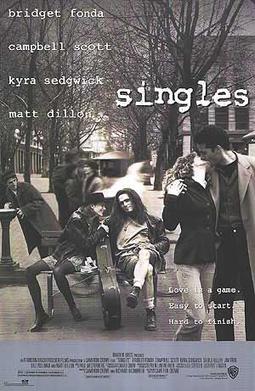
Singles poster

Singles

99 minutes

Cast

Selected cast credits · Film reference

Bridget Fonda Janet Livermore
Campbell Scott Steve Dunne
Kyra Sedgwick Linda Powell
Sheila Kelley Debbie Hunt
Jim True David Bailey
Bill Pullman Dr. Jamison
Matt Dillon Cliff Poncier
Jeremy Piven Doug Hughley
Tom Skerritt Mayor Weber
Peter Horton Jamie
Bill Smillie Boston doctor
Chuck McQuary Garage opener clerk
Jaffar Smith Kid #2
Dana Eskelson Club girl
Mykol Hazen Club bouncer
Art Cahn Magazine stand clerk
Jane Jones Denise
Paul Giamatti Kissing man
Alicia Roper Kissing woman
Xavier McDaniel Himself
Wayne Cody Himself
Eddie Vedder Eddie
Jeff Ament Jeff
Cameron Crowe Club interviewer
Thomas A. Doyle Wrong phone number
Alice Marie Crowe Dr. Jamison’s nurse
Joan Giammarco Receptionist
Jim Hechim Rich
Tim Burton Brian
Bruce Pavitt Bruce
Sandra Grant Waitress
Tom Herbert Deputy mayor
Jerry Ziesmer Councilman Jordan Fisher
Nina Escudero Airline clerk
Dan Wartman Single kid on plane
Amy Hill Hospital nurse
Mike Parker Mover

Singles | The Rewatchables

Explore episodeClose episode

What’s Aged the Best?

Music; mature emotional resonance; fully formed characters; Seattle scene; title cards; romance callbacks; fourth-wall narration; pregnancy test

In the discussion (26)
Approx. transcript time · 00:05:28Read transcript
  • The loneliness and romantic uncertainty resonate more strongly with age, even when youthful viewers originally connected mostly with scenes and music.
  • Pre-internet loneliness is captured through going to bars alone, hoping to meet people, leaving answering-machine messages and sharing music or mixtapes.
  • Crowe lets characters with full, complicated lives gradually fit together through love, compared with Jerry Maguire, Say Anything and Almost Famous.
  • Linda and Janet are convincingly written women whose choices remain understandable, including Janet considering surgery to reach Cliff.
  • The characters feel like whole people with unseen lives rather than profiles defined by a few interests; their apparent confidence masks how meeting another person can unsettle them.
  • The music has gained power and accidentally preserves several bands that became enormous.
  • Steve and Linda’s relationship anchors the movie; an older viewer recognizes avoidable defensive mistakes and wants them simply to call and talk, making weaker material easier to forgive.
  • Alice in Chains performing feels strikingly authentic and still exciting after many viewings; more band footage is wished for at the expense of the garage-opener material.
  • The soundtrack is proposed as the greatest ever and exceptionally good value, with strong songs rather than leftover band contributions.
  • State of Love and Trust is called a top-twelve Pearl Jam song, Drown a personal top-five Pumpkins song, and the Screaming Trees and Westerberg tracks unusually prominent; these are individual placements, not complete ranked lists.
  • Cornell’s solo contribution and the Alice in Chains and Soundgarden performances are praised; the solo-song title is garbled in this transcript.
  • The live band footage lets viewers experience shows they were too young or distant to attend, functioning partly as a concert film.
  • Vedder, Gossard and Ament are funny and natural in their acting cameos, though Pearl Jam never actually performs; the hostile review-reading scene exploits that presence.
  • Java Stop captures an emerging Seattle coffee-shop culture distinct from older screen diners; whether earlier movies such as Slacker contained comparable cafés remains uncertain.
  • Album-like title cards are praised and fully enumerated: Have Fun Stay Single, The Hourglass Syndrome, Blues for a T-Shirt, Blue Seattle, Expect the Best, The Theory of Eternal Dating and What Took You So Long.
  • A date leaning over to unlock the driver’s door is remembered as a considerate gesture, also used in A Bronx Tale; automatic locks largely erased the ritual.
  • The film’s poster is considered excellent and worth framing.
  • The film’s many cameos are praised.
  • Debbie’s country video is praised as hilarious.
  • The two Westerberg tracks are praised as exceptionally strong solo songs.
  • The newsstand warning that clubgoers will lose their hearing seems prescient.
  • Dillon reveals a funny side that had not been familiar, including his unfinished musical ideas.
  • Crowe’s corny romantic one-liners work because he plants meanings and returns to them, including the neighborhood excuse and final reunion line.
  • Direct-to-camera narration builds familiarity and can fit the era’s casual home-video culture; uncertainty about whom the characters address remains part of its effect.
  • Steve’s claim that modern society barely requires leaving home seems even truer in the present.
  • The pregnancy-test scene captures the woman’s bodily certainty, the man’s nervous fixation on instructions and the immediate shift in their relationship.

Picking Nits

Character ages; garage opener; filthy apartment; one-sided friendship; ethical surgeon; insufficient Seattle talk; accident reaction

In the discussion (7)
Approx. transcript time · 00:05:50Read transcript
  • The characters seem around thirty while presented as twenty-three to twenty-five, an age mismatch that affected early understanding.
  • Giving a near-stranger a garage opener as he supposedly leaves for Spain is odd; having a spare explains access but not the trust.
  • Steve’s apartment deteriorates implausibly into a food-covered hoard, making Linda’s willingness to have sex there especially unconvincing.
  • Linda dominates conversations with Ruth without asking about her life, making the friendship feel one-sided.
  • The compassionate plastic surgeon is considered implausible compared with a perceived industry eagerness to sell procedures.
  • More ordinary coffee-shop talk about Seattle bands or the Sonics would root the friends in the city; X-Man’s existing mention is acknowledged but considered insufficient.
  • The couple’s severe retreat after the accident seems abrupt; the defense is that the collision breaks their dream state and exposes how unprepared they are.

Most Rewatchable Scene

Alice in Chains sequence; implant consultation

In the discussion (21)
Approx. transcript time · 00:08:03Read transcript
  • The garage-door-opener detail and the Xavier McDaniel sexual-distraction scene became clearer and funnier with age.
  • Steve’s drunken club phone call once seemed as romantic as Lloyd Dobler’s boombox gesture.
  • Linda’s betrayal by the apparently mysterious Luis is a gutting opening that establishes emotional chaos before Steve enters.
  • Linda insisting she will not lose another garage opener and Steve resolving to focus on work express defensive certainty before romance disrupts it.
  • The Peter Horton negotiation and the “popcorn with half this city” line remain memorable.
  • Janet’s adoration cuts to Cliff’s Hendrix posturing and Touch Me I’m Dick, then his insistence that he sees other people meets her refusal to believe him.
  • Stoltz’s bitter talking mime provides an excellent transition into Alice in Chains performing.
  • Steve seeing Linda at the club is a love-struck reversal of his declared disinterest, followed by the sharp rejection that not having an act is itself his act.
  • The first date reveals Steve’s albums, wall decorations and X-Man poster, then his supertrain pitch meets Linda’s attachment to her car.
  • The Andy flashback establishes the sensitive-ponytail man and his emotional-larceny line.
  • The parking-underneath callback and Steve admitting he was nowhere near Linda’s neighborhood deepen the first-date sequence.
  • Xavier McDaniel’s basketball clip becomes the sexual-distraction cameo ending in the instruction not to come.
  • The café discussion that casual sex is lethal, with Cliff reacting as though he needs a clinic, is praised as the apparent blueprint for Friends’ dating-neighbors coffee-shop setup.
  • Vedder reading the devastating Citizen Dick review while Cliff tries to remain positive is a favorite short sequence; the review attacks his mediocre talent and urges him to leave town.
  • Piven’s fan recognizes Steve and invites him to DJ, demonstrating the Elvis Costello–Public Enemy mix; the short cameo felt authentic in 1992.
  • Debbie’s dating video and Tim Burton’s aspiring-director cameo are singled out as especially funny early-nineties material.
  • Depressed Steve passes the mime, then Soundgarden and the phone-booth call create another strong sequence.
  • Janet visiting the withdrawn Steve leads through the parallel-universe couple line into Drown.
  • The implant consultation is a final favorite: Pullman’s refusal to manipulate Janet’s body helps her recognize her worth, and he seems a better match than Cliff.
  • The concluding “What took you so long?” reunion is admired as an early example of Crowe’s climactic romantic line, later echoed in Jerry Maguire.
  • The whole Alice in Chains sequence, including the car ride, mime and Linda’s no-act rejection, receives two final scene choices.

What’s Aged the Worst?

Luis; Nirvana’s absence; dated communications; Bobby Van; Gibson reference; intrusive gestures

In the discussion (9)
Approx. transcript time · 00:11:33Read transcript
  • The same romantic gestures could now feel frightening or intrusive: drunken possessiveness, a boombox outside a window and appearing at someone’s workplace are criticized.
  • Post-club newsstand visits and the fear surrounding casual sex feel historically remote.
  • Video dating looks obsolete but can also be read as a precursor to Tinder rather than wholly dated.
  • Answering machines, broken machines and overheard live messages are dated plot mechanisms, with Swingers invoked as a later example.
  • Luis’s elaborate romance deception is condemned as predatory and bizarre, especially pretending to leave for Spain while remaining nearby.
  • The Bobby Van reference now requires explanation as a Make Me Laugh host.
  • Nirvana’s absence is regretted; Crowe wanted Imodium, but the band publicly rejected appearing in a Seattle love story or rock movie.
  • Linda’s ideal combining Holden Caulfield and Mel Gibson now carries baggage because of Gibson’s later conduct.
  • The fax machine is dated, prompting an uncertain discussion of when faxing faded from ordinary use.

Probably Unanswerable Questions

Romantic pairings; modern athlete cameo; Janet’s money; train viability; accident; Ruth

In the discussion (12)
Approx. transcript time · 00:18:00Read transcript
  • Janet’s career ambitions remain largely unknown; pursuit of Cliff seems to be her chosen last youthful experiment.
  • A February or March 1992 release might have preceded the trend and avoided criticism of cashing in, potentially making the film bigger.
  • Modern equivalents for the sexual-distraction athlete include DeAndre Jordan, Steph with opposite encouragement, Patrick Beverley as an unsatisfying likely choice, city-dependent Tobias Harris or another Philadelphia player whose name is unclear in the transcript, Kobe and finally Grant Williams for his annoying presence.
  • Why Steve lost his job is unclear and deferred to the supertrain discussion.
  • Steve and Janet are proposed as the couple who should have ended together; her new confidence and calm make her seem exactly what he needs after her own romantic disappointment.
  • Their chemistry seems stronger than Steve and Linda’s, prompting speculation about an alternative cut; mostly silent Steve–Linda bonding scenes and the earlier failed Steve–Janet relationship complicate that reading.
  • Ruth’s immediate rejection of Bailey seems unexplained; a possible sexuality implication is floated without certainty.
  • Janet’s ability to afford elective surgery, repay loans and return to school raises questions about savings or family money; architecture-school funds are offered as a possible explanation.
  • If Janet has money, why not support Citizen Dick’s production or posters? A Steve Albini demo is a joking suggestion.
  • A train might be useful, and Seattle’s later light rail is mentioned, but Steve’s café-like pitch lacks travel-time or cost evidence; Big Dig experience reinforces skepticism.
  • The pediatrician’s strong regional accent raises a joking Boston-character hall-of-fame question, with Rhode Island offered as a correction.
  • Responsibility for the traffic accident is questioned through the long-yellow light; a signal malfunction is suggested after correcting the women’s names.

Half-Assed Internet Research

Origins; Seattle shift; band timing; soundtrack; critical reception; production conflicts; locations; Spoonman; Friends connection

In the discussion (21)
Approx. transcript time · 00:18:36Read transcript
  • Crowe’s stated aim was to show people who love a city and make a family from friends they do not want to leave.
  • Crowe reportedly felt Singles had unresolved casting and writing issues; seeing Pulp Fiction solve interlocking vignettes impressed him, while testing and reshoots delayed this film about eighteen months after spring 1991 shooting.
  • The script began in 1984 as a Phoenix story; Andrew Wood’s death and Seattle’s communal response reportedly led Crowe to relocate it before the major 1991 grunge albums appeared.
  • Spring 1991 filming preceded Ten, Nevermind and Badmotorfinger; Pearl Jam was still called Mookie Blaylock during its scenes.
  • Alice in Chains is described as playing live rather than miming to playback.
  • Crowe’s inspiration included Stone Gossard and Jeff Ament working together at a coffee shop and Chris Cornell holding a kitchen job while making music, feeding Cliff’s working-musician milieu.
  • Nirvana reportedly refused involvement in the love story.
  • Crowe’s journal recalls the cast first meeting at a hotel and bonding at a packed Off Ramp show featuring Mookie Blaylock and Alice in Chains.
  • The soundtrack was released early on June 30,1992 and became a bestseller; exclusive material such as State of Love and Trust encouraged fans to buy the whole album.
  • Cornell reportedly recommended the Smashing Pumpkins, after which Corgan offered three songs including Drown.
  • The film is reported to have a $9 million budget and $18 million gross.
  • The Stranger’s review accused Crowe of relying on Seattle’s hipness and musician cameos without memorable substance; that sellout criticism is rejected as unfair to a love letter and rare access to the scene.
  • An MTV soundtrack-launch party appears in the Pearl Jam documentary and online, showing an intoxicated band and familiar MTV presenters; Adam Curry’s presence is questioned.
  • Scott’s recent leukemia-patient role in Dying Young left him thin with short hair; the studio reportedly worried about wigs, and Crowe’s journal describes a volatile working relationship.
  • Crowe’s journal describes his relationship with Scott deteriorating and the difficulty of writing an ordinary man without quirks; their eventual confrontation suggests real on-set conflict.
  • The central café was filmed at the since-closed OK Hotel.
  • Dillon wore much of Ament’s wardrobe; Ament’s invented Citizen Dick song titles inspired Cornell to write material, including Spoonman, whose opening riff appears in the film.
  • Touch Me I’m Dick parodies Mudhoney’s Touch Me I’m Sick.
  • Returning to the apartment building for Pearl Jam Twenty reportedly led to an annoyed landlord ordering the crew away and telling Crowe the film had ruined his life through constant visitors.
  • Warner Bros. reportedly sought a Singles series, Crowe declined, and Kauffman and Crane went on to Friends; Crowe’s quoted 2017 account recalls his mother’s regret over the missed financial opportunity.
  • The answering-machine material was reportedly added in reshoots, with Scott wearing a wig, to supply missing longing that made the couple’s reunion understandable.

Roger Ebert's review

In the discussion (1)
Approx. transcript time · 00:38:43Read transcript
  • Ebert gave three stars, describing amusement, recognition and affection for the characters.

Apex Mountain

Campbell Scott; anguished phone messages; Xavier McDaniel era; garage openers; video dating; early-nineties Seattle; red Saab

In the discussion (16)
Approx. transcript time · 00:45:20Read transcript
  • Newsstands are nominated as a possible Apex, with the fuller discussion deferred.
  • Crowe is rejected as an Apex here.
  • Sedgwick’s later The Closer is preferred.
  • Scott receives an affirmative choice based on this film and the Julia Roberts movie.
  • Dillon and Pearl Jam are rejected; Kelley’s television work is offered instead.
  • Long, anguished nineties phone messages receive an emphatic affirmative choice.
  • McDaniel’s Knicks–Bulls playoff and Singles period is accepted as a career-era peak, with his Celtics signing mentioned.
  • Garage-door openers receive immediate agreement.
  • Video dating in movies is accepted, reinforced by Burton directing the fictional video.
  • Tim Burton cameos are proposed as a separate candidate without a clear response.
  • The supertrain concept is compared with the 1979 NBC series; its repeated failure leaves no clear winner.
  • Apartment buildings as plot devices lose to Melrose Place or Rosemary’s Baby.
  • Sub Pop is rejected in favor of roughly two years earlier.
  • Early-nineties Seattle is favored, though the exact year is debated through Sleepless in Seattle, the Sonics and Griffey; later civic and musical changes complicate the nostalgia.
  • The old red Saab fastback is an affirmative final candidate.
  • Douglas Coupland’s Generation X is noted as another major contemporary touchstone; no explicit final ruling is stated.

The Andy and Red – Zihuatanejo Award for What Happens the Next Day?

Janet leaves Cliff; band becomes Pearl Jam; Steve and Linda divorce; Steve and Janet reunite

In the discussion (6)
Approx. transcript time · 00:50:46Read transcript
  • Cliff may end up at the coffee shop while the band becomes Pearl Jam without him.
  • Brian the video director probably does not become Scorsese; an indie feature or artful pornography is imagined instead.
  • Pam and the cyclist probably do not last, though Pam’s selfishness is debated against Debbie’s intrusive roommate behavior; an initial video-guy pairing is corrected to the cyclist.
  • Janet leaves Cliff almost immediately or when classes begin; he works in a pizza shop and encounters her awkwardly.
  • Cliff is kicked out of the future Pearl Jam and remains bitter.
  • Steve and Linda have two children and divorce; Steve may manage the coffee shop and eventually pair with Janet, who becomes an architect.

The Slow Ride / Kid Cudi – Pursuit of Happiness Award for Best Needle Drop

State of Love and Trust; Would?; Westerberg opening theme; Hendrix kitchen record

In the discussion (3)
Approx. transcript time · 01:04:36Read transcript
  • State of Love and Trust, Alice in Chains after the mime, and the recurring Westerberg opening-credit song are competing needle-drop choices; the Alice in Chains title is corrected from Man in the Box to Would?.
  • The Hendrix record in the kitchen receives an additional shout-out; no title is stated in these spans.
  • Imodium over Debbie cycling to the next location is proposed as an alternative insertion for the missing Nirvana song, not an actual cue.

The Great Shot Gordo Award for Most Cinematic Shot

Linda outside the club; power-plant wide shot

In the discussion (2)
Approx. transcript time · 01:06:38Read transcript
  • Linda being comforted after Luis’s betrayal, framed outside the club with Love Bone lettering visible, is a cinematic-shot choice.
  • The wide power-plant shot after the chili dog is a second cinematic-shot choice.

The Butch’s Girlfriend Award for the Weakest Link in the Film

Older-looking cast, especially Scott; disputed

In the discussion (1)
Approx. transcript time · 01:07:06Read transcript
  • The apparent age of the cast, especially thirty-year-old Scott as Steve, is questioned; others defend his maturity and the characters’ professional lives, leaving Scott disputed rather than a settled weak link.

Recasting Couch

Mathis as Linda; Cusack or Stoltz as Steve; Hamilton considered

In the discussion (5)
Approx. transcript time · 01:07:23Read transcript
  • Cusack initially seemed the obvious post-Say Anything Crowe avatar, though affection for Scott has grown.
  • Samantha Mathis as Linda is welcomed as a younger alternative to Sedgwick.
  • Josh Hamilton as Steve is considered but may be young and would make the film resemble Kicking and Screaming.
  • River Phoenix is rejected as too handsome; Slater is considered too young.
  • Cusack or Stoltz are proposed as stronger Steve options, though Stoltz may seem too cool.

The Stephen A. Smith Hottest Take Award

Bad supertrain pitch; underused Bailey; Nirvana contradiction; Friends borrowing; Reality Bites comparison

In the discussion (6)
Approx. transcript time · 01:14:18Read transcript
  • An earlier Klosterman argument favored Reality Bites as a Gen X film and contrasted its romanticized slacker with Singles’ pathetic version; the current response ultimately values both without requiring a winner.
  • Steve may be a bad train designer: his pitch supplies coffee, music and vibes instead of evidence justifying billion-dollar disruption, so the mayor’s quick rejection and his firing make sense.
  • Bailey is badly underused, with no arc; identifying Jim True-Frost as The Wire’s Prez prompts a joking Baltimore-police future for the character.
  • Nirvana should have been included, yet its refusal and contempt for fame are also what made it special; Unplugged, Saturday Night Live and MTV appearances complicate the selling-out argument.
  • A counterproposal favors using Imodium in the stereo scene rather than an actual Nirvana performance or Cobain cameo; a live appearance might distract Steve from calling Linda.
  • Friends is accused of borrowing the setup and character types, with Janet–Rachel and Steve–Ross parallels; opinions differ on whether Crowe deserved compensation or had simply refused the opportunity.

Casting What-Ifs

Depp; Dillon; Cornell; Abdul; disputed Jennifer Jason Leigh

In the discussion (5)
Approx. transcript time · 01:23:13Read transcript
  • Depp reportedly declined Steve partly because he did not want a character who says I love you; his extreme good looks are also considered a poor fit, though an alternative view thinks he could do it.
  • Dillon also reportedly declined Steve; his looks are offered as a reason the decision worked.
  • Cornell was Crowe’s intended Cliff but could not fit acting around Soundgarden touring and recording; the idea is appealing but potentially impractical.
  • Paula Abdul was reportedly a very close runner-up for Debbie, with excellent audition material still in the archives.
  • A Jennifer Jason Leigh–Linda casting story is disputed and left unverified after initial confusion with Janet; a Single White Female reunion produces joking hostility between the characters.

The Joey Pants “That Guy” Award

Jim True-Frost; Devon Raymond; Giamatti; Garber; Pullman; Walker

In the discussion (3)
Approx. transcript time · 01:25:40Read transcript
  • Jim True-Frost as Bailey, also known as The Wire’s Prez, is the primary that-guy choice.
  • Devon Raymond as Linda’s friend Ruth is another familiar presence, with her limited use compared to being left in the corner to shoot threes.
  • The many small appearances bring up Giamatti, Garber, Pullman and Ally Walker; Walker’s later crime series is recalled without a settled title.
In the discussion (3)
Approx. transcript time · 01:26:45Read transcript
  • The announced eleven-candidate list is Vedder and Ament as one entry, Stoltz, Horton, Pullman, Piven, Giamatti, LeGros, Walker, Burton, Skerritt and McDaniel; alternatives remain unranked.
  • McDaniel and Piven are an initial toss-up, while Stoltz is acknowledged as an obvious award choice.
  • Piven receives final choices for the intensity of his arrival and pregnancy-test reaction; Stoltz receives a separate choice for making the smoking mime memorable.

Sequel, Prequel, Limited Series, or All-Black Remake

Black ensemble in Atlanta/New Orleans or Seattle; Atlanta1995; D.C. punk prequel

In the discussion (4)
Approx. transcript time · 01:38:04Read transcript
  • An all-Black version is enthusiastically proposed, set in present-day Atlanta or New Orleans with hip-hop.
  • An alternative Black Seattle grunge-revival ensemble is suggested.
  • Atlanta in 1995 is considered a better creative setting but a more expensive, harder-to-finance period version than a contemporary film.
  • A D.C. punk-scene prequel around 1989 is joked about through Fugazi and a purple-haired Joe House.

Is This Movie Better With…?

Kathryn Hahn as Ruth; Buscemi possibilities; Philip Baker Hall as mayor

In the discussion (4)
Approx. transcript time · 01:39:43Read transcript
  • Kathryn Hahn as Ruth is considered an excellent spiritual fit.
  • Buscemi as Bailey feels potentially believable but his Mr. Pink association interferes; the mime or Luis are additional options.
  • Philip Baker Hall could play the mayor.
  • Wayne Jenkins is imagined teasing the supertrain planner, without a clear casting choice.

Just One Oscar

Soundtrack; Westerberg’s Waiting for Somebody

In the discussion (1)
Approx. transcript time · 01:40:33Read transcript
  • The soundtrack is chosen first, then Westerberg and Waiting for Somebody are named as a possible original-song route; eligibility is discussed uncertainly.
In the discussion (6)
Approx. transcript time · 01:46:08Read transcript
  • Reality Bites or Kicking and Screaming are initial pairing choices.
  • Say Anything works as a Seattle high-school prequel to post-college Singles.
  • Action Jackson is a joking double-feature suggestion.
  • Love Jones is an appealing alternative with a similar vibe.
  • Vanilla Sky is proposed and immediately withdrawn as a joke before the Jerry Maguire choice.
  • Jerry Maguire completes a Crowe progression from high school through post-college life to professional adulthood.

What Piece of Memorabilia Would You Want From This Movie?

Cantrell’s long johns; Citizen Dick poster; garage opener; stereo-shattered glass; X-Man bumper sticker

In the discussion (5)
Approx. transcript time · 01:47:39Read transcript
  • Cantrell’s long johns are a memorabilia choice.
  • The original Citizen Dick Smarter Than You poster is another choice.
  • The garage opener is desired as an inside joke.
  • Shards from Janet’s stereo-shattered car window are another choice, explicitly corrected away from Linda’s separate traffic accident.
  • Steve’s X-Man bumper sticker is another desired object; its exact wording is garbled in the transcript.

Who Won the Movie?

Grunge; the nineties

In the discussion (2)
Approx. transcript time · 01:49:58Read transcript
  • Steve is the initial choice, Bridget Fonda is proposed in response, and the discussion shifts to grunge with explicit agreement and a final explanation about renewed soundtrack listening.
  • The producer separately chooses the nineties.
Podcast choices
Speaker not identified
Grunge
Speaker not identified
Grunge
Speaker not identified
The nineties

Producer review

Favorite young-adult ensemble; questions about garages, strangers’ rides and answering machines

In the discussion (4)
Approx. transcript time · 01:50:40Read transcript
  • Singles joins Kicking and Screaming as a favorite early-twenties ensemble movie for a viewer born two years after its release.
  • The garage-opener gift raises questions about regional garage access, with Seattle and San Francisco offered tentatively rather than established as common practice.
  • The readiness to offer strangers rides seems surprising; picking up the roadside mime is distinguished from giving an acquaintance a lift after a bar.
  • A broken answering machine seems an inadequate explanation for never reconnecting; the response stresses playing it cool and treats machine failure largely as a movie device, later supplanted by voicemail and pagers.

More from the conversation

The opening memorial remembers Jonathan Tjarks, his family, his role in defining The Ringer and his writing and podcasting through cancer; the spelling is explicitly supplied in the announcement.
Approx. transcript time · 00:00:00Read transcript
Opening promotions cover Higher Learning, The Ringerverse, Talk the Thrones, The Watch and the fantasy-football podcast, with joking confusion about show titles and a Saquon Barkley victory lap.
Approx. transcript time · 00:02:29Read transcript
The thirtieth-anniversary discussion calls Singles a favorite flawed movie and an especially pure cable rewatchable, with music and Bridget Fonda central to its appeal.
Approx. transcript time · 00:04:20Read transcript
Repeated cable viewing helped introduce underground music and a recognizable ensemble, while the dating rituals differed from personal experience.
Approx. transcript time · 00:06:41Read transcript
Singles is one participant’s favorite Crowe film despite not being his best; another ranks Almost Famous ahead of it but Singles above Jerry Maguire.
Approx. transcript time · 00:08:50Read transcript
Seeing the film at the characters’ age, shortly after starting graduate school, made Steve’s faded college promise and Janet’s appeal feel personally recognizable.
Approx. transcript time · 00:09:20Read transcript
Crowe’s romantic optimism is linked to a period when grand gestures felt less corny, with the internet proposed as part of the later cultural shift.
Approx. transcript time · 00:12:18Read transcript
Fear of casual sex and disease shaped the era’s romance; contrasting school-sex-education anecdotes recall warnings about death, pregnancy and sexually transmitted infections.
Approx. transcript time · 00:12:56Read transcript
The shared-apartment found-family premise is compared with Melrose Place, which began around the same time, and with later Friends; friendships may feel permanent even when only a few survive six years.
Approx. transcript time · 00:18:36Read transcript
The move from eighties high-school movies to early-nineties twenty-something stories is followed by adult crossroads films such as Jerry Maguire.
Approx. transcript time · 00:19:24Read transcript
Living Single supplied a comparable aspirational young-adult community for Black viewers; Singles nevertheless resonated strongly with someone who never watched Friends.
Approx. transcript time · 00:20:30Read transcript
Crowe’s journal and the film’s Salinger references suggest a short-story collection whose pieces only partly cohere, with Debbie seeming peripheral and Bailey lacking a vignette.
Approx. transcript time · 00:22:15Read transcript
The film is compared with an album whose central romance supplies the strongest songs, while Crowe and the music were the original selling points.
Approx. transcript time · 00:24:28Read transcript
Boston’s smaller music scene offered a similar experience of seeing a performer onstage and then at a service job; singing Hunger Strike at school marked grunge as a distinctive personal discovery.
Approx. transcript time · 00:27:26Read transcript
The film’s contemporaneous music snapshot is contrasted with the retrospective Dazed and Confused and later-stage disco of Saturday Night Fever; grunge’s anti-popularity ethos complicates its mass success.
Approx. transcript time · 00:28:08Read transcript
The soundtrack era is traced through Above the Rim, Pulp Fiction, The Bodyguard, Go, White Men Can’t Jump, Juice, Hav Plenty, Ride, Rush and Bad Boys II, with uncertain dates and chronology left unresolved.
Approx. transcript time · 00:32:47Read transcript
Rush’s Clapton material and Pulp Fiction’s Kool & the Gang cue recall the urge to buy a soundtrack immediately after seeing a film.
Approx. transcript time · 00:34:16Read transcript
Hendrix and Sly music within the film matter beyond the soundtrack album; physical CDs and mixtapes also served practical uninterrupted car listening.
Approx. transcript time · 00:35:33Read transcript
The soundtrack supplied an uninterrupted drive from Holy Cross to Boston, illustrating its practical importance as a CD.
Approx. transcript time · 00:36:08Read transcript
Fonda’s Single White Female and Singles moment suggested a major breakthrough, followed by a strange filmography and a perfect later fit as Melanie in Jackie Brown; Bodies, Rest & Motion and Point of No Return are discussed.
Approx. transcript time · 00:36:18Read transcript
Fonda as a hypothetical Mia in Pulp Fiction is debated: her accessible beauty is contrasted with the character’s otherworldly glamour.
Approx. transcript time · 00:37:15Read transcript
Fonda’s family pedigree and smaller earlier appearances created prolonged expectations before the apparent breakthrough.
Approx. transcript time · 00:38:15Read transcript
Newsstand scenes in Singles, A Few Good Men and In the Line of Fire prompt nostalgia for magazine sections as meeting places and urban destinations before cell phones.
Approx. transcript time · 00:44:13Read transcript
Piven’s evolution from welcome small-role presence through PCU and Entourage is recalled, including his changed appearance and later baggage.
Approx. transcript time · 00:51:35Read transcript
Writing college columns in Dunkin’ Donuts once seemed unusual, before working in coffee shops became commonplace.
Approx. transcript time · 00:58:33Read transcript
Early-nineties Seattle, with its music and Sonics, is imagined as a prime destination for a twenty-two-year-old time traveler; writing scathing Stranger reviews is joked about.
Approx. transcript time · 01:00:04Read transcript
The Christmas-movie debate resumes: one standard requires Christmas to be thematic rather than mere setting, excluding Die Hard and disputing Home Alone while accepting Christmas Vacation.
Approx. transcript time · 01:15:05Read transcript
Nirvana’s separation from the scene and Cobain’s discomfort with success are discussed through memories of his suicide note; later Unplugged is interpreted as a possible move toward R.E.M.’s model of ethical popularity.
Approx. transcript time · 01:21:14Read transcript
Whether the whole band shared Cobain’s posture is disputed, with the Foo Fighters’ playful early video and accessible rock identity offered as evidence of a different inclination.
Approx. transcript time · 01:22:22Read transcript
Attempts to schedule Single White Female for the podcast meet reluctance to revisit a film described as more scarring than rewatchable.
Approx. transcript time · 01:25:17Read transcript
Scott’s rapid rise through Dying Young and Singles is compared with McConaughey’s early ascent.
Approx. transcript time · 01:29:02Read transcript
The Black Singles pitch returns as a joke, including Bernthal’s incongruous casting and willingness to accept checks for adaptations; a hypothetical derivative of a participant’s film tests the fairness argument.
Approx. transcript time · 01:44:52Read transcript
Janet and Linda are contrasted with contemporary names such as Olivia and Sophia, prompting a wish to revive the older names.
Approx. transcript time · 01:48:42Read transcript
Living near friends is defended as a worthwhile adult choice, with Los Angeles distance contrasted with denser neighborhoods and college’s easy proximity.
Approx. transcript time · 01:53:04Read transcript
A shared post-college apartment with a longtime friend is remembered enthusiastically, followed by jokes about his name and upcoming marriage.
Approx. transcript time · 01:53:49Read transcript
Remote work could let friends choose one city together; families buying on one cul-de-sac and coordinating children’s ages extend the idea into adult community.
Approx. transcript time · 01:54:30Read transcript