
‹ All movies
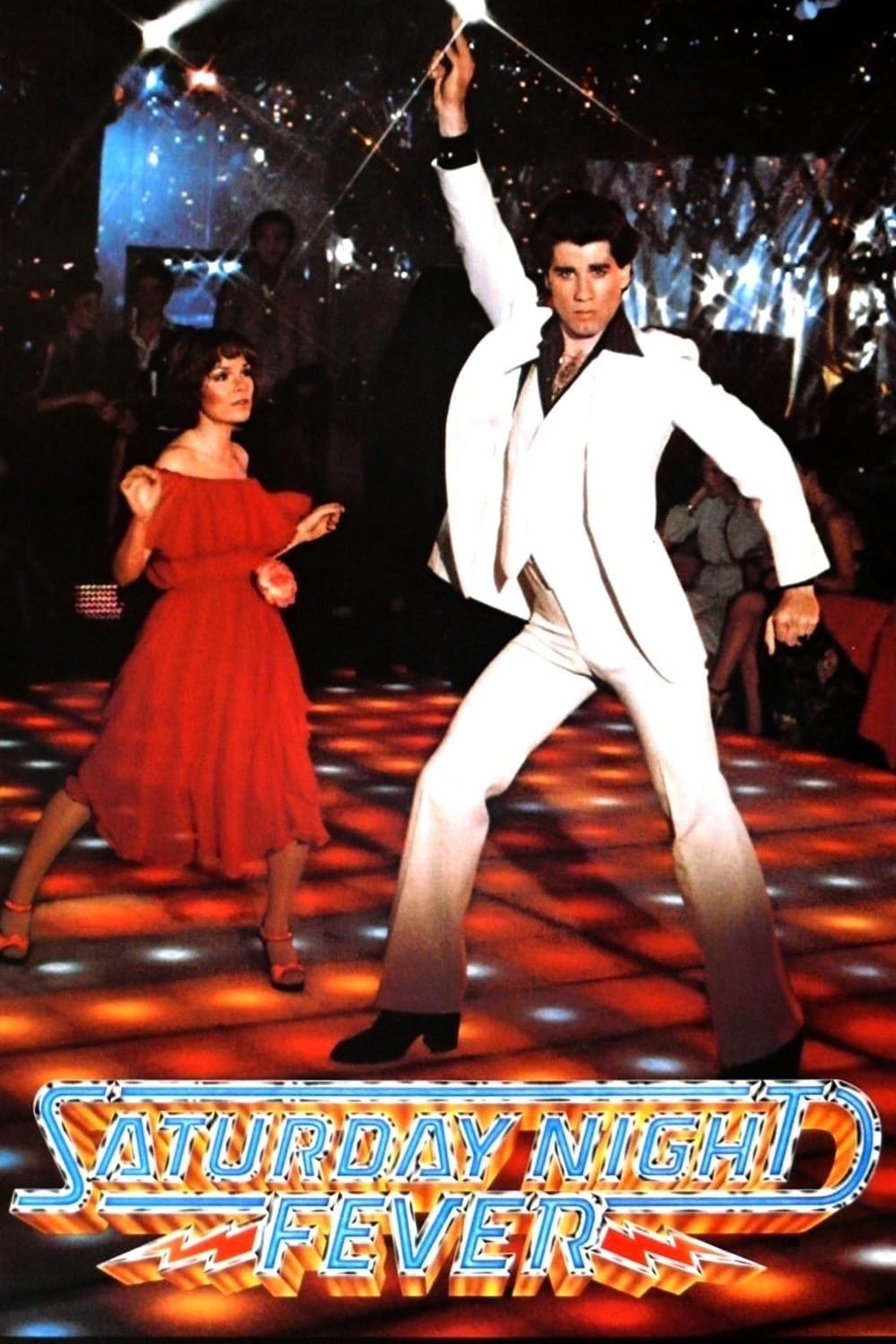
Saturday Night Fever poster

Saturday Night Fever

119 minutes

Cast

Selected cast credits · Film reference

John Travolta Anthony "Tony" Manero
Karen Lynn Gorney Stephanie Mangano
Barry Miller Bobby C.
Paul Pape Double J.
Donna Pescow Annette
Val Bisoglio Frank Manero Sr.
Julie Bovasso Flo Manero
Martin Shakar Frank Manero Jr.
Denny Dillon Doreen
Fran Drescher Connie
Robert Costanzo Paint store customer
Ann Travolta Pizza girl

Saturday Night Fever | The Rewatchables

Explore episodeClose episode

Picking Nits

Underwhelming dance contest; no Barracudas revenge; easy police questioning; $500 prize too small; second-place check not swapped

In the discussion (5)
Approx. transcript time · 00:20:54Read transcript
  • An earlier nit: the Puerto Rican couple kept their second-place check, so Tony, who celebrated a $4 raise, should have swapped checks; a participant says the same point was on their Picking Nits list.
  • The dance contest should have been the best scene, a face-off with the Puerto Rican couple, and instead screwed up the easy part with no Rocky moment.
  • The Barracudas fight goes nowhere; they may have attacked the wrong guys, and losing the fight would have been funnier.
  • After their friend falls to his death, the police ask no follow-up questions and Tony rides the subway for six hours.
  • The $500 contest prize, split to $250 each, is too small; about $1,500 would have made more sense given the $4 raise.

Roger Ebert's review

In the discussion (3)
Approx. transcript time · 00:28:54Read transcript
  • Ebert gave the film three and a half stars and called its musical and dancing sequences dazzling.
  • Ebert compared it to Scorsese's Little Italy in Mean Streets and Who's That Knocking at My Door: characters with few aims and little hope of reaching the larger world symbolized by Manhattan and the Brooklyn Bridge.
  • Ebert loved the movie, but Siskel loved it more and bought the suit.

Most Rewatchable Scene

You Should Be Dancing solo; opening credits

In the discussion (14)
Approx. transcript time · 00:29:55Read transcript
  • The opening credits are indelible and endlessly parodied; most people have only seen the first minute.
  • In the opening Tony carries a paint can, stacks two pizza slices and eats them at once, and hits on two women, blocking one from passing in a point-of-view shot; the music makes the scene.
  • Travolta gives a one-of-one unicorn performance; no actor of the last 50 years could pull off the opening walk, with only a young Mario Lopez or a young Pacino floated.
  • Magic Mike and Channing Tatum are named the closest current-era equivalent for driving women crazy.
  • The first disco sequence brings Disco Inferno, an "I love to watch you dance" cameo by a Saturday Night Live alum, and the Night Fever group line dance.
  • Tony popping out of his bedroom in his underwear doing "Al Pacino, Attica" for his grandmother is a funny, real moment rooted in 1977.
  • The first coffee scene, where Tony is called a cliche on his way to no place, is praised as well written and well acted.
  • The Father Frank Jr. disco visit includes the Fran Drescher cameo, and she is called the best-looking girl in the club.
  • In the You Should Be Dancing scene Travolta takes over the floor; he threatened to quit unless it was shot wide instead of in close-ups, and it plays like a sports movie.
  • The solo scene is called one of the five most iconic scenes of the 1970s and announced in advance as this participant's category winner.
  • The first Brooklyn Bridge scene was filmed about 600 feet up with few safety precautions.
  • The dance contest is enjoyable because it is infuriating, with Caesar and Maria excelling; the other view is that the final dance is underwhelming compared with the solo scene.
  • The You Should Be Dancing scene is picked as most rewatchable.
  • The opening scene with the credits is the other pick, accepted as fair.

What’s Aged the Best?

Soundtrack; Tony's bedroom posters; Donna Pescow; white-suit poster pose; Annette and Tony dynamic; friend-group chemistry; mid-70s New York locations; Brooklyn versus Manhattan; Airplane parody; Mad Magazine parody; Dance Fever; pork chop dinner

In the discussion (11)
Approx. transcript time · 00:44:57Read transcript
  • The soundtrack remains great 45 years later; any of those songs will be played in their entirety, even though the band never seemed cool.
  • The soundtrack is an all-time murderers row including Yvonne Elliman, Tavares, A Fifth of Beethoven, Manhattan Skyline, Boogie Shoes and Disco Inferno.
  • Tony's room has posters of Serpico, Bruce Lee, Wonder Woman, Rocky and Farrah Fawcett.
  • The sudden close-up insert on the Farrah Fawcett poster when the father enters is called seriously bad directing.
  • The white-suit poster pose was not planned; Travolta did it as a joke at the end of a long photo shoot.
  • Donna Pescow's performance and the realistic Annette and Tony dynamic, including her watching him walk down the street, hold up.
  • Tony's racist meathead buddies feel like they have known each other for years, which may be why they were hard to picture in other movies.
  • Mid-70s distressed New York as a location, alongside Mean Streets, Taxi Driver, Death Wish, The Warriors, Dog Day Afternoon and others, holds up.
  • The film captures how far Bay Ridge and lower Brooklyn were from the city, from a participant who grew up in Mill Basin; the two places have merged over 20 years.
  • The Airplane parody of the dance scene and Mad Magazine's parody are lasting references; Dance Fever is added as a TV attempt to cash in.
  • The pork chop dinner, where the out-of-work father rants and Tony takes a second chop, is confusing but very real.

What’s Aged the Worst?

Treatment of women; sexual assault; racism; homophobia; misogyny; Nick Cohn's fabricated article; Staying Alive; Barracudas fight; Tony's quick recovery; Karen Lynn Gorney's casting; PG TV edits

In the discussion (9)
Approx. transcript time · 00:53:29Read transcript
  • The relationships with the women have aged poorly: sexual assaults, racism, homophobia and misogyny.
  • The random homophobic harassment of two gay men under the bridge is cited; whether the film is self-aware or simply saw no problem is debated, with realism offered as the reason it was included.
  • Nick Cohn acknowledged in the mid-90s that he fabricated most of the article after the real-life model for Tony sued for profits.
  • The sequel Staying Alive is listed.
  • The Barracudas fight is a B minus that should have been the best 90-second fight of 1977.
  • Tony has an apparent concussion yet looks fine 10 hours later and for the contest a week later.
  • Karen Lynn Gorney is rated a below-average dancer with a weak New York accent and weak acting, and she struggled to keep up because of earlier motorcycle-accident injuries.
  • Her casting is so baffling that a half hour of Googling found no explanation; she was older than Travolta while lecturing him about going nowhere.
  • Watching the PG version on TV with dubbed-in swears was painful.

Casting What-Ifs

John Avildsen replaced by John Badham; Jessica Lange, Kathleen Quinlan and Carrie Fisher reportedly considered for Stephanie; Donna Pescow nearly passed over

In the discussion (5)
Approx. transcript time · 00:58:53Read transcript
  • The original director, who made Rocky, was fired a month before shooting, and his replacement was put on the map by this film.
  • Actresses reportedly considered for Stephanie include Jessica Lange, Kathleen Quinlan, Amy Irving and Carrie Fisher, with the internet list flagged as not fully verified.
  • Amy Irving is doubted because she was in Carrie with Travolta and was probably too famous; Carrie Fisher auditioned before Star Wars and would have been better than Gorney.
  • Accent matters most: Gorney's fake New York accent is unconvincing, illustrated by an impression of a Brooklyn aunt.
  • Donna Pescow, from Brooklyn, had to bring her accent back; Paramount executives Eisner and Katzenberg thought her too pretty, so she gained about 10 pounds and auditioned six times.
In the discussion (3)
Approx. transcript time · 01:04:09Read transcript
  • Anyone could replace Karen Lynn Gorney; Carrie Fisher is the exciting option.
  • Fran Drescher as the lead would have been great, though possibly too young if the role needed someone older.
  • Cher (transcribed "share") is floated, with the bonus of fake Hollywood stories about the leads falling in love during filming; the joke headline adds "Sunny, furious."

Half-Assed Internet Research

Brooklyn location shoot; gang harassment; real bridge reaction; ad-libbed hair line; first mainstream "blowjob"; girlfriend who died during filming; early Steadicam; Travolta family cameos; Bee Gees song origins; Farrah poster insert; Gorney's stalled career

In the discussion (9)
Approx. transcript time · 01:04:46Read transcript
  • The film was shot entirely on location in Brooklyn; the 2001 Odyssey disco has been demolished.
  • The production was harassed by local gangs and the mafia, with firebombings, and used fake call sheets; paying unions to stand by still happens.
  • The director kept the bridge stunt a secret from Donna Pescow, so her reaction was real, and Travolta ad-libbed the hair line because he was mad at the actor.
  • The film is claimed as the first mainstream Hollywood movie to use the word blowjob, accepted as true.
  • Travolta's real-life girlfriend, a TV actress, convinced him to make the film and died of cancer during filming.
  • It was one of the first films to use a Steadicam; Travolta's sister Ann plays the pizza lady and his mother a paint-store customer; Ellen Travolta is discussed.
  • Stigwood got the band on board; they declined to read the script but had song titles like Stayin' Alive, Night Fever and How Deep Is Your Love, and according to Barry Gibb the group was dead in the water before the film revived them.
  • Paramount suits found the mirror scene homoerotic and asked for more Farrah Fawcett footage, explaining the poster close-up.
  • In her own account, people could not separate Gorney from Stephanie; she turned down a Saturday Night Fever TV series, made an unsold album in England, and now appears in the Clifford the Big Red Dog movie.

Apex Mountain

Travolta at Grease; Karen Lynn Gorney (Apex Hill); Welcome Back, Kotter for old Brooklyn; Brooklyn Bridge; 1977; disco; John Badham; dysfunctional Italian family dinners (permanent apex); Barry Miller, Paul Pape and Joseph Cali

In the discussion (9)
Approx. transcript time · 01:10:52Read transcript
  • Apex Mountain is defined as a person or thing at the peak of its powers and popularity.
  • Travolta's apex is Grease, perhaps one week after it opened, following this film; a couple of points come off because Grease was an existing musical.
  • With an Olivia Newton-John-caliber co-star this film would have been different.
  • Karen Lynn Gorney gets a yes, since she did not act for 14 years afterward, downgraded to Apex Hill.
  • For old Brooklyn as a pop-culture location, the Travolta TV show is picked over this film and The Warriors, partly for its credits.
  • This is Apex Mountain for the Brooklyn Bridge, with Woody Allen as the only competitor.
  • 1977, disco (revived by the film despite worries it was too late, and criticized for whitewashing), and the director are all affirmed.
  • Dysfunctional Italian family dinners are a permanent apex that never goes away, as in Goodfellas.
  • The guys in the movie, Barry Miller, Paul Pape and the actor transcribed as Joseph Kelly, were definitely at their apex.
In the discussion (5)
Approx. transcript time · 01:17:49Read transcript
  • It could be remade as a series, though the hope is that it does not happen.
  • A 1977 setting would feel like a costume party and lose the sense of being current.
  • No: two hours with these people is enough, without an Annette episode.
  • The formula has been remade with different dancing, music or stand-up comics, and All the Right Moves follows it.
  • Tony's win is a functional relationship with a woman; his best case is teaching at the dance studio or opening a club with the DJ.

Probably Unanswerable Questions

Staying Alive's existence; Donna Pescow's career; no seatbelts

In the discussion (4)
Approx. transcript time · 01:19:38Read transcript
  • Staying Alive is horrible but welcome; its first five minutes are among the funniest of the 80s and it is too different to ruin the original.
  • Stallone bumping into Travolta in a redone opening shows he couldn't resist putting himself in the film he directed; Frank Stallone is mentioned.
  • Donna Pescow was really good but Angie, co-starring the Airplane lead, never took off, and she became a character actress, later on The Sopranos.
  • Nobody wears a seatbelt, and a childhood bench-seat crash put one participant through the windshield.
In the discussion (2)
Approx. transcript time · 01:21:42Read transcript
  • It has to be the suit; three were made, two disappeared, and the one Siskel bought and sold is now with an unknown owner.
  • Other objects considered: the car, the paint can, the hairbrush, the 2001 disco ball, and the condoms Annette holds in an overly long close-up; the white suit is still the thing.
In the discussion (4)
Approx. transcript time · 01:23:03Read transcript
  • The question is called about as easy as it gets, and Travolta wins going away.
  • Cases are also made for the band behind the songs and for Robert Stigwood, who made about a billion dollars from the properties.
  • Travolta is still chosen; he might have become a star through Grease anyway, but the part seemed written for him.
  • Moving from Barbarino to this role surprised audiences and showed he was a real actor; this is flagged as a point forgotten in an earlier category.
Podcast choices
Speaker not identified
John Travolta

More from the conversation

The episode is tied to the HBO Music Box documentary Mr. Saturday Night, directed by John Maggio; the guest is introduced as an old friend in his 20th year of Jimmy Kimmel Live.
Approx. transcript time · 00:01:08Read transcript
The two have known each other 19 years and bonded over Saturday Night Fever (1977), which made Travolta a superstar, turned the Bee Gees into the biggest act in the world and revived disco for two to three years.
Approx. transcript time · 00:03:07Read transcript
It is a time capsule of six months in Bay Ridge, Brooklyn, and really a movie about losers with no path out whose only magic is a couple of hours as kings of the 2001 Odyssey dance floor.
Approx. transcript time · 00:03:23Read transcript
Tony works at a paint store, fights for a raise, owns one suit and lives with parents; the home life is called the most realistic part by a participant from an Italian family who grew up five miles away.
Approx. transcript time · 00:04:14Read transcript
The dinner-table hitting, with a grandmother who has no lines, is described as not unusual for 1970s Brooklyn homes.
Approx. transcript time · 00:05:05Read transcript
The 'two times someone told me I was good' speech to his father is called the movie in a nutshell.
Approx. transcript time · 00:05:41Read transcript
Stephanie is also a loser: living off a man she does not love, not bright, and no better a dancer than the girl Tony rejected.
Approx. transcript time · 00:06:02Read transcript
Karen Lynn Gorney was about 10 years older than Travolta, had no other IMDb credit for 14 years, and could not get back on All My Children.
Approx. transcript time · 00:07:26Read transcript
1975-78 is framed as a turning point with Jaws, Rocky, Star Wars, Saturday Night Fever, Annie Hall and then Grease.
Approx. transcript time · 00:08:08Read transcript
The soundtrack is called probably the best original soundtrack of all time.
Approx. transcript time · 00:08:42Read transcript
One participant saw the film as a kid in Las Vegas because Sammy Davis Jr. gave Betamax movies and a projection TV to the father of best friend and band leader Cleto.
Approx. transcript time · 00:09:03Read transcript
The other saw the heavily edited 1979 PG re-release with dubbed lines while visiting New Jersey relatives and did not get it until cable reruns made it a definitional rewatchable.
Approx. transcript time · 00:10:10Read transcript
The first third rewatches well; the last 20 minutes are shocking for a mainstream movie.
Approx. transcript time · 00:11:14Read transcript
Like Mean Streets, the film captures a place and its people; viewers root for awful characters because of the dancing and Travolta, unlike The Sopranos where David Chase knows they are bad guys.
Approx. transcript time · 00:11:14Read transcript
The ending is spoiled: Tony attempts to rape Stephanie in the car, and the next morning promises he will not before she lets him in and offers friendship.
Approx. transcript time · 00:12:53Read transcript
Critics including Ebert saw a portrait of a Brooklyn underclass; the film could not be made this way now, and assaulted women in it quickly move on.
Approx. transcript time · 00:13:57Read transcript
Travolta's rise: The Boy in the Plastic Bubble, then Welcome Back, Kotter, where every kid wanted to be Vinnie Barbarino, nobody wanted to be Horshack, and the blond replacement character felt like a betrayal.
Approx. transcript time · 00:14:50Read transcript
Robert Stigwood signed Travolta to a three-film deal when TV stars rarely crossed over, bought Nik Cohn's 1976 New York magazine article, and added the Bee Gees to build an IP machine.
Approx. transcript time · 00:17:21Read transcript
Travolta felt like the biggest star of one participant's childhood, ahead of Reynolds because of better movies plus TV, music and dancing.
Approx. transcript time · 00:18:55Read transcript
The contest is rigged and racist, suggesting the film is self-aware; Donna Pescow's Annette is the most sympathetic character and an amazing performance, though not nominated.
Approx. transcript time · 00:21:39Read transcript
Travolta researched in disguise, rehearsed three hours a day, lost 20 pounds and was nominated for Best Actor.
Approx. transcript time · 00:23:18Read transcript
Oscar do-over: of the 1978 Best Actor nominees (Woody Allen, Richard Burton, Marcello Mastroianni, Travolta, winner Richard Dreyfuss), one participant would give it to Travolta while the other argues for Woody Allen, noting comedians are at a disadvantage.
Approx. transcript time · 00:23:33Read transcript
Best Original Song snub: You Light Up My Life won while no Bee Gees song was nominated; the soundtrack won four Grammys, sold over 20 million copies, and was the top-selling album until Thriller.
Approx. transcript time · 00:25:13Read transcript
Budget guess: six million guessed; the budget was three and a half million and it grossed $237.5 million; box-office dollars versus tickets is criticized.
Approx. transcript time · 00:26:53Read transcript
Stigwood took a bigger cut of the soundtrack from Paramount and Michael Eisner and made perhaps half a billion dollars.
Approx. transcript time · 00:27:42Read transcript
Siskel bought the white suit at a 1979 charity auction for $2,000 and sold it in 1995 at Christie's for $145,000.
Approx. transcript time · 00:29:21Read transcript
Childhood idols recalled include Barbarino, Fonzie, the Hulk, Tom Seaver and Fred Sanford.
Approx. transcript time · 00:32:29Read transcript
Radio anecdote about the Fred Sanford star: a Seattle show called his Vegas hotel for about 60 days to set up a telethon for his IRS debts that the program director killed.
Approx. transcript time · 00:33:40Read transcript
Learning the hustle for a 1970s dance, then standing in the corner.
Approx. transcript time · 00:36:19Read transcript
Staying Alive is called one of the worst sequels ever.
Approx. transcript time · 00:43:51Read transcript
The Bee Gees music was added after filming; the song Lowdown was denied clearance by Columbia Records for the rehearsal scene.
Approx. transcript time · 01:01:20Read transcript
Travolta story: the guest owns the original artwork for both sides of a lunchbox and gave one piece to Travolta on his show after the Oscars; the Good Times Ernie Barnes painting is owned by Eddie Murphy, revealed through 20 questions.
Approx. transcript time · 01:24:30Read transcript
Closing: a future movie episode with Sal is planned, and the live ABC Diff'rent Strokes and The Facts of Life revival on December 7 is plugged.
Approx. transcript time · 01:28:26Read transcript
Next week might be a Tony Scott film.
Approx. transcript time · 01:30:00Read transcript