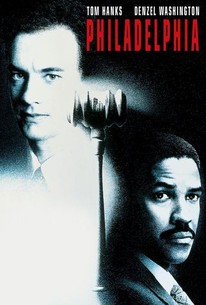
Most Rewatchable Scene: the opening Philadelphia montage and Springsteen song, with documentary-like camera interaction. Chris calls it a possible opening-credits Apex; Bill ranks the song among Springsteen’s best, and Wesley compares the montage to local Action News.
The opening direct-to-camera Hanks–Washington confrontation is recalled as a scene nominee.
Andy’s brief call to his mother is praised for efficiently revealing illness, severity, openness and her suppressed grief.
The senior-associate promotion scene contrasts the old-boys celebration with scrutiny of Andy’s forehead lesion.
Andy asking Joe to represent him is praised for Joe’s fearful reaction and attention to touched objects, the firing flashback, and Andy’s devastated stillness after rejection. One host calls it his favorite.
The library discrimination scene, with Tracey Walter’s librarian and Joe joining Andy’s legal research, is nominated.
Dr.J’s cameo and the partners’ subsequent villainous strategy conversation are nominated; Robards’s full commitment is admired despite caricature.
Opening arguments and the courtroom material are praised, especially Steenburgen’s repeated fact formulation and Denzel’s speech.
The Maria Callas opera scene is nominated and initially awarded Great Shot Gordo for the overhead camera and red lighting. Wesley objects to red’s association with hell for a gay character; Bill reads passion for life instead.
Andy’s testimony about excellent lawyering and justice, the flashback to office jokes, and the attack on his sexual history build to the lesion reveal.
The lesion scene is considered manipulative but effective: Wesley weighs its audience and warning function, while Chris sees a strong courtroom tactic. Wheeler’s testimony is another nominee.
The hospital farewell, the oxygen-mask gesture, individual family goodbyes and Neil Young ending are praised as exceptionally sad final minutes.
Wesley chooses Joe’s private conversation with his wife about gay acquaintances. His confident tirade, apron, bottle and food feel lived-in, and learning his attractive aunt is lesbian punctures his certainty.
Chris chooses Andy’s promotion scene for Demme’s unsettling head-on framing and authentic wood-paneled club culture, compared with Trading Places’ banquet sequence.
Bill chooses Dr.J’s cameo, with Andy asking Joe to take the case as runner-up.
The Maria Callas opera scene is nominated and initially awarded Great Shot Gordo for the overhead camera and red lighting. Wesley objects to red’s association with hell for a gay character; Bill reads passion for life instead.
Chris chooses Andy’s promotion scene for Demme’s unsettling head-on framing and authentic wood-paneled club culture, compared with Trading Places’ banquet sequence. — Chris Ryan
Aged best: Hanks and Banderas’s authentic relationship scenes despite the thin Miguel role; Hanks’s Oscar speech inspiring In & Out.
Aged best: the awkward aftermath of the opera scene as Joe leaves rather than a sentimental fade. Wesley questions how much Andy’s solitude is actually shown, again connecting the perspective to Joe.
Joe’s hesitation on the stairs after leaving Andy is praised as an actorly moment; possible concern for his vulnerability is offered, while Wesley explicitly denies suggesting a sexual return.
Aged best: the family, the reuse of Demme actors such as Charles Napier, Philadelphia’s wealthy-club culture, period fear of lesions, and Andy briefly glimpsing his possible future in a dying patient.
Andy’s theater mustache and stubbled baseball-cap appearance prompt appreciation of Hanks’s looks and a teasing callback to Wesley’s earlier celebrity attractiveness opinion.
Aged best: jury deliberations reverse expectations about the apparent conservative juror, and the verdict reactions work. Robards’s villain and Joanne Woodward’s mother are praised.
Aged best: Springsteen’s award sweep is compared with Carly Simon’s Working Girl song; Robert Ridgely’s presence inevitably recalls his Boogie Nights character.
Joe’s questions about witnesses’ sexuality are considered provocative and potentially dated. Wesley sees the legal tactic as more daring than the film’s sparse account of Andy’s private life, which mostly gives Miguel caregiving and a past sexual encounter; AIDS discrimination and homophobia become intertwined trial subjects.
Weak link: Joe’s aggressive sexuality questions may go too far. His courtroom-world retort prompts a debate over his most characteristic line, with Training Day’s Kong and Malcolm X’s Plymouth Rock alternatives.
Aged worst: three Joe homophobia scenes may be too many; the bar scene is the suggested cut. The pharmacy confrontation is defended as containing lived truth despite the screenplay’s contrivance.
Aged worst: cutting Andy–Miguel scenes leaves their relationship thin. The missing-file sabotage and partners’ firing decision are underexplained, weakening the courtroom mechanics even if the broader argument works.
Anna Deavere Smith’s paralegal testimony raises racial workplace discomfort but shuts the issue down too quickly; Wesley imagines the fuller response a contemporary playwright could give her.