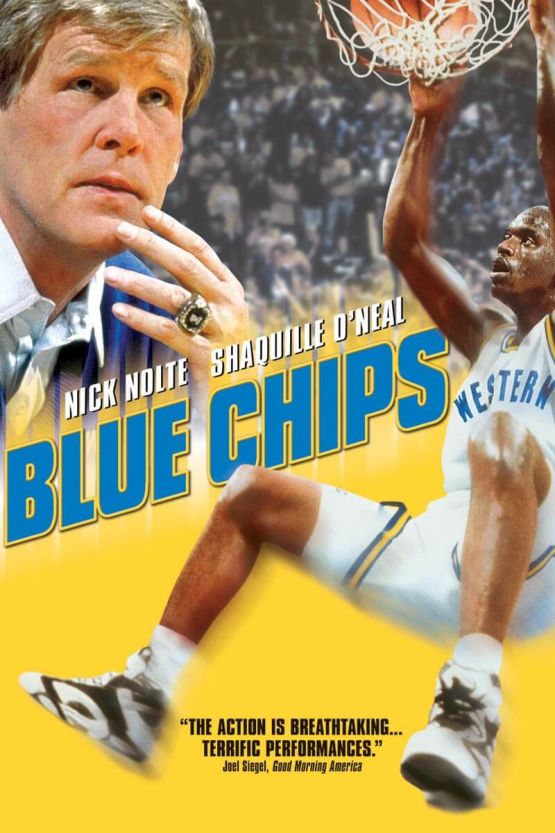
Damon is chosen for starring and writing despite missing the acting Oscar.
The usual single-winner rule is explicitly waived for both writers after their long effort and Oscar triumph.
They made the screenplay despite years of being told it would not work, then backed it up with three decades of work; the speaker cannot split the choice, despite praising Robin Williams.
Affleck’s youngest-screenwriting-winner distinction is asserted and confirmed within the conversation, not externally verified here.
Friedkin’s basketball enthusiasm reportedly included considering a one-third Celtics purchase and consulting Cousy, explaining the latter’s appearance.
The production reportedly used real players, coaches and games before six thousand spectators, but authentic play alone does not solve basketball’s cinematic difficulty.
Anthony C. Hall is described as both actor and player; many real coaches and college stars supplied the basketball cast.
A claimed Kevin Garnett appearance cannot be located and his youth raises doubt; Geert Hammink is recognized.
Shelton reportedly developed the script in 1981, with studio delays before White Men Can’t Jump revived interest; Lansing brought in Friedkin while Shelton made Cobb.
Basketball was reportedly filmed at Frankfort High using full competitive games plus set plays; Knight repeatedly disrupted planned endings by coaching to win.
A $35 million budget and $26 million gross are reported; later home-video value and enduring cultural references are offered as qualifications.
Shaq’s reported worst-new-star Razzie nomination is rejected as unfair because his performance is good.
Friedkin’s reported claim that sports films cannot reproduce a real game’s unpredictable suspense is dismissed as sour grapes, with successful sports movies offered as the objection.
Shaq reportedly wore very thin soles to reduce height differences; framing him farther from Nolte and Mary McDonnell is discussed as another solution.
Shaq’s last college game is recalled as an Indiana loss to the team featuring Knight and the actor playing Ricky; Indiana’s subsequent Final Four loss to Duke is also recalled.
Butch’s Chicago gym is identified as Mount Carmel High School, and the crew including Shaq reportedly stayed at a Lafayette Howard Johnson’s for two weeks.
The deserted walkable neighborhood beside a giant arena raises doubts about its Los Angeles geography; UCLA and USC associations conflict.
Indiana’s authentic uniforms and Knight’s participation seem surprising in such a bleak portrait when other teams are fictional.
Bird casually shooting and retrieving rebounds after multiple back surgeries is doubted.
Algiers is described as ordinary West Bank New Orleans, not the remote swamp journey implied by the recruiting trip.
The coaches barely remember a game they won last year, unlike Mind the Game’s detailed recollections of individual plays.
A two-title coach facing dismissal after limited losing is questioned, with multiple disappointing Tony-era seasons offered as a qualification.
Western U apparently has no conference tournament; the treatment of an NIT season as successful also feels wrong for this program.
Neon’s tutoring, SAT results and immediate class attendance have an unclear and seemingly compressed calendar, despite a defense that he could already pass the exam.
The recruiting calendar is unclear: elite players would mostly be committed already, and Butch’s high school is still playing after Western’s season ends; AAU is offered as a possible explanation.
The Dolphins nickname feels wrong for a Los Angeles school never shown near the beach, though a coastal-location defense is offered and Pepperdine’s Waves are recalled.
Jacksonville University and the College of Mount St. Vincent are supplied as real examples using a dolphin mascot, tempering the naming complaint.
Ed O’Neill’s reporter having photographs of every recruiting violation and sophisticated surveillance-like technology seems implausible for a local reporter in 1994.
A local reporter devoted to exposing the beloved program would face intense hostility; a national reporter might make more sense, though the character is understood as a major Los Angeles journalist.
Freddie calling under-the-table recruitment his personal hell seems melodramatic, followed by an imagined failed Oklahoma State coaching tenure.
Indiana and Bobby Knight appear with real identities while other schools and the NCAA are fictionalized; universal real names would improve the film. Knight’s influence is only speculated as an explanation.
The ending’s children are playing outside late at night and fail to recognize supposedly famous Pete; a stranger interrupting their game would be unwelcome.
The late-night ending sparks jokes about social problems and how a disruptive stranger might be received today.
Ebert’s stated score is three stars; the quoted review praises accurate tone and a cynical morality play about high-pressure college sports. No denominator is stated.
Ideal first-viewing ages range from twelve or thirteen through fourteen or fifteen to sixteen in 1994; today’s nostalgia audience might instead be middle-aged.
Pete’s repeated opening tirade is nominated as an anti-motivational introduction, contrasting hunched vulnerability with Pitino’s smooth confidence.
Cousy’s free-throw conversation is nominated; a reported plan to alternate shooters failed when he made twenty-one straight, leaving Nolte’s complaint improvised.
The kindly athletic director is interpreted as a deliberately incurious figurehead who would also lose his job after the scandal.
The free-throw sequence is defended enthusiastically; Cousy reportedly recalled the crew’s reaction as contrasting his accuracy with Shaq’s misses the prior day.
The recruiting trip is called the best fifteen-minute stretch, with Chicago highlights and rival coaches appearing at every stop.
Gossett’s brief recruiter-facing school role is praised for balancing cynical control of the process with concern for the player; other actors accept small parts.
Woodard’s blunt millionaire answer and demands for a job and house are recruiting-sequence highlights.
The Indiana recruiting stop introduces Larry Bird and his actual French Lick home; the cameo leads into a commercial-location anecdote.
Bird’s house shares the driveway from the Magic Johnson Converse commercial; mismatched eyelines are noticed, but Bird’s presence carries the scene.
Shaq visiting the elementary classroom is praised for his gigantic yet childlike presence.
The barn basketball sequence is admired, while its abundance of elite players, half-court rules and geography are questioned.
Happy’s untraceable-money pitch and argument that players deserve compensation are admired as a precursor to modern collectives.
The payoff montage gives the mother a job and house, Ricky money and a tractor, and Neon an unsolicited Lexus; Neon remains the purest character.
Butch’s homesickness scene is a candidate.
Happy claiming ownership of Pete is a candidate; whether his point-shaving admission fits his earlier denial of wrongdoing is questioned.
Reviewing the 1991 point-shaving tape is a favorite, with comically obvious turnovers and clock checks; The Gambler’s version is considered better.
The tape-review confrontation is called the best scene, while the wording distinguishes best from most rewatchable.
Freddie’s detached needling of the assistant who recruited Tony builds the tape-review confrontation toward an explosion.
Pete’s rebuke to Tony is read as self-accusation; an explicit display of Tony’s leverage would better explain why he stays on the team.
The final game offers Knight’s referee arguments and Hurley’s play, but the improbable alley-oop and droning score disappoint; Tupac, Beastie Boys or The Natural music are imagined alternatives.
The final press conference is nominated for Ed’s probing question and Pete’s confession, with the final declaration compared to A Time to Kill’s emotional climax.
Two explicit choices favor the press conference; another response prefers the point-shaving review and adds Cousy’s free throws.
The tape-review staging lets Freddie needle the foreground assistant while Nolte remains behind them.
The lack of hip-hop is considered a missed opportunity for a 1994 basketball movie.
Quotation marks around Penny in the opening credit are disliked; consistent naming is preferred.
Neon remaining unknown despite recruiting infrastructure, military service and junior college is implausible; the spectacular new class should attract national reporting.
The press-conference slur for Chinese people ages badly, as does the premise that China has little interest in basketball.
Neon’s joke to Jenny and Pete is enjoyed, but it is considered likely to be cut today.
Butch failing to run the motion offense is called absurd.
McDonnell’s hairstyle and clothing are criticized as making the 41-year-old actor look much older and less attractive, with disagreement about Jenny’s appeal.
Jenny’s ongoing involvement is interpreted as love of basketball and her role as the moral compass.
Marques Johnson’s character inviting Jenny for drinks and wings is interpreted as a possible romantic approach.
Pete’s shame and confession are contrasted with a contemporary expectation of persistent denial.
Cousy being called Vic is disliked; playful alternatives closer to his own name are proposed.
Dicky V’s scene is considered about forty seconds too long, despite recognition of his prominence.
Pete’s constant shouting and weak technical coaching prompt speculation that Freddie supplies the real tactical knowledge.
The complaint about McDonnell’s unflattering styling continues against disagreement that she still looks attractive; Dances with Wolves is used as a comparison.
Pete calling Happy about Butch is admired on paper for showing that Pete now works for the booster and has lost control.
Pete is criticized as too unlikable and spineless to root for; the defense is that helplessness is the point and winning changes how a volatile coach is perceived.
Ricky requesting only $30,000 and a tractor feels too modest for a major program; $50,000, $75,000 or $100,000 would fit better. A possible farm bill is offered as an explanation.