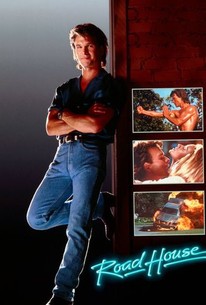
Dalton's first-name recognition across bars before the internet raises questions about an underground bouncer-information network; the opening bar's location is unspecified.
The hosts wonder where one buys bladed boots, whether they are custom-made and why this blade remains exposed rather than retracting.
The price of buying off a whole police department is left speculative.
Wesley controls a tiny town while destroying its few businesses, yet his ownership and wealth source remain unclear. A Chicago-mob origin and additional local businesses are speculation.
The physical possibility of ripping out a throat is disputed without resolution.
The group wonders which parts of Jasper Wesley leaves alone and why there is no strip club; the Double Deuce may already fill that role.
Why no Swayze sequel around 1993? Los Angeles and the Viper Room are proposed as a setting for Dalton's next cleanup.
Terry Funk is proposed as a leading wrestler crossover below Hulk Hogan's Thunderlips, but André the Giant in The Princess Bride and Roddy Piper in They Live push him down; no formal numbered ranking is settled.
Dalton's Memphis killing appears to be self-defense after unknowingly dating a married woman, making his shame puzzling. His alertness to weapons contrasts with missing her marriage, and the hosts question whether earlier bar fights also killed anyone.
Dalton's attachment to German cars and whether anyone called about the Buick sale remain unanswered.
Marshall Teague; movie bouncers and coolers; Jeff Healey; white blues guitarists’ era; Kelly Lynch’s period; throat-rip kills; prison-sex threats; outdoor tai chi; 1989 action movies.
Drambuie is proposed as an Apex because of the conspicuous quantities at the Double Deuce.
Marshall Teague's career peak is affirmed despite his continued later work.
Swayze's Apex is placed later around Ghost, Point Break and Road House's rental growth. Elliott alternatives include Mask and 1883; Terry Funk's is assigned to early-eighties wrestling.
Movie bouncers and coolers, Jeff Healey, the era of white blues guitarists, and Kelly Lynch around this period receive affirmative support.
Gazzara is only tentatively considered a belated Apex through recognition; Elliott's pubic-hair suggestion becomes a joke about a future 1883 appearance.
Throat-rip kills, prison-sex threats and outdoor tai chi are affirmed. Action-star names and mullets are discussed with competing examples rather than a settled unique winner.
Death-deciding coin tosses are proposed but compared with No Country for Old Men; persevering with a repeatedly damaged car is another suggestion without a clear final endorsement.
1989 action movies receive an explicit Apex claim because established stars and a new generation overlap.
Nominees include the dump-truck-balls exchange and 'Opinions vary'; the brains-and-ass remark; kill-or-be-killed advice; the ugly-wife story; sleeping when dead; and Wesley's trophy-room threat. The prison-sex taunt is declared the winner, with disagreement about whether it functions as insult, compliment or both.
Chris chooses the apparently cocaine-fueled men at the opening bar and their 'moose lips' dialogue. — Chris Ryan
Kyle loves the pre-internet fame of bouncers, imagining trading cards, Cooler Illustrated and a fantasy league despite the premise's implausibility. — Kyle Brandt
Bands protected by cages and the action-film premise of recruiting 'the best' share a top preference.
The gratuitous monster-truck destruction of the dealership exemplifies beloved expensive action excess, even though Wesley's villainy is already clear.
Elliott's timeless appearance and ability to call someone 'mijo' remain appealing; Swayze himself is missed, and Kevin Tighe's shift from Emergency! lead to character actor is appreciated.
The closing song When the Night Comes Falling and swimming-hole ending are praised; the singer is clarified as Jeff Healey rather than Swayze.
Shirtless tai chi, Jimmy Reno, uncertainty about whether Dalton is a first or last name, 'Nobody wins a fight' and the nipple-to-nipple invitation all retain appeal.
The hero's hidden Memphis past is an appealing trope, though his shame needs explanation; the hosts imagine a missing confession scene. The throat-rip move still shocks.
Julie Michaels's stunt background and later Point Break fight, the Family Guy tribute and Jeff Healey's performance are additional pleasures.
Swayze's effortless cigarette flick and drifting smoke are praised as hall-of-fame movie smoking, despite the real-life tragedy discussed.
Beer bottles broken over heads, Wesley's breakfast eggs and drink, and Wade and Dalton's morning diner beers are the three choices; the last prompts concern about the doctor's imminent workday.
Wade Garrett's light build, telegraphed punches and few victories undermine his reputation; his presence also makes Dalton emotionally vulnerable, though he can have an effective night.
Kelly Lynch's implausibly glamorous, single small-town emergency doctor wins the rarely used Elisabeth Shue scientist award. Her past with Wesley is ambiguous rather than clearly a relationship.
Dalton sparing Wesley seems inconsistent after his other killings; a counterargument says Elizabeth's warning about becoming another tyrant establishes the moral choice, without convincing everyone.
The haircuts and exposure of Elliott's pubic hair are criticized, though another participant jokingly nominates the latter for Great Shot Gordo.
Bars without televised Kansas City sports feel wrong, especially given Bo Jackson and the area's prominent teams; shared sports might even unite the town.
The opening song Don't Throw Stones is merely adequate compared with the closing song.
The Jimmy fight overshadows the Wesley finale. Moving it immediately before the townspeople kill Wesley could improve the structure and avoid Dalton's oddly rapid recovery between locations.
The waitress's obvious lip-syncing, the barn's lack of air conditioning, Wesley's consequence-free abuse of a henchman and the ineffective stuffed-bear attack are criticized.
Dalton leaves his old job without notice, raising doubts about his reliability and whether his bar improvements last after departure.
Modern litigation might make violent professional coolers less viable, though the speaker invites correction.
Dalton's constant smoking conflicts with his spiritual, mind-and-body discipline, though pain and personal demons are offered as possible explanations.
Displaying discussions 4573 - 4584 of 8676 in total