Rooker receives both hypothetical Oscar choices. The cited supporting-actor field is Hackman, Nicholson, Pacino, Paymer and Davidson, with Paymer the imagined replacement; the cited field's year is retained as podcast discussion, not externally corrected. — Kyle Brandt
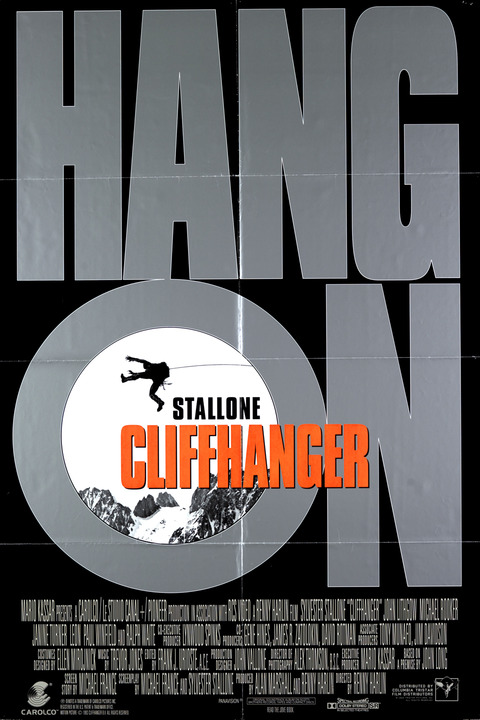
The rescue opening is a contender for the greatest opening scene, though the novice's ability to reach the summit and Hal's injured knee create obvious questions.
The opening's rescue plan is criticized as needlessly dangerous compared with lifting people directly by helicopter; the failed buckle lacks redundancy, and Gabe using one arm rather than both is questioned. Despite this, the scene is cinematic. — Bill Simmons
Hal's immediate hostile stare at Gabe after the fall seems to promise revenge that never comes and remains unfair given his own inaction. — Bill Simmons
Frank appears to smile in the background during the death; wind-induced squinting is a possible explanation, but the effect is unintentionally comic. — Kyle Brandt
Gabe returning to Jesse eight months later is a favorite bad-acting scene: mumbling, overwrought dialogue and his greater trauma than Hal resemble a soap opera. Brandt recognizes lines from his own Days of Our Lives experience. — Bill Simmons
The midair transfer is an admired scene candidate. — Bill Simmons
The plane-to-plane stunt reportedly cost a million dollars and was performed for real. — Bill Simmons
Travers failing to ensure all his victims are dead is a major planning mistake. — Bill Simmons
The first suitcase and avalanche sequence is a favorite absurd scene. — Bill Simmons
The villain firing at the avalanche is baffling, while Gabe survives beneath a suitcase. — Bill Simmons
Forcing Gabe to remove his coat exposes his physique, while Hal suddenly worries about the man he blamed. — Bill Simmons
The nighttime sliding fight is a fun scene, ending with the climbing stake stopping the descent and an unconvincingly made-up scraped face. — Bill Simmons
The Leon fight is admired because Stallone takes an unusually one-sided beating before the obvious sharp cave formations pay off; stalactite death is proposed as an Apex. — Bill Simmons
Saving Jesse with another glove pull calls back to the opening, jokingly suggesting Gabe tries harder because he loves her and has no distracting shouting. — Bill Simmons
Frank's death brings another Rooker No and the emotional never-hurt-anybody line, punctured by Lithgow's Touching; the excess is enjoyed. — Bill Simmons
Delmar beating Hal while narrating soccer is the strongest alternative to the opening. — Kyle Brandt
His soccer enthusiasm and racism are interpreted as 1993 villain coding before the 1994 World Cup changed American interest. — Kyle Brandt
Season’s over, asshole supplies a celebrated payoff to the fight. — Bill Simmons
Costner: no; his peak is still Dances With Wolves, which won all the Oscars and made him the new Warren Beatty, with no argument. — Bill Simmons
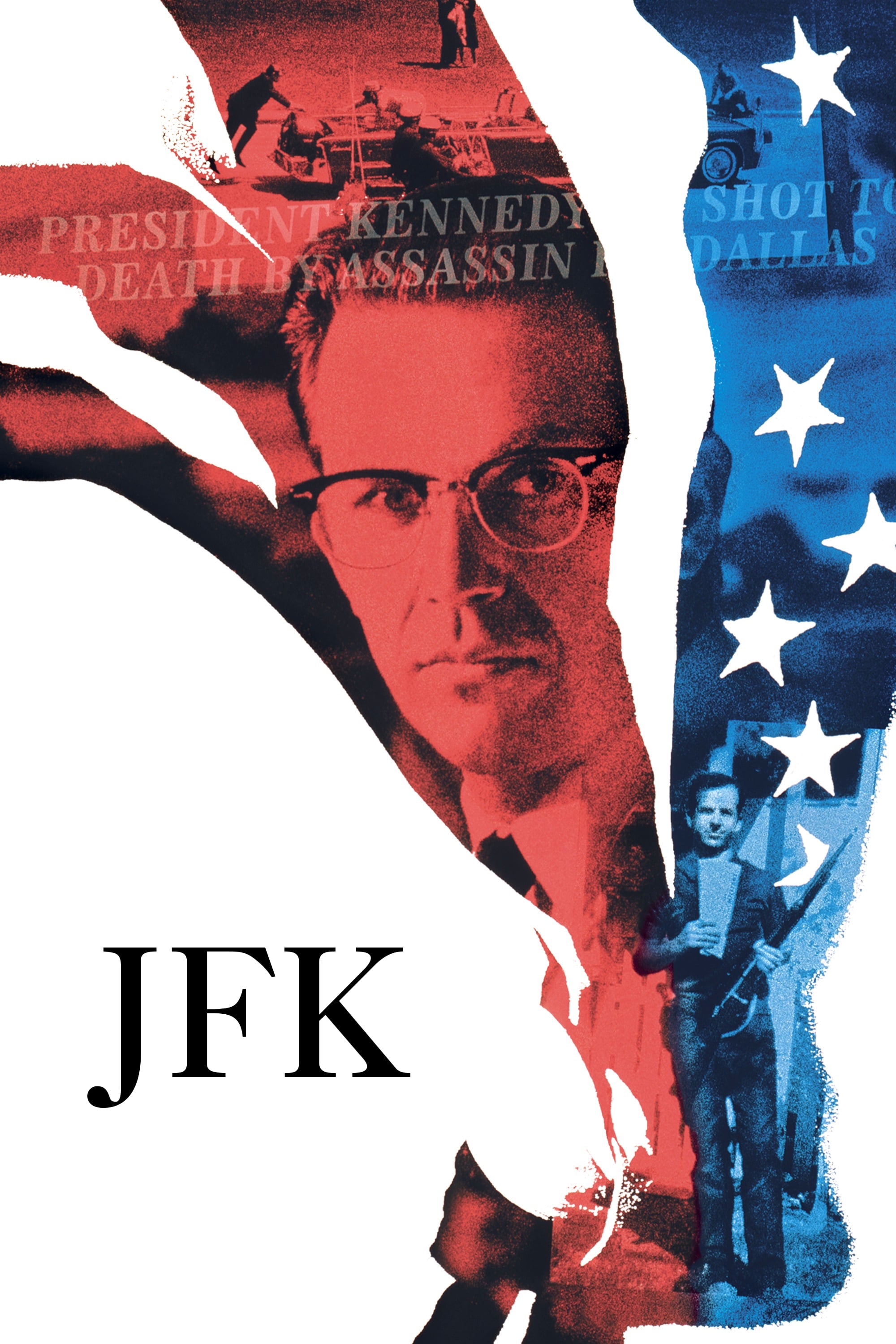
Oliver Stone: it might be this, since he got a studio to fund an assassination movie with his made-up theory and made The Doors and JFK in the same year; called a really good case. — Bill Simmons
JFK assassination conspiracies peaked in the early 90s: agreed. — Bill Simmons
Michael Rooker: Henry: Portrait of a Serial Killer is his high point, with Henry and JFK in about a two-year span when it was all happening for him. — Bill Simmons
Henry is recommended as a realistic, disturbing film; one participant recalls seeing it before a game at a theater near BU with seven other men; tangent: Henry and One False Move as a never-sleep-again home double feature.
Rooker being the most normal-seeming character shows how crazy the movie is; his LBJ argument scene is called absurd and possibly cut down.
Rooker is praised in Cliffhanger and now in the MCU; one participant has met with him.
Wayne Knight, no question: Newman at the same time and Jurassic around then.
The Zepruder (as transcribed) film as Apex Mountain: yes, with a reference to the Time-Life building.
Also joked about: the Cowboys doing well in '91, and a Zupruder (as transcribed) NFT pushed by Gary Vee. — Brian Koppelman
Richardson: a filmography spanning Stone's films from Salvador through Nixon, John Sales (as transcribed), Scorsese and Tarantino; at the top of his game here; a jab that he's no Gordon Willis, but flexible with a distinctive blown-out overhead light.
J.O. Sanders plays one of Costner's two cohorts who quits and shows up in the courtroom at the end; he has been in a million things and resembles a True Detective character. — Bill Simmons
Peter Maloney, the medical examiner, is also in The Thing and is recognizable once seen. — Chris Ryan
Oswald's wife, played by the actress who was a Russian doctor on Melrose Place (Dr. Katia Petrovna), is named as Bita Posniak (as transcribed); she is said to have read all 26 volumes of the Warren Report.
George C. Scott is floated as a great, angrier X, but Sutherland's bemused X is called perfect.
The 'hell's coming with me' scene followed by the killing montage; Wyatt Earp confronting Billy Bob Thornton at the card table; or the stretch from Wyatt Earp, on his horse after Bill Paxton's death, seeing Powers Booth through to the creek
The nominated choices open with Wyatt Earp confronting a heavier Billy Bob Thornton near the beginning, the 'skin that smoke wagon' exchange played as a clip; Earp completely emasculates him and then tells the bartender he is taking 25% of the house; Thornton's grumbling just before, about playing cards with his brother's kids, is also loved and called a good heat check.
More nominees: the first OK Corral shootout and Kurt Russell's 'hell's coming with me' speech, played as a clip and followed by a montage of them killing people; the creek shootout, Russell's version of Larry Bird walking on water in the 1987 playoffs; and Kilmer versus Michael Biehn, one-on-one at the end.
Also proposed, the 'turn your head into a canoe' scene: after the character the hosts call Ben Johnson is killed, Kurt Russell comes out and pistol-whips the shooter, Thomas Hayden Church and the others surround Russell, and Val Kilmer shows up with 'you music lover' and 'I got two guns, one for each of you'.
The first 'I'm your Huckleberry' is nominated with a clip: Michael Biehn is drunk, some of his buddies already killed, and is trying to challenge Earp when Doc comes from the shadows of the saloon and delivers the famous line; beyond Kilmer, Biehn is called really good, against type, a great villain and a great Johnny Ringo, the real-life figure.
Biehn is so good that one host went online to research why his career was not bigger: The Terminator, this, Aliens and The Abyss, where he plays one of the crazy Navy SEALs, and then not much, partly because he stopped working with James Cameron, who makes few movies; it is argued he and Michael Rooker have switched parts, since 99 times out of 100 Rooker would play Ringo and Biehn the good guy you are not sure you trust, Rooker playing a lunatic in every movie.
One favorite is the 'hell's coming with me' scene and the killing montage that follows.
Asked whether anything else belongs in the pool, the answer is no, those are the big five. — Sean Fennessey
Another host does add one: the scene at the very beginning when the brothers and their three women get off the train and look at each other in the mirror; nobody goes for the twelve-minute theater sequence, which they would have told George to cut.
From a channel-flipping standpoint, if the film is on after Bill Paxton dies, with Kurt Russell on his horse pretending to leave and then seeing Powers Booth, one host watches from that point on, knowing he is going to stay and kill everybody and end it in the creek; that is called that host's favorite part.
Another host's favorite is the Billy Bob scene, and Thornton reportedly improvised all his dialogue, as Kurt Russell told the hosts, though with Thornton that is hard to verify.