
Film credit
Nicolas Cage
Also referred to as Nick Cage, Cage, Nicholas Cage, Nick Haye, Nick K.
Stats
- Episodes featuring their films
- 5
- Movies in this archive
- 5
Rewatchables episodes featuring Nicolas Cage’s films


Face/Off
1997 film
Bill Simmons · Shea Serrano · Chris Ryan · Jason Concepcion
Aired October 26, 2017
Mentioned in discussions

In the discussion (8)
- The Sally Can't Dance character is rough and not great; they probably would have cut it now, and even in the late 90s it was awkward and weird rather than something 1997 audiences thought was good.
- Getting rid of Chappelle at 43 minutes has aged the worst; Chappelle could have helped the last two thirds, so cut somebody else and keep Pinball, the funny guy. The guess is they only had him for about three days, that he came up with his own dialogue, and that they did not know what they had.
- Cusack's hair hurts: this is the first time it was going back as the 90s went along, like his best friend Piven, and he shows up with a flowing mane that flies around like a huge Trump wig in the convertible scenes. One host feels the movie is beneath him the whole time, an undertone of not believing his agent told him to do it, while another loves Cusack and places this right around Grosse Pointe Blank.
- In Cusack's defense, Rosenberg wrote the parts for Cusack and Buscemi with them in mind; Colm Meaney's character even uses 'loquacious', and they are all idiots compared to Cusack, who is the one person in the movie, in sandals, who could have been you while everybody else is a superhero.
- The gregarious, hilarious prison guard on the plane, a David Tao type (as transcribed), has aged the worst with his line about seeing eleven Current Affairs, two Hard Copies and a genuine Geraldo interviewee, shows that are all long gone. Also the cheesy guitar solo that kicks in when Cage, told by Bubba Gump that there is no God, declares that he will show God exists, after which Cage walks through a gunshot to the left arm without flinching.
- The insulin subplot has aged poorly: there is no need for the diabetic shock the entire movie, since Cage could simply stay for Rachel Tickatin (as transcribed), who would be jumped by Johnny 23. Michael T. Williamson (as transcribed), whom a host really likes, spends the film shouting for his insulin, including 'get off my insulin' during the riot, and a secret favorite moment is Cage's weary 'Jesus' when Williamson gets shot.
- Earlier, while picking nits, a host had meant to save the secretly armed DEA agent for aged worst: he pulled the Fredo Corleone, grabbed the gun, sweated and seemed out of control.
- Johnny 23 has also aged the worst, though arguably it was aging badly even as the movie came out.

In the discussion (9)
- Malkovich saying the title in the movie, two different times, is a favorite thing and the hallmark of Bruckheimer movies, like 'welcome to the Rock'; the hosts imagine Bruckheimer reading the script in the bathtub and jotting a note that nobody says the title.
- Nick Cage has aged the best: he has become a punching bag, but people forget he won an Oscar and was an awesome action hero in the 90s, holding the Grantland action-hero championship belt for two or three years; unlike 80s action guys such as Stallone, Schwarzenegger and Seagal, he, Bruce Willis and Mel Gibson were actors before they were action heroes, and he rattles off post-murder one-liners like the bunny line.
- The secret of the movie is that ridiculous things happen but the characters are played by smart, good actors buying in: Cusack, Malkovich, Ving, Buscemi and Cage are all great, and Malkovich is 100% evil, believing everything he is saying.
- Cage's hair has aged the best, this being the best year for it: thinning, so he grew it out wavy, with no explanation for going from high and tight out of the army to an outrageous mullet in prison while bettering himself and learning Spanish, looking like a bass tech for Poison.
- Chappelle has aged incredibly well, and there is more racially charged humor than remembered, which one host flatly labels racist, including a lot of characters using a slur for each other; Chappelle is nonetheless very funny. The Cyrus kill line 'Cy... anara' (transcribed 'Sigh! Anatta'), which he had prepared and was waiting for someone to call him Cy, is another thing that aged best.
- The Buscemi and Cage exchange after Cage comes back up from the kill below is played as a clip: whether working 50 hours a week for 50 years and hoping to die before the indignity of the toilet is insane. Buscemi goes to nine other levels, 'most murders are a crime of necessity rather than desire', and would give the greatest TED talk; a host admits that movies mocking people for having a job hurt his feelings, as with Heat.
- Malkovich has aged the best for this host, on his run of villains like In the Line of Fire, really in the pocket as the heavy, funny, smart and scary, knowing exactly how far to go; it was a great period when action movies stopped requiring jacked-up Jose Canseco types and instead hired incredible drama actors to elevate stupid material for less money than the action guys cost. — Chris Ryan
- The trend started with Rickman in Die Hard and led to Lithgow and Malkovich; asked which Malkovich role comes to mind first, the answers are In the Line of Fire, Dangerous Liaisons and Teddy KGB, with Con Air right underneath; he looks the same in every movie yet his characters feel different, as in the Killing Fields, and Mile 22 gets a thumbs up with reservations.
- For another host the best is Nick Cage.


Most Rewatchable Scene
Cusack's scouting-report introduction of the inmates; stealing the second plane at the boneyard; the cons taking over the plane
In the discussion (7)
- Candidates open with the rainstorm fight in which Nick Cage kills the drunk; the whole fight makes one host mad every time because the lawyer, the guy from Miami Vice, gives terrible advice to plead guilty and it comes out as ten years. The hosts debate going not guilty unless a deal is agreed with the judge, and conclude that Cameron Poe is kind of a dumbass who should have just got in the car and later got off the plane rather than stay for his diabetic buddy and his insulin.
- Cusack's scouting report for the inmates is phenomenal; a host wishes more graphics and background had flashed up for each guy, Creed-style, six minutes long, and would have watched it forever.
- Asked, as the fight-scene expert, whether there has ever been a crouch fight scene like the bunny-back-in-the-box fight: close-quarter fights exist, like the bathroom stall in Mission Impossible or the front-seat-and-back-seat car fight in the Raid, but this is the first crouch one. — Shea Serrano
- More candidates: Cruzito trying to escape and steal the second plane, whom one host just calls Cruz; the whole boneyard sequence where the cons trap the soldiers and the plane explosion; the 'that's a rock' exchange while the plan is explained; and the plane landing on the Vegas Strip, making seven candidates.
- A clear winner is declared: Cusack doing the introduction, the scouting report. An honorable mention is floated for the long montage of letters to his daughter, the hosts repeating 'Dear Casey', enjoying her two-word letter asking whether he is ever coming home, wondering whether the wife stopped writing, and relishing the unintentional comedy of him writing calmly while mattresses go over the balcony during a prison riot.
- Asked for picks, one host goes with stealing the second plane for its unintentional comedy, propane and gas everywhere at an abandoned airfield, including Colm Meaney's car getting crashed into the tower; another goes Cusack, liking him in roles where he is a little smarter than everybody, as in Runaway Jury, and calling him one of the best parts of the movie despite seeming frustrated to be in it; a third has the cons taking over the plane.
- The takeover is admired for the needle buried in the hand to pick the handcuffs, which the hosts would like Mythbusters to test, like other movie-easy things such as lighting gasoline by tossing a cigarette; it was so windy Cusack's wig flew around all movie yet people lit things. Johnny 23 stays in character, Cage has to prove again that he is a good guy, and his accent is great.

Casting What-Ifs
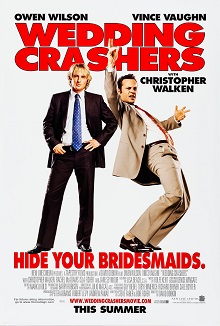
Vince Vaughn pushed for Justin Long as Todd, who auditioned as Buffalo Bill; Will Ferrell turned down John Beckwith for a smaller role; Jane Seymour beat out Raquel Welch; Nicolas Cage was the backup for the Will Ferrell part
In the discussion (5)
- Keir O'Donnell won Todd, but Vince Vaughn really pushed for Justin Long, whose interpretation of the character was Buffalo Bill from Silence of the Lambs and who thought he had the job; the hosts call it a phenomenal what-if that would have made the character more acceptable by being so ridiculous, instead of a gay art school kid who is also a psycho and is mocked homophobically by his grandmother.
- The black sheep character can be awesome, with Spalding in Caddyshack (as transcribed) the greatest example, and Christopher Walken himself played one as the brother in the Minnesota scene of Annie Hall.
- Will Ferrell was offered John Beckwith, the Owen Wilson role, and turned it down for a smaller role, which the hosts are glad about because of Chaz; Jane Seymour beat out Raquel Welch.
- Asked whether he would rather have had Raquel Welch, the answer is that it is hard to see anybody but Jane Seymour in the role now, and he loves her. — Chris Ryan
- Seymour was great stunt casting after Dr. Quinn Medicine Woman; Nicolas Cage was the next call after Ferrell's no, which the hosts would like to see, though Cage reportedly gets called for parts like this and it never quite comes off, as in a Seth Rogen story, because he still thinks it is 1999 and must be the star, with tax liens against his Scottish castles.


Who Won the Movie?
Nicolas Cage vs. John Woo (1-1 on distinct host ballots; a further Cage pick may be the first voter; the audience poll called it unanimous for Cage)
In the discussion (4)
- In ten or eleven Rewatchables the show has never had two stars pitted against each other, literally and figuratively, since Heat, where Pacino was named the winner; in the spirit of overacting one host goes Nick Cage.
- Picks John Woo, since this was really the last time he got to make a heat-rock Hollywood movie before going off the rails. — Jason Concepcion
- A tangent on Woo's later Paycheck with Ben Affleck, which nobody can quite summarize, filed with Reindeer Games among the Affleck films of six years that had the title first and the script later.
- After the tangent someone says they also think Cage won the movie, which may be the first Cage voter restating rather than a new vote; the audience is asked and answers Cage in what is called a unanimous decision; it was a tough podcast for Travolta, who got beat up and lost in a lot of ways, plus the love handles in the movie.
Podcast choices
- Speaker not identified
- Nicolas Cage
In the discussion (9)
- Why did they give Nick Cage the less fun part, since Travolta becoming evil is so much more fun than Cage becoming the nice guy trapped in Cage's body; the counter is that Cage gets the first 40 minutes to be evil and had more fun in this movie, so his was the better role.
- They did not direct Nick Cage, Nick Cage directed this movie, or freebase cocaine directed Nick Cage; you needed Cage because he is very good at being crazy and had to have trouble processing being another person, which Travolta could not do.
- Who signed on first? Cage, the hosts decide, since he would look at the roles and want the one who kills a kid and assaults a teenager in the first 40 seconds. Who got paid more? Split between Travolta, fresh off Greece (as transcribed), and Cage, coming off the Oscar, The Rock and Con Air; the joke is that Travolta was told 15 and Cage got 20, or was paid in Chiclets.
- Was Cage's acting just as bad here as it would be for the next 20 years, bad in a good way, or straight up great and the same as in all his movies? One host threatens to walk off the stage if the panel decides he was bad in this movie, and the choice narrows to good versus good-bad.
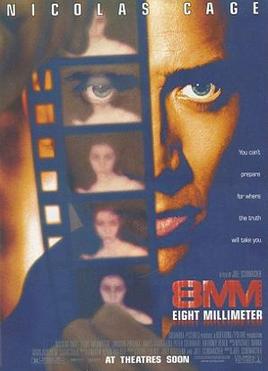
- Does not know that he has seen a Nick Cage movie since this one, though he did see 8mm. — Chris Ryan
- The audience is polled and says good-bad; a clip of Cage's interview about the role is played in which he says he meditated on the idea of wearing the face of the man who killed his son, literally not metaphorically, offered as proof that he was a good actor fully in it; the hosts guarantee Cage would still insist today that he took his face off and wore it.
- Asked how he would explain to his wife that it is really him wearing someone else's face, says he would come home freaking out, laughing and crying, wearing Neil's face. — Shea Serrano
- In the movie the only reason she believes him is that he names his blood type, O negative or so, and talks about the son's bed; one host would try to come up with memories he has not tweeted about so she would know he was serious, though there is no way it is happening either way.
- An audience member adds an unanswerable question: when Castor wakes up bandaged after the switch, why not just kill him; the hosts call it a strong point they had not thought of and joke about the Geneva Convention, the Bill of Rights and the rule of law keeping this from being a dictatorship, since removing his face in an office park is already the act of human rights here while he still has the sanctity of life.

The Neil McCauley “A Book about Metals” Award for Best Line from the Movie
"There will be a lot of changes around here"; "We'll take a break when the case breaks"; "What a predicament"
In the discussion (6)
- Lines put forward: 'I'm Castor Troy' (as transcribed Caster Trey) from the clip already shown; evil Travolta's 'it's like looking in the mirror, but not', a really good Travolta line; and his throwaway 'lies, mistrust, mixed messages, this is turning into a real marriage', offered as a senior high school yearbook quote.
- Also 'Sean, we've been living together as man and wife for a week', which is devastating and very uncomfortable, and the actual last line of the movie, 'Dad, I'm sorry I shot you'.
- Gives an honorable mention to Travolta with Cage's soul going into Dominique Swain's room, seeing her pack of cigarettes and that she is listening to the James Brown song about a brand new bag, lighting one and saying 'there will be a lot of changes around here' before walking out; that is his favorite line. — Chris Ryan
- Picks a different one: six years after the elite uber terrorist killed his son at the carousel, Sean Archer has become the worst boss ever, and when asked to give the agents a break says 'we'll take a break when the case breaks'. — Jason Concepcion
- Has two Travolta lines from the church standoff at the very end: Travolta telling the Cage-faced Archer, who is mad that he killed his kid, to either get over it or kill himself rather than take it so personally; and, as the two-man standoff grows person by person to a dozen guns pointed at everyone, 'what a predicament', the best line in the whole movie for him. — Shea Serrano
- Another host might vote for 'what a predicament' too, since it was exactly a predicament.
Picking Nits
Dr. Walsh makes the surgery sound routine; the secret off-the-books hospital; Archer tells nobody, not even his wife; prison guards killed rather than informed; Castor never tells Dietrich; a prison fight five minutes after surgery; the hasty reverse surgery and the added love handles; nobody guarding Cage in the coma; Time's Man of the Year for one bomb; helicopters giving up and a 40-mile swim; holding a 250-pound man by a gun barrel; shooting a guard in the toe; Travolta's chin cleft and Cage's teeth glossed over
In the discussion (9)
- Dr. Walsh spends two minutes on the surgery as if Travolta were getting his hamstring fixed: with the new anti-inflammatories healing takes days not weeks, then they simply connect the muscles, tear ducts and nerve endings; the hosts do not think it is that easy, though he sold it well enough that one would trade faces with a fellow host for a week.
- This is not a hospital but an illegal secret one, like in the Palisades; why could Travolta not tell his wife or anybody he worked with? Only CCH Pounder and Robert Wisdom knew, it was totally off the books, and the three people who knew were burned alive; still, one host would definitely tell his wife the night before that he was switching faces with the guy who killed their son, hard as that conversation would be.
- Why could they not tell the prison guards instead of killing them, when those guys are all on the take? And why did Castor not tell Dietrich, the bald guy, when other people in his life knew?
- Could Travolta as Cage have survived the prison fight with a new face, punched five minutes after surgery when he was told not to get hit, his face itching as he scratches it; way more attention went into putting Cage's face on Travolta, while Travolta's face on Cage was a hasty shotgun job done under threat of immolation, yet afterwards it is the carefully made face that itches while the wearer of the rushed one loves his new face with no itching or side effects.
- They explained how they would get rid of Travolta's love handles, so how did they add love handles, especially with a gun to the head? And why was nobody watching Cage in the coma, a feared independent terrorist who has taken out 20 people, with his face in a bowl under a spotlight ten feet away?
- Once Cage's character, wearing Travolta's face, foils his own bomb to become the hero, the film casually drops that Sean Archer was Time Magazine's Man of the Year, and his boss even cites it; would you win Man of the Year for foiling one bomb, and who did he beat in 97, Michael Jordan, Bill Gates, Bill Clinton?
- Castor escapes the Catalina prison with a 70-foot jump into the water, and the circling helicopters give up at once, the action-movie rule that once you land in the water the helicopter flies away; does he survive the leap and the bullets, swimming 40 miles underwater to L.A., presumably like a dolphin coming up every once in a while?
- One nitpick maybe nobody notices: as Cage and the prisoner called Machine or Sabaka (as transcribed) escape, murdering guards, Sabaka falls over the rail and Cage holds this 250-pound man up by the barrel of his gun, which would take years on the machines; the hero cannot kill a guard or he would be bad, so Sabaka does the killing while he shoots a guard in the toe from 40 feet; both men shoot well until they shoot at each other at close range and dodge bullets.
- Earlier, while on what aged worst, a host who hates to nitpick this movie notes that Travolta's big chin cleft and Cage's rat-like teeth were just glossed over, though the film does joke about the chin.

Apex Mountain
Nick Cage (one host's yes at 157; the moderator closes 'nobody had an apex' at 159)
In the discussion (7)
- John Woo: no, with no explanation offered.
- Joan Allen: no, though a contender, and one host would feel so bad if this were her Apex Mountain.
- Gina Gershon: no; Bound is suggested instead, and Cocktail (as transcribed) comes up with a don't-get-me-started.
- Travolta: no way; he was the biggest star in the world, but this is a second, mini-pleasant apex era for him rather than the peak.
- Nick Cage: a definite yes, this rather than the Oscar is his Apex, after the trilogy of those films in a row, followed by the movie where he plays an angel who comes back, after which it all fell apart.
- Tangent: Travolta also played an angel, in 1996's Michael, whereas in Phenomenon he had an accident rather than being an angel and is remembered only for the poster pose.
- After a joke asking whether this is the apex for smoking a cigarette without a face, the host wraps up by saying nobody had an apex, despite the definite yes for Cage moments earlier.

The Dion Waiters Award for Best Heat Check Performance
Pollux Troy (Alessandro Navola, as transcribed); the escaping prisoner played by the actor from 8mm and The Wire; CCH Pounder
In the discussion (5)
- Nominees: Nick Cassavetes as Dietrich, Gina Gershon, Dominique Swain as the daughter, Alessandro Navola (as transcribed) as the brother Pollux, a choice the host does not condone, CCH Pounder, who gets burned to death along with Robert Wisdom's Bunny Colvin from The Wire, Thomas Jane, Todd Parker in Boogie Nights, as one of the prisoners, and the actor who played Machine in 8mm and Sabaka (as transcribed) in The Wire, who escapes with Cage and is one host's favorite.
- Margaret Cho gets an honorable mention; the hosts cannot believe she is in it as comic relief with one joke, a terrible line about a transplant for the stick up someone's rear.
- Picks the brother Pollux because of his weird voice, doing the ten million dollars line. — Jason Concepcion
- Another host has the prisoner Sabaka (as transcribed), our dude whom the others like too.
- Another goes with CCH Pounder because she smokes in every scene she is in, including inside the medical lab during the face transplant, then puts her cigarette out on the comatose patient, which is never okay.
Unintentional Comedy Award
The surgery haircut with the face off; the wife not picking Travolta up from the hospital; adopting the homicidal maniac's son unannounced; the dove-filled church funeral; the opening carousel and the sniper drinking from a straw
In the discussion (9)
- Nominees begin with the entire movie, opening credits to the end, Cage making crazy faces in prison, Dietrich and Cage laughing at each other Austin Powers style, and the box with absinthe, molly and Chiclets.
- At the end Travolta is in surgery for a couple of weeks after being thrown off a boat and badly injured, and his wife is working at her desk at home when he comes in rather than picking him up or waiting at the hospital; a friend from Jimmy's show, Dave Damoshek (as transcribed), used to do an office bit about it: oh, is it Tuesday, I thought it was Monday, it's your husband, he just got his face back.
- Cage wakes from the coma with his face off, and the hosts work out what counts as face: eyelids, nose and lips yes, ears no; nobody is watching him, he is immediately fine, there are somehow cigarettes and a telephone, and his face sits in a bowl of saline solution under a spotlight like a Hall of Fame plaque (as transcribed 'plus').
- The clip of his phone call is played, imagining getting that call; the henchmen bring in a doctor who asks what he wants him to do, as if there were any question with the face over there; then Cage, with no lips or face, smokes a cigarette, the most ridiculous part of the movie since he has no nose and would have to hold it in his teeth.
- Adds two nominees: the denouement at a dove-filled church outside Hermosa, there because Sean Archer's boss has a heart attack exacerbated by Archer breaking his sternum, followed by a funeral like the papal conclave with incense, singing monks, a Marine guard salute and a thousand doves; and CCH Pounder's two options, put an agent in Pollux's cell or switch your face with his, with no other brainstorm. — Chris Ryan
- Picks the opening of the movie: Travolta on the carousel rubbing his son's lips and hugging him very closely, then the first look at Cage as Castor through the sniper scope, the mustache that looks like carpeting, drinking through a straw like a Diet Pepsi before killing a man. — Jason Concepcion
- Castor Troy is a terrorist for hire, a kind of friendly independent terrorist with no clear employer who is owed ten million dollars; another bit has them looking at the 1997 internet, really cut scenes from a Sega Genesis game with something about Croatia going on.
- Another pick is the surgery: in the middle of a super complex procedure lasering the face off and putting it on another man, they first take the face off and then give him a haircut over an open wound, trimming it up.
- A host hands out medals: bronze to the haircut with the face off, silver to the wife not picking him up from the hospital, and gold to Archer adopting the homicidal maniac's son without clearing it with his wife, just coming home with the child; then Dominique Swain touches the kid's lips, which is how you get into the family.
Half-Assed Internet Research
Cage and Travolta spent two weeks together learning each other's mannerisms; the film was originally set in the future, in space; the studio wanted the slash out of the title; the boat chase took four weeks to film; the special edition DVD has an alternate mirror ending; Castor Troy kills 20 people; a Metacritic score of 82
In the discussion (13)
- The corner is called half-assed because you cannot believe pretty much anything on the internet; according to it Cage and Travolta spent two weeks together picking up each other's mannerisms and learning to play one another, which the hosts buy, and then played really crazy dialed-up versions of themselves.
- Buys the two weeks: that is the kind of thing you do when you are an actor to pretend it is a job. — Jason Concepcion
- Whose idea was it, Cage's or Travolta's? 100 percent Cage, imagined inviting him to Bangkok or Thailand to hang out.
- Originally the film was set in the future, in space, where face technology is better; Woo would not do it and said it needed to be more realistic, which amuses the hosts since space travel has actually been done while face switching and magnetic boots have not.
- The studio wanted to take the slash out of the title and John Woo resisted, thinking people would think it was a hockey movie, Johnny Depp being the great example; the boat chase took four weeks to film, which makes sense because it feels like it lasts four weeks in San Diego.
- This was a cool era of movies where desert, marina and big city sit within three blocks, like Seven with its constant rain and then desert; the 90s did not care about meteorology, and it lasted through Collateral with Jamie Foxx getting from the airport to downtown in seven minutes.
- The special edition DVD has deleted scenes and an alternate ending in which Travolta looks in the mirror and Joan Allen gasps as she and the audience see Castor's face as his reflection; the studio nixed it, an atrocious idea now on the disc.
- Guesses that Castor Troy killed around 20 people. — Jason Concepcion
- The body-count quiz draws guesses of at least 24 and 20, with three kills in the first 45 seconds before he slows down; the answer is 20, close enough that the accuracy is called disturbing, Concepcion credited with nailing it after two hosts watched the film four times in a row.
- A favorite moment: after they get Castor, Sean walks into the office, is told the CIA sent champagne, says he did not know they did catering, then bummed out suggests a drink and names anonymous extras shot in the first shootout, Winters and Finesco, whom nobody cares about; Winters had been on screen for 27 seconds.
- The favorite killing: Castor holds an undercover woman out of the plane, shoots her, throws her off, she gets run over by the plane and he does the Jordan shrug; before that he makes a crude come-on about sending her flowers and rephrases it into something lewder.
- They had been working to catch an international, apolitical, stateless terrorist operating in Los Angeles who had already assassinated a federal agent's child, yet all it took was the brother buying a plane ticket and an agent already in place; he was wearing a fake mustache.
- Metacritic gave it 82 out of 100, which astonished one host; another calls that a low score for acting that has Nicolas Cage pretending to be Castor Troy pretending to be John Travolta pretending to be Sean Archer pretending to be Castor Troy, five levels Inception deep.


