
‹ All movies
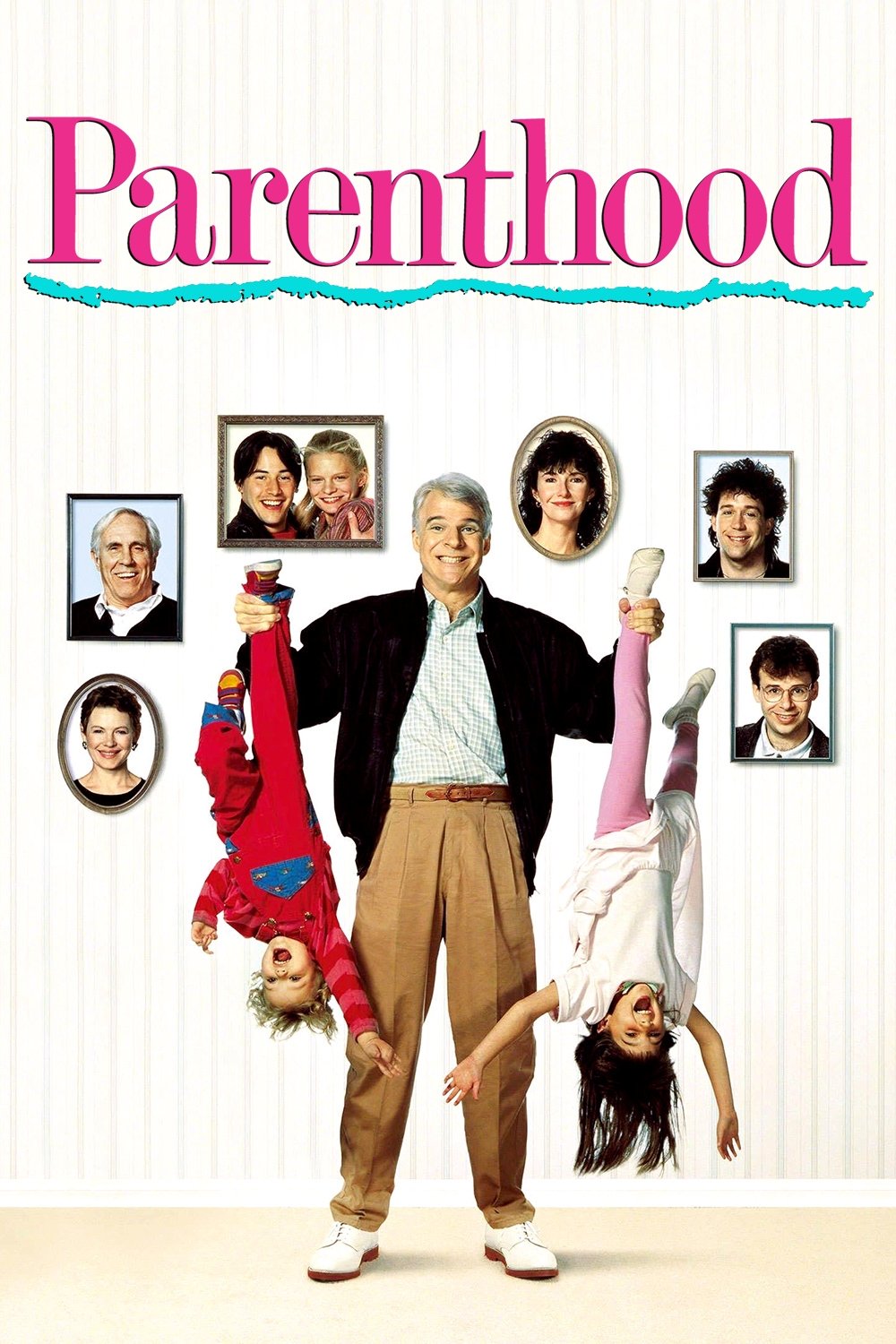
Parenthood poster

Parenthood

124 minutes

Cast

Selected cast credits · Film reference

Steve Martin Gil Buckman
Mary Steenburgen Karen Buckman
Dianne Wiest Helen Buckman Lampkin Bowman
Jason Robards Frank Buckman
Rick Moranis Nathan Huffner
Tom Hulce Larry Buckman
Martha Plimpton Julie Buckman-Lampkin Higgins
Keanu Reeves Tod Higgins
Joaquin Phoenix Garry Buckman-Lampkin (credited as Leaf Phoenix)
Harley Jane Kozak Susan Buckman
Dennis Dugan David Brodsky
Helen Shaw Grandma
Jasen Fisher Kevin Buckman

Parenthood | The Rewatchables

Explore episodeClose episode

Half-Assed Internet Research

Failed 1990 NBC series; Blonde Goddess tape; Wiest and Steenburgen friendship; Florida location; Plimpton wig and mohawk; Helen Shaw’s final film; cast murder game; Martin’s late fatherhood

In the discussion (11)
Approx. transcript time · 00:35:39Read transcript
  • Brought forward from internet research: NBC ordered a Parenthood series from a rough cut, per Bill Carter in The New York Times, and the 1990 show was canceled after twelve episodes.
  • The 1990 series cast David Arquette and a young DiCaprio in the Garry role, part of a late-1980s wave of failed movie-based shows such as Ferris Bueller, Working Girl, Uncle Buck and Dirty Dancing.
  • The later Parenthood series is considered good by those who watched early seasons; Friday Night Lights is an outlier because it reworked the premise.
  • The Ferris Bueller TV show’s joke about a poster of Matthew Broderick playing him is recalled as hacky.
  • The adult tape Helen finds was reportedly Blonde Goddess, a 1982 film whose opening parodied Indiana Jones.
  • Dianne Wiest and Mary Steenburgen were reportedly best friends who worked as waitresses together at the Magic Pan before being cast as sisters-in-law; both won Oscars.
  • The film is set in St. Louis but was shot in Florida, with palm trees and a Publix visible.
  • Martha Plimpton dated River Phoenix for nearly five years and began the shoot bald from a prior role, wearing a wig until Ron Howard had her shave her head into a mohawk.
  • Helen Shaw, who played the grandmother, made her final film here and died in 1997 at age 100.
  • During filming the cast became obsessed with a Mafia-like murder game played through eye contact, including during the dinner scene.
  • Steve Martin did not become a parent until age 67 in 2012 despite starring in two iconic parent movies of his generation.

Most Rewatchable Scene

Robards’s end-zone speech into the Little League catch and dance

In the discussion (14)
Approx. transcript time · 00:39:06Read transcript
  • The opening minivan chaos, with children piling out, a small naked boy wearing a holster and a daughter throwing up, is nominated as capturing life with young kids.
  • Larry’s dinner pitch for hydroponics is nominated as the kind of sales pitch one host loves in movies.
  • The principal telling Gil and his wife that Kevin needs a special school is praised as well written, though not the most rewatchable.
  • The birthday party sequence is favored for Cowboy Gil, the boy banging his pail-covered head into the wall, the grandmother on helium, and the stripper mix-up at the lodge.
  • Helen discovering Garry’s tape, Keanu Reeves’s character explaining Garry’s masturbation, and the grandmother asking what channel it is are nominated.
  • Gil and his wife searching the garbage for a retainer, with Gil reflecting that children are perfect until they grow up to be like him, is a smaller nomination.
  • Robards’s father character seeking Gil’s advice with the no-end-zone speech leads into the Little League game; that stretch is declared a winner and favorite part of the movie.
  • The Little League dance is called perhaps the best moment of Steve Martin’s career for his physical comedy; he first taunts Clint Howard’s character, and his wife’s perspective contrasts his intensity.
  • The grandmother’s roller-coaster speech works because it is corny and the characters are dismissive before its meaning lands.
  • The closing hospital montage is called heartwarming despite a risk of corniness.
  • The first choice is Dianne Wiest reviewing the photographs Julie and her boyfriend took, balancing concern, fury and admiration, with favorite lines about the vibrator and Garry. — Van Lathan
  • Two more choices follow: Larry’s confrontation with his father, where their father favors Larry because Larry absorbed his philosophy while Gil rejected it, and the vibrator scene. — Van Lathan
  • Given the choice between the photographs and the Little League game, the second baseball game is chosen because of Robards and Martin. — Chris Ryan
  • Another participant says the second baseball game is also their choice.

Picking Nits

Towering Little League pop fly; Martin playing 35; baseball positioning; uninjured car-crash couple; sexual content; Moranis’s classroom song; developed sex photos

In the discussion (10)
Approx. transcript time · 00:52:20Read transcript
  • Moved up from picking nits: the first baseman explodes into the outfield impossibly fast under a pop fly that hangs for about fifteen seconds.
  • A 32-mile-per-hour pitch and a weak batter could not produce that pop fly, and the first baseman is a slow slugger type rather than a quick first baseman like John Olerud.
  • The biggest nitpick is that Martin, 44 and looking older, plays a 35-year-old; he is called miscast despite being great.
  • If Gil is 35 with a nine-year-old, he would be about fifty at the college graduation yet appears elderly with a cane.
  • A generational talent gap is suggested between the Hanks-Keaton group and Martin; Dan Aykroyd or Bill Murray might have fit, but the character should have been written older, which would also sharpen the late pregnancy.
  • The team’s best player would pitch or play shortstop rather than first base; Lou’s grievance comes from Gil’s positioning of Kevin, and a manager could simply move the left fielder to second.
  • Gil or his wife should have been hurt in the car accident, although the nature of the crash is unclear.
  • The film pushes the limits of its rating with a vibrator, pornography, oral sex and sex photographs.
  • Rick Moranis singing in the classroom is called a least-favorite, overly long scene.
  • Developing sex photographs at a local shop seems implausible; developers reportedly refused to print some photos.

What’s Aged the Worst?

Baseball scenes; boyfriend’s racing subplot; rosy final act; Kevin’s school handling; tower-shooting fantasy and bomb-threat joke; Leaf Phoenix credit; limo stunt double; Cool’s treatment; Larry’s gambling talk; Martin as a 35-year-old

In the discussion (10)
Approx. transcript time · 00:53:13Read transcript
  • Moved forward: all the baseball scenes are poor, especially the Cardinals nostalgia montage, where research says the runner pulled a hamstring over twelve takes.
  • Beyond the baseball scenes, the boyfriend’s shoehorned racing career and crash, after which he walks away and gets a job, is called the worst part of the movie.
  • The last twenty minutes are too rosy; the writers needed a closer like Rivera or Bill Goldman, as with City Slickers; killing the grandmother could have supplied a funeral, though ending with a birth may be why it is rewatchable.
  • The school ambushing the parents with a therapist and effectively expelling Kevin would not happen now and seemed extreme even then; Kevin’s portrayal would spark lengthy online backlash today.
  • Kevin’s tower-shooting fantasy and a throwaway joke about a school bomb threat have aged badly, part of a 1980s motif also seen in Full Metal Jacket.
  • The Leaf Phoenix credit is joked about, with a suggestion to recut a trailer touting Academy Award winner Joaquin Phoenix.
  • Larry being thrown from a limo uses an obvious stunt double, though the scene is loved.
  • Cool’s treatment is mentioned again as rough.
  • Larry’s gambling dialogue lacks sports-betting fluency despite Tom Hulce’s greatness in Amadeus; late-1980s films did not know gambling language, with Pete Rose and a later 90210 gambling plotline recalled.
  • Steve Martin not looking 35 is added as a final item.

What’s Aged the Best?

Joaquin Phoenix; Kanye West lyric; Keanu Reeves; overlapping young cast; thumb trick; helium grandmother; Phoenix and DiCaprio rivalry; Garry’s room; the boyfriend’s arc; Grazer nude-photo backstory; Cure poster; Kevin’s tense face; Harley Jane Kozak; money realism

In the discussion (16)
Approx. transcript time · 00:53:29Read transcript
  • Joaquin Phoenix, then credited as Leaf, gives a performance that forecasts an Oscar winner, especially when his face breaks while asking his father if he can live with him.
  • One participant did not realize the actor was the boy from Parenthood until after Gladiator, when a sister pointed it out.
  • A Kanye West lyric from Gone about a new wife and “now you’re Jennifer Aniston” is said to borrow from the film’s line about a new wife and family.
  • Keanu Reeves in his pre-Speed, Bill and Ted phase is fun and owns the boyfriend role, compared with David Arquette taking it in the TV series.
  • The cast captures an era of overlapping young actors, with Reeves and River Phoenix making a Gus Van Sant film and Martha Plimpton dating River Phoenix; Plimpton is also praised.
  • Gil’s thumb trick still delights small children.
  • The grandmother inhaling helium is favored, as any helium scene is funny.
  • Per the research, there was a rivalry in which DiCaprio sought the Garry role, Phoenix got it, and the two competed for parts, with Phoenix measuring himself against DiCaprio.
  • Garry’s chaotic room is praised as a horror show compared with a real teenager’s room.
  • The boyfriend character as every parent’s nightmare who turns out decent is a favored concept.
  • The nude-photo discovery reportedly happened to producer Brian Grazer; developing such photos in the 1980s is joked about.
  • The Cure's Boys Don't Cry poster in Julie's room is appreciated.
  • Kevin’s tense face became a recurring reference in an early sports column, seen in a head coach during the Super Bowl and in LeBron James.
  • Harley Jane Kozak, also Helen in When Harry Met Sally, is appreciated as an actor who never quite broke through.
  • The film’s candid treatment of money, including Larry’s debts, Gil’s worries about private school, and summer-school pay funding a vacation, is more relatable than shows where money is no object.
  • The car sex-act gag is raised but deferred to Apex Mountain.
In the discussion (2)
Approx. transcript time · 01:09:42Read transcript
  • Casting what-ifs is announced, then paused so one more thing about what aged worst can be said.
  • Casting information was hard to find and many actors were rumored for Gil; Robin Williams is the interesting alternative who could have handled the Little League scene, though Robards as his father might have felt odd.
In the discussion (2)
Approx. transcript time · 01:13:47Read transcript
  • Keanu Reeves seems to be in a slightly different movie with an unexplained racing career and backstory; the award, not always given, goes to him approvingly.
  • Tom Hulce is the alternative: he is in the right movie, but his flight to Chile to escape gamblers suggests a separate film, and his father says he will never be seen again.
In the discussion (3)
Approx. transcript time · 01:14:58Read transcript
  • Keanu may be ineligible for having too many scenes; Clint Howard and the grandmother are nominees until Dennis Dugan as Gil’s boss is nominated and called the winner.
  • Dugan’s boss exercises in business clothes during work hours, talks down to Gil, and lights a cigarette as soon as he steps off the machine.
  • The research segment later says Helen Shaw’s grandmother lost the award to Dennis Dugan.

Apex Mountain

Steve Martin in 1979; Parenthood for Mary Steenburgen, tentative; A Beautiful Mind or Apollo 13 for Ron Howard as director; Happy Days free-throw scene for Ron Howard as actor; Harley Jane Kozak; the Ford convertible; Randy Newman; Amadeus for Tom Hulce; City Slickers for the screenwriters; The Bad News Bears films for Little League scenes; The World According to Garp; the Pam and Tommy Lee tape

In the discussion (15)
Approx. transcript time · 01:20:19Read transcript
  • Steve Martin’s Apex was previously assigned through Father of the Bride; the real peak is 1979 with Saturday Night Live guest-hosting, The Jerk, comedy albums and arena stand-up, prompting mock objections for Shopgirl and HouseSitter.
  • Mary Steenburgen’s Apex might be this film rather than the Howard Hughes movie, and her character is linked to Randy Newman’s song.
  • Ron Howard’s directing Apex is argued as A Beautiful Mind because it won him the Oscar; Apollo 13 is offered as the alternative.
  • Apollo 13 is favored for Ron Howard’s directing Apex, described as a mainstream rather than unusual view. — Chris Ryan
  • Ron Howard’s acting Apex is the Happy Days scene where Richie misses a game-winning free throw and his father offers a candy bar.
  • Harley Jane Kozak is definitely at Apex here, as is the Ford deluxe convertible.
  • Randy Newman is a yes for the Oscar-nominated song and the era when I Love L.A. became a Lakers staple; a fan argues he had several peaks, Toy Story is attributed to Craig, and The Natural score is noted, while another host resents him for the Lakers and Dodgers.
  • Parent comedy movies are considered, with Folks! and National Lampoon films raised.
  • Tom Hulce’s Apex is Amadeus, which predates this film.
  • City Slickers is the Apex for the film’s two screenwriters.
  • For feel-good Little League scenes the answer is not Parenthood but The Bad News Bears and Breaking Training, with Hardball and Rookie of the Year also raised.
  • A fan theory imagines the Hardball coach as Keanu’s Parenthood character after moving to Chicago and picking up gambling from Larry.
  • Parenthood is called up there for funny great-grandmother characters, which are hard to pull off.
  • For car accidents caused by oral sex, The World According to Garp is declared the winner, recalling its driveway scene to horrified reactions.
  • This film is not the road-head peak; the answer is the Pam and Tommy Lee tape, with a story about ordering it by phone before the internet.

Probably Unanswerable Questions

Sequel about Cool; Cool’s name and race; Kevin’s current job

In the discussion (4)
Approx. transcript time · 01:33:45Read transcript
  • Both others would have watched a 2000 sequel about Cool, perhaps a thriller searching for Larry in Chile like Proof of Life.
  • Cool’s name, his sudden appearance and the choice to make him Black are called off-putting, though the viewer chose not to be bothered while watching.
  • Kevin’s current job is imagined as Padres GM in advanced analytics, Twitter CEO or a Bitcoin investor, or simply a healthy life.
  • Kevin is also imagined blocking a host on Twitter or working for The Ringer and making the tense face on Zoom.
In the discussion (4)
Approx. transcript time · 01:36:34Read transcript
  • Dianne Wiest is proposed over the obvious choices of the director or the lead star because she is funny and heartbreaking in every scene despite less screen time, and she was Oscar-nominated for the role.
  • Mary Steenburgen is praised as grounded and for breaking out of a thankless wife role, without being named as a pick.
  • Ron Howard gets a vote because the film followed the Willow flop and three comedies and proved he was a real director, opening thirty years of work.
  • Steve Martin gets a vote while conceding Wiest is best in the film, because the role shows his full range from Cowboy Gil to scenes with Robards; another participant agrees he shows all five tools.
Podcast choices
Speaker not identified
Dianne Wiest
Speaker not identified
Ron Howard
Speaker not identified
Steve Martin

Producer review

Nostalgia for the era’s simpler look and technology

In the discussion (3)
Approx. transcript time · 01:38:42Read transcript
  • The producer liked the film a lot and feels nostalgia for the era’s look, clothes, home life and simpler technology despite not being alive then. — Craig Horlbeck
  • The hosts mock the nostalgia as insulting to people who lived then; the producer adds film cameras and no iPads.
  • One host agrees the era through about 1995 had more conversation and looked better on camera, citing When Harry Met Sally.

More from the conversation

Network cross-promotion names Van Lathan's Higher Learning and Ringerverse shows and Chris Ryan's The Watch, followed by a trailer cold open for the film.
Approx. transcript time · 00:01:20Read transcript
The episode is billed as the third installment of a February series on troubled families; the prior entry, Rachel Getting Married, is described as important but not rewatchable.
Approx. transcript time · 00:02:36Read transcript
Asked what film to pick for the family series, Van chose Parenthood as a long-running family bonding movie rooted in his household's love of Steve Martin films such as The Jerk.
Approx. transcript time · 00:03:20Read transcript
The film is praised as aging well and as a favorite Ron Howard film; a surprise that it is 33 years old and moves so efficiently with so many characters.
Approx. transcript time · 00:03:58Read transcript
The movie resolves storylines that would take many hours of television, and dramatic scenes end with comic buttons that relieve tension.
Approx. transcript time · 00:04:17Read transcript
The flashback of Gil's father paying an usher to sit with him frames a baby-boomer drive to be a better father than one's own dad, with a personal family parallel.
Approx. transcript time · 00:05:01Read transcript
In 1989 there was little on-screen depiction of an anxious child like Kevin; today such characters are common, and the film's treatment of therapy stood out.
Approx. transcript time · 00:05:31Read transcript
The clash of parenting generations is illustrated by the grandfather telling Kevin to get his money back while Gil consoles him; a personal story describes being a worried, precocious child whose father recognized it in the film.
Approx. transcript time · 00:06:52Read transcript
The school-placement reaction is called an authentic period response in which families were embarrassed to admit problems.
Approx. transcript time · 00:08:37Read transcript
The film establishes roughly fifteen characters and four families within about fifteen minutes, like a TV pilot, and captures family as an enforced social circle.
Approx. transcript time · 00:09:08Read transcript
The early exchange where Gil needles his father about drunken weddings illustrates an era when people had to get along with relatives they would not otherwise choose.
Approx. transcript time · 00:11:14Read transcript
Family loyalty is compared to rooting for a sports team, including talking oneself into the James Harden trade for the Sixers; the episode is taped on a Monday.
Approx. transcript time · 00:12:23Read transcript
A childhood anecdote recalls a grandmother confiding doubts about a cousin's paternity, as an example of family secrets.
Approx. transcript time · 00:13:35Read transcript
The four adult siblings are laid out: Gil the normal son, driven Susan married to a man grooming their daughter as an overachiever, overwhelmed divorced Helen, and gambling son Larry, whose mullet is compared to Jaromir Jagr's and Richie Sambora's.
Approx. transcript time · 00:14:09Read transcript
Larry is framed as checking most boxes of a favorite movie-character type, invoking the Dion Waiters standard: wild-eyed, owing bookies, estranged from his father, overacting and lying.
Approx. transcript time · 00:15:14Read transcript
The seven children and the wider family are enumerated, reaching roughly fourteen or fifteen characters including Todd and the grandmother; the grandparents' wife and the middle daughter get the least screen time.
Approx. transcript time · 00:15:38Read transcript
Every character gets an arc, including Keanu Reeves in a handful of scenes and Larry's confrontation with his father; the grandmother has perhaps the most poignant moment.
Approx. transcript time · 00:17:01Read transcript
The film's many-branched family format has been copied for decades; it manufactures big stakes from small events like Little League games, a drag race, a school play and a no-show birthday entertainer.
Approx. transcript time · 00:17:54Read transcript
The school-play meltdown and roller-coaster idea capture the film's point that family crises are both enormous and not a big deal; a parent recalls a son's preschool-concert tantrum that he outgrew.
Approx. transcript time · 00:18:57Read transcript
Van makes the case that Parenthood is Ron Howard's best film, citing a top-five-ish list of Night Shift, A Beautiful Mind, Apollo 13 and Parenthood, with Cinderella Man and Backdraft raised; firefighters on a Baton Rouge film set reportedly disliked Backdraft.
Approx. transcript time · 00:21:35Read transcript
The film is described as a grounded ensemble comedy-drama that would be praised if made today; a counterpoint says Twitter would change it, and Cool would not be written as biracial now because his parentage is used to make Larry seem more shameful.
Approx. transcript time · 00:22:29Read transcript
The Babaloo Mandel and Lowell Ganz script is called perfect and Howard's restraint is credited; the film is argued to be his most enduring and emotionally connective.
Approx. transcript time · 00:23:43Read transcript
Howard is grouped with Rob Reiner and Barry Levinson as a safe-pair-of-hands director of the 1980s and 1990s who can work across genres, compared to coach Rick Adelman; A Beautiful Mind is called his closest to a great movie.
Approx. transcript time · 00:24:11Read transcript
A personal Ron Howard Mount Rushmore includes Night Shift, Rush, Parenthood and Ransom over Apollo 13, which is said to annoy through overfamiliarity, with the astronaut's wife called a poor character; Rush was praised and recalled from a Grantland column.
Approx. transcript time · 00:25:32Read transcript
A Beautiful Mind draws mixed reactions: its acclaim makes it hard to exclude, but two participants say they do not like it and Apollo 13 is argued to be much better.
Approx. transcript time · 00:26:56Read transcript
The Paper is cited as a Howard project with every ingredient, a strong cast and timely newspaper subject that never quite realized its potential, though it remains enjoyable.
Approx. transcript time · 00:27:09Read transcript
The Ron Howard Mount Rushmore is revised to Night Shift, Splash, Rush and Parenthood; he is praised for aligning with actors on the rise, including Michael Keaton, Tom Hanks, Russell Crowe, Steve Martin during his 1986-92 run, and Mel Gibson in Ransom.
Approx. transcript time · 00:28:14Read transcript
Gung Ho receives an honorable mention, with speculation that some scenes might not play today but that its treatment of the American-Japanese auto rivalry is probably fine.
Approx. transcript time · 00:29:16Read transcript
Howard's fame as the star of Happy Days and earlier The Andy Griffith Show is recalled; his departure to direct felt like a betrayal until Night Shift, and parents kept calling him Opie or Richie Cunningham.
Approx. transcript time · 00:30:03Read transcript
Typecasting from beloved TV roles is compared to actors from The Wire, Oz and The Sopranos, including Michael Imperioli and James Gandolfini; Howard's Arrested Development narration is noted.
Approx. transcript time · 00:31:48Read transcript
A Safe Hands Hall of Fame is suggested as a Big Picture podcast idea; Howard and Rob Reiner are seen as interchangeable for many films, and Howard's rescue of Solo is defended as a perfectly adequate Star Wars film.
Approx. transcript time · 00:32:36Read transcript
Screenwriters Lowell Ganz and Babaloo Mandel are praised as consistently excellent, previously discussed on the City Slickers episode.
Approx. transcript time · 00:34:18Read transcript
Box office and awards: two Oscar nominations for Dianne Wiest and Randy Newman, a $20 million budget and $120 million gross, with a recollection of a re-release to push it past $100 million.
Approx. transcript time · 00:35:01Read transcript
Banter mocks worry that the naked-child scene would be canceled today, likening it to a straw-man argument about critics of LeBron James.
Approx. transcript time · 00:39:28Read transcript
Larry's hydroponics pitch is compared to a future movie character pitching Bitcoin or NFTs.
Approx. transcript time · 00:40:45Read transcript
VFW lodges in films from Parenthood to Rounders are depicted as places where one wrong word gets someone beaten up.
Approx. transcript time · 00:42:48Read transcript
An instruction to Craig to play the grandmother's roller-coaster speech is followed by the clip; only the first name is spoken here.
Approx. transcript time · 00:46:54Read transcript
A spouse recalled seeing the film at about eleven and leaving with many questions about the sexual jokes; another participant did not understand the vibrator joke as a child either.
Approx. transcript time · 00:50:47Read transcript
A parent's anecdote about a son's messy room prompts discussion of whether teenagers are allowed door locks.
Approx. transcript time · 00:58:41Read transcript
Parents are recalled as using television to discipline, getting angry at a child for things a TV character did; a father watching The Empire Strikes Back said Luke should obey Vader, answered with a Donald Trump joke.
Approx. transcript time · 00:59:13Read transcript
A second mention of producer Craig's generation, in connection with 1980s photo developing, uses only the first name.
Approx. transcript time · 01:01:45Read transcript
Boston and Los Angeles sports anthems are compared: Randy Newman's Lakers song is resented, the Dropkick Murphys and Neil Diamond are associated with the Red Sox, and the Celtics lack an anthem beyond the dancing Gino clip.
Approx. transcript time · 01:23:24Read transcript
Sprawling multi-character family comedies with heart are now rare, with This Is Where I Leave You an occasional attempt.
Approx. transcript time · 01:24:38Read transcript
Asked for a Black equivalent of Parenthood, the answer proposes Soul Food as a multigenerational family story with parallel characters, though it is far less funny and its problems more dire.
Approx. transcript time · 01:24:57Read transcript
A Black Parenthood is suggested as an untapped crossover; films are only now examining Black family life without imposed societal drama, compared with Nomadland.
Approx. transcript time · 01:26:44Read transcript
Tom Hulce in Amadeus is compared jokingly with Andrew Garfield in Tick, Tick... Boom!, which one participant refused to watch while his family enjoyed it.
Approx. transcript time · 01:27:46Read transcript
Ivan Reitman's death the previous day is marked with a tribute: his rewatchable films including Dave and Stripes, a personal acquaintance with son Jason, and his influence on Seth Rogen, Apatow-style comedies, lovable-loser premises and genre-blending comedy.
Approx. transcript time · 01:40:45Read transcript
The closing credits the episode as produced by Craig Horlbeck (ASR Horlebeck), promotes Van's and Chris's other shows, and says two more family-series episodes remain, possibly as a double next week.
Approx. transcript time · 01:44:04Read transcript