Rapid crosscutting repeatedly interrupts developing performances, especially Cruise’s bedside breakdown.
Opening coincidence vignettes are nominated as thematic entry points, though less compelling on repeat viewing; the scuba story is preferred over the drawn-out suicide story.
All Cruise scenes are favored in principle, especially Frank’s grand entrance.
Moore’s pharmacy meltdown, the frog downpour and Stanley needing to urinate during the quiz show are nominees.
Frank confronting Earl is the agreed winner, from his arrival through the breakdown; Hoffman crying in the background deepens it and the frogs awaken Earl.
Anderson’s 1999 prediction that Magnolia would be his best film is rejected; its personal ambition and flaws make it tempting to mentally repair.
Reilly’s subplot, Moore’s excessive intensity and overall length are criticized; removing Stanley and Donnie is proposed.
Unlike For Love of the Game’s obvious proposed cuts, this film invites disagreement over which stories are expendable; the quiz material is compelling but its necessity uncertain.
Walters is criticized as inadequate for a complicated role and its final scene, but defended as deliberately portraying an unpleasant, introverted cocaine addict rejecting kindness; later Adams or Stone is imagined as an alternative caliber.
Reilly’s simplicity is compared unfavorably with Forrest Gump and considered too prolonged, though defended as purposeful incompetence.
Moore’s subplot is proposed for removal; the pharmacy behavior seems implausibly intrusive and her lawyer-office confession excessively unhinged.
Rain and 99 percent humidity seem unlike Los Angeles, with the frog storm acknowledging the film’s unreality.
The Wise Up singalong loses novelty after years of musical television episodes.
Frank’s threatening intrusion into the interviewer’s space feels uncomfortable.
Frank’s self-help persona, the singalong, 1970s Hollywood nostalgia and television as a portal to tawdry distractions feel 1999.
Ordering porn magazines and deliveries by telephone feels pre-app 1999.
Anderson’s Fiona Apple relationship and bucket hat define the era; their intense creative interaction in That Moment and later friendship/video collaborations are admired.
Debra Winger was reportedly considered for Linda and Brando for Earl; Winger might improve a performance deemed too similar to Amber Waves and emotionally unprepared.
Cruise is proposed but challenged for excessive screen time; Michael Bowen as Stanley’s father is an alternative and possible winner across several awards.
A ten-episode series is enthusiastically preferred, centering individual episodes on characters with shared opening and closing chapters and background overlaps.
The frog storm’s meaning, national significance and geographic reach are questioned; a mother’s interpretation treats it as life-changing unpredictability rather than realism.
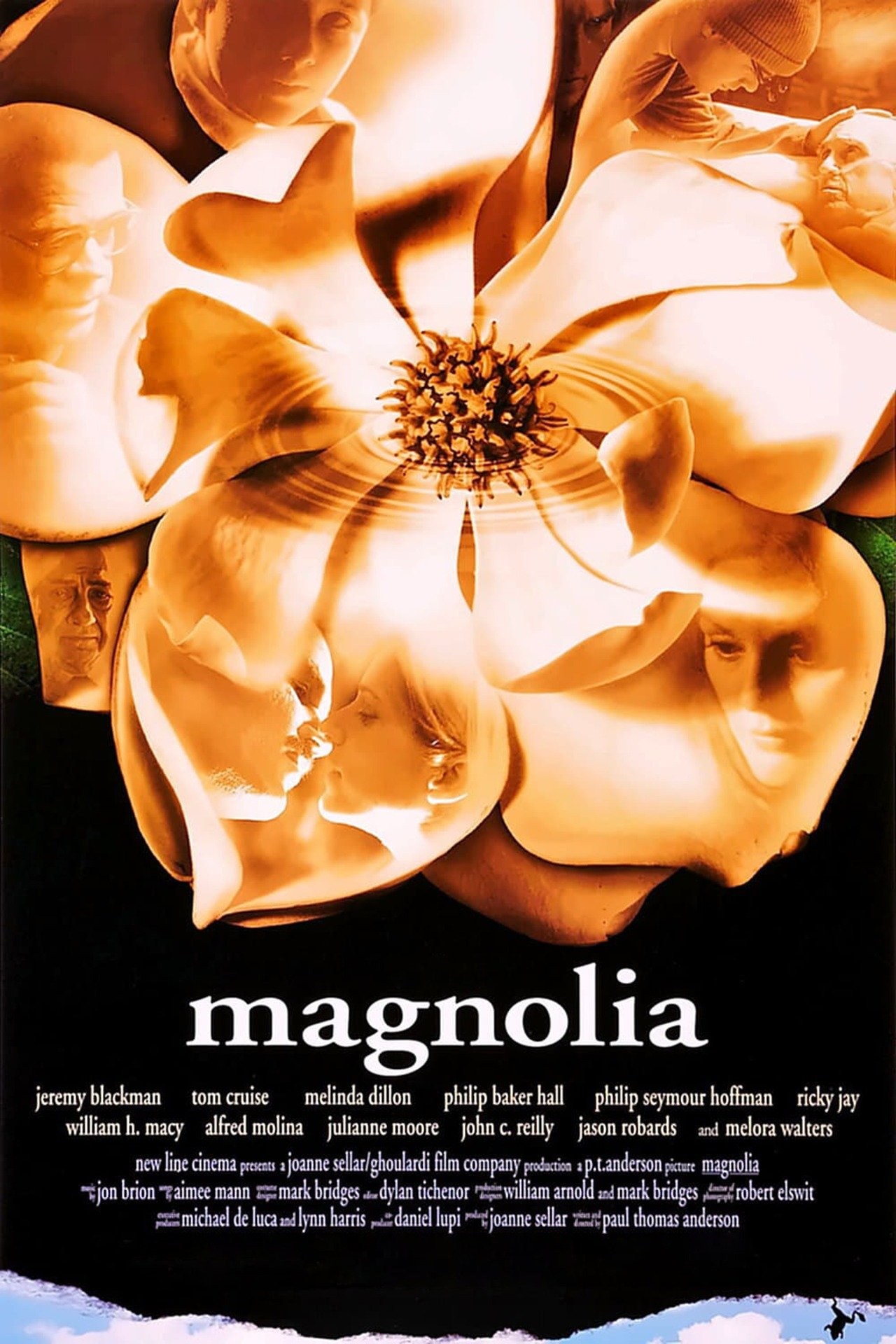
The unexpected theatrical shock, Claudia’s apparent hallucination and story-changing consequences defend the frogs as a bold essential choice; poster clues were overlooked.
Linda and Frank’s next conversation and Claudia’s third date with the officer are imagined; the Trump presidency is jokingly used to make the frogs feel plausible.
Claudia’s apparent abuse by Jimmy is considered sufficiently clear despite ambiguity; its necessity and possible echo of the Woody Allen story are debated.