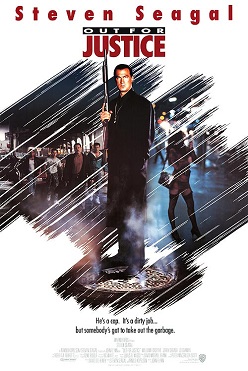
Under Siege is favored for mass recognition, Out for Justice for the devotee’s version, and Hard to Kill if the bust carries the coma wig and beard; Seagal is imagined choosing On Deadly Ground himself. — Kyle Brandt
This is affirmed for unintentional-comedy Seagal, while his overall career peak is placed at Under Siege and the leverage to direct his passion project. — Kyle Brandt
LeBrock is rejected; acupuncture is affirmed, prompting personal treatment stories and surprise that real sessions lack smoking needles. — Kyle Brandt
Cobra is preferred for empty-hospital murder attempts; The Fugitive’s one-armed Sykes is ultimately preferred for incompetent hitmen after the era as a whole is considered. — Kyle Brandt
Ojai is affirmed, with admiration for the house and speculation about renting it for a bachelor party. — Kyle Brandt
1990 is a possible action-film peak within the 1988–1992 run, when many major stars had releases and a new action film seemed to arrive every weekend. — Bill Simmons
The studio reportedly cut toward 95 minutes for additional screenings: family amusement-park opening, nurse interrogation and death, longer son kidnapping, and O’Malley funeral were removed. — Bill Simmons
An alternate ending reportedly killed Trent with another bank line; both hosts prefer that to arrest. — Bill Simmons
Seagal reportedly broke Connery’s wrist while teaching martial arts, collected guitars and swords, and leveraged Under Siege II participation for On Deadly Ground directing. — Bill Simmons
An account of overlapping marriages is recalled as a complicated sequence involving an unfinished divorce, annulment and LeBrock’s pregnancy. — Bill Simmons
Reports of deliberately striking stunt performers, short working days and allegations from Forsythe and Leguizamo are recounted as claims about on-set behavior. — Bill Simmons
A claimed CIA-advisor background is treated uncertainly, and a reported broken nose inflicted by Henry Silva on Above the Law closes the research. — Bill Simmons
The clerk is an early nominee for making a vivid impression before being abruptly killed. — Kyle Brandt
The hospital hitman and Johnny Carson are alternatives, but the clerk’s few magnetic lines opposite underplaying Seagal receive the final preference. — Bill Simmons
A conditional Steven Seagal Underacting Award is proposed for stripping away nuance and lowering his voice; “I have no words” on learning his son is alive exemplifies it. — Bill Simmons
The explicitly solicited take links betrayal, coma and revenge to Kill Bill, while the assassin’s bolo tie and Storm’s ponytail are compared with Vincent Vega; Kill Vern is proposed as a joke title. — Kyle Brandt
Seagal is compared with Billy Corgan: a major creative run whose reputation is eclipsed by a disliked persona, with the Under Siege pair likened to a double album. — Bill Simmons
A spouse’s admission of an early Seagal crush becomes an amused personal revelation, particularly his low voice and ponytail. — Bill Simmons
The production title Seven Year Storm has appeal, but Hard to Kill is preferred for its blunt promise and compatibility with “Steven Seagal is…” advertising. — Bill Simmons
LeBrock’s performance is considered underthought and disengaged. — Bill Simmons
The coma hair and beard are cheap and visibly peeling, although their absurdity is also entertaining. — Bill Simmons
Trent’s bank slogan is overused, with speculation that modern social media would ridicule it. — Bill Simmons
The love scene prompts concern about the lack of an intimacy coordinator, followed by a cited magazine account of sexual-misconduct allegations. — Bill Simmons
A magazine’s allegations from McCarthy, de Rossi, Chong, LaRue, Margulies and former assistants are discussed alongside Seagal’s Putin relationship and reported dishonesty; the hosts distinguish enjoying old screen work from their present view of him. — Bill Simmons
The nurse’s nickname for her comatose patient, ignoring danger, and seduction beside pictures of his murdered family make her characterization especially objectionable. — Kyle Brandt
The rapid physical recovery and apparent emotional recovery from his wife’s murder are implausible, while Storm fails to establish whether his son survived. — Bill Simmons
The absurd sheet-lifting admiration is read as evidence of Seagal’s ego, despite the nurse’s deeply inappropriate treatment of a coma patient. — Kyle Brandt
Storm’s wife is admired as attractive, while the unusually explicit love scene raises questions about Seagal’s conduct and his real marriage to LeBrock. — Bill Simmons
LeBrock’s lasting appeal from Weird Science and The Woman in Red is separated from her weak performance here; the passionless scene with her real husband contrasts strangely with his screen wife’s scene. — Bill Simmons
A small child instantly understanding a murder threat and escaping through a window is admired as an implausibly competent movie-child trope. — Bill Simmons
Serving chopsticks to a newly awakened coma patient and finding an Ojai house already outfitted as a martial-arts dojo are enjoyed as absurd conveniences. — Bill Simmons
William Sadler is welcomed through memories of Shawshank and Die Hard 2, with joking disappointment at the absence of naked tai chi. — Bill Simmons
Seagal’s dangling-arm running is a maximal source of unintentional comedy, compared with a toddler fleeing a towel; a running coach seems necessary, while dialogue praising his speed and online compilations compound the joke. — Bill Simmons
A near baseball-playing scene in Out for Justice creates regret over missing another potential display of awkward athleticism. — Kyle Brandt
Johnny Carson playing during sinister events supplies a pleasing happy-versus-scary contrast. — Kyle Brandt
The secret dock meeting during the opening credits recalls an action trope already parodied by The Naked Gun. — Bill Simmons
Storm’s inept-looking camera handling somehow records incriminating evidence perfectly, prompting comparisons with incompetent volunteer photographers. — Bill Simmons
The liquor-store robbery is enjoyably ridiculous: Oscar banter precedes execution and mass retaliation, followed by questions about leaving the crime scene. — Bill Simmons
Visible landing pads, Seagal’s smirk and champagne exchange, the clerk’s crude career joke, and police Oscar jokes amid corpses heighten the liquor-store scene’s comedy. — Bill Simmons
Emerging from the coma and escaping the hospital are a leading choice; the greasy assassin impersonates a doctor without identification, and Storm maneuvers a stretcher despite years of immobility. — Bill Simmons
The nurse’s sexual interest in an incapacitated patient is startling; sheet-lifting and suggestive kitten dialogue are condemned as grotesquely inappropriate while Seagal’s ego is mocked. — Kyle Brandt
The rapid recovery montage combines shaving, movement practice, motivational clippings, jogging, rope-board punching and acupuncture. — Bill Simmons
The recovery montage is an explicit favorite revisited for amusement: bandana, thin tank top, weak-looking punches, running and requested Chinese herbs all contribute. — Kyle Brandt
The modest exercises are contrasted with Rocky’s spectacular training; the mountain climax predictably receives an eagle sound effect. — Bill Simmons
The montage briefly pauses for the nurse to seek O’Malley before returning to more training. — Bill Simmons
The blood-bank threat finally follows recognition of Trent’s repeated catchphrase, leading into the house shootout. — Bill Simmons
Storm’s reunion with his son and O’Malley’s death are nominated, with visible squibs and wires undermining the shooting. — Bill Simmons
The pool-cue fight culminates in the crude revenge line for Storm’s wife, a favorite catchphrase reused socially. — Kyle Brandt