
Film credit
Harrison Ford
Also referred to as Ford
Stats
- Episodes featuring their films
- 9
- Movies in this archive
- 13
Rewatchables episodes featuring Harrison Ford’s films


Star Wars: A New Hope
1977 film
Bill Simmons · Chris Ryan · Sean Fennessey · Van Lathan
Aired May 6, 2025
Star Wars: A New Hope
1977 film
Bill Simmons · Chris Ryan · Sean Fennessey · Van Lathan
Aired May 6, 2025

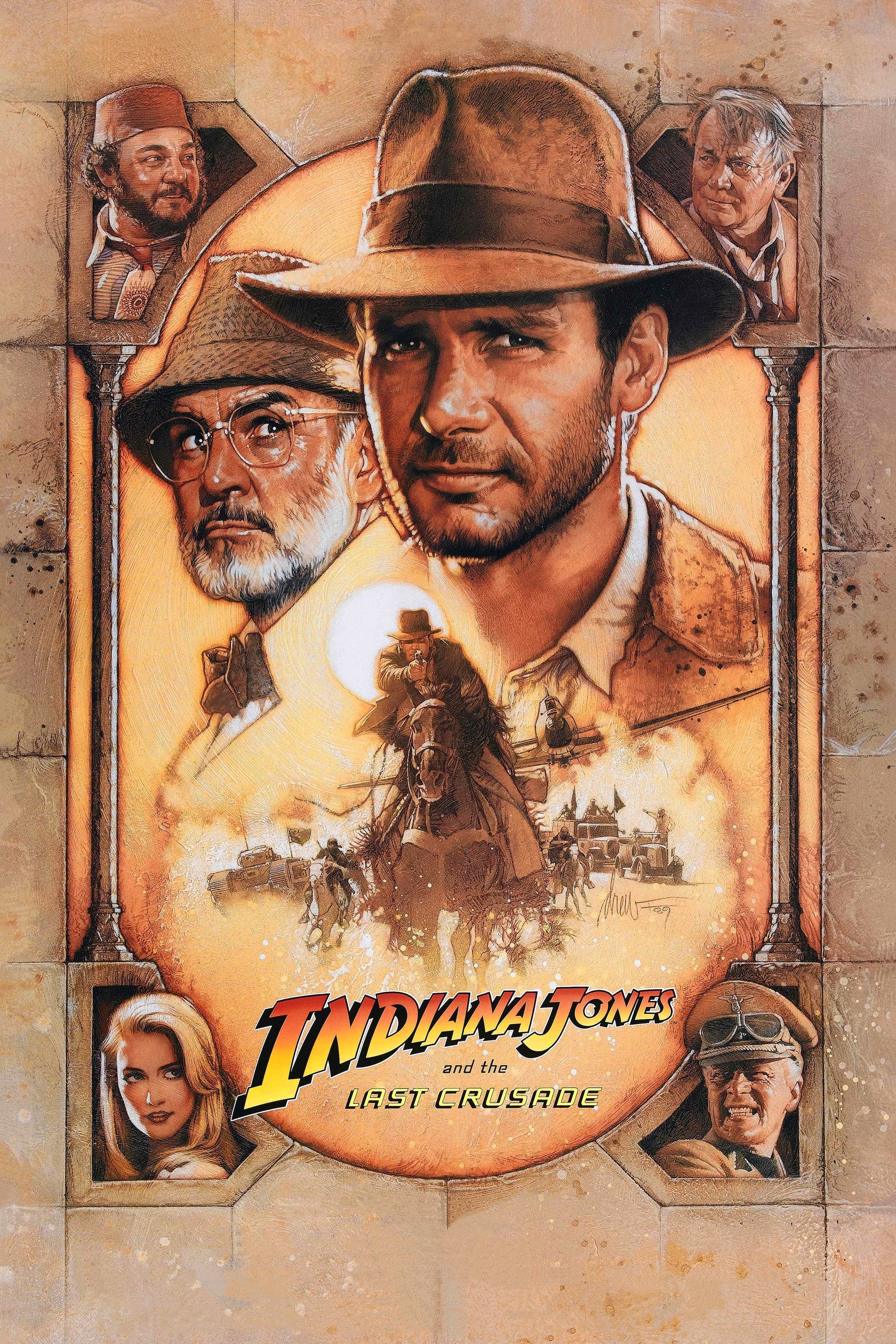
Indiana Jones and the Last Crusade
1989 film
Bill Simmons · Chris Ryan · Sean Fennessey
Aired June 20, 2023

Mentioned in discussions


Just One Oscar
Harrison Ford; Best Picture
In the discussion (1)
- Ford's acting and the film itself split the one-Oscar preferences. — Bill Simmons

Apex Mountain
Amish movie characters; corn silos; sponge baths; evil Danny Glover; Lukas Haas
In the discussion (8)
- Ford's Apex is tentatively this prestige breakthrough after earlier franchise peaks, because of the Oscar nomination and first-choice status. — Bill Simmons
- McGillis peaks at Top Gun instead. — Mallory Rubin
- Amish film characters receive an affirmative Apex; evil Philadelphia police remains uncertain. — Bill Simmons
- Corn silos and sponge baths receive affirmative Apex support; corn generally is less certain. — Bill Simmons
- The upper-body-only bath and Book's toileting while injured raise practical questions. — Mallory Rubin
- Evil Glover receives affirmative Apex with Shooter an alternative; Godunov peaks at Die Hard. — Bill Simmons
- Haas receives affirmative acting support then a joking later social-life alternative; train-station murder goes to Blow Out and Mortensen to Aragorn. — Mallory Rubin
- Weir's Apex is Dead Poets Society rather than Witness, given subsequent clout and lasting impact. — Mallory Rubin

Half-Assed Internet Research
Role preparation; barn raising; silo safety; boycott; Kurosawa’s admiration
In the discussion (4)
- Ford researched Philadelphia homicide while McGillis lived with an Amish widow and seven children; Ford deliberately avoided Amish research to preserve Book's ignorance. — Bill Simmons
- Character-based excuses for research are compared with Rupert Grint's homework anecdote, followed by sexual jokes. — Mallory Rubin
- The barn raising expanded from a paragraph; the silo actor reportedly had a hidden scuba regulator, prompting concern and jokes about danger. — Bill Simmons
- An Amish religious-freedom organization reportedly urged boycott; Kurosawa's admiration is celebrated. — Bill Simmons
Casting What-Ifs
Robert Redford; David Cronenberg; Burt Reynolds; uncertain Isabella Rossellini report
In the discussion (3)
- Redford reportedly sought the lead but producers feared disruptive rewrites; Cronenberg reportedly declined directing. — Bill Simmons
- Reynolds reportedly wanted the part then withdrew; a Rossellini offer is treated as uncertain research. — Bill Simmons
- Ford reportedly doubted McGillis before Weir persuaded him; whether this reflected her personally or inexperience is unresolved. — Bill Simmons

The Stephen A. Smith Hottest Take Award
A western rather than a cop movie; John Book as Ford’s richest role
In the discussion (7)
- The film is argued to be a western and love story with cops, rather than fundamentally a cop movie. — Mallory Rubin
- The other response agrees that the police plot is mostly machinery, without the usual station scenes. — Mallory Rubin
- John Book is proposed as Ford’s richest and hardest role, above Indiana Jones and Han Solo. — Bill Simmons
- Redford is considered less sexually convincing, while Pitt or mid-to-late-2000s DiCaprio might manage the role. — Bill Simmons
- The difficulty of combining action, romance and rapport with a child is agreed, though not necessarily the number-one ranking. — Bill Simmons
- Crowe is another possible performer, with Proof of Life cited and his magnetism debated. — Bill Simmons
- Book, Han Solo and Indiana Jones are proposed as parallel peaks rather than a single best role, with Kimble added as a possibility. — Mallory Rubin

The Butch’s Girlfriend Award for the Weakest Link in the Film
Rachel’s quick romantic transition; Book’s insufficient concern for Carter and Elaine
In the discussion (2)
- Rachel seemingly moves on too quickly after her husband's death; the counterargument says Daniel pursues her and Ford's appeal is exceptional, while conceding limited visible mourning. — Mallory Rubin
- Book shows insufficient urgency about danger to Carter and Elaine; protecting Samuel explains some caution but does not eliminate the risk. — Mallory Rubin

In the discussion (6)
- The screenplay choices and Ford holding the kitten are aged-best selections; the kitten image is requested as funeral imagery. — Bill Simmons
- Dirty cops losing their principles, Ford's run, visual restraint, Dutch-master lighting and inexperienced supporting players are aged-best choices. — Mallory Rubin
- Haas's unexpected later place in DiCaprio's social circle is noted with basketball-role comparisons. — Mallory Rubin
- The early milking scene, its teat joke and calling Book English remain funny. — Bill Simmons
- Godunov's life and early death are discussed; Amish observers reportedly watched but would not appear, with Mennonites among the extras. — Bill Simmons
- The dialogue-free final romantic farewell is preferred to the scripted explanation. — Mallory Rubin

The most 1985 thing
Electronic score
In the discussion (3)
- The coffee-commercial reference is a period candidate and reportedly references Ford missing that advertisement role. — Mallory Rubin
- Elaine's appearance and deleted Donkey Kong scene date the film; hiding a paper address would fail in a modern digital system. — Mallory Rubin
- The electronic Maurice Jarre score is the stated most-1985 choice, admired but strongly of its era. — Bill Simmons

The Slow Ride / Kid Cudi – Pursuit of Happiness Award for Best Needle Drop
Wonderful World during the barn dance
In the discussion (2)
- The barn dance is the easiest scene choice and an exceptional personal favorite; it also receives the needle-drop award. — Mallory Rubin
- The barn dance embodies desire through awkwardness, sweat, lighting and near-kisses; Ford reportedly chose the song, performed as a cover because original rights were unavailable. — Mallory Rubin

Most Rewatchable Scene
Barn dance; final confrontation
In the discussion (14)
- Opening travel and Samuel's expressive child performance are admired; a child-actor Oscar is proposed and the intensity is less straightforward in adult roles. — Bill Simmons
- The bathroom murder excels through the stall switch, tiny hands, eyes and hat retrieval, the latter compared to Indiana Jones. — Mallory Rubin
- Recognizing Glover's photograph is praised for silence, slow motion, eye contact and Book lowering the finger. — Mallory Rubin
- The parking-garage shootout and blood reveal provide smart thriller action, with the elevator motorist adding comedy. — Mallory Rubin
- Eli's gun conversation supplies a moving moral argument about hands and hearts, compared to Gandalf's restraint. — Mallory Rubin
- The barn dance is the easiest scene choice and an exceptional personal favorite; it also receives the needle-drop award. — Mallory Rubin
- The barn dance embodies desire through awkwardness, sweat, lighting and near-kisses; Ford reportedly chose the song, performed as a cover because original rights were unavailable. — Mallory Rubin
- The barn raising makes communal work riveting, integrates Ford's carpentry, and conveys rivalry and gossip through lemonade and lunch gestures. — Mallory Rubin
- The bath invitation communicates Rachel's confidence and defiance while Book hesitates; lightning, the mirror and the open door make desire visible. — Mallory Rubin
- Punching the bully is a satisfying conventional 1980s beat following news of the partner's death; Book openly distinguishes his methods from Amish ones. — Mallory Rubin
- The final invasion uses Samuel, livestock and the silo effectively; the surviving chief's surrender is an unusual moral collapse rather than routine violent death. — Bill Simmons
- Glover was reportedly originally to die by mule, changed to a shooting at Ford's request; Book's use of farm knowledge pays off earlier scenes. — Mallory Rubin
- The climax is the other final scene preference for spatial clarity, renewed thriller tension and the near miss before Book's planned departure; Schaefer likely learns the location only after the bully incident. — Mallory Rubin
- The barn dance and final confrontation remain split preferences. — Bill Simmons
In the discussion (1)
- Ebert awarded four stars, praising the adult love story, thriller and Ford's performance. — Bill Simmons

Casting What-Ifs
Unverified Jake candidates: Harrison Ford, Mel Gibson, Michael Douglas, Tom Hanks
In the discussion (1)
- Harrison Ford, Mel Gibson, Michael Douglas and Tom Hanks are reported Jake candidates, but the reliability is explicitly doubted. — Bill Simmons

