‹ All movies
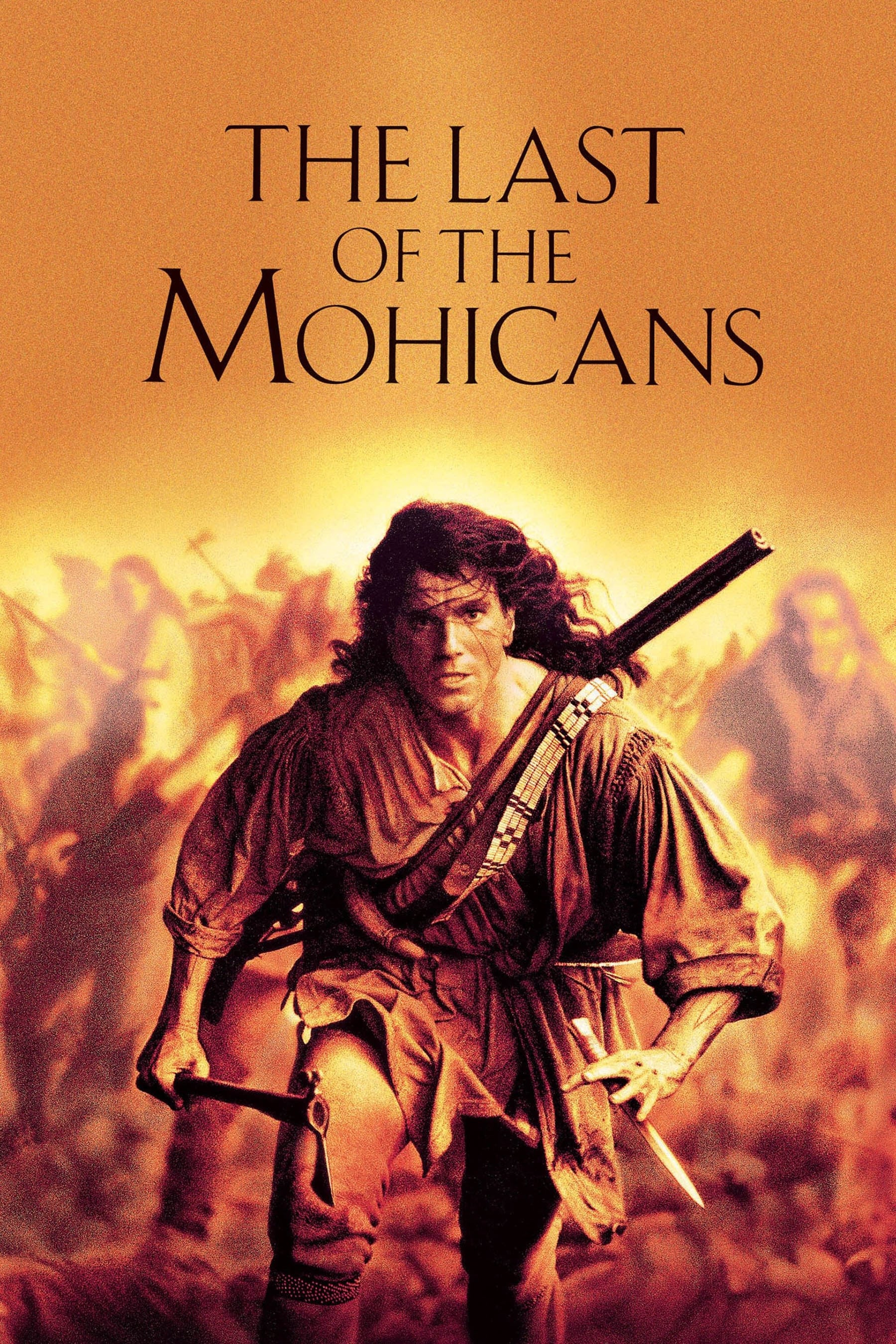
The Last of the Mohicans poster

The Last of the Mohicans

112 minutes

Cast

Selected cast credits · Film reference

Daniel Day-Lewis Nathaniel "Hawkeye" Poe
Madeleine Stowe Cora Munro
Russell Means Chingachgook
Eric Schweig Uncas
Jodhi May Alice Munro
Steven Waddington Major Duncan Heyward
Wes Studi Magua
Maurice Roëves Colonel Edmund Munro
Patrice Chéreau General Montcalm
Edward Blatchford Jack Winthrop
Terry Kinney John Cameron
Tracey Ellis Alexandra Cameron
Dennis Banks Ongewasgone
Pete Postlethwaite Captain Beams
Colm Meaney Major Ambrose
Mike Phillips Sachem

The Last of the Mohicans | The Rewatchables

Explore episodeClose episode

Producer credits not yet identified.

Roger Ebert's review

In the discussion (3)
Approx. transcript time · 00:24:29Read transcript
  • Roger Ebert gave the movie three stars.
  • Ebert's review is quoted: not as authentic and uncompromised as it claims, more of a 'metinade' (as transcribed; likely matinee) fantasy than it wants to admit, but probably more entertaining as a result.
  • The rating is repeated as three stars; the host thought Ebert would have gone three and a half and jokes that he disliked his seat that day.

Most Rewatchable Scene

Final cliff showdown ending with Chingachgook killing Magua

In the discussion (18)
Approx. transcript time · 00:27:58Read transcript
  • The episode notes include an ambush and then a second ambush; two ambushes in one movie, like multiple Gladiator fights, signal the right pick.
  • First ambush, about 20 minutes in: Magua mutters under his breath, walks to the back of the column, and a British soldier who greets him is tomahawked.
  • The ambush includes a scalping and Chingachgook's thrown tomahawk as Hawkeye and his two companions upend it, with confusion over whether Russell Means plays Uncas or Chingachgook.
  • The argument where the English do not believe Hawkeye yields 'Someday I think you and I are going to have a serious disagreement'; the hosts say the line was cut from the first version and restored in a later director's cut, one of three versions Mann has made.
  • Hawkeye pulling Cora away for the first kiss is praised for the building music.
  • A joke proposes a Vegas trance remix of the love theme after quarantine. — Chris Ryan
  • A joke about playing the theme during a spousal argument over the unclean sink while watching basketball in the bubble.
  • Second ambush: Magua cuts out the colonel's heart and vows to wipe out his seed, joked as excessive trash talk; the act is not shown, and Mann is joked to be saving the footage.
  • The waterfall scene's 'Stay alive, no matter what occurs. I will find you' is great stuff; anyone unmoved is a replicant, Duncan concedes he cannot compete, and the moment was in the summer 1992 trailer.
  • Magua presents the two women to the Sachem; Hawkeye walks in unarmed and takes blows; the Sachem's line about the white man is called a good quote, and the trade is narrated in NBA trade terms with Duncan offering himself.
  • That Sachem scene would be a favorite if not for the ending; older Sachem-type characters are 'always a home run'.
  • The film conveys the era efficiently, such as settlers insisting on defending their homes, described as an early American revolutionary spirit.
  • The cliff sequence: Uncas loses to Magua, his father runs in slow motion, and the music and images are called as overwhelming as Heat's bank robbery; the scene was watched about five times the night before.
  • Alice looks at Magua and steps off the cliff as Cora rounds the corner; the sisters go from a tea set in a meadow to giving themselves to the wild, and are game throughout, with Cora becoming a nurse.
  • A Madeleine Stowe tangent covers her Revenge and Stakeout run and her filmography, with Playing by Heart defended.
  • In the last scene Hawkeye and Chingachgook clean house; the wide shot of Magua and Chingachgook on the rock and the final 360 tomahawk swing are called one of the coolest shots seen in a theater.
  • That final scene is named as the most rewatchable pick, and the other participant goes with it as well.
  • Honorable mention: Hawkeye covering the courier from the fort wall; the courier is called the worst job in colonial America and the 'Postmates of 1757'.

What’s Aged the Best?

The music; Wes Studi as Magua; the romance; British-French stereotyping; Chingachgook and Uncas; the lacrosse game; the Kentucky directions exchange; Magua's third-person dialogue

In the discussion (10)
Approx. transcript time · 00:43:13Read transcript
  • The music is the first answer, emphatically: 'it's the music, it's the music, and then it's the music.'
  • Day Lewis is offered only as 'you could say'; Wes Studi's performance as Magua and the romance are named as aging well too.
  • The 1750s British-French stereotyping is praised, with a quoted line about Latin voluptuousness and Gallic laziness; a whole series of the two sides fighting would be welcome, though whom to root for is unclear.
  • Chingachgook and Uncas are a favorite father-son combo, likened to the speaker and his dad, with a Red Sox joke.
  • The lacrosse game is another pick, with jokes about betting on a round robin.
  • The exchange about going to Kentucky, answered 'face north, turn left, and walk', is praised as good underrated sarcasm.
  • Magua's lines are singled out, including his muttering to the English officer and his vow about the gray hair's heart and seed.
  • Magua's third-person speech is the favorite element, joked as a press-conference habit and a demand to be traded to the Hurons.
  • Studi is so good as Magua that he was hard to see as anyone else for years, including in Heat.
  • Magua is not a pure villain but a man set on revenge; a version from his perspective would be about justice, with jokes about Magua defenders in a player-friendly era.

What’s Aged the Worst?

Dense, hard-to-follow first hour; slow first-hour pacing

In the discussion (6)
Approx. transcript time · 00:48:09Read transcript
  • There is a lot of information in the first hour; the Duncan scenes are meant to convey it but the period-style dialogue makes few concessions, and one participant remains confused after many viewings.
  • The movie arguably could have used a narrator, from someone who hates narrators, with Henry Hill or Magua's ghost joked about.
  • The first hour could speed up; a counterpoint says the Hawkeye-Cora slow burn needs time, then concedes the music could cover a few trimmed minutes.
  • Hawkeye and Cora are called the favorite relationship in any Mann movie even though they barely have a real conversation.
  • More was wanted from the younger sister as a performer; the other participant thinks she is perfect as a shell-shocked character.
  • The Alice-Uncas bond is read as puppy love, with talk of whether a love scene existed; a two-minute setup scene would have helped, and no further aged-worst items are offered.

Casting What-Ifs

Brian Cox as Colonel Munro; Andie MacDowell as Cora; Jean Reno as Montcalm

In the discussion (4)
Approx. transcript time · 00:51:47Read transcript
  • The hosts say Brian Cox was offered Colonel Monroe and turned it down.
  • The hosts say Andie MacDowell (transcribed 'Andy McDowell') was in the mix for Cora; she and Madeleine Stowe could have swapped almost every role, and the speaker says Stowe wins their all-time battle.
  • Counterpoint on whether Stowe could have led Four Weddings and a Funeral, and whether Andy McDowell (as transcribed) could have led Bad Girls.
  • The hosts say Jean Reno was offered General Montcalm (transcribed 'Montcom'), which would have been weird.
In the discussion (2)
Approx. transcript time · 00:53:50Read transcript
  • Magua is ruled ineligible for being in too much of the movie.
  • The Sachem's roughly five minutes are praised: his demeanor, his line about the white men and darkness, brokering the trade, and how he listens to Hawkeye and recognizes Magua is not someone he should help; the role is credited to an actor named Mike Phillips.

Recasting Couch

No affirmative selection

In the discussion (3)
Approx. transcript time · 00:54:33Read transcript
  • The hosts are happy with the actress who played the younger sister; Uma Thurman is called too old after Dangerous Liaisons and Alicia Silverstone too young, and the role needs someone British.
  • Drew Barrymore is rejected; the role needs an unfamous, shell-shocked young girl.
  • No recast is offered, capped by an 'Oh my God, Uncas' joke.

Half-Assed Internet Research

Mann's takes and budget overrun; Fort William Henry set; waterfall reshoot; composer change; costume designer exit; release delay and three cuts; Native American extras; Russell Means's background

In the discussion (10)
Approx. transcript time · 00:55:26Read transcript
  • The hosts say Mann did at least 20 takes per setup, the budget ran $7 million over, and 20th Century Fox sent a representative to keep it on track.
  • A story has Mann shouting over speakers about an orange light that turned out to be the sun rising; the host questions whether it is true.
  • The hosts say the production used North Carolina for 1757 New York and spent $6 million on a Fort William Henry set built to historical specifications.
  • The hosts say Mann decided he did not like the waterfall scene and reshot it nine days before, as transcribed, 'Revere saw the movie', and that the 'stay alive, I will find you' moment came from the reshoot.
  • Citing a 1996 Randy Edelman interview, the hosts say Mann fired Trevor Jones over a more electronic score and brought in Edelman for a classical one; both are credited, with jokes about Jones being replaced.
  • The hosts say the original costume designer, a multiple Academy Award winner (transcribed 'Jay Matcheson'), left over artistic differences and removed his name, and Elsa Zampelli (as transcribed) finished; this is joked into Mann's pattern of people walking off sets.
  • The hosts say the film was scheduled for summer 1992, Mann delivered a three-hour version, Fox postponed it to September, and it was cut to two hours, with three cuts existing.
  • The hosts say the production employed 900 Native Americans from across the United States, most notably Cherokee.
  • The hosts say Russell Means was 52, making his first movie, and was a famous American Indian activist; they say he ran for vice president in 1984 as Hustler publisher Larry Flint's (as transcribed) running mate and lost the 1988 Libertarian nomination to Ron Paul.
  • A reported practical-joke war between Day Lewis and Stowe escalated from food fights to a staged bloody car crash; both hosts doubt it happened.

Apex Mountain

Wes Studi; Jodhi May; tomahawk throws; waterfall jumping

In the discussion (9)
Approx. transcript time · 01:00:19Read transcript
  • Not Day Lewis: his Apex is There Will Be Blood, one of the great performances of the last 50 years, though one could argue this is his mainstream Apex.
  • Michael Mann is a no.
  • Wes Studi is a yes, 'unfortunately', because he is great in this movie.
  • Jodhi May (transcribed 'Jody May') is a yes, since the speaker does not know what happened to her after this movie.
  • Full-scale tomahawk throws are Apex; no better one comes to mind, and everyone wanted a tomahawk afterward.
  • Talking about yourself in the third person is flagged but judged probably not Apex.
  • Hawkeye's jump into the waterfall is declared Apex Mountain for waterfall jumping, because The Fugitive followed the next year; water-park joke.
  • It is probably Apex Mountain for colonial frontier movies and maybe the best Revolutionary War era movie.
  • A claim that it might be Apex for MTV type of style action set to music is questioned: the other participant sees it as more classical and traditionalist, while granting it is the conclusion of the style begun with Miami Vice and far more modern than Jeremiah Johnson.

Picking Nits

Alice and Uncas's unexplained romance; single-courier communication; tea service in the wilderness; period wigs

In the discussion (4)
Approx. transcript time · 01:03:25Read transcript
  • It is unclear when the younger sister fell for Uncas, with jokes about a missed ice-cream date.
  • Wartime communication hangs on single couriers crossing the forest with no backup; the fix would be a triple courier system and trained birds. — Chris Ryan
  • Duncan's tea with Cora at a table in an open field raises who staffed it; the answer offered is England's policy of recreating home anywhere, an imperialist bent.
  • Wig strategy of the era: Colonel Monroe's gray wig is age-appropriate, and one participant would have gone Nick Cage Conair mullet; no further nits.
In the discussion (2)
Approx. transcript time · 01:05:41Read transcript
  • Two unmentioned lines are offered: 'Death and honor are thought to be the same, but today I learned sometimes they are not' and 'I'd rather make the gravest of mistakes than surrender my own judgment,' the latter joked as a Billy King line.
  • 'Someday you and I are going to have a serious disagreement' was already covered; 'Stay alive. I will find you' is called the best quote, with the Kentucky directions line recalled.

Sequel, Prequel, Limited Series, or All-Black Remake

Could be remade as a 10-episode series

In the discussion (3)
Approx. transcript time · 01:06:20Read transcript
  • It could be, but would be among the most expensive 10-episode shows if done correctly.
  • A series would address the confusing political context and the Alice-Uncas relationship, though the film works as it is and Mann would tinker with it forever.
  • It would also give Magua a backstory, joked as recording his own music and coaching youth lacrosse.

Probably Unanswerable Questions

Who to root for between the English and the French

In the discussion (1)
Approx. transcript time · 01:07:05Read transcript
  • Few questions are offered; the remaining one is who viewers were supposed to root for between the English and the French, called too complicated to handle, while conceding no expertise on the French and Indian War.
In the discussion (3)
Approx. transcript time · 01:07:05Read transcript
  • Daniel Day Lewis (transcribed 'Daniel Deelis') is named, prompting 'No Michael Mann?'
  • It is a great Mann movie, but this is among the favorite Day Lewis performances; he became a rock star household name off it and then chose a different direction.
  • Jokes imagine Day Lewis as Neil McCauley spending years learning metals and safecracking and serving time in San Quentin.
Podcast choices
Speaker not identified
Daniel Day-Lewis

More from the conversation

A Ringer network promo opens the episode, followed by trailer audio as a cold open.
Approx. transcript time · 00:00:00Read transcript
The film is framed as a 'semi' one-for-us because it was successful, famous and culturally impactful; the hosts note Michael Mann started the Rewatchables with Heat and say they will eventually do every Mann movie, probably ending with Blackhat.
Approx. transcript time · 00:00:47Read transcript
Genre question: a modern or revisionist frontiersman movie in a line with Jeremiah Johnson (1972), Dances with Wolves (1990) and The Revenant (2015); the hosts say Mann insisted it was a romantic adventure rather than a Western, the same year as Unforgiven, and that the film is set in 1757.
Approx. transcript time · 00:01:36Read transcript
Jeremiah Johnson is one participant's dad's favorite movie ever; he texts the line 'Some say he's up there still' whenever he rewatches it.
Approx. transcript time · 00:02:13Read transcript
1992 is called the last big year of the MTV style crossed with real movies; the last 15 minutes are basically a music video and among the best final 15 minutes of any movie, with Mann perfecting a style he started with Miami Vice in 1984.
Approx. transcript time · 00:02:33Read transcript
Jokes imagine recutting the ending to In the Air Tonight and a Miami Vice crossover with Tubbs at a phone booth.
Approx. transcript time · 00:03:10Read transcript
Day Lewis and Mann are framed as two perfectionist 'lunatics' who could have produced a Heaven's Gate but instead respected each other; each is quoted praising the other, the hosts joke that people get fired or walk off every Mann set, and note the two never worked together again.
Approx. transcript time · 00:03:43Read transcript
Could Day Lewis have played Neil McCauley in Heat? A slip to 'Neil Kavanaugh' is joked about as a Bruins left wing.
Approx. transcript time · 00:06:03Read transcript
Mann's chronology is traced: The Jericho Mile, Thief, The Keep (1983), Manhunter (1986), Crime Story, L.A. Takedown and a long documentary (transcribed 'Kiki Camerina story'), leaving a big gap before this film; filmographies collapse in memory.
Approx. transcript time · 00:06:33Read transcript
One participant loves the film the way many people love Titanic: a maximalist, lush widescreen romantic adventure; the maker of this movie could have been the biggest filmmaker in the world before Mann went digital with Miami Vice, Collateral and Public Enemies.
Approx. transcript time · 00:07:38Read transcript
Released in 1989 it would have gotten about 11 Oscar nominations, but Dances with Wolves undercut it and brought Oscar regret; the hosts say it received only a sound nomination.
Approx. transcript time · 00:08:37Read transcript
The film opened on a Friday that was one participant's 23rd birthday, with Singles out the week before.
Approx. transcript time · 00:09:32Read transcript
Anticipation was high: Mann's legend had grown with Thief and Manhunter on cable and VHS, and Day Lewis was a surprise Oscar winner for My Left Foot whose earlier films were not hits; this big-budget Mann film was the logical career choice.
Approx. transcript time · 00:10:11Read transcript
Day Lewis could have been the biggest star in the world, yet chose rarely to work and to transform for each role; the hosts imagine him in mainstream parts such as the Jeremy Irons Die Hard 3 villain or Lithgow's Cliffhanger role and note he never took one, even Nine being a learning exercise.
Approx. transcript time · 00:11:14Read transcript
His later filmography is listed; leaving this movie, the speaker thought he would be the biggest star in the world and that everyone younger than Harrison Ford should retire.
Approx. transcript time · 00:13:59Read transcript
Magazine-era preparation stories as the hosts relate them: months living off the land, training with a U.S. Army colonel, carrying his rifle everywhere including holiday dinners, avoiding modern technology and rolling his own cigarettes; the hosts say the authenticity shows in the opening hunt.
Approx. transcript time · 00:14:24Read transcript
The running scenes play without cuts or stunt doubles as the hosts describe it; the hosts say Mann shot in North Carolina because the actual Adirondacks area was too built up, and that having Wes Studi and Russell Means in their roles makes the film feel different from other Hollywood action films.
Approx. transcript time · 00:16:41Read transcript
Asked whether they were Mohican or Huron going in, the answer is Mohican; the hosts describe Magua as a spy who flips, say Mann likes stories without a clear right side, and say viewers root against the French and English and for the Native characters defending the land while Magua is the most despicable figure.
Approx. transcript time · 00:17:06Read transcript
Hawkeye is willing to let another man die to save Cora, but the hosts read Duncan as volunteering to salvage his dignity, unlike Billy Zane's Titanic villain.
Approx. transcript time · 00:18:29Read transcript
The hosts say Mann has described the 1936 film as a childhood memory he was trying to unlock; this film plays that role for one participant, and movies seen at 12 to 14 (48 Hrs.) are called the most influential.
Approx. transcript time · 00:19:17Read transcript
The film is described as Mann's attempt at a David Lean or Kubrick epic without the special effects later common in films such as Gladiator.
Approx. transcript time · 00:20:22Read transcript
Worst-case lead: Jan-Michael Vincent as a joke, then Val Kilmer as a plausible lead Mann would have liked (agreed); Hanks not athletic enough, Costner (transcribed 'Costa') already did Dances with Wolves, Bruce Willis too weird, and Mel Gibson later did The Patriot.
Approx. transcript time · 00:20:22Read transcript
The Cooper novel is called a treasured American text not well regarded as literature, which the film embellishes; the hosts give a $40 million budget and $75.5 million gross.
Approx. transcript time · 00:21:32Read transcript
1993 Oscars: Unforgiven won Best Picture over The Crying Game, Scent of a Woman, A Few Good Men and Howard's End; the hosts would add Malcolm X and this film in place of The Crying Game and Howard's End.
Approx. transcript time · 00:22:14Read transcript
Best Actor was 'the most loaded' field: Pacino won for Scent of a Woman over Downey (Chaplin), Eastwood and Denzel (Malcolm X), with Stephen Rea (transcribed 'Stephen Ray') taking a slot Day Lewis could have had.
Approx. transcript time · 00:22:51Read transcript
The Crying Game twist was a guarded secret; one participant recalls spoiling it for Holy Cross friends, and The Usual Suspects for a friend (transcribed 'Jacko').
Approx. transcript time · 00:22:51Read transcript
Redoing Best Actor, the answer is Denzel, followed by 'me too'; Pacino is still called unbelievable, and make-good Oscars are criticized.
Approx. transcript time · 00:24:29Read transcript
The film was immensely satisfying on release; the last stretch from the fort escape and 'I will find you' to the end flies.
Approx. transcript time · 00:25:28Read transcript
Blue Moon ad read, including pandemic Zoom small talk.
Approx. transcript time · 00:26:29Read transcript
Roman ad read.
Approx. transcript time · 00:42:15Read transcript
The episode is taped in one straight take on a Friday to make editing easy for Craig (transcribed 'Craig Horrell back'), with the PGA on.
Approx. transcript time · 00:43:13Read transcript
Blue Apron ad read.
Approx. transcript time · 00:59:17Read transcript
Mann tally: Collateral, Heat twice, this film, The Insider for Rewatchables '99 and Miami Vice; still to do are Manhunter, Ali and Blackhat, while Public Enemies is doubted. Fincher is under-covered (The Social Network done, not Se7en or The Game), Tony Scott well covered, with The Last Boy Scout coming.
Approx. transcript time · 01:08:41Read transcript
Sign-off: 'stay alive this weekend' and a reminder to clean the sink; the episode is taped on a Friday, with a made-up song about Ben Simmons's knee news and the Sixers roster; one more episode comes Wednesday, with two a week for the rest of the month.
Approx. transcript time · 01:09:29Read transcript