‹ All movies
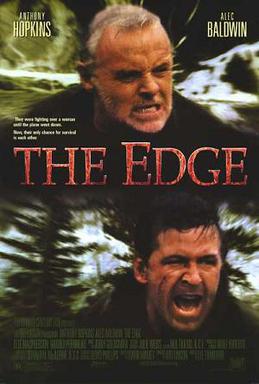
The Edge poster

The Edge

118 minutes

Cast

Selected cast credits · Film reference

Anthony Hopkins Charles Morse
Alec Baldwin Robert Green
Elle Macpherson Mickey Morse
Bart the Bear The Bear
L.Q. Jones Styles
Mark Kiely Mechanic
Eli Gabay Jet Pilot
Larry Musser Amphibian Pilot
Brian Arnold Reporter
Bob Boyd Reporter
Kelsa Kinsly Reporter
Gordon Tootoosis Jack Hawk
Gary A. Hecker Bear Vocals
Brian Steele Bear, attack sequence

The Edge | The Rewatchables

Explore episodeClose episode

What’s Aged the Best?

Baldwin; Hopkins; wilderness survival; stocked cabins; jealous-rich-husband premise; Macpherson; homemade compass; shame monologue; Norm’s Bart joke; cuckolding

In the discussion (10)
Approx. transcript time · 00:04:51Read transcript
  • Baldwin’s arrogant but appealing backstabber fits his strengths, alongside Glengarry Glen Ross and Malice.
  • Hopkins’s stillness and expressive eyes reveal thought and awareness; the unusual performance is considered perfectly suited to Charles despite his age.
  • Outdoor survival stories retain their appeal by asking whether people can keep themselves alive without society.
  • Finding a stocked remote cabin is satisfying like discovering supplies in a video game; tea and the gun restore civilized habits and the men’s old conflict.
  • The jealous older rich man with a younger wife remains an effective setup.
  • Macpherson’s nightgown appearance and charisma are admired, recalling her Sports Illustrated celebrity.
  • The homemade compass is enjoyable movie ingenuity even though it fails.
  • The warning that stranded people die of shame is considered profound advice to stop dwelling on mistakes and solve the problem; it was memorable enough to appear in a book.
  • Norm Macdonald’s joke that Bart was paid in meat, bear prostitutes and cocaine is remembered fondly.
  • Cuckolding and male dominance remain culturally relevant; the Black-character death trope is also acknowledged as persistently recognizable.

What’s Aged the Worst?

Heroic billionaire; post-injury Baldwin; photographer casting; Native-man objectification; distant rescue reception; Black-character death

In the discussion (7)
Approx. transcript time · 00:10:26Read transcript
  • The heroic billionaire reflects an earlier aspirational view of wealth; a contemporary audience might instead root for the bear against a Bezos-like figure.
  • Baldwin’s rambling, oddly mild delivery after the deadfall injury is criticized as a strange performance choice.
  • Baldwin seems too gruff to be a fashion photographer; chief of staff is suggested instead, although his bullying could fit the profession.
  • Bob’s objectification of the Native man and disbelief that the cabin owner took the photograph are criticized as revealing his arrogance.
  • Baldwin’s delivery after falling into the pit resembles the comically injured Will Ferrell character in Austin Powers.
  • The silent, distant reception after Charles’s rescue feels strange; no one even approaches to shake his hand.
  • Killing the Black character is dated; bird strikes have become more familiar, while a drowned modern phone would not necessarily solve the survival problem.

Casting What-Ifs

Ford; Hoffman; De Niro; standby Pullman

In the discussion (5)
Approx. transcript time · 00:26:10Read transcript
  • Art Linson’s book is cited for the attempt to recruit Harrison Ford, whose participation was expected to make a much bigger hit; Ford passed.
  • Bill Pullman was reportedly lined up as a last-minute replacement during Baldwin’s beard dispute.
  • Dustin Hoffman turned down the role, and the production went far into discussions with De Niro.
  • De Niro reportedly gave a deliberately flat table read because he had not made character choices, frustrating Linson.
  • De Niro reportedly remained concerned about the bear whether fake or real; Pullman is recalled as another near participant.
In the discussion (4)
Approx. transcript time · 00:27:03Read transcript
  • Ford as Charles with Pitt or Kilmer as Bob is imagined as a major commercial upgrade, though Pitt’s age is debated.
  • Pullman is rejected for Bob, while Goldblum is proposed as a quirky, unexpectedly attractive alternative.
  • Kidman or Thurman could convey the wife’s emotional lie, though their willingness to take a four-scene role is debated.
  • Uma Thurman receives both final choices over Nicole Kidman for the wife.

Half-Assed Internet Research

Linson’s production accounts; locations and gross; Bart’s career; Hopkins’s injury; reality adaptation; Baldwin’s criticism; Fischer; What Just Happened

In the discussion (12)
Approx. transcript time · 00:27:57Read transcript
  • Linson recounts Baldwin’s angry refusal to shave his beard and subsequent refusal to speak to the director or producer after finally shaving.
  • Linson’s account of the studio pitch includes an executive objecting that viewers would not root for a rich man; Mamet developed the bear and betrayal elements to win sympathy.
  • Alberta and British Columbia are named as filming locations; no budget figure was found, while the gross is reported as 43.3 million.
  • Bart the Bear is described as a 23-year-old star near the end of his career, reunited with Hopkins after Legends of the Fall.
  • Bart’s credits are listed as Windwalker, The Clan of the Cave Bear, The Great Outdoors, The Bear, White Fang, The Giant of Thunder Mountain, Homeward Bound, On Deadly Ground, Legends of the Fall,12 Monkeys, Walking Thunder, The Edge and final film Meet the Deedles, plus Grizzly Adams and a Kenny Rogers television movie.
  • Bart reportedly presented at the 1998 Oscars and was unusually docile and trusted by actors; his trainer recalled Hopkins respecting him as a fellow performer.
  • Hopkins reportedly combined a neck/back problem and painkillers with hypothermia after river work, causing a roughly 10-day production shutdown.
  • The film reportedly inspired a Brazilian survival reality show using Charles’s techniques.
  • Baldwin’s autobiography reportedly praised Mamet’s script but attacked the director for turning it into a dumb action movie.
  • Jenna Fischer reportedly calls it a favorite she watches annually; informal barbershop recollections illustrate its broad cable familiarity.
  • A claim on Wikipedia that Bart won an Oscar but could not attend is identified as an obvious joke or false insertion.
  • What Just Happened is described as a 2008 Barry Levinson fictionalization of Linson’s book, including the difficult bear movie and beard dispute; De Niro and Bruce Willis are named.

Most Rewatchable Scene

Killing the bear

In the discussion (11)
Approx. transcript time · 00:37:36Read transcript
  • The opening cabin dynamics are appreciated for the rabbit-and-panther story, food warning and Charles’s observations of the affair.
  • The surprise birthday scene builds suspense through the slightly open door and exposed ham.
  • The terrifying bird-strike crash is a compelling wilderness-disaster sequence; the vehicle is corrected from helicopter to small plane.
  • The first bear encounter delivers an effective surprise as Charles gets into danger near the log crossing.
  • Stephen’s death is read as the predictable fate of the Black character among three survivors; his self-inflicted spear injury occurs offscreen.
  • The bear-killing plan is admired for using its own weight to drive it onto the spear after luring a charge.
  • Charles discovering the affair through the watch in the cabin is named a favorite and then more precisely the best dramatic scene.
  • Baldwin’s drinking, armed monologue simultaneously insults Charles and psychs himself up to kill him, earning particular praise.
  • The rescue is satisfying when the helicopter circles back after uncertainty about whether it saw them.
  • Killing the bear receives the most-rewatchable choice and agreement that Bart’s action is most rewatchable; the cabin remains the best dramatic scene.
  • The argument over unburied bloody material is praised for its background staging; Bob’s behavior is considered monumentally stupid, with intentional sabotage left uncertain.

Probably Unanswerable Questions

Pilot’s death; Bob’s intent and rescue; development investment; cannibalism; bear versus shark

In the discussion (8)
Approx. transcript time · 00:39:26Read transcript
  • The pilot’s exact cause of death is unclear, and the survivors barely acknowledge him; drowning or a broken neck are possibilities.
  • Whether Bob would actually shoot Charles is disputed: his hesitation and retreat suggest he could not, while another reading takes his intention seriously.
  • Whether Charles will fund the 40 million development afterward is uncertain; the lack of a welcoming handshake counts against it.
  • Both reject helping Bob after the pit fall because he threatened Charles and still has the gun.
  • An alternative would retrieve the weapon and perhaps offer whiskey before leaving Bob.
  • The imagined response escalates into taunting Bob and leaving the traitor behind.
  • Charles would plausibly eat Bob if stranded longer, although the rifle might let him hunt instead.
  • One preference favors a bear attack to avoid drowning and disorientation; the other favors a shark for a potentially quicker death than prolonged mauling.

Picking Nits

Saving Charles; trap construction; Bob’s cruelty; night sandwich; spear injury; engraving; bear speed

In the discussion (8)
Approx. transcript time · 00:40:47Read transcript
  • Bob’s rescue of Charles seems inconsistent with wanting him dead, but Charles’s survival knowledge supplies a practical explanation.
  • The sophisticated trap and ready supply of rope seem implausible; such engineering skill could instead create shelter and a rescue signal.
  • Bob could be ten percent more vicious by explicitly taunting Charles about the affair; the counterview preserves some audience sympathy for him.
  • A working supermodel requesting a large late-night ham sandwich seems implausible to the discussion.
  • Stephen’s unexplained spear injury remains a nitpick.
  • Mickey’s engraving both gifts through the same shop carelessly documents the affair and exposes it to the engraver.
  • The engraver could demand hush money;50,000 is considered more realistically payable than 10 million.
  • A grizzly’s claimed 30–35-mile-per-hour speed makes the men’s escape implausible, and its home terrain should not be an obstacle.

Apex Mountain

Bear movies; Omega Seamaster Chronograph 2296

In the discussion (8)
Approx. transcript time · 00:41:14Read transcript
  • Perrineau’s stretch around The Edge, Oz and The Best Man is considered his peak.
  • Bear movies receive both affirmative choices, with The Edge called the best mainstream example.
  • Hopkins is rejected for Apex here.
  • Baldwin is rejected for Apex here.
  • Macpherson’s earlier swimsuit-issue years are preferred.
  • Perrineau’s initial yes is revised through The Best Man and Oz to Lost, whose large audience supports the final preference.
  • The name The Edge is rejected in favor of the U2 guitarist.
  • The Omega Seamaster Chronograph 2296 receives an affirmative Apex choice.

The Great Shot Gordo Award for Most Cinematic Shot

Opening helicopter panorama; mountain vista

In the discussion (2)
Approx. transcript time · 01:04:01Read transcript
  • The opening helicopter panorama establishes the scale of the setting, reminiscent of Cliffhanger.
  • The mountain shot where the men turn around to see the landscape is another choice.
In the discussion (3)
Approx. transcript time · 01:11:10Read transcript
  • Bookworm was the original title, rejected by the studio.
  • The brainstorming list includes Ambushed, The Ambush, Wild, Wilder, The Wild, Into the Wild, Wilderness Now, Dead Hunt, Deadfall, Precipice, On the Precipice, Over the Precipice, The Edge, Edge, On the Edge, The Bear Killer, The Bear Roared, The Bear and the Brain, Roared and Bloody Betrayal; the opening list wording is slightly unclear.
  • Deadfall is the agreed viable alternative; The Bear and the Brain is rejected, On the Edge is too generic, and Into the Wild later became a strong wilderness-film title.

The Neil McCauley “A Book about Metals” Award for Best Line from the Movie

“Never feel sorry for a man who owns a plane”; “We’re all put to the test, but it never comes in the form or at the point we would prefer, does it?”; “Our friend is a billionaire. You know what happens when you misplace one?”; “What one man can do, another can do”

In the discussion (4)
Approx. transcript time · 01:12:27Read transcript
  • “Never feel sorry for a man who owns a plane” is one quote choice.
  • “We’re all put to the test, but it never comes in the form or at the point we would prefer, does it?” is another quote.
  • “Our friend is a billionaire. You know what happens when you misplace one?” is a favorite quote.
  • “What one man can do, another can do” is another favorite, followed by Charles’s frenzied promise to kill the bear.

The Joey Pants “That Guy” Award

L.Q. Jones; Gil Meyers actor; Kathleen; younger-viewer Perrineau

In the discussion (3)
Approx. transcript time · 01:16:43Read transcript
  • Perrineau might be a that-guy choice for younger viewers who know Lost; the plane-admiring mechanic is identified through Gil Meyers from 90210.
  • L.Q. Jones is a legendary that guy, recognizable from Westerns despite a different beard here.
  • Kathleen is another that-guy choice, linked to Road House, Private School, Bad Influence and Yellowstone without a spoken surname.
In the discussion (3)
Approx. transcript time · 01:25:17Read transcript
  • An all-Black remake initially proposes Denzel as a billionaire modeled on Bob Johnson or Byron Allen, then questions whether he would accept a cuckold role.
  • The preferred reworking casts Queen Latifah as an Oprah-like billionaire, Tessa Thompson as her wife and Idris Elba as the photographer; Zoë Kravitz is an alternative wife.
  • The doomed third survivor becomes a white man, with French Stewart or John Stamos proposed to reverse the original trope.

Is This Movie Better With…?

Sam Jackson as Stephen

In the discussion (1)
Approx. transcript time · 01:28:17Read transcript
  • Sam Jackson as Stephen would be hilarious, pairing a bear attack with his shark attack in Deep Blue Sea.

The Andy and Red – Zihuatanejo Award for What Happens the Next Day?

Divorce; nature-focused new life; former wife’s reality-TV career

In the discussion (3)
Approx. transcript time · 01:33:52Read transcript
  • Charles leaves his wife, likely protected by a prenup, and pays her off; he begins a new life without her.
  • Charles may travel, embrace nature, fund the development or move to Alaska.
  • His former wife joins a Housewives-style show; whether the affair stays secret is disputed before imagining a public revelation.

The Coach Finstock Award for Best Life Lesson

Keep the younger wife away from the handsome fashion photographer

In the discussion (1)
Approx. transcript time · 01:36:03Read transcript
  • Do not let a much younger wife spend time with the handsome, aggressive fashion photographer whose behavior signals an affair.
In the discussion (2)
Approx. transcript time · 01:36:30Read transcript
  • Bart the Bear receives the emphatic winner choice despite only four and a half minutes of screen time; another participant tentatively agrees.
  • Asked to choose between the human leads, Baldwin is praised for slightly better acting and consistent characterization, but Hopkins is the human-only winner.
Podcast choices
Speaker not identified
Bart the Bear

More from the conversation

Wilderness survival invites viewers to imagine their own responses; cable exposure gave The Edge a cultural following despite limited theatrical impact.
Approx. transcript time · 00:03:33Read transcript
A crowded 1997 movie year may have caused the film to be overlooked.
Approx. transcript time · 00:04:26Read transcript
The stalking bear makes part of the movie feel like horror.
Approx. transcript time · 00:05:43Read transcript
Class conflict persists in the wilderness: money no longer matters, but Charles’s problem solving supports his authority and fuels Bob’s resentment.
Approx. transcript time · 00:05:43Read transcript
Charles fears that wealth cannot satisfy his younger wife; the affair confirms a suspicion rather than arriving wholly unexpectedly.
Approx. transcript time · 00:06:11Read transcript
The often-skipped opening 20 minutes establish deference to Charles, his awareness of financial opportunism and the relationship tension.
Approx. transcript time · 00:07:30Read transcript
The surprise bear-costume birthday scare is read as Bob trying to weaken Charles in front of his wife, potentially even inducing a heart attack.
Approx. transcript time · 00:08:55Read transcript
Income inequality and social media are credited with changing attitudes toward wealth, contrasting with celebrations of big contracts during the 1990 sboom.
Approx. transcript time · 00:12:22Read transcript
NBA lockout complaints about cars and feeding families are remembered as early backlash against wealthy athletes; the financial crisis later deepened that shift.
Approx. transcript time · 00:13:14Read transcript
Charles’s curiosity and quick application of book knowledge save him; his ability to read people seems developed to protect his wealth, while his marriage leaves him insecure.
Approx. transcript time · 00:15:25Read transcript
The rich know-it-all can annoy others, yet Hopkins plays him quietly and makes himself smaller to persuade his companions.
Approx. transcript time · 00:16:46Read transcript
After Silence of the Lambs, Hopkins mixed dramas and odd mainstream projects; Nixon’s failure and the lack of another comparable hit are recalled.
Approx. transcript time · 00:17:12Read transcript
Hollywood’s use of Hopkins is questioned; his presence gives films instant credibility, and later Hannibal projects are viewed as lucrative older-actor work.
Approx. transcript time · 00:18:06Read transcript
The Bounty is admired for its cast and Hopkins–Gibson conflict, with its title corrected from Mutiny on the Bounty.
Approx. transcript time · 00:18:32Read transcript
Baldwin’s 1990 srun is admired but seen as falling short of his talent. Prelude to a Kiss is a family favorite despite being too strange for a broad audience.
Approx. transcript time · 00:20:23Read transcript
Heaven’s Prisoners is praised as a sweaty Louisiana noir and a favorite Baldwin lead performance; Malice, The Getaway and The Juror are also discussed.
Approx. transcript time · 00:22:09Read transcript
The post-Basic Instinct erotic-noir trend prompts memories of Color of Night’s nudity and criticism of Body of Evidence and Madonna’s acting.
Approx. transcript time · 00:22:36Read transcript
The Marrying Man and The Getaway appeal through Baldwin–Basinger chemistry; The Shadow and Outside Providence receive separate personal endorsements.
Approx. transcript time · 00:23:57Read transcript
Baldwin and Kilmer are compared to talented athletes who never found the right team, competing with Ford, Cruise, Pitt, Costner and Hanks for leading roles.
Approx. transcript time · 00:24:51Read transcript
The ending is compared with Hopkins’s return to civilization in The Bounty; the specific complaint about a credit’s placement is surprising.
Approx. transcript time · 00:32:22Read transcript
The Edge is favored among bear movies over White Fang and The Revenant, with The Great Outdoors also beloved; The Revenant is admired but too punishing to revisit.
Approx. transcript time · 00:35:50Read transcript
Poor eyesight, allergies, injuries, choking and digestive trouble make historical or wilderness survival seem frighteningly precarious.
Approx. transcript time · 00:37:09Read transcript
The Edge helped discourage a planned seaplane excursion; bird strikes also recall Sully and make flying unsettling.
Approx. transcript time · 00:38:59Read transcript
LL Cool J’s survival in Halloween H 20 and Deep Blue Sea is contrasted with Samuel L. Jackson’s shocking death; Deep Blue Sea is personally rewatchable.
Approx. transcript time · 00:43:00Read transcript
Naked and Afraid is compelling for practical skills such as burning and carving a canoe; mosquitoes and other hardships can make contestants quit immediately.
Approx. transcript time · 00:46:03Read transcript
Alive is proposed as the greatest rescue scene, while Cast Away downplays rescue; Alive’s crash is admired but difficult to revisit.
Approx. transcript time · 00:51:22Read transcript
A possible What Would You Do month prompts a family survival joke about which relative would provide the most food.
Approx. transcript time · 00:52:15Read transcript
A lone cabin occupant would plausibly own strange pornography, unlike the uniformly practical supplies found in movie cabins.
Approx. transcript time · 00:55:50Read transcript
Earlier swimsuit models became major stars; Crawford and Ireland built businesses, while later model fame often comes with an existing celebrity story.
Approx. transcript time · 00:57:39Read transcript
A school confiscation of a swimsuit issue and the accompanying making-of video are remembered as evidence of its cultural impact.
Approx. transcript time · 00:59:26Read transcript
The swimsuit issue and slam-dunk contest are compared as 1980speaks that stayed relevant in the 1990 sbefore fading in the 2000 s.
Approx. transcript time · 00:59:54Read transcript
A proposed horror cameo would kill the confident masculine character; the prospective performer requested survival and questions that familiar casting pattern.
Approx. transcript time · 01:02:43Read transcript
An early interpretation that Bob planned to lead Charles to the cabin and murder him is reconsidered as inconsistent with the plot.
Approx. transcript time · 01:24:51Read transcript
A two-day Oscars format could reserve one day for categories such as animal performances, comedy and horror.
Approx. transcript time · 01:29:34Read transcript
An unspecified unusual November theme is teased for the future; it does not identify the current episode as part of that theme.
Approx. transcript time · 01:39:09Read transcript