
‹ All movies
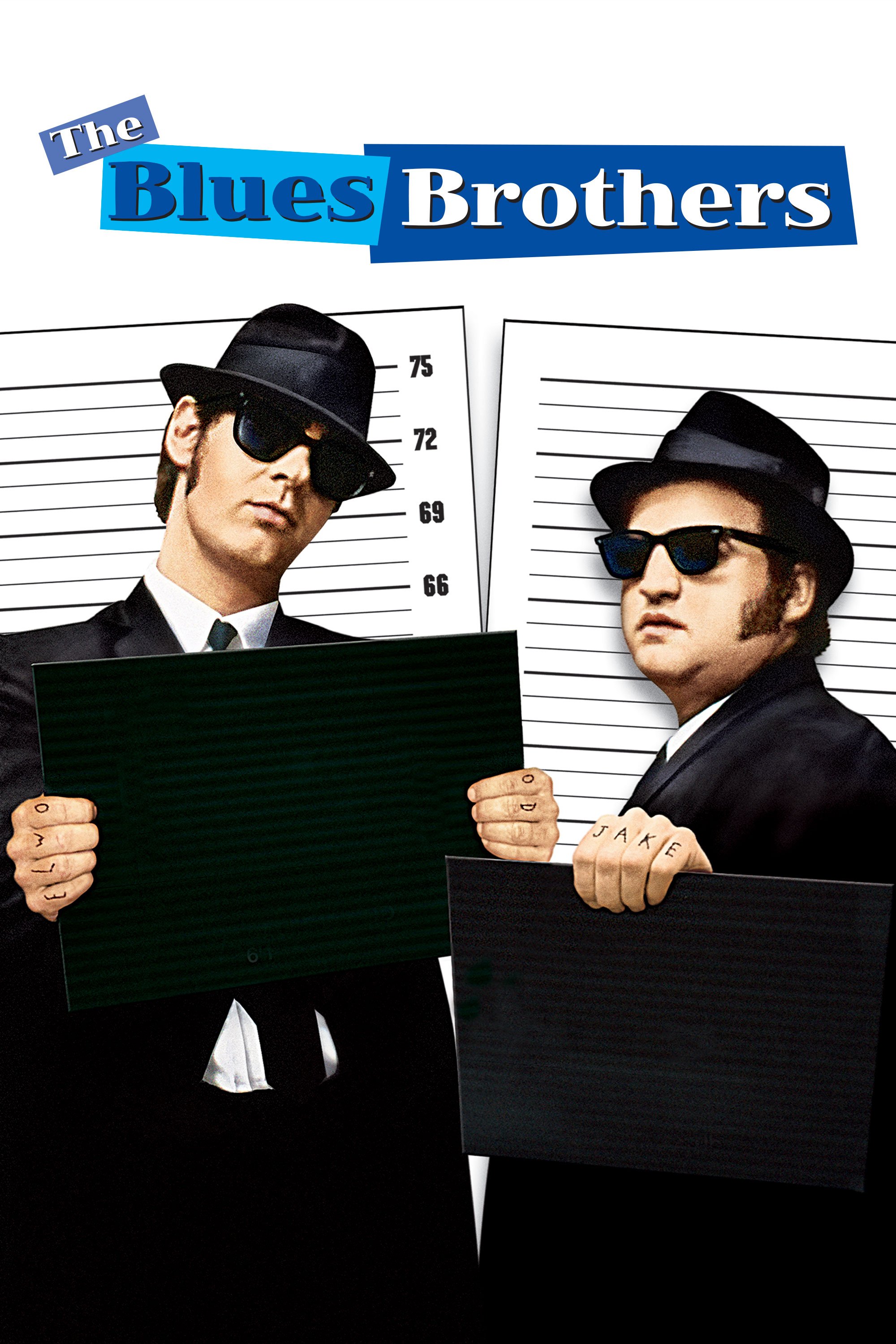
The Blues Brothers poster

The Blues Brothers

133 minutes

Cast

Selected cast credits · Film reference

John Belushi Joliet Jake Blues
Dan Aykroyd Elwood Blues
James Brown Reverend Cleophus James
Cab Calloway Curtis
Aretha Franklin Mrs. Matt Murphy
Carrie Fisher Mystery Woman
Henry Gibson Head Nazi
John Candy Burton Mercer
Kathleen Freeman Sister Mary Stigmata
Steve Lawrence Maury Sline
Paul Reubens Waiter
DeVoreaux White Young guitar thief
Steven Spielberg Cook County clerk

The Blues Brothers | The Rewatchables

Explore episodeClose episode

Producer credits not yet identified.

Half-Assed Internet Research

SNL origins; sprawling script; troubled production; stunts and release

In the discussion (18)
Approx. transcript time · 00:15:47Read transcript
  • The Blues Brothers began as a warm-up act, appeared as musical guests with Steve Martin and Carrie Fisher in 1978, then toured and released the hit album amid Belushi’s rapid rise.
  • The film is placed near the start of a Chicago filmmaking revival and praised as a major city love letter preceding Ferris Bueller. The discussion’s mayor identification is not independently verified.
  • Aykroyd reportedly delivered an unwieldy 324-page first script filled with digressions despite never having written or read a screenplay.
  • The troubled production reportedly included a $3.5 million downtown scene, budgeted cocaine, an on-set private bar and an eventual $27.5 million budget that angered executives.
  • The film is reported to have grossed $115.2 million, ranked tenth for 1980 and sixth among musicals, and launched alongside a concert tour; the claimed same-day Empire release is retained only as a podcast claim.
  • Mixed contemporary reviews and criticism of excess are contrasted with enthusiasm from Siskel and Ebert.
  • The original script reportedly contained separate recruitment plots for eight band members, compressed because they would not make a workable movie.
  • Aretha reportedly struggled with lip syncing; Hooker is said to be the only singer recorded live.
  • The Colleen Camp poster in Elwood’s apartment prompts a reported Apocalypse Now history: Lynda Carter’s original casting, storm interruption, Wonder Woman conflict and replacement poster recreating her original pose.
  • Thirteen Bluesmobiles were reportedly bought at auction, plus sixty police cars at $400 each.
  • Forty stunt drivers and more than five hundred extras reportedly worked on the climax; a Pinto was dropped from a helicopter at 1,200 feet with special FAA permission.
  • A Vanity Fair account describes a daily chain of executive anger over spending, eventually reaching Aykroyd as the person responsible for getting Belushi to work.
  • Woodward’s Wired is described as controversial and drug-focused, supplying much production history later reused; Belushi disappearing into nearby homes makes the making-of seem filmworthy.
  • The film reportedly destroyed 103 cars, a record later surpassed by The Matrix Reloaded’s 300.
  • Belushi’s skateboarding injury reportedly required an urgently summoned orthopedic surgeon to keep his knee usable for filming.
  • The Hollywood Palladium reportedly doubled for Chicago; enthusiastic concert crowds are praised, although their initial indifference to the first song is questioned.
  • Aykroyd is quoted as blaming racist Southern theater refusals for suppressing box-office potential.
  • Elwood’s freeze-framed record lists 116 parking and 56 moving violations with orders to arrest him and impound the vehicle.

Roger Ebert's review

In the discussion (1)
Approx. transcript time · 00:29:17Read transcript
  • Ebert gives three stars and praises Landis for organizing chaos while preserving humor, grace and whimsy; the interpretation of the brothers as hard-boiled cynics is questioned. No denominator is spoken.

Really Fun Deleted Scenes

Gas-station explosion

In the discussion (1)
Approx. transcript time · 00:31:47Read transcript
  • A deleted scene has Belushi’s discarded cigarette blow up the gas station after Twiggy leaves; its exclusion is questioned amid the retained destruction.

Casting What-Ifs

Olivia Newton-John unavailable; studio wanted younger musicians

In the discussion (2)
Approx. transcript time · 01:00:54Read transcript
  • Olivia Newton-John reportedly could not take the probable Twiggy role because of Xanadu; the part’s celebrity appeal is compared with contemporary famous personalities.
  • The studio reportedly wanted younger musical acts, including Rose Royce, instead of the older soul legends; this is criticized as misunderstanding the project.

Probably Unanswerable Questions

Spielberg’s career; Bob’s pursuit; smell; Belushi’s future; SNL film control

In the discussion (8)
Approx. transcript time · 01:04:22Read transcript
  • If Spielberg followed 1941 with this runaway production, would he still direct Raiders? A Poltergeist follow-up is explicitly framed as a joke at Hooper’s expense.
  • Why Bob abandons his business to pursue the brothers over $200 is questioned; humiliation is offered as motivation.
  • The country bar seems far removed culturally from Chicago, though nearby Indiana could explain it.
  • The scarcity of explicit cocaine use in apparently drug-fueled period movies is questioned, with Cruising a disputed example involving uncertain substances.
  • How badly the brothers smell is questioned given unwashed clothes, sewer travel and restaurant patrons objecting even amid smoking.
  • The Colleen Camp poster raises a playful shared-universe question with Apocalypse Now and an imagined veteran attending the band.
  • Belushi’s potential future is debated between more blockbuster comedies and serious acting; an imagined America’s Guest script illustrates spontaneous early-1980s filmmaking.
  • Whether this production encouraged Lorne Michaels to gain more control of SNL adaptations is asked; later contractual participation and power are discussed with explicit uncertainty.

Picking Nits

Thin plot; instruments IOU; orphanage taxes; uninjured shoppers; beer bill; missing hours

In the discussion (10)
Approx. transcript time · 01:19:59Read transcript
  • Removing the chases and music would leave little plot; the objection is countered as removing the essential ingredients of the film.
  • Ray’s $1,400 instrument IOU seems generous; wildly high modern-dollar conversions are explicitly uncertain rather than verified values.
  • Closing a church-owned orphanage over $5,000 property taxes seems implausible because it might be tax-exempt.
  • Nobody being struck in the crowded mall chase is questioned; the real filming location is distinguished as an already closed mall staffed with extras.
  • Fisher’s access to a rocket launcher is questioned, prompting arms-dealing jokes.
  • The Soul Food Cafe appears full of health violations, with an unattended live grill and a saxophone on the counter.
  • The Good Old Boys arrive hours late to their own gig; road closures from the chases are a comic explanation.
  • The $200 beer bill seems enormous at imagined fifty-cent prices, implying about four hundred beers for the band.
  • Twiggy waiting at a motel for the odd stranger after paying him $94 seems implausible, with his magnetism offered as the defense.
  • The nighttime post-concert escape becomes a morning downtown arrival, leaving many hours unexplained.
In the discussion (3)
Approx. transcript time · 01:34:09Read transcript
  • Animal House, Wayne’s World, Old Boyfriends and Continental Divide are floated; an apparent Leopard attribution is joking or confused and remains unresolved.
  • Crossroads is recommended for its Robert Johnson history and treatment of the blues.
  • The Commitments is a final double-feature choice about Irish youths forming a 1960s soul band.