
‹ All movies
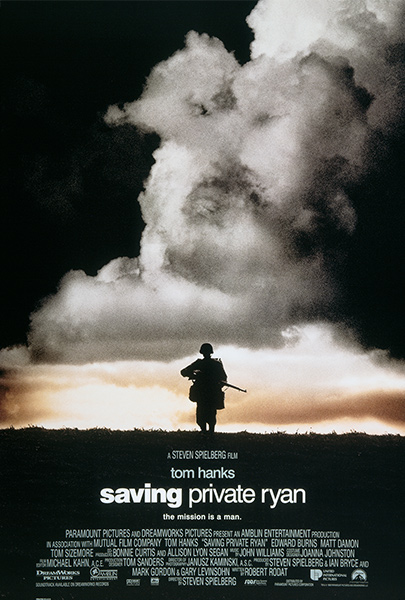
Saving Private Ryan poster

Saving Private Ryan

170 minutes

Cast

Selected cast credits · Film reference

Tom Hanks Captain John H. Miller
Tom Sizemore Technical Sergeant Michael Horvath
Edward Burns Private Richard Reiben
Matt Damon Private James Francis Ryan
Barry Pepper Private Daniel Jackson
Adam Goldberg Private Stanley Mellish
Vin Diesel Private Adrian Caparzo
Giovanni Ribisi T-Medic Irwin Wade
Ted Danson Captain Fred Hamill
Jeremy Davies Corporal Timothy Upham
Paul Giamatti Sergeant William Hill
Dennis Farina Lieutenant Colonel Walter Anderson
Joerg Stadler Steamboat Willie
Max Martini Corporal Henderson
Dylan Bruno Toynbe
Ian Porter Trask
Julian Spencer Garrity
Steve Griffin Wilson
Marc Cass Fallon
Markus Napier Major Hoess
Neil Finnighan Ramelle Paratrooper
Peter Miles Ramelle Paratrooper
Paul Garcia Field HQ Major
Seamus McQuade Field HQ Aide
Ronald Longridge Coxswain
Adam Shaw Delancey
Rolf Saxon Lieutenant Briggs
Corey Johnson Radioman
Loclann Aiken Soldier on the Beach
John Barnett Soldier on the Beach
Maclean Burke Soldier on the Beach
Victor Burke Soldier on the Beach
Aiden Condron Soldier on the Beach
Paschal Friel Soldier on the Beach
Shane Hagan Soldier on the Beach
Paul Hickey Soldier on the Beach
Shane Johnson Soldier on the Beach
Laird Macintosh Soldier on the Beach
Brian Maynard Soldier on the Beach
Martin McDougall Soldier on the Beach
Mark Phillips Soldier on the Beach
Lee Aaron Rosen Soldier on the Beach
Andrew Scott Soldier on the Beach
Matthew Sharp Soldier on the Beach
Vincent Walsh Soldier on the Beach
Grahame Wood Soldier on the Beach
John Sharian Corporal
Glenn Wrage Doyle
Crofton Hardester Senior Medical Officer
Martin Hub Czech Wehrmacht Soldier
Nigel Whitmey Private Boyd
Sam Ellis Private Hastings
Erich Redman German #1
Tilo Keiner German #2
Stephan Grothgar German #3 / Voice on Bullhorn
Michelle Evans Jean’s Wife
Martin Beaton Jean’s Son
Anna Maguire Jean’s Daughter
Nathan Fillion Minnesota Ryan
Leland Orser Lieutenant DeWindt
Michael Mantas Paratrooper Lieutenant
David Vegh Paratrooper Oliver
Ryan Hurst Paratrooper Mandelsohn
Nick Brooks Paratrooper Joe
Sam Scudder Paratrooper #1
John Walters Old French Man
Dorothy Grumbar Old French Woman
James Innes-Smith MP Lieutenant
Harve Presnell General Marshall
Dale Dye War Department Colonel
Bryan Cranston War Department Colonel
David Wohl War Department Captain
Eric Loren War Department Lieutenant
Valerie Colgan War Department Clerk
Amanda Boxer Mrs. Margaret Ryan
Harrison Young Ryan as Old Man
Kathleen Byron Old Mrs. Ryan
Rob Freeman Ryan’s Son
Thomas Gizbert Ryan’s Grandson
Nina Muschallik Ryan’s Granddaughter (uncredited)
Taylor Murphy Sergeant Blaine (uncredited)
Mac Steinmeier Waffen SS Soldier (uncredited)
Derek Lea Bangalore Assistant (uncredited)
Leo Stransky German Sniper (uncredited)
Vincent Ventresca Soldier on Beach (uncredited)

Saving Private Ryan | The Rewatchables

Explore episodeClose episode

Half-Assed Internet Research

Production method; awards; screenplay origins; budget and gross; boot camp; beach shoot; disputed anecdotes

In the discussion (20)
Approx. transcript time · 00:09:41Read transcript
  • The cinematography is described as using altered lenses, film technique, and desaturation to produce a gray, muddy, visceral image.
  • Spielberg is recalled as arriving without a shot list, shooting largely handheld and sometimes operating the camera himself, despite the huge number of extras and complicated effects resets.
  • The discussion names eleven Oscar nominations and enumerates wins for directing, cinematography, sound, editing, and sound-effects editing; the transcript renders the intervening win count unclearly.
  • Brokeback Mountain and La La Land are identified as the two other films matching the described combination of precursor wins and a directing Oscar without Best Picture.
  • Robert Rodat is credited with building the screenplay from an anecdote he read, with Mark Gordon producing.
  • The stated budget is $70 million and worldwide gross $485 million, placing it second for 1998; its cost is contrasted with The Gray Man and expensive television.
  • It is described as the third R-rated film to reach $200 million domestically, after Terminator 2 and Beverly Hills Cop.
  • Diesel’s account that Spielberg saw his filmmaking and created the role for him is discussed with explicit skepticism about the strongest version of the story.
  • The actors are said to have helped shape their parts, with Goldberg’s involvement in Mellish raised as an example.
  • The widely repeated account of Sizemore being drug-tested daily and threatened with replacement even at the end of filming is discussed; the threat to reshoot is doubted.
  • Damon is said to have improvised the barn story, which Spielberg retained.
  • Goldman’s criticism is read from his essays on the five Best Picture nominees collected in The Big Picture; the publication attribution is corrected tentatively from New York to Premiere.
  • Darabont is credited with uncredited rewrites and creating the Bible-quoting sniper, whose dialogue is praised.
  • The story is traced to a D-Day book Rodat’s wife gave him and an account of a family whose surviving son was removed from Normandy; the transcript’s book date and family spelling are unclear.
  • The actors reportedly attended a ten-day boot camp while Damon trained separately to encourage resentment toward him.
  • The Omaha Beach sequence is said to have been filmed in Ireland for $12 million with 1,500 extras.
  • The movie’s body count is stated as 255 after guesses of 10,000, 500, and 192.
  • An alleged Spielberg ban on admitting late arrivals is discussed but rejected as implausible to enforce.
  • The historical account behind the Lincoln–Bixby letter is questioned; the sons’ outcomes are given inconsistently rather than treated as a verified tally.
  • Robin Williams introducing Damon to Spielberg is recalled as a route into the film.

Casting What-Ifs

Ford; Gibson; disputed Miller alternative; Norton; Brooks; Thornton; disputed Madsen; Schweiger; Bay

In the discussion (10)
Approx. transcript time · 00:21:39Read transcript
  • Harrison Ford and Mel Gibson are recalled as rumored alternatives for Miller; Gibson’s Australian identity makes him harder to picture.
  • Ford is considered plausible and naturally suited to Miller’s guarded command style, but likely to give a grouchier performance.
  • Ford is doubted as an equivalent for Hanks in the teacher speech because Hanks supplies unusual empathy and handles extended speeches naturally.
  • Michael Bay is said to have declined an approach to direct; Pearl Harbor is used to imagine the likely result.
  • Ford and Gibson are repeated as Miller alternatives; another proposed actor’s name is unclear in the transcript and the claim is explicitly doubted.
  • Norton is said to have declined Private Ryan because of American History X.
  • Garth Brooks is said to have briefly been considered for the sniper.
  • Thornton is discussed as a possible Horvath who did not want to film the water scenes; the claim is treated as plausible rather than established.
  • Madsen is said to have been offered Horvath and recommended Sizemore, but the account is explicitly doubted.
  • Schweiger is said to have declined the prisoner role to avoid typecasting; his inability to seem goofy is discussed.

Roger Ebert's review

In the discussion (3)
Approx. transcript time · 00:33:15Read transcript
  • Ebert’s rating is stated as four stars; no denominator is spoken.
  • Ebert’s review is paraphrased as praising the expression of complex ideas about war through images and action, with Upham serving as an audience surrogate.
  • The review itself is criticized as weak relative to the film and Ebert’s usual work; Stephen Hunter’s Spielberg’s Hell is offered as a stronger response. The three-and-a-half-star remark is speculation about Ebert’s feelings, not his reported rating.

Recasting Couch

Damon as Miller

In the discussion (7)
Approx. transcript time · 00:46:39Read transcript
  • Reiben is imagined as a role for mid-2000s DiCaprio, a surviving River Phoenix, or Heath Ledger in a version ten years later.
  • Phoenix is also proposed for Wade, prompting joking reshuffles of Ribisi and Davies; Reiben is characterized as the film’s best straightforward movie-star part.
  • The original 1998 casting is retained; for a modern Miller, Clooney is considered too old and Reynolds too youthful-looking.
  • Reilly is rejected as too old and Driver is doubted despite his military service because he lacks the desired reassuring Hanks quality; Dave Franco is briefly floated.
  • DiCaprio and Gyllenhaal are discussed, with Gyllenhaal considered too handsome and nervy; Ledger is mourned as someone who could have filled this type of role.
  • Damon is the accepted modern replacement for Miller.
  • Swapping Sizemore with Giamatti is proposed as a test of how essential he was, though Sizemore is credited with improving the film.

Picking Nits

Mellish’s tactics; Ryan’s collapse; German recognition and release; viewpoint shifts; staying with Ryan; Upham’s turn; historical details

In the discussion (10)
Approx. transcript time · 00:47:48Read transcript
  • Mellish is criticized for giving up his upper position to reach for his knife during the fight.
  • Ryan giving up near the end is disliked by someone wanting him to remain heroic; the response stresses his youth and lack of combat experience.
  • The spared German is considered insufficiently visually distinctive to recognize immediately when he returns.
  • Goldman’s unreliable-narrator objection is discussed: the opening enters old Ryan’s eyes before showing a beach landing he did not witness. Others accept the misdirection as effective rather than disqualifying.
  • The film’s later shift toward Upham as its point-of-view character is considered more distracting than the cemetery framing trick.
  • The squad staying after Ryan refuses to leave is questioned; Goldman’s proposed fix has them insist he come and begin leaving before the Germans arrive.
  • Ryan’s refusal to return home after losing his brothers is questioned, then defended through his commitment to the men beside him and the limits of outsiders’ understanding of combat bonds.
  • Freeing the German prisoner is criticized; wounding him or tying him to a tree are suggested alternatives.
  • Upham’s killing of the prisoner is defended as the collapse of his ethical view of warfare; the opposing objection is the abrupt shift from paralysis to corralling and shooting Germans, perhaps enabled by the arriving air support.
  • References to other American forces from beaches that had not yet linked up are cited as historical inaccuracies without a fuller catalogue.

Probably Unanswerable Questions

Ryan and Reiben cemetery reunion; Damon’s repeated reaction; whether Ryan earned it

In the discussion (3)
Approx. transcript time · 01:47:26Read transcript
  • Replacing the family cemetery visit with Ryan and Reiben visiting together is proposed as a less sentimental ending that would also show their lasting friendship.
  • Damon’s reaction to learning his brothers are dead is compared with his Good Will Hunting breakdown, prompting an imagined repetition of it’s not your fault.
  • Whether Ryan earned the sacrifice is asked; marriage and children are visible, while a regional Chevrolet sales job is speculation and more explanatory life history is rejected.
In the discussion (5)
Approx. transcript time · 01:55:22Read transcript
  • Patton is proposed for its related interest in what war does to men, while being judged inferior to Ryan.
  • Hardcore is offered as another George C. Scott pairing.
  • A Midnight Clear is proposed as an admired war film; its audition sides are said to have been used for Ryan.
  • Another answer rejects watching a second film afterward.
  • Days of Thunder is identified as what someone actually watched afterward and is then called the true double feature.

Producer review

Few notes; Good job, Steve

In the discussion (1)
Approx. transcript time · 01:59:02Read transcript
  • The invited producer says he has seen the film a couple of times, perhaps first with his father, has few notes, and offers Good job, Steve; the conversation references reactions to earlier episodes.