
‹ All movies
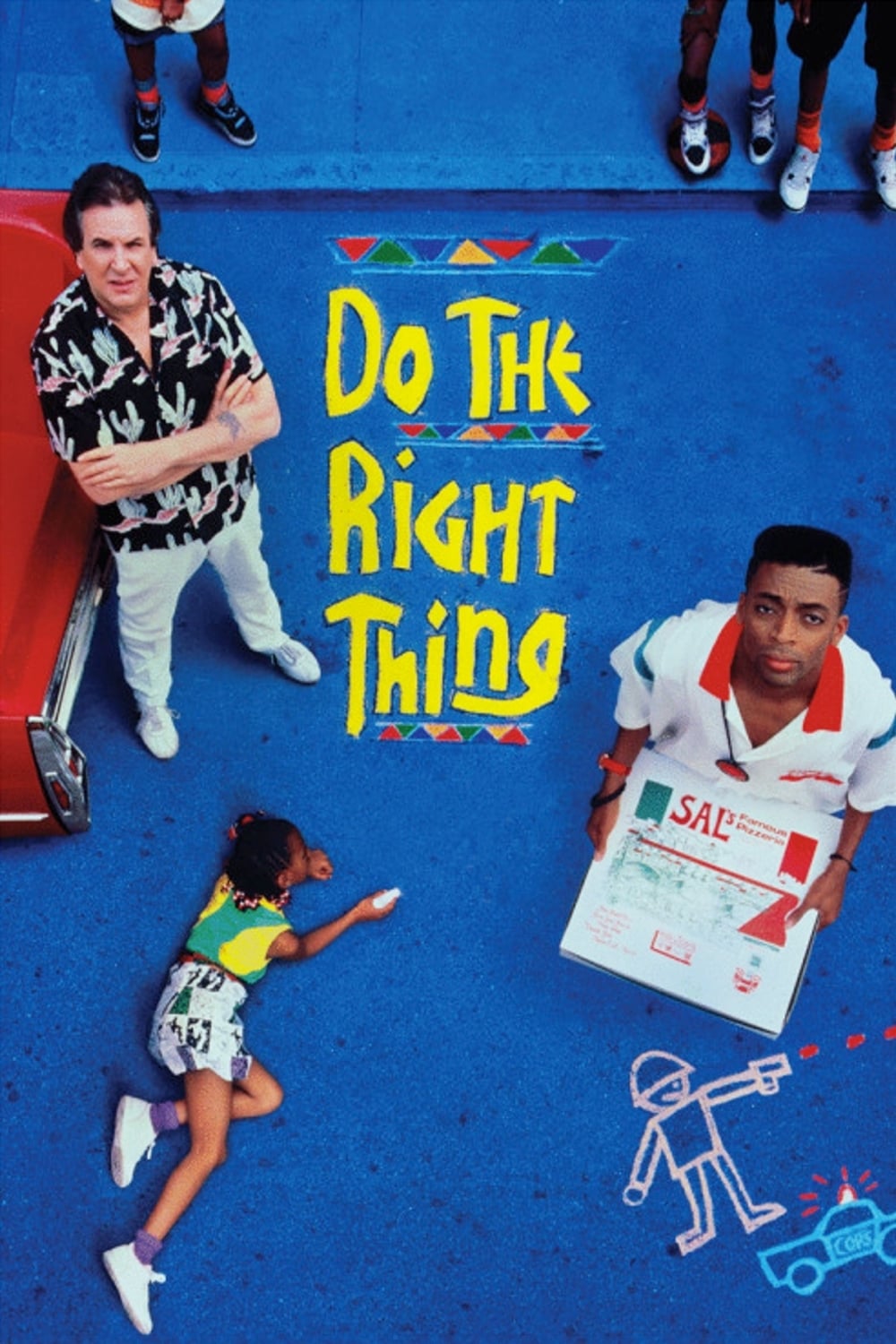
Do the Right Thing poster

Do the Right Thing

120 minutes

Cast

Selected cast credits · Film reference

Spike Lee Mookie
Danny Aiello Sal Frangione
Ossie Davis Da Mayor
Ruby Dee Mother Sister
Giancarlo Esposito Buggin' Out
Bill Nunn Radio Raheem
John Turturro Pino Frangione
Richard Edson Vito Frangione
Joie Lee Jade
Samuel L. Jackson Mister Señor Love Daddy
John Savage Clifton
Robin Harris Sweet Dick Willie
Frankie Faison Coconut Sid
Frank Vincent Charlie
Miguel Sandoval Officer Mark Ponte

Do the Right Thing | The Rewatchables

Explore episodeClose episode

Producer credits not yet identified.

Most Rewatchable Scene

Rosie Perez opening dance; final sequence

In the discussion (17)
Approx. transcript time · 00:34:12Read transcript
  • The opening sequence of Rosie Perez dancing to Public Enemy is the first scene on the list.
  • Perez was choreographing the Fly Girls at the time, and five years of dance are visible in the sequence.
  • Lee reportedly met Perez in a Brooklyn club and told her she was in his movie even though she said she was not an actress; the film is described as full of accidents like this.
  • Jennifer Lopez was one of the Fly Girls Perez worked with and was not yet famous.
  • Buggin' Out's Wall of Fame argument with Sal is a complicated scene; Lee has said both sides have good points: it is Sal's shop, but only black people eat there.
  • The Wall of Fame argument is called a proto-internet conversation with no subtlety or compromise about how many and which black figures go up.
  • Buggin' Out represents an emotional, ahistorical form of activism whose confrontation can only make Sal feel aggrieved.
  • Frank Vincent driving through the open fire hydrant is one of the funniest parts of the movie and recognizable to anyone who played in hydrants as a city kid.
  • A childhood memory: opening the corner hydrant and using a can with no top or bottom to spray passing cars, because there was no pool to go to.
  • Pino and Sal's debate about selling the pizzeria plays in one long shot interrupted by Smiley.
  • That conversation is necessary but not essential and creates a false sense of trust in Sal, coming right after his moment with Jade, as he says he is proud to have fed the neighborhood.
  • Sal also hates rap and being confronted and smashes the boombox; like the Martin and Malcolm pairing, Sal and everyone in the film carry both love and hate, with Jade possibly the only purely good character.
  • The final extended sequence is the last pick, painful and hard to watch rather than comforting, with the camera tumbling in and out of the pizzeria and the trash-can jump cut repeated three times.
  • That final sequence is thought possibly to be the only one Lee ever storyboarded, with Ernest Dickerson, from the moment Smiley, Buggin' Out and Radio Raheem enter the pizzeria.
  • The racial slur montage is added to the list; later Lee versions such as the 25th Hour mirror speech have made the device less effective, but here it establishes the factions.
  • A Turturro story: after watching dailies of his rant he asked Lee to get on the cover of Ebony with his arm around him so he would be safe on the subway; his rant is called the best of the sequence and extremely rewatchable.
  • After the list is recapped, one participant goes with Rosie Perez; the ending is chosen by a participant who calls Rosie a close second.

What’s Aged the Best?

The film's timelessness; Fight the Power

In the discussion (9)
Approx. transcript time · 00:48:05Read transcript
  • Fight the Power appears in the film over 20 times and was written for it after Lee asked Chuck D for an anthem.
  • Other rundown items: the clash between generations and races, Ossie Davis and Ruby Dee as the mayor and Mother Sister, and Spike Lee as a movie star.
  • Lee is not a good actor here but does not need to be; he gives a charismatic center, is not dead on screen, and this was essentially the last time he put himself at the center of one of his films.
  • Also listed: Danny Aiello's nominated powerhouse performance, Robin Harris as Sweet Dick Willie, Dickerson's color in the red wall and the rooms, Mr. Softee, and direct address to camera later borrowed by Wes Anderson.
  • Two things one host believes Tarantino took from the film: the 'shoot me in a dream' line that reappears in Reservoir Dogs, and the Sicilians-and-Moors idea from True Romance echoing Mookie and Pino's talk; Lee has never said this.
  • Asked what has aged best, the answer is the film's timelessness, perhaps the movie itself.
  • Ossie Davis and Ruby Dee, who per one host never got fuller film careers for racism-related reasons, get a salty love letter here; asked whether they are the vote, the answer is the film instead.
  • Public Enemy is the other pick: the song never gets tiring, has perfect samples, and Chuck D's muscular, off-kilter voice cannot be mimicked, according to a participant who wrote rap criticism for almost 10 years.
  • The harmony with Flavor Flav is praised, while noting the history his image invokes and that he later complicated it as a reality star; the result is called 'your winner. Fight the Power.'

What’s Aged the Worst?

What Rosie Perez's character is made to do; her nude scene

In the discussion (5)
Approx. transcript time · 00:55:44Read transcript
  • There is not a lot here; one hedged answer is that Perez's first-movie inexperience shows.
  • What she is made to do has aged worst: browbeat Mookie as a bad father, morally in the right but made unpleasant, though she still has two dimensions.
  • The nude scene has not aged well; a Perez interview is read on air saying she had a big problem with it, felt the atmosphere was not correct, and did not want to do the ice-cube shot.
  • The hosts note Perez and Lee remain in communication, that she is honestly reflecting on a bad experience, and that the film launched her career.
  • Her run through White Men Can't Jump, Fearless and Untamed Heart is praised; she became a character actress without her Latina identity being a talking point.
In the discussion (5)
Approx. transcript time · 01:02:38Read transcript
  • Listed nominees: Bill Nunn as Radio Raheem, Robin Harris as Sweet Dick Willie, and Rosie Perez; Sam Jackson, Martin Lawrence and Roger Guenveur Smith are also raised.
  • Heat check is tricky because nearly every character gets about a scene and a half; Robin Harris is a 'bay leaf' outside the plot, always with Frankie Faison and Paul Benjamin.
  • John Savage's scene in a Larry Bird jersey, stepping on Buggin' Out's new Jordans, is offered as the pick and as a potential rewatchable scene.
  • Savage's story that Larry Bird gave him the jersey through his sister is called apocryphal: per the hosts, Lee debunked it to Savage's face, saying he bought the shirt and gave it to costume designer Ruth Carter.
  • Challenged on picking a white guy, the picker is not scared: Savage's one memorable scene is a heat check moment.

Apex Mountain

Spike Lee as a fiction filmmaker; Danny Aiello

In the discussion (7)
Approx. transcript time · 01:16:24Read transcript
  • This is Lee at the peak of his filmmaking powers, a firm yes, rather than Malcolm X, 25th Hour or Mo' Better Blues.
  • 4 Little Girls is raised; Lee is one of the best nonfiction filmmakers, so the apex claim is limited to his fiction filmmaking.
  • Some of his films, even good ones like BlacKkKlansman, have screenwriting problems; Inside Man is perfection; here the screenplay is perfect.
  • Losing Original Screenplay to Tom Schulman is called the real travesty; the missing Best Picture nomination is not, since it would never have won even in 2019.
  • Danny Aiello: yes, the best performance he ever gave in a movie.
  • John Turturro: no; Jungle Fever, Barton Fink, his self-directed films, Transformers, Gloria Bell and Miller's Crossing are cited, with a joke that he gets sexier as he ages.
  • No one else in the cast is at the peak of their powers; it is Lee's apex.
In the discussion (4)
Approx. transcript time · 01:20:20Read transcript

Sequel, Prequel, Limited Series, or All-Black Remake

Could work as a different Netflix series

In the discussion (2)
Approx. transcript time · 01:30:10Read transcript
  • The first answer is no, but on reflection it could work, just not as the perfect math problem the movie is.
  • Lee already made She's Gotta Have It into a TV show, which one participant would not watch.
In the discussion (4)
Approx. transcript time · 01:36:48Read transcript
  • Spike Lee won: the film made his career, is one of the greatest movies the country has produced, and inspired generations to make movies.
  • Lee lets actors from Edward Norton to his own sister give good performances.
  • Clockers is a second-favorite Lee film with his greatest ending, solving Richard Price script problems with moral clarity, as in his Katrina documentary and 4 Little Girls.
  • This is the film Lee should be proudest of: a perfect movie about an imperfect problem America will not solve, which people will still watch in 100 years.
Podcast choices
Speaker not identified
Spike Lee