‹ All movies
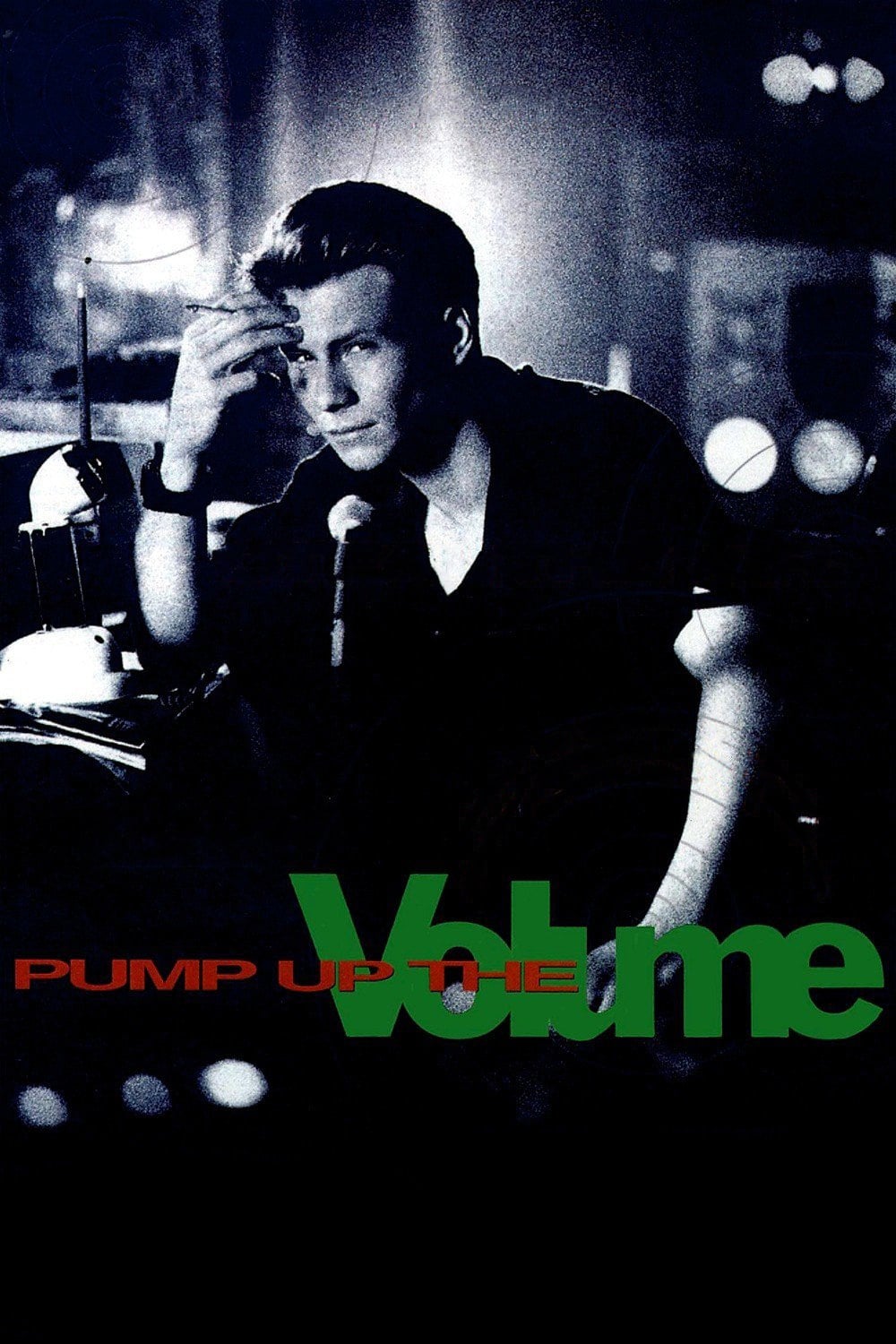
Pump Up the Volume poster

Pump Up the Volume

102 minutes

Cast

Selected cast credits · Film reference

Christian Slater Mark Hunter
Samantha Mathis Nora De Niro
Annie Ross Principal Loretta Creswood
Andy Romano Mr. Murdock
Scott Paulin Brian Hunter
Ellen Greene Jan Emerson
Mimi Kennedy Marla Hunter
Anthony Lucero Malcolm Kaiser
Billy Morrissette Mazz Mazzilli
Robert Schenkkan David Deaver
Cheryl Pollak Paige Woodward
James Hampton Arthur Watts
Ahmet Zappa Jaime
Seth Green Joey
Justin Hessling Holden Chu

Pump Up the Volume | The Rewatchables

Explore episodeClose episode

Producer credits not yet identified.

In the discussion (4)
Approx. transcript time · 00:35:49Read transcript
  • Cusack is raised early and cut off as stepping on Casting What-Ifs.
  • The hosts say the director wanted John Cusack, who liked the script but said he had played his last teenage role; a host is glad because Cusack would have been too old.
  • Moyle's interviews stress how young Slater was, but a host notes Slater turned 51 the day before, so he was at least 20 during filming.
  • The hosts say Drew Barrymore pursued the Nora role hard but Moyle pushed for Samantha Mathis; a host is glad since Barrymore would have been 15.

Roger Ebert's review

In the discussion (3)
Approx. transcript time · 00:41:41Read transcript
  • An over/under of two stars is set for the Ebert review and the under is taken.
  • Asked for a guess, the reply is that the review probably feels tossed off, as if he had seen it all before, siding with the under. — Andy Greenwald
  • The stated review is three and a half stars; Ebert is quoted as calling it hard-hitting, critical and worth seeing, and the hosts joke that he is back.

Most Rewatchable Scene

Wave of Mutilation montage

In the discussion (8)
Approx. transcript time · 00:44:08Read transcript
  • The opening scene introduces Hard Harry with fake masturbation bits and the "totally exhausted decade" monologue, plus the blonde superfan in the parking lot.
  • The second show strings together the poetry-lady letter, the Beastie Boys song and the Malcolm call, including the riff about a voice going somewhere uninvited like a virus.
  • The Malcolm call lands when he says "I'm all alone"; it follows a prank by two girls that had primed Mark to be skeptical of the letters.
  • His first show after Malcolm dies has the "being young seems worse than being dead" and "the real me is just as disturbed as the rest of you" lines, called catnip for 16-year-olds.
  • Other rewatchable scenes: Mark's parents nearly busting him when Nora pops up, Mark and Nora walking through school ("don't you see that you're the voice"), and the Jeep broadcast finale.
  • The pick is the Wave of Mutilation drop, called one of the favorite music drops in any movie; another voice says "me too".
  • The montage cuts between listeners, including Nora at her drafting table, and shots of suburbia being built in the desert, praised for direction and editing.
  • A further vote goes to the shirtless party dance that ends with Paige microwaving her belongings.
In the discussion (8)
Approx. transcript time · 00:54:26Read transcript
  • Wave of Mutilation is named again.
  • The two-identities structure, with Mark as a basement nerd who becomes Hard Harry at 10 p.m., works like a superhero story and anticipates online personas; he even turns his back on Nora to speak as his alter ego.
  • Nora De Niro is added to every category possible.
  • The Malcolm character could have gone wrong but works, with his oblivious mother asking him to watch TV.
  • The gay caller scene stands out for its plainspokenness in a 1990 film, and the film is called in some ways braver and more direct than current teen entertainment.
  • Ellen Greene as the cool English teacher is proposed; another host had her under aged worst because it is ambiguous whether she knew Mark was Hard Harry.
  • Casting Greene, described as an off-Broadway legend who played Audrey in Little Shop of Horrors, is defended as a smart choice for the necessary cool-teacher role.
  • The declared answer is a tie between the soundtrack and Samantha Mathis.

What’s Aged the Worst?

Shep Shepard reporter; gay caller performance; short on-screen shows; bedroom posters; the man who works with gangs downtown; wraparound shades; eagerness to phone

In the discussion (8)
Approx. transcript time · 00:58:52Read transcript
  • The Shep Shepard TV reporter role could have been much funnier in better hands.
  • The actor in the gay caller scene underdelivers, as if a replacement was grabbed that day; the budget shows in some one-scene supporting parts.
  • A crossover is proposed in which Die Hard's Dick Thornberg washes up in Mesa hoping Hard Harry is his way back to network.
  • The shows seen on screen are too short to build an audience; the film should show one running until 2:30 a.m.
  • Bedroom posters in 1985-94 films were wrong, a missed chance for Nike basketball, hip-hop and alt-rock posters; Boogie Nights and my so-called life are praised for getting them right.
  • The man who works with gangs "downtown", raised earlier as the film's only Black character and deferred to this category along with the police-department banter, is recalled as "the gang leader" and called tough.
  • Slater is impeccably cool except when he dons wraparound shades to visit his PO box, looking like Max Headroom.
  • Mark's eagerness to cold-call people on his cordless phone is what made one host recoil in 2020.

Picking Nits

Easily discovered identity; oblivious parents; unmasked phone voice; weak pirate signal; car broadcast; elaborate disguise; no siblings; no drinking or drugs

In the discussion (9)
Approx. transcript time · 01:03:36Read transcript
  • The FCC should have found him within minutes, and his parents should have noticed him smoking and monologuing in the basement.
  • The PA system prank scene is called unrealistic, and it was also on a nitpick list.
  • Clues like moving from back east, the dad-bought radio kit and eating in the stairwell meant no Sherlock Holmes was needed.
  • The dad never connects the radio equipment he bought to the pirate DJ, even after the parents say they could hear Mark talking.
  • He uses his real voice on phone calls, so the prank girls could identify him from one answer in English class.
  • Pirate signals are weak and patchy, and broadcasting from a moving car off a car battery is absurd.
  • Wanting a tiny audience clashes with the elaborate lengths he goes to disguise himself, and his soldering hobby should have tipped off his parents.
  • The film seems to consist entirely of only children, with no siblings questioning anyone.
  • The teenagers only drink Diet Pepsi and smoke, with no weed or alcohol, attributed to 1990 fear culture.
In the discussion (3)
Approx. transcript time · 01:06:37Read transcript
  • Two actors from Teen Wolf appear: Mark's dad, who runs the play in Teen Wolf and was Professor Randall on 90210, and Teen Wolf's dad, who plays the FCC head with the bad rug at the end.
  • Lynn Shea is shouted out as a parent at the PTA meeting who later appears in the Insidious movies.
  • The pranked guidance counselor Devers is played by Robert Schenken, a Pulitzer Prize-winning playwright of The Kentucky Cycle who wrote the LBJ play All the Way; the reply is that this has to win.
In the discussion (2)
Approx. transcript time · 01:08:05Read transcript
  • The principal is called a classic terrible actor, with the line "This isn't going to happen in our school."
  • Her after-hours scene sipping brandy from a snifter is called an incredible moment, and another voice agrees she was terrible.
In the discussion (4)
Approx. transcript time · 01:08:05Read transcript
  • The English teacher is called the odds-on favorite, and Seth Green, who has about two lines, is added for figuring out how to get the tape played over the school loudspeaker system.
  • Seth Green seemed the same age for 25 years, from Camp Imi Love as Patrick Dempsey's little brother onward.
  • The PA prank is called unrealistic, with a control board like something from early Star Trek that nobody can shut down.
  • Seth Green gets two votes; the host backing the English teacher says he is outvoted and on an island with Ellen Green, followed by a joke that her wine-drinking shots were all filmed in one day.

Recasting Couch

Ally Sheedy as the English teacher; Jimmy Eckhouse as Mark's dad; Tim Kazurinsky as the main teacher

In the discussion (4)
Approx. transcript time · 01:10:44Read transcript
  • Ali Sheedy is proposed for the English teacher, giving the film a link to the John Hughes and Breakfast Club era, as a mid-20s teacher a few years out of school.
  • Casting someone like Sheedy would visually suggest a future beyond high school for a Nora type; the other host is convinced and switches teams.
  • Jimmy Eckhouse from 90210 is proposed as Mark's dad, so the parents, who otherwise just chain-smoke and drink wine like the non-mob characters in The Sopranos, would show some humanity before his late turn; the reply is "that's fair".
  • Tim Kazerinsky should have been the main teacher, or alternatively Brian Doyle-Dill-Berry; the reply is "That's a great one."

Half-Assed Internet Research

Smoking illness; Montreal school inspiration; improvised dance; Santa Clarita filming; license suspension

In the discussion (5)
Approx. transcript time · 01:12:19Read transcript
  • As read on air, Slater became physically ill several times from the cigarette smoking during filming.
  • As read on air, the school was based on a Montreal high school where the director's sister taught that weeded out students who lowered averages.
  • As read on air, the director wanted to choreograph the fake-masturbation dance but Slater overruled him to keep it spontaneous.
  • As read on air, the film was shot in Santa Clarita, which a host finds very Arizona-like.
  • As read on air, Slater's license had been suspended for the second time in two years, so his character could not drive and Nora drives in the finale.

Apex Mountain

Christian Slater; Samantha Mathis; pirate radio movies; flipping switches; PO boxes; pre-Nevermind college radio era

In the discussion (8)
Approx. transcript time · 01:14:38Read transcript
  • Christian Slater gets a yes, with two agreeing voices; the next level was expected via Young Guns and Robin Hood but never happened, though True Romance briefly revived the belief.
  • Heathers and this film convinced everyone he was a leading man, given how many monologues he gets.
  • Samantha Mathis is at her Apex, with a joke to rename it Nora De Niro Mountain or put her face on it.
  • Pirate radio movies are at their Apex; the 2009 Pirate Radio with Philip Seymour Hoffman is called worse, and the agreement is "This was its best."
  • The Pixies are raised for Apex: one voice says this is a bigger Pixies drop than Where Is My Mind in Fight Club "just because it's so perfect", the counterargument that Fight Club can still be watched is called fair, and the case ends only with "I can see that argument."
  • Flipping switches is proposed because the switch sound design is so satisfying; the reply is "Great point."
  • Asked whether this is Apex Mountain for PO boxes, the answer is yes, adding the claim that the Unabomber killed PO boxes. — Bill Simmons
  • The last Apex is the pre-Nevermind alternative college-radio era, with 1990 called the peak before grunge; another voice agrees such a soundtrack could not be made a few years later.

The Neil McCauley “A Book about Metals” Award for Best Line from the Movie

"It can't get any worse. It can only get better."; "Eat me, beat me, push me, pull me, talk hard."

In the discussion (2)
Approx. transcript time · 01:23:56Read transcript
  • The "just remember one thing, it can't get any worse, it can only get better... quitting is not going to make you strong, living will" speech is called pretty good.
  • The "eat me, beat me, push me, pull me, talk hard" refrain is added as unsaid until then, recalled as a gateway line said by 14-year-old classmates.
In the discussion (4)
Approx. transcript time · 01:24:22Read transcript
  • The hosts relay that Slater has had meetings about an updated version and quoted him on reexamining what happened to Mark Hunter.
  • A 10-episode Netflix reinvention is called pretty cool; another host says no reinvention is needed since no one can see the original.
  • Andy is urged to call his friend Sam, said to love the film, which was an inspiration for Mr. Robot and for casting Slater.
  • The pitch: a grown-up Mark who flamed out with a mid-90s cocaine problem, gets clean through UFC, and shaves his head.

Probably Unanswerable Questions

Mark's next five years; whether Mark and Nora last

In the discussion (5)
Approx. transcript time · 01:27:13Read transcript
  • Mark likely gets a good attorney and probation rather than jail, but with a felony record.
  • He lands on The Real World Seattle, then MTV hosting such as Alternative Nation, with a joke about Zane Low.
  • The film has Mark and Nora barely kiss before a brief public kiss and going to prison for each other.
  • The relationship does not last; Nora is too cool and heads to Oberlin, dating older men.
  • Nora is called the most obvious unspun spinoff character, perhaps as a college student or a young teacher leading her own revolution.
In the discussion (3)
Approx. transcript time · 01:29:51Read transcript
  • Samantha Mathis as Nora wins, where three people could have won; she is called a generation's Velvet Underground record.
  • Her brief nude scene is framed as a character-driven power move rather than a gratuitous 80s-style scene.
  • She is fully realized and sees herself as Mark's equal, answering his request for help with "it's about time"; another voice agrees.
Podcast choices
Speaker not identified
Samantha Mathis

More from the conversation

Spotify sponsor read, then a cold open built from the film's trailer audio.
Approx. transcript time · 00:00:00Read transcript
The episode is framed as a reunion of The Watch pairing, with Andy Greenwald returning after at least two years away running TV shows.
Approx. transcript time · 00:00:32Read transcript
The hosts say the film came out 30 years ago and cannot be streamed or rented; one host wonders whether music licensing is the cause, and the episode is pitched as a demand to make it rewatchable.
Approx. transcript time · 00:01:05Read transcript
A joke villain named Joe Streaming is imagined, modelled on the FCC commissioner at the end of the film.
Approx. transcript time · 00:02:34Read transcript
Premise summary: a lonely kid who moves to Arizona runs a pirate radio show from his basement at 10 p.m. as Hard Harry, using a voice disguiser; it is called Slater's best film other than maybe True Romance.
Approx. transcript time · 00:02:34Read transcript
Anecdote: a friend named Gus ran a pirate-style radio show in the mid-80s from the Greenwich Country Day station; a caller's questions once made them fear it was the FCC.
Approx. transcript time · 00:03:17Read transcript
Asked whether the movie invented podcasts, the reply is that it invented the internet, presaging LiveJournal and AOL message boards with its closing chorus of teenage voices connecting.
Approx. transcript time · 00:04:20Read transcript
The film was a VHS staple that felt formative, tapping into the teenage sense that parents, teachers and government might all be phony.
Approx. transcript time · 00:05:10Read transcript
Heathers and Pump Up the Volume are paired as generational totems, 'the shot and the chaser', shared hand to hand.
Approx. transcript time · 00:06:02Read transcript
The film is placed in a post-John Hughes wave with Heathers and Say Anything, showing that nobody in high school has it together; Paige is cited as the girl who seems popular but is not okay.
Approx. transcript time · 00:06:36Read transcript
The soundtrack is highlighted: a slow version of the Pixies' Wave of Mutilation, Leonard Cohen, and a Beastie Boys song not on License to Ill.
Approx. transcript time · 00:08:47Read transcript
The show is passed around like contraband; illicit rap such as the Ice-T song the kids gather around is recalled as an introduction to forbidden material.
Approx. transcript time · 00:09:30Read transcript
Teenagers detect phoniness, yet a middle-aged Canadian writer-director earns credibility early with a Camper Van Beethoven cassette and a realistic mixed-tape collection.
Approx. transcript time · 00:10:02Read transcript
The basement tape collection is compared to Joe House's college room and the pre-Nirvana era; the only noted miss is not including early Nirvana, though there is a Soundgarden tape.
Approx. transcript time · 00:11:05Read transcript
Pre-internet hunger for culture: an advance Replacements tape from someone Nora-like, and Mark returning a Lenny Bruce book as an example of discovery by eavesdropping.
Approx. transcript time · 00:11:39Read transcript
Mark arriving from back east explains why his music is ahead of the Arizona kids; in 1990 the sources were friends, college radio and magazines like Spin.
Approx. transcript time · 00:13:18Read transcript
Soundtracks like this one formed taste by connecting old and new music such as Leonard Cohen and MC5; unlike Goodfellas, much of the music is diegetic, played by Mark himself.
Approx. transcript time · 00:14:09Read transcript
College radio usually sounded like a DJ back-announcing Mud Honey, but the successful shows created the feeling of a small shared audience, like a basement concert.
Approx. transcript time · 00:15:29Read transcript
Younger viewers may never have been truly alone; Paige clutching her boombox in her floral bedroom captures isolation before phones.
Approx. transcript time · 00:16:01Read transcript
A host compares his daughter's constant phone connection with 1990 kids alone in their rooms, where a pirate DJ railing against school would be idolized.
Approx. transcript time · 00:16:52Read transcript
The film is judged to more than hold up, with few nitpicks, tightly structured around the DJ scenes, the expulsions subplot, and a strong ending.
Approx. transcript time · 00:17:33Read transcript
Read in 2020, the film anticipates anyone building an audience by broadcasting; its ending has Mark arrested by the FCC rather than vindicated.
Approx. transcript time · 00:18:31Read transcript
The film does not soften the suicide early in the story: Mark, a 16-year-old, lacks the right words on the call, which a host finds raw compared with how a modern version would be written.
Approx. transcript time · 00:19:32Read transcript
The film is framed as a superhero story: a secret identity walking the halls like Clark Kent or Peter Parker until he embraces his power.
Approx. transcript time · 00:19:59Read transcript
The suicide call is called the most authentic scene: Mark handles it poorly, and his next show, where he says he never told the caller not to do it, is praised as a moment of learning from a mistake.
Approx. transcript time · 00:20:27Read transcript
Because the film is narrowly focused on Mark and his community, it also indicts the adults and school for failing to notice the isolated student, not only Mark.
Approx. transcript time · 00:21:47Read transcript
After his apology Mark cannot stay away from the microphone, and his handling of a caller bullied for being gay is blunt, suggesting he has not fundamentally changed.
Approx. transcript time · 00:23:00Read transcript
Talking openly about taboo subjects removes their power, which the film anticipates; the gay caller scene is called empathetic for 1990, as is Mark's reaction when the teacher announces Malcolm's death.
Approx. transcript time · 00:23:56Read transcript
Hard Harry's show is likened to crass talk radio and popular edgy podcasts, with Talk Radio (Eric Bogosian) and Alex Jones mentioned.
Approx. transcript time · 00:25:01Read transcript
Other transgressive streams of the era: Jerky Boys prank-call CDs and taped Howard Stern bits; broadcasts vanished unless taped, like Letterman and the Motown special with Michael Jackson's Billy Jean.
Approx. transcript time · 00:26:12Read transcript
In 1990 the alternative music the hosts loved was not popular, rewatching meant Blockbuster, and William Goldman's New York Magazine movie columns felt like a friend.
Approx. transcript time · 00:27:15Read transcript
Hard Harry's first monologue says everything is fake and used up, though a host notes 1990 was a relatively calm time; the Mesa setting feels like a disconnected suburban satellite.
Approx. transcript time · 00:28:06Read transcript
The hosts relay that Slater, doing interviews for Dirty John, called it his favorite film and job and said it could not be introduced to a new generation because the music rights were never secured.
Approx. transcript time · 00:29:28Read transcript
A host explains from his own TV show's experience that streaming absences are almost always about music rights, since deals are often bought for limited terms.
Approx. transcript time · 00:30:13Read transcript
The hosts cite a Vice interview with music supervisor Kathy Nelson and director Alan Moyle: licensing came from personal relationships, Moyle knew Leonard Cohen, and the film has an unreleased Beastie Boys song that would require reshooting to replace.
Approx. transcript time · 00:30:37Read transcript
Music rights also hurt 90s TV like Freaks and Geeks, Melrose Place and 90210; Homicide: Life on the Street is asked about; a host suggests labels started charging after Goodfellas used many songs.
Approx. transcript time · 00:31:31Read transcript
The director's name is confirmed as Moyle; he reportedly wanted Hard Harry to combine Holden Caulfield and Lenny Bruce.
Approx. transcript time · 00:32:20Read transcript
Hard Harry is called one of the best open riffs on Holden Caulfield.
Approx. transcript time · 00:33:00Read transcript
The hosts relay that the original script was about a suicidal pirate DJ who kept discussing it on air; after pushback the writer realized he most enjoyed writing the rants, turning it into something other than a nihilistic downer.
Approx. transcript time · 00:33:00Read transcript
The radio segments are compared to Good Morning, Vietnam as the best parts of the film.
Approx. transcript time · 00:33:43Read transcript
Slater's career before the film: The Name of the Rose, 'Cleveland in the cube' (ASR), Legend of Billy Jean (joked to have also 'created the internet'), then Heathers and 'next Nicholson' hype; Cuffs is recalled as a letdown.
Approx. transcript time · 00:33:43Read transcript
The hosts say Moyle's deal with New Line required final say on who played Mark.
Approx. transcript time · 00:35:21Read transcript
Slater's Mark and Heathers' JD created a 'super cool outcast' type that is not sweet, unlike Cusack's neurotic roles; mentioning Cusack as first choice is cut off as stepping on Casting What-Ifs.
Approx. transcript time · 00:35:21Read transcript
Samantha Mathis's Nora De Niro is called a favorite female character of the century, compared with Winona Ryder's Heathers character; her room, tapes, books and tea-drinking are said to have defined a type of crush.
Approx. transcript time · 00:36:50Read transcript
The 'introducing Samantha Mathis' title card is compared to Ken Griffey Jr.'s Upper Deck rookie card.
Approx. transcript time · 00:38:21Read transcript
Mathis's later career as recounted by the hosts: Thing Called Love with River Phoenix, whom she was dating when he died; Broken Arrow with Slater; a show with Winona Ryder; one Lost flashback episode; Billions.
Approx. transcript time · 00:38:43Read transcript
A host recounts being star-struck when Samantha Mathis sat behind him at a Los Angeles restaurant in 2006.
Approx. transcript time · 00:39:28Read transcript
Nora is proposed for best actress at a future 200th-episode Rewatchy Awards; she is described as not a manic pixie dream girl, with her own motives, letter-writing as the 'Meet Me Beat Me' lady, and a clue-covered cork board.
Approx. transcript time · 00:40:16Read transcript
Two Zappas appear in the film, Amet Zappa and Nora's friend, said to be a Zappa cousin; Nora's coolness includes handling Mark's parents and the Jeep line.
Approx. transcript time · 00:40:51Read transcript
In-show promo for The Watch with Chris Ryan and Andy Greenwald (Lovecraft Country, Lonesome Dove).
Approx. transcript time · 00:42:14Read transcript
The hosts say they watched the film on a 24-part YouTube playlist and call on streamers (Ted Sarandos, Peacock) to license it, or joke about piracy fitting its destiny.
Approx. transcript time · 00:43:23Read transcript
Soundtrack roll call: Camper Van Beethoven, World Party, The Church, XTC, Morrissey, Fugazi, Peter Murphy (a host would have chosen differently, maybe Billy Bragg); the UK Surf version of Wave of Mutilation is called the best song of the era.
Approx. transcript time · 00:49:32Read transcript
College rock had not yet broken in 1990, known through IRS compilations and 120 Minutes; fans resented R.E.M. for getting popular.
Approx. transcript time · 00:49:58Read transcript
The hosts say New Line wanted a more pop option than Leonard Cohen, so Concrete Blonde covered the song; a Sweet Jane cover in Natural Born Killers is mentioned and later corrected from Mazzy Star to Cowboy Junkies.
Approx. transcript time · 00:50:36Read transcript
Singles is compared as a grunge film whose music was well timed, recalling the earlier Reality Bites episode with Chuck, but it is about adults.
Approx. transcript time · 00:51:12Read transcript
More soundtrack: Sonic Youth, Soundgarden and the Pixies as essential choices; Leonard Cohen as a zag; Richard Hell's Love Comes in Spurts; Bad Brains with Henry Rollins covering MC5; Cowboy Junkies covering Robert Johnson; the descendants; was not was; the Beastie Boys outtake; rated 10 out of 10.
Approx. transcript time · 00:52:12Read transcript
Writing specific songs into a script breaks a screenwriting rule, forcing the production to secure them, unlike Singles where Cameron Crowe had bands record new songs.
Approx. transcript time · 00:53:03Read transcript
The soundtrack stays true to what 16-year-olds would like, mixing Leonard Cohen with short hardcore songs.
Approx. transcript time · 00:53:53Read transcript
A host recalls having a PO box for his early website and relates Hard Harry's letters to getting a first reader email.
Approx. transcript time · 01:18:19Read transcript
Pre-internet writing felt like shouting into the void; at Spin the only letters came from prisoners; James Gumb jokes from the Silence of the Lambs episode illustrate thinking one's jokes were private.
Approx. transcript time · 01:19:26Read transcript
The producer, who had never seen the film, says Nora was not his type and he preferred Paige, later citing the Stone character in Superbad (ASR 'MS. Stone'); he went to high school 2008-2012.
Approx. transcript time · 01:32:33Read transcript
Closing: an open call to Apple, Netflix, HBO Max, Peacock and listeners to restore the film, thanks to Andy, Chris and Craig, a Cocktail episode on September 1, and plugs for The Watch and Craig's fantasy football podcast; sign-off 'Talk hard.'
Approx. transcript time · 01:35:06Read transcript