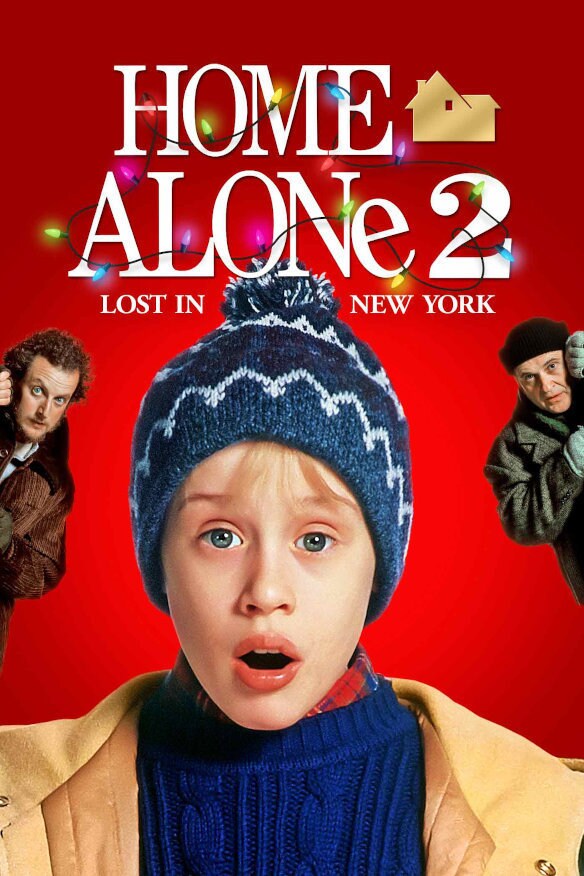
The parents’ negligence is compared with worse or abusive parents in The Great Santini and This Boy’s Life, preventing a definitive worst-ever answer.
The burglars are imagined with severe lasting brain injury in a sentimental sports-documentary parody.
A dark hypothetical imagines the pigeon lady robbing Kevin after bringing him to Carnegie Hall; it is a joke about the fictional scene, not an established plot event.
The imagined aftermath involves legal intervention, a different guardian or emancipation after the repeated neglect; Uncle Frank is specifically rejected as the alternative.
One proposed lesson favors company over isolation, but the opposing reading jokingly celebrates Kevin escaping an unpleasant family for food, swimming and adventure.
The response calls the film enjoyable and potentially a classic had it come first, but prefers the original because the sequel repeats jokes with less nuance and excessive intensity.
The hosts defend familiar comforts, while the response asks for fresh jokes from the same filmmakers; New York’s Christmas atmosphere is praised despite the repetition.
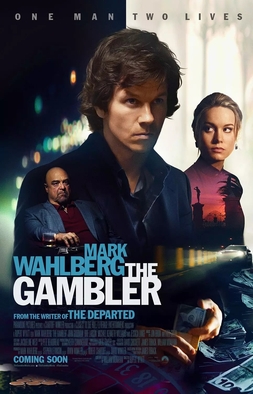
The project initially involved Scorsese, DiCaprio and Monahan; Scorsese departed, Todd Phillips briefly followed, and Wyatt and Wahlberg eventually took over.
The opening launches directly into gambling without lifestyle setup, introducing the underground room and Bennett’s all-or-nothing behavior.
The opening blackjack streak builds from ten thousand through repeated doubled bets; refusing to pocket winnings exposes his self-destructive approach.
Neville’s high-interest loan and Bennett calling life a losing proposition intensify the sense that he wants to destroy himself.
Mr.Lee’s demand for repayment meets Bennett’s literal insistence that this is a gambling establishment.
Bennett rejects the dealer’s protection because the point is to escape protection from himself; the new-dealer sequence is particularly enjoyable.
Taking the blackjack winnings to roulette and losing on black completes an opening stretch worth repeated viewing, despite the contradictory running money totals.
The casino’s ocean view prompts uncertain Venice/Palisades geography before settling tentatively on hillside Palisades.
Bennett’s lecture compares literary genius with elite athletic ability and rejects respectable mediocrity, including mutually flattering novelist reviews.
The pretentious student trying to impress him is sharply dismissed.
Having a future NBA player, national tennis prospect and genius writer in one class is comically remarkable.
The tennis player’s shift from winning to understanding the game is praised through Bennett’s IQ-breakpoint remark.
Calling the talkative student an NPR host while identifying quiet Amy as the genuine writer makes another strong classroom passage.
Frank’s shaved-head introduction diagnoses Bennett’s contradictions and asks whether privilege has really burdened him.
Frank demands humiliating self-admission before lending; Bennett refuses to say he is not a man, preserving his insistence that gambling is only a means to an end.
Lamar’s knee problem and Bennett’s complaint about teaching indifferent students make their exchange another candidate.
The casino trip with Amy begins with an absurd successful double-down on18 and quickly becomes a race to lose everything.
Frank’s financial-independence speech argues that a paid home, reliable car and savings create freedom to refuse demands; it is the first explicit favorite.
The final confirmation gives Frank’s speech both scene votes.
The basketball is considered convincing despite an overly dark arena; Lamar’s game is compared with several NBA players without a single settled analogue.
The final roulette bet in another hidden gambling room, with all parties watching, is a strong setup even if a climactic blackjack scene would be preferred.
Both final choices agree on Frank’s financial-independence speech.
Displaying discussions 3133 - 3144 of 6801 in total