The sexually charged telephone performance while Michelle lies beside an unaroused Julian exposes how easily he switches professional desire on and off.
The opening credits combine the 450 SL, Blondie and Armani fitting into an admired sequence, especially driving the PCH.
The first Gere–Hutton hotel exchange is praised for its chemistry and frank proposition.
The French conversation plays on misunderstandings of language and intention, culminating in the iconic “no, just one fuck” line.
The Palm Springs encounter with a married couple is a deliberately strange scene candidate, contrasting Leon’s clients with the madam’s and emphasizing the husband’s creepiness.
Julian’s flowing seduction, undressing and touch are admired as intimate choreography before the husband makes the encounter disturbing.
Julian laying out clothes and dressing is admired as pure directorial style.
The naked monologue about spending three hours giving a neglected woman an orgasm is a scene candidate, expressing his sense of worthwhile work.
Julian’s staged nude pose by the blinds makes him seem unusually exposed in his element while explaining his work.
The shoeshine confrontation with Detective Sunday is admired as a cat-and-mouse exchange, with Julian insulting the detective’s appearance.
Elizondo’s amused reactions make the antagonistic exchange feel like an unexpected bond.
The senator’s short confrontation is enjoyed for exposing Julian’s powerlessness and outsider status.
The late-night visit to Probe is a scene candidate, its gay-club atmosphere compared with Cruising.
Julian tearing apart his apartment and car creates tension and showcases Gere’s anger, with practical objections deferred.
Leon explaining the frame-up is a scene candidate; placing the revelation well before the end makes room for an emotional and spiritual conclusion, though another voice dislikes the extended finish.
The opening credits receive an explicit choice and agreement, extending into the madam-and-women porch conversation.
The morning-after telephone call and breakfast order are another candidate, with Michelle visibly dazed by pleasure and barely able to answer beyond refusing eggs.
The limited cocaine use seems odd for the era, though Julian’s older clients may prefer cocktails and his own use occurs privately.
Michelle’s emotional love for Julian is insufficiently established beyond sexual attraction; an intimate connecting scene should replace some of the stretched ending.
A relaxed Malibu meal or Lakers outing is proposed to create that missing connection, with joking possibilities involving basketball and courtside Leon.
The balcony death looks like Julian charging at Leon, making the maid’s testimony that he tried to save him an implausible reason to avoid charges.
Keeping sex toys in a study filing cabinet is questioned.
Driving around with the incriminating jewels is criticized as foolish.
Julian should inspect the undercarriage before tearing open his car door.
Bad parking gives the police an unnecessary opening while Julian is being pursued.
A storage locker could hide the jewels; frantic behavior is offered as a defense, with cocaine jokingly proposed to explain his decisions.
The senator needs a larger role, potentially participating in the frame-up or murder rather than remaining an accessory to the story.
Whether Schrader invented a desirable Los Angeles lifestyle or captured an existing subculture is debated, with Pat Riley’s Armani image cited as possible influence.
Whether Julian enjoys his life is questioned: he may merely believe he should, treating his apartment as a trophy storeroom until intrusions expose the illusion; Leon’s warnings prove accurate.
Julian’s inability to receive pleasure is interpreted as professional identity blocking vulnerability; Michelle’s love offers the meaningful connection his carefully controlled life lacks.
Ryman should attract more suspicion for his wife’s death; his role in directing or permitting the violence remains unclear despite Leon’s cover-up.
A three-hour pleasure session raises joking questions about hydration, tongue exercises, neck cramps, breaks and halftime.
Allen Payne was reportedly the original Kyle choice.
Leon reportedly said Washington was offered Shep; the panel doubts he was realistically in contention, but cites Ricochet and other unconventional roles as possible counterexamples.
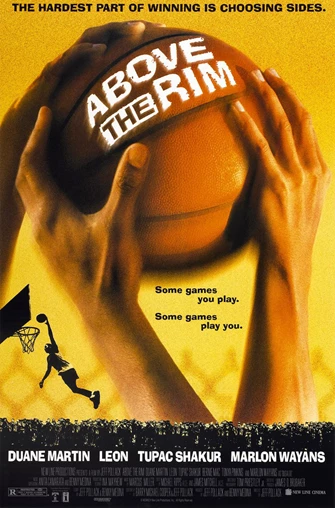
The film is described as Tupac’s last movie released during his lifetime; later completed films arrived posthumously, and shooting reportedly sometimes waited for him.
A reported$6.5 million budget and$16.2 million theatrical gross are supplemented by speculation that later formats earned much more.
Martin attended NYU rather than Georgetown, correcting a long-held assumption that the ending used his actual college shot.
Kobe Bryant reportedly sometimes practiced without a ball; any influence from this film is a joke rather than established history.
Pinkins is reportedly only three years older than Martin.
Martin reportedly played at NYU in the late 1980s and received an 1988–89 first-team honor.
Leon reportedly left a Loyola Marymount basketball scholarship for acting.
Leon described NYU scrimmages involving Rucker tournament players, where actual skill mattered more than acting.
Tupac and Wayans reportedly shared a two-bedroom trailer, and Wayans recalled frequent marijuana smoking.
Speedy Williams, the red team’s point guard, is identified as a basketball technical consultant.