Randone’s Bulls wager is defended through a speculative 1996 Knicks playoff reconstruction: a 13-point loss nearly covers 12, countered by the rule against betting on Jordan. — Chris Ryan
A top-ten De Niro performance claim is narrowed to top-ten rewatchability after a formidable career list, with the “You blew it” scene more tempting to revisit than Raging Bull. — Sean Fennessey
Stallone’s weight gain is speculated to have changed his face after weight loss and prompted later cosmetic work; this is a personal theory, not a documented explanation. — Bill Simmons
The producer judges the De Niro take the hottest of the three. — Bill Simmons
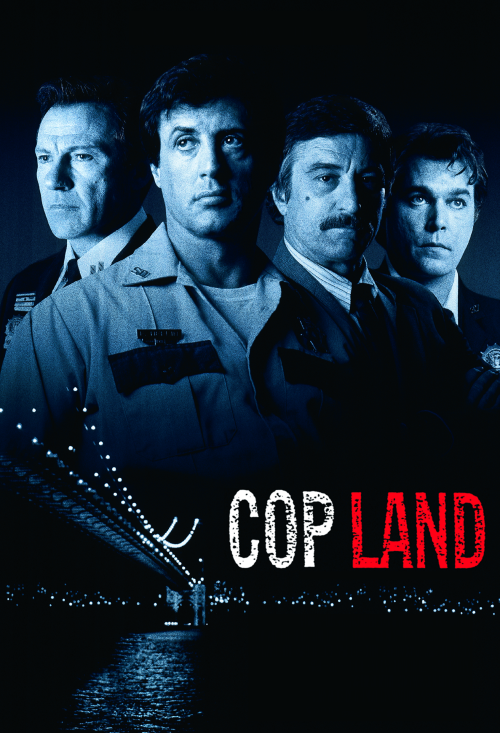
Two choose Ray beside the illuminated aboveground pool; the wide Stallone/river/bridge composition opening the shootout is the other signature image. — Bill Simmons
The lost era of ambitious indie ensembles working for scale is fondly remembered. — Bill Simmons
De Niro and Stallone sharing scenes felt monumental before De Niro’s later commercial comedies; Jackie Brown and Wag the Dog enhance his 1997 run.
Firing beside Freddy’s good ear is an effective escalation of cruelty, compared with targeting a wrestling injury or McClane’s bare feet.
Mid-1990s New Jersey clothes and atmosphere are enjoyed. — Chris Ryan
Falco smoking is an especially enthusiastic attraction choice. — Chris Ryan
Falco and Liotta’s convincing smoking and intimacy are singled out, with the cast’s general familiarity with cigarettes praised. — Chris Ryan
Freddy’s Carlton cigarettes and Lethal Weapon pinball establish character economically: he wants to be a supercop.
The portrayal of a closed white-cop community has disturbing contemporary resonance; reportedly cut racism scenes and the bridge exchange about saving Black children deepen the critique, though it is not nuanced.
Mangold's sustained career is an aged-best choice. — Bill Simmons
Young muscular Berg and the returning fashion of Randone's shoes and motorcycle are enjoyed. — Bill Simmons
The rare, well-chosen Springsteen uses and restraint with needle drops keep the score effective.
Six future Sopranos performers are listed: Falco, Ventimiglia, Patrick, Sciorra, Sirico and Nascarella. — Bill Simmons
The satellite town and bar feel authentic to childhood experience of cop bars: welcoming to children yet increasingly boisterous and intimidating.
The diagonal speech, wordless Keitel–De Niro coffee-shop tension and ensemble bar scenes are early favorites. — Sean Fennessey
Superboy’s shooting and staged jump launch the plot with enjoyable bar, bridge and evidence-planting details; Calderon’s suspicion and the bottle causing the blowout are praised.
Keitel and De Niro’s reunion and guarded Amish exchange make the hosts want more scenes together.
The bar sequence moves from Berg’s gambling dispute through Patrick’s dart confrontation and Figgsy’s demand not to be shut out; it is a leading choice.
Ray’s attempted pool drowning of Superboy is a strong dramatic candidate despite upcoming nitpicks. — Bill Simmons
Both Stallone–De Niro confrontations work, especially the famous “You blew it” tirade and the immediate realization that Freddy has revived the case.
Figgsy rejecting Freddy’s justice and warning that being right is not a bulletproof vest is another favorite.
The final shootout and De Niro’s shouted “Go to lunch” case closure are nominated.
The rooftop sequence with Berg is praised for Serpico-like tenement geography and dead ends.
The whole Figgsy bar sequence is explicitly selected as a Sopranos precursor; “You blew it” receives the other explicit final choice. — Bill Simmons
Weinstein’s editing reputation prompts speculation about cuts, and the opening/closing De Niro voiceover is criticized for explaining what the images already establish.
Ray’s plan to hide Superboy, stage a funeral, then display him at a large party before deciding to kill him is criticized as incoherent; a hoped-for mob-funded relocation partly explains the initial plan. — Chris Ryan
The cover-up’s public party, sudden murder decision and failure to pursue a simpler self-defense account are debated; Ray’s corrupt network risks collapsing if any participant flips.
The Four Aces should show more Yankees, Devils or other sports on television. — Bill Simmons
Casual drunk driving, including taking a blacked-out Freddy to his car rather than home, now looks especially bad. — Bill Simmons
Young Freddy’s flashback casting is unconvincing, and Moriarty’s changed appearance since Raging Bull surprises. — Bill Simmons
Stallone’s later belief that this hurt his career disappoints the hosts, who think he should value its cult following and his established achievements. — Bill Simmons
Stallone claimed 2.6 percent body fat, a 155-pound weight, ten egg whites and toast, fruit every third day, and several kinds of daily training. — Bill Simmons
Three Rocky statues were made, and Philadelphia officials moved one away from the museum steps after deciding it was a movie prop rather than art. — Bill Simmons
Mr. T claimed his mother walked out of the movie after criticizing the way Clubber spoke to Adrian. — Bill Simmons
Stallone told Roger Ebert in 1979 that a possible third film would stage a Coliseum fight and might end with Rocky’s death. — Bill Simmons
The movie’s exterior house is reported to have belonged to the boxer in Chicago. — Bill Simmons
The film uses an unreleased demo of Eye of the Tiger rather than the later commercial version. — Bill Simmons
The opening montage intercuts Rocky enjoying celebrity with Clubber destroying opponents, making both the story and threat immediately clear.
Thunderlips combines credible wrestling moves, comedy, crowd energy, Paulie’s chair attack, and the movie’s role in Hulkamania.
Clubber interrupting the statue ceremony turns a celebration into an escalating challenge and insult to Adrian.
Mickey’s admission that Rocky fought selected opponents reframes success as comfort and fear of the truly hungry challenger. — Bill Simmons
The first Clubber fight races from the simultaneous ring entrance through a brawl, early Rocky punches, a knockout, and Mickey’s death. — Bill Simmons
The beach confrontation is called Rocky and Adrian’s best scene because she forces him to admit fear without treating fear as shameful.
The training montage is energetic despite Apollo appearing to ease up in the race and the beach embrace becoming comic.
The final fight uses a large stated weight difference, a rope-a-dope strategy, and slow-motion reaction shots to build its comeback.
Stallone claimed that he and Mr. T went all out late in the final round, but the panel doubts it and allows that only some body punches may have landed. — Bill Simmons
The private Rocky-Apollo fight ends on a freeze-frame that felt like a cliffhanger even though later films never show the result.
Thunderlips wins one participant’s scene ballot because the nine-minute sequence contains nearly every kind of entertainment the film offers.
The opening montage wins another ballot because it immediately establishes the movie’s pace and stakes.
A curveball reframes it as what won the movie: the knife, the indelible image a kid would talk about leaving the theater; the reply is 'I love that thing.' — Kyle Brandt