‹ All movies
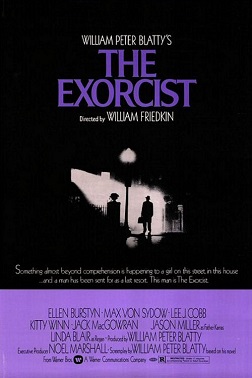
The Exorcist poster

The Exorcist

121

Cast

Selected cast credits · Film reference

Ellen Burstyn Chris MacNeil
Max von Sydow Father Merrin
Lee J. Cobb Lt. [William F.] Kinderman
Kitty Winn Sharon
Jack MacGowran Burke Dennings
Jason Miller Father [Damien] Karras
Linda Blair Regan [MacNeil]
Barton Heyman Dr. Klein
Pete Masterson Clinic director
Robert Symonds Dr. Tanney
Arthur Storch Psychiatrist
Reverend Thomas Bermingham S.J. University president
Titos Vandis Karras' uncle
John Mahon Language lab director
Ron Faber Assistant director
Donna Mitchell Mary Jo Perrin
Roy Cooper Jesuit dean
Mercedes McCambridge Voice of demon Pazuzu
Richard Callinan Astronaut
Joanne Dusseau Senator's wie
Vincent Russell Derelict
Ann Miles Spiderwalker

The Exorcist | The Rewatchables

Explore episodeClose episode

Producer credits not yet identified.

Roger Ebert's review

In the discussion (2)
Approx. transcript time · 00:27:34Read transcript
  • Ebert and Siskel are reported to have both awarded four stars.
  • Pauline’s negative review is discussed; her objections about emotional investment and a tidy ending are challenged.

Most Rewatchable Scene

Party interruption; first demonic outburst; crucifix scene; mother meets priest; exorcism; detective interviews

In the discussion (7)
Approx. transcript time · 00:30:48Read transcript
  • The astronaut warning and public urination are nominated as a powerful scene.
  • A pet’s public urination evokes the film, while the unusual priest-and-astronaut guest list is explained as a Washington society party.
  • The Iraq prologue is defended for establishing Merrin’s history, heart problem and the geographic reach of evil, but explicitly not nominated as most rewatchable.
  • The first demonic outburst and crucifix/head-turn scene are praised for their shocking escalation.
  • The mother’s meeting with the priest is admired for the performances, bruises, sunglasses and shaking hands.
  • The entire final exorcism is praised as an extraordinary final twenty to thirty minutes.
  • Both detective scenes are nominated, especially the subtle conversation with the mother about her daughter killing the director.

What’s Aged the Best?

Title and presentation; poster arrival; theme music; attic suspense; makeup; ascent imagery; dirty language; sound design; Jason Miller casting

In the discussion (6)
Approx. transcript time · 00:41:45Read transcript
  • The title, lettering, poster and carefully lit arrival of the exorcist are praised, including the delayed entrance of the title character.
  • The theme music and classic attic investigation remain effective sources of tension.
  • The aging makeup on the forty-four-year-old actor playing the exorcist and the detailed wounds on the possessed child are praised.
  • Repeated stairs and ascents are read as heaven-and-hell motifs; the demon’s dirty language also provides humor.
  • Loud ambient dogs, invasive medical-machine sounds and a wallet used for neck-cracking sound are praised.
  • Casting playwright Jason Miller over famous actors is praised as perfect and less distracting.

What’s Aged the Worst?

Slow opening; some effects; Exorcist II; Linda Blair’s later career; dangerous directing methods; Burke as party guest

In the discussion (5)
Approx. transcript time · 00:50:49Read transcript
  • The slow opening and some dated effects are criticized; Exorcist II is described as a notorious failed change of direction.
  • Exorcist 3 is praised, while the prequel production involving Paul Schrader and Harlin is described as strange.
  • Blair’s post-film career is reserved for later discussion; a Toyota Pazuzu story is a joke, and the gray jogging sweatsuit receives affectionate attention.
  • The hosts describe injuries to the actresses, a gun fired near Miller, and the director striking the real priest before his scene.
  • Burke’s drunken and confrontational party behavior is criticized with some nostalgia.

Casting What-Ifs

Brando; Nicholson; Keach; Newman; Hepburn; Bancroft; Fonda; MacLaine; Penn; Kubrick; Nichols; Rydell

In the discussion (4)
Approx. transcript time · 00:54:36Read transcript
  • Brando was reportedly vetoed to avoid a Brando movie; Nicholson, Keach and Newman are discussed for Karras, with Keach paid off for Miller.
  • Keach is thought capable of the role, which could have been his biggest film.
  • Hepburn’s Rome condition, Bancroft’s pregnancy, Fonda’s ideological rejection and Shirley’s later regret precede Burstyn’s casting.
  • Penn, Kubrick and Nichols reportedly declined; the subsequent director choice was resisted in favor of Friedkin after The French Connection.
In the discussion (3)
Approx. transcript time · 00:59:11Read transcript
  • The demon voice wins, with raw eggs, smoking, whiskey and physical restraints recounted as methods used in recording.
  • Replacing Blair’s spoken dialogue is praised as crucial to the effect.
  • A ranking of internal voices is suggested: Karras’s mother and the homeless man are singled out as chilling, with a British voice also mentioned and added athlete voices imagined.

Recasting Couch

No necessary recast; Jane Fonda and early Al Pacino considered

In the discussion (3)
Approx. transcript time · 01:01:39Read transcript
  • The cast is largely left intact, perhaps except Burke; Fonda’s actress-as-actress casting is considered too self-conscious.
  • Early Godfather/Serpico-era Pacino as the priest is considered intriguing and prompts impressions.
  • The panel distinguishes early Pacino from the later persona and calls the proposed performance fascinating.

Half-Assed Internet Research

Miller’s career; voice and pea-soup effects; Georgetown stairs; university filming; Linda Blair’s later life

In the discussion (4)
Approx. transcript time · 01:03:54Read transcript
  • Miller reportedly declined Taxi Driver for The Nickel Ride and is identified as Jason Patric’s father.
  • The crucifix dialogue is described as a slowed recording of Blair; Miller reportedly expected pea soup on his chest but was hit more broadly.
  • Georgetown stairs became a tourist site; students reportedly charged to watch the stunt, and a later St. Elmo’s Fire filming request was refused with a joke about the devil losing.
  • Blair’s early fame and reported relationships with Rick Springfield, Glenn Hughes, Tommy Shaw, Rick James and Wings Hauser are discussed; her age fifteen relationship with Springfield is criticized.
In the discussion (5)
Approx. transcript time · 01:09:33Read transcript
  • Friedkin’s power after two major hits and Miller’s Pulitzer, Tony and supporting-actor nomination make both clear Apex choices.
  • Washington films are debated against All the President’s Men; the actor playing Merrin is unresolved given The Seventh Seal and other major roles.
  • Blair receives a yes; Georgetown loses to its basketball era; Burstyn is debated against Alice Doesn’t Live Here Anymore and her durable later career.
  • Split-pea soup and the demon receive yes answers; reversed speech is compared with alleged backward music messages without settling a choice.
  • The demon’s name, appearance and travel inspire jokes before the explanation that Karras’s crisis of faith made him the target.

Picking Nits

Priest possession; healed scars; murder charges; Sharon’s job; unfinished film

In the discussion (5)
Approx. transcript time · 01:16:29Read transcript
  • The objection that a saved priest could not be possessed is met by the observation that priests are fallible.
  • Regan’s nearly healed face is questioned, with elapsed time and release from possession offered as explanations.
  • Murder charges are considered, with the detective’s discretion, Burke’s unpopularity and a possible abuse implication discussed uncertainly.
  • Sharon’s willingness to remain as babysitter through the possession is questioned.
  • The panel wonders why filming continues and whether Crash Course was finished or any good after its director’s death.

Sequel, Prequel, Limited Series, or All-Black Remake

No further television remake needed

In the discussion (2)
Approx. transcript time · 01:20:56Read transcript
  • A ten-episode expansion is proposed before the existing television series with Davis is recalled.
  • The TV show is described as not great and a reason not to remake movies like this.

Probably Unanswerable Questions

Carl’s past; Regan’s future; missing father; house rental; Pazuzu’s next move

In the discussion (5)
Approx. transcript time · 01:21:26Read transcript
  • Carl’s denial of being a Nazi is considered unconvincing; bringing the demon in luggage is jokingly suggested.
  • The daughter’s next five years and return to L.A. after possession and killing are imagined as difficult.
  • The missing father is questioned, then connected to divorce and puberty as thematic explanations.
  • Renting the house again and the demon’s next destination are questioned.
  • Exorcist 3’s Karras, Gemini Killer and institutionalization plot is summarized and its realism contrasted with its creepiness.
In the discussion (4)
Approx. transcript time · 01:26:11Read transcript
  • Two explicit Friedkin choices are followed by a preference for him despite initial temptation toward Miller.
  • The result is complicated by the argument that the film set expectations too high for Friedkin’s later work.
  • Later films including Cruising, Jade, Blue Chips, Bug, The French Connection and Sorcerer prompt possible future-episode discussion.
  • Friedkin’s generational placement, uneven career and later revival are compared with Coppola and Schrader.
Podcast choices
Speaker not identified
William Friedkin
Speaker not identified
William Friedkin
Speaker not identified
William Friedkin

More from the conversation

The panel debates the film’s continued power, emphasizing documentary-like locations and natural performances against modern horror artifice.
Approx. transcript time · 00:02:32Read transcript
An explicitly thirteen-film, unranked survey of 1972–77 movies is used to argue that the era established durable modern filmmaking templates. This is not a Top Ten List.
Approx. transcript time · 00:09:02Read transcript
The panel links its success to audiences seeking intense experiences and to a parent’s fear of an inexplicable threat at home.
Approx. transcript time · 00:13:11Read transcript
Pea-soup jokes, head-spinning references and the Richard Pryor SNL parody illustrate cultural impact; troubled-production publicity is compared with Jaws and Titanic.
Approx. transcript time · 00:17:23Read transcript
The R rating is questioned in light of the crucifix scene, with discussion of rating inconsistencies and unverified industry-bribery theories.
Approx. transcript time · 00:22:24Read transcript
Box office and the 1973 Oscar field are reviewed, including the rivalry between prominent films and traditional award choices.
Approx. transcript time · 00:24:48Read transcript
A recurring CR craft-rating category for sound, makeup and lighting is proposed as a joke.
Approx. transcript time · 00:49:52Read transcript
Priest Month is mentioned jokingly with no established next film; no formal theme membership is asserted.
Approx. transcript time · 01:17:03Read transcript