
‹ All movies
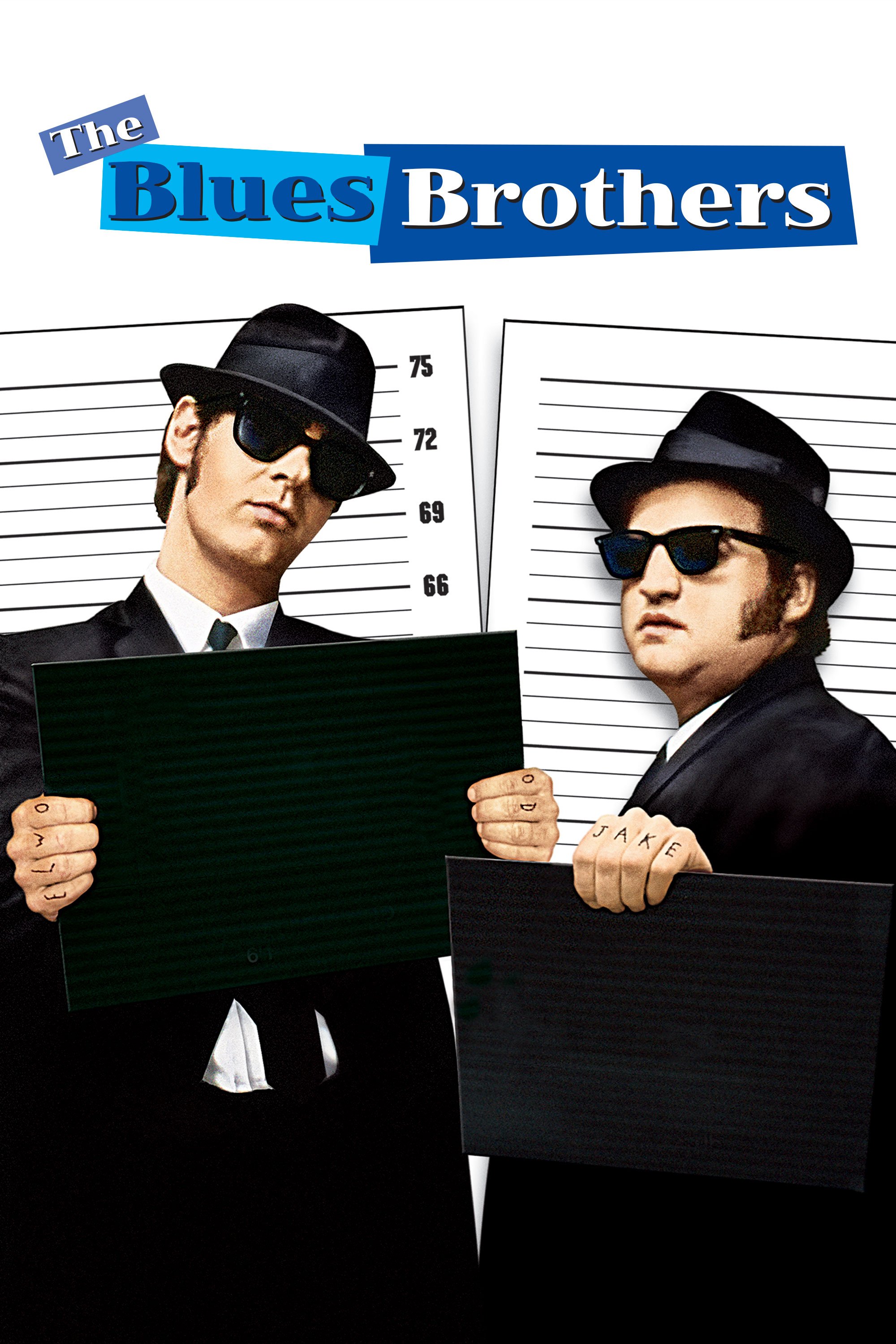
The Blues Brothers poster

The Blues Brothers

133 minutes

Cast

Selected cast credits · Film reference

John Belushi Joliet Jake Blues
Dan Aykroyd Elwood Blues
James Brown Reverend Cleophus James
Cab Calloway Curtis
Aretha Franklin Mrs. Matt Murphy
Carrie Fisher Mystery Woman
Henry Gibson Head Nazi
John Candy Burton Mercer
Kathleen Freeman Sister Mary Stigmata
Steve Lawrence Maury Sline
Paul Reubens Waiter
DeVoreaux White Young guitar thief
Steven Spielberg Cook County clerk

The Blues Brothers | The Rewatchables

Explore episodeClose episode

Producer credits not yet identified.

What’s Aged the Worst?

Manual steering; missing Shaffer and cameos; sequel; racist theater bookings

In the discussion (7)
Approx. transcript time · 00:31:08Read transcript
  • Enormous car pileups are questioned as a dated appeal, but escalating absurdity eventually turns initially tedious chases into impressive comic invention.
  • Manual steering ages poorly; a remembered failed test drive of a cheap late-1960s Mustang illustrates the difficulty.
  • Paul Shaffer’s absence disappoints; his competing Gilda Live commitment reportedly enraged Belushi and cost him his band place.
  • Howard Shore suggesting the Blues Brothers name without continuing involvement is raised, though his later career went well.
  • More SNL-related cameos, such as Murray, Martin or Laraine Newman, are desired; Hartman’s later cameo work illustrates the appeal.
  • Blues Brothers 2000 is called a poor sequel.
  • Landis’s account of Ted Mann restricting bookings to avoid Black audiences is condemned as racist and as harming the film’s release, despite its eventual success.

Most Rewatchable Scene

Ray’s Music Exchange; Chez Paul; mall chase

In the discussion (11)
Approx. transcript time · 00:36:54Read transcript
  • Jake’s release, the brothers’ reunion, police-car pickup and bridge jump provide a strong opening.
  • James Brown’s church performance and Jake’s epiphany are nominated as iconic, with a stunt double inferred for the handsprings.
  • The Dixie Square Mall chase is loved for escalating destruction, deadpan shopping remarks and its period mall atmosphere.
  • Chez Paul is a favorite and the funniest scene, unleashing Belushi through food and outrageous demands; more similarly unrestrained scenes are desired.
  • The Soul Food Cafe sequence combines John Lee Hooker, dry toast and four fried chickens, and Aretha’s Think; Murphy’s stiff acting contrasts with her performance.
  • Ray’s Music Exchange is praised as the best musical number for its outdoor choreography, compared with Ferris Bueller’s Twist and Shout dancing.
  • Bob’s Country Bunker, Rawhide and Stand by Your Man are nominated; its chicken wire inspires a joke about live television recaps.
  • Minnie the Moocher, the Palace Hotel performances and Carrie Fisher’s tunnel confrontation are listed among candidates.
  • The 106-miles-to-Chicago exchange is an iconic launch into the final chase.
  • The Nazis’ prolonged falling Pinto, the Bluesmobile collapsing and the surrounding guns are final-chase highlights.
  • Ray’s Music Exchange is explicitly selected for Charles’s timing, the song and dance, and its necessary place in getting instruments; another response favors Chez Paul or the mall.

The most "year the movie came out" thing

Police cars; $10 suit; celebrity album; R&B car-chase musical

In the discussion (3)
Approx. transcript time · 00:43:48Read transcript
  • Destroyed 1970s police cars and an expensive suit costing ten dollars mark the era.
  • Don Simpson reportedly sought the project for Paramount, inspiring a joke about an even more drug-heavy production.
  • Fame enabling an album and an R&B car-chase musical about two white felons on a divine mission feel characteristic of 1980.

What’s Aged the Best?

Lead duo; anti-Nazi humor; Fisher; Chicago; soul music

In the discussion (8)
Approx. transcript time · 00:44:43Read transcript
  • Belushi and Aykroyd, and Elwood’s tiny apartment with its detailed furnishings, hold up.
  • Mocking white supremacists and calling the head nun the Penguin hold up.
  • Carrie Fisher’s Curl Up and Dye salon and determined weapons-based revenge are admired, especially beside her Empire role.
  • A cinema marquee offering Escape from Alcatraz, The Warriors and Up in Smoke is praised as an extraordinary triple bill.
  • Ray-Bans are connected with the lasting impact of this film and Risky Business.
  • Chicago’s extensive use and the sauna meeting revealing the entire band are praised.
  • The making-of stories may surpass the film, and its path from SNL characters to feature films holds up.
  • The 1960s soul and R&B music is considered timeless and among America’s finest.

What Piece of Memorabilia Would You Want From This Movie?

Colleen Camp poster; hats, glasses, briefcase and harmonica

In the discussion (4)
Approx. transcript time · 00:47:12Read transcript
  • The rare original Lynda Carter centerfold is an attractive memorabilia choice; a discovered sale listing gives no available price.
  • Jake and Elwood’s hats and Ray-Bans are desirable, recalling souvenir gear at the sequel premiere; a reported five hundred lost glasses makes an original pair hard to identify.
  • Elwood’s briefcase and the collapsed car are alternatives, but the Colleen Camp poster is the preferred object because of its film history.
  • The harmonica from the major performance is another choice.

The Great Shot Gordo Award for Most Cinematic Shot

Prison footsteps; final surrounding guns; car entering truck

In the discussion (2)
Approx. transcript time · 00:49:46Read transcript
  • Low-angle prison footsteps and the final pullback revealing hundreds of guns are nominated.
  • The police car entering a truck is another shot choice.

The Stephen A. Smith Hottest Take Award

Cut Fisher’s subplot; sequel harms SNL ranking; cocaine’s cultural impact

In the discussion (3)
Approx. transcript time · 00:57:50Read transcript
  • Cutting Carrie Fisher’s largely detached revenge plot might have controlled the budget, though her explosions serve as transitions; Jake’s long engagement is also questioned.
  • The bad sequel weakens the franchise’s claim to best SNL-related movie because both Wayne’s World films work; MacGruber is also in contention.
  • Cocaine is provocatively called an underrated cultural force behind improbable creative choices, while its destructive effects are explicitly acknowledged and personal-use jokes follow.

The Joey Pants “That Guy” Award

Henry Gibson; young guitar thief; Kathleen Freeman; Napier disputed

In the discussion (3)
Approx. transcript time · 01:01:52Read transcript
  • Charles Napier is considered overqualified after repeated wins, with his scream compared with the moment Lecter attacks him; Henry Gibson is a leading alternative despite cinephile familiarity.
  • The child attempting to steal at Ray’s shop is recognized as the later Die Hard chauffeur; the first name is recalled uncertainly, so no new full identity is asserted.
  • Kathleen Freeman as the Penguin is another choice.

Apex Mountain

Blues Brothers band; prison-property returns; mall stores; Illinois Nazis; Oldsmobiles

In the discussion (12)
Approx. transcript time · 01:10:53Read transcript
  • Belushi’s official peak is placed in 1978 with Animal House and SNL, though his Chicago citywide popularity is considered another kind of apex.
  • Aykroyd is rejected in favor of Ghostbusters.
  • The prison-property-return scene is an apex candidate and a template, compared with Rounders and 48 Hrs.; an imagined heist-movie version becomes a joke.
  • Chicago as a film location is rejected in favor of Ferris Bueller or The Fugitive, with Thief an emotional alternative.
  • The blues is rejected; Elvis in Vegas is preferred for bushy sideburns.
  • Fisher’s simultaneous Star Wars-era prominence supports her case, though Jedi is proposed as a stronger character moment and sparks disagreement about the trilogy.
  • J. C. Penney and especially Pier 1 benefit from the mall scene at an already strong historical moment for the stores.
  • Illinois Nazis are accepted; Rawhide’s theme is placed at the television show’s height instead. Orange Whips prompt uncertainty about the drink itself.
  • Scarface and Richard Pryor are alternatives for cocaine’s cultural peak, with a joking basketball-stat line also imagined.
  • New Oldsmobiles are accepted and James Brown rejected; Elwood’s awful apartment is compared with Se7en’s sloth-victim apartment.
  • The Blues Brothers as a band are accepted here over their platinum album and SNL appearances.
  • Vengeful ex-girlfriends lose to Fatal Attraction; Landis’s peak is debated between Coming to America and Animal House rather than this film.

Cruise or Hanks?

Hanks as Elwood

In the discussion (1)
Approx. transcript time · 01:17:20Read transcript
  • An initial both answer gives way to Hanks as Elwood; Cruise’s handspring skill is raised but does not change the final Hanks preference.

Is This Movie Better With…?

Daniel Plainview introducing the band; Tony Romo chase commentary

In the discussion (2)
Approx. transcript time · 01:24:03Read transcript
  • Daniel Plainview as a third Blues Brother introducing the Palace Hotel performance is imagined.
  • Tony Romo commentary on the falling Nazis and Fisher’s missile launcher is proposed.

Just One Oscar

Belushi acting; Aykroyd’s inspiration

In the discussion (2)
Approx. transcript time · 01:25:05Read transcript
  • Soundtrack and Aykroyd are considered; Belushi is chosen for irreplaceable acting, while Aykroyd’s inspiration or story receives a separate preference rather than screenplay.
  • Belushi’s actual awards competition is considered formidable, with replacing Jack Lemmon’s Tribute nomination a possibility but beating De Niro unlikely.

The Coach Finstock Award for Best Life Lesson

Mission from God; pay tickets; mend mistakes; do not abandon your bride

In the discussion (3)
Approx. transcript time · 01:33:41Read transcript
  • A mission from God can override everything else.
  • Pay parking tickets to avoid trouble; the prison’s Never Too Late to Mend sign supplies another lesson.
  • Do not abandon a girlfriend at the altar, especially if she has access to weapons.