
‹ All movies
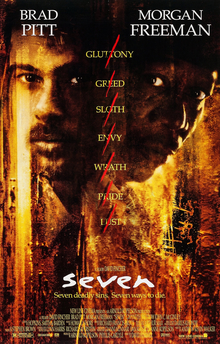
Se7en poster

Se7en

126

Cast

Selected cast credits · Film reference

Brad Pitt Mills
Morgan Freeman Somerset
R. Lee Ermey Police captain
Kevin Spacey John Doe

Se7en | The Rewatchables

Explore episodeClose episode

Producer credits not yet identified.

Roger Ebert's review

In the discussion (1)
Approx. transcript time · 00:35:30Read transcript
  • The later four-star review is distinguished from the original three-and-a-half-star review and praised as an especially good late-career piece.
Most Rewatchable Scene

Car ride with John Doe; desert ending

In the discussion (6)
Approx. transcript time · 00:36:40Read transcript
  • Somerset’s library research and dinner with the Mills couple are nominated for filmmaking and establishing affection.
  • The SWAT discovery and apartment pursuit are nominated; the cough reportedly surprised actors, and Pitt’s real arm injury was incorporated.
  • The car ride and ending are leading choices; the helicopter view and Freeman running back and forth to the box are praised.
  • Small procedural moments are appreciated, while the car speech is praised for voice changes and sustaining suspense after the killer is known.
  • John Doe’s bloody-handed entrance and demand for a lawyer are celebrated.
  • The car ride is explicitly preferred because new details survive familiarity with the ending; fingerprints, pizza-parlor research exchange and the office-name removal are added favorites.

What’s Aged the Best?

John Doe performance; credits; seven-sins structure; unnamed rainy city; music; unseen box contents; Mills’s reading frustration; sound; Somerset

In the discussion (8)
Approx. transcript time · 00:45:55Read transcript
  • Spacey’s performance is praised; earlier De Niro, Will Patton, Tim Blake Nelson and Billy Bob Thornton are considered possible alternatives, and the dead-dog denial is admired.
  • The serial-killer-style credits immediately establish a grimy, modern world.
  • The seven-sins structure and intersecting final sins are praised, with literary influences and clue-solving conventions discussed.
  • The unnamed city and relentless rain create an authentic, oppressive setting.
  • Love Plus One at the pizza place and the decision not to show the head in the box are praised.
  • Mills’s reading frustration, city noises and Somerset’s lonely, cynical research-driven existence are admired.
  • The industrial rock music, Nine Inch Nails and the later scoring partnership are praised.
  • Somerset is imagined as a difficult social companion, with speculative sports allegiances.

What’s Aged the Worst?

First-viewing shock; horror labels; Pitt–Paltrow romance; composition books; persuasive killer rhetoric

In the discussion (5)
Approx. transcript time · 00:56:06Read transcript
  • The initial shock can never be recovered; the ending leaves viewers unable to continue an ordinary evening.
  • The standard horror label is considered inadequate for dread built from unseen violence, with thriller/horror alternatives unsuccessfully proposed.
  • The movie is a weird document of Brad and Gwyneth’s love because it did not work out and ends with her head in a box.
  • Composition books are compared with an imagined blog or online community that might have redirected the killer.
  • The angry case that each victim deserved to die jokingly prompts recognition of some solid points.
In the discussion (4)
Approx. transcript time · 01:00:14Read transcript
  • Washington reportedly rejected Mills as too dark and later regretted it.
  • The Stallone claim is doubted; Duvall and Hackman are reported Somerset alternatives, and Pacino reportedly chose City Hall.
  • Kilmer as John Doe is enthusiastically imagined after a reported rejection; a Chechik directing attachment is questioned.
  • The claim that del Toro rejected the film as too dark is treated skeptically.

The Joey Pants “That Guy” Award

Leland Orser; unidentified booth attendant

In the discussion (2)
Approx. transcript time · 01:02:40Read transcript
  • Orser is chosen as familiar by face but difficult to name or separate from this role.
  • The booth attendant is added as a familiar actor whose name remains unresolved.

Recasting Couch

Original top four; Jason Patric, Duvall, River Phoenix and an unresolved alternative

In the discussion (2)
Approx. transcript time · 01:06:17Read transcript
  • The top four are defended, with Jason suggested for Mills and Duvall for Somerset; another suggested name is unclear in the transcript.
  • River Phoenix is imagined as a compelling dark alternative had he lived.

Half-Assed Internet Research

Handwritten books; diner; fleeting face image; Michael Reid MacKay

In the discussion (4)
Approx. transcript time · 01:07:25Read transcript
  • The books reportedly took two months and $15,000 to make; Pitt’s injury is recalled.
  • The diner is identified as the Quality Coffee Shop, also used in Training Day.
  • The fleeting Paltrow image before the shooting is compared with Fight Club’s film-frame imagery.
  • The very thin actor playing the chained victim is named and described as weighing ninety-eight pounds.
In the discussion (3)
Approx. transcript time · 01:09:30Read transcript
  • Freeman receives a yes based on Shawshank followed by Seven and resulting leverage; 1989 and the pre-Robin Hood period challenge it.
  • Pitt and Fincher receive no; an early-Paltrow proposal is rejected as incompatible with the definition, and American Beauty is preferred for Spacey.
  • The French Revolution is preferred for decapitations and Dante for the deadly sins.

Picking Nits

Tracy’s isolation and confidant; head shipment; dog; killer’s public behavior; Somerset’s reaction

In the discussion (7)
Approx. transcript time · 01:11:50Read transcript
  • Tracy’s lack of friends, the move, fear of discussing pregnancy and choice of Somerset as confidant are questioned, though the diner scene is defended as convincing.
  • The logistics of packaging, courier payment, blood and timing are explored without a settled explanation.
  • Whether the dog is killed, how the right size box is chosen and how much blood comes from the head are questioned.
  • An accomplice is proposed; the killer’s bloody taxi ride and uncontrolled behavior raise questions about earlier detection.
  • The head is imagined face-up; Somerset’s apparently restrained response is questioned.
  • Somerset’s suspicion during the car ride and established cynicism are offered to explain his reaction.
  • The panel doubts Mills ever looks inside the box after being restrained.

Sequel, Prequel, Limited Series, or All-Black Remake

Seven-episode series; older Mills investigates copycat sins

In the discussion (2)
Approx. transcript time · 01:21:00Read transcript
  • A seven-episode series receives interest, qualified by concern that the original depends on its unusually gifted team; Copycat is the comparison.
  • A Fincher sequel with older Mills is pitched: barred from police work and perhaps a bounty hunter, he joins a younger partner to investigate anniversary copycat killings; Michael B. Jordan and Ronan are suggested, alongside a transcript-garbled young actor name.

Probably Unanswerable Questions

Favorite sin; tongue injury; dog’s fate; Somerset’s next day

In the discussion (4)
Approx. transcript time · 01:23:27Read transcript
  • Envy, sloth and wrath are separate favorite-sin answers.
  • The ability to bite off one’s tongue is disputed without reliable resolution.
  • The dogs are presumed alive but neglected because killing them would disturb the killer’s tally.
  • Somerset’s next day is imagined as leaving town or watching the Jets; a supposed extra ending about a football signing is a joke.
In the discussion (2)
Approx. transcript time · 01:25:18Read transcript
  • Fincher receives a choice and explicit agreement, while Freeman is said to nearly share the honor for guiding viewers through the world.
  • Fight Club’s lasting impact is disputed; Fincher’s subsequent creative control and craftsmanship support the choice.
Podcast choices
Speaker not identified
David Fincher
Speaker not identified
David Fincher

More from the conversation

The film’s bleakness and concealed killer billing are discussed as possible reasons for limited Oscar recognition; spoiler secrecy and slow-building box office are contrasted with contemporary marketing.
Approx. transcript time · 00:04:19Read transcript
The hosts discuss Fincher returning after Alien 3, defending the ending and building a style indebted to Hitchcock and influential on True Detective.
Approx. transcript time · 00:10:00Read transcript
The final stretch’s pull is contrasted with appreciation of the patient, detailed detective work in the first half.
Approx. transcript time · 00:15:55Read transcript
Reported ending alternatives include a direct cut to black and Somerset shooting the killer; the studio-added final narration is criticized.
Approx. transcript time · 00:19:49Read transcript
The 1995 Academy choices are criticized against the enduring impact of genre films including Casino.
Approx. transcript time · 00:22:34Read transcript
Pitt’s performance divides the panel: twitchiness is criticized, while Mills’s limited intelligence, good intentions and immaturity are defended as deliberate.
Approx. transcript time · 00:24:08Read transcript
An informal, revised favorite-Pitt-performance list includes Inglourious Basterds, Jesse James and Once Upon a Time in Hollywood; another settles on Moneyball first, True Romance second, Once Upon a Time in Hollywood third and Inglourious Basterds fourth. This is not a Top Ten List.
Approx. transcript time · 00:28:55Read transcript
Freeman’s late rise, Walker’s Tower Records writing period and New Line’s move into major productions are discussed.
Approx. transcript time · 00:30:41Read transcript