
‹ All movies

The opening twelve minutes with Drew Barrymore

The twelve-minute scene at the top is proposed as the most rewatchable scene and its clip is played; the ending and the Rose McGowan garage door death are arguable alternatives, but as a pure, well-done piece of art the first twelve minutes are called way up there for a horror movie.

K. Austin Collins: Calls the opening fantastic and recalls that this was a first horror movie.

"Hello, Sidney"

'Hello, Sidney' is proposed as the number one quote; 'I'm dying here, man', 'I'm feeling a little woozy', Lillard's proud 'liver alone', his intoning of 'I'll be right back' after the rule against saying it, and Skeet's 'rated R on the way to an NC‑17' line are also liked, though his character is clearly a sociopath who brings her dead mother into every conversation about sex and is weird in every scene.

The film

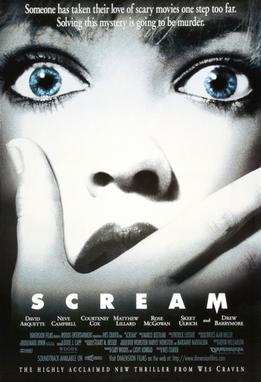
Scream (1996)

Directed by Wes Craven · Drama

111 minutes

Cast

Selected cast credits · Film reference

Cast credits have not been imported yet.

Everything from the episode

In the order the hosts got to it. Open a row for the discussion.

11:18

Most Rewatchable Scene

The opening twelve minutes with Drew Barrymore

The opening twelve minutes with Drew Barrymore

In the discussion (10)
Approx. transcript time · 00:11:18Read transcript
  • The twelve-minute scene at the top is proposed as the most rewatchable scene and its clip is played; the ending and the Rose McGowan garage door death are arguable alternatives, but as a pure, well-done piece of art the first twelve minutes are called way up there for a horror movie.
  • Calls the opening fantastic and recalls that this was a first horror movie. — K. Austin Collins
  • The actor who played the boyfriend Steve was found in research to have been up for the Skeet Ulrich part; he took the wordless role instead, a performance joked to be all in the eyes.
  • The movie taught a host what Jiffy Pop was, and the popcorn timing what is going on is called genius; Drew Barrymore being dragged to her death while moaning into the phone as her parents hear is a nightmare-inducing touch.
  • The movie had to display a mastery of the form in its first twelve minutes for the self-referential rest to work; the killer's phone quiz, in which Drew Barrymore's character wrongly names Jason as the Friday the 13th killer, is a common mistake that makes the audience feel in on it together.
  • The opening is called a slam dunk, yet Jamie Kennedy's character laying out the rules while the party watches Halloween is offered as one more candidate and is never formally ruled out, and the clip is played: no sex, no drinking or drugs, never say 'I'll be right back'.
  • The rules monologue is a crazy meta moment and the format of one host's articles; one has always held it against the franchise that the character does not die until the second movie, though he would have been a prime suspect; the rules as stated are recited, including everyone is a suspect, with Halloween's never-be-curious rule as an addition, and the rules had legs, since people discussed them at scary movies afterwards.
  • The last twenty minutes are lights out: from the moment Sidney gets the gun, Matthew Lillard and Jamie Kennedy's characters stumbling toward her and blaming each other, and the killers stabbing each other in the kitchen, make a phenomenal six minutes.
  • Had no clue how the movie would end, watching it on a high school date with a girl who had already seen it; thought Billy was dead when he was stabbed, and the two-killer twist was the first surprise twist to really shake this viewer. — Shea Serrano
  • Earlier, the opening is timed at twelve minutes and called spectacular, in the conversation for the great best first scenes, with the death kept secret in 1996.
27:42

What’s Aged the Best?

The Ghostface mask; the opening scene; the Halloween homages; two high school kids as the killers; the fame-seeking C...

The Ghostface mask; the opening scene; the Halloween homages; two high school kids as the killers; the fame-seeking Courtney Cox reporter as a nineties artifact; the video store; the cell phone

In the discussion (9)
Approx. transcript time · 00:27:42Read transcript
  • The mask is amazing and still kind of scary, the droopy ghost that turns up every Halloween among the trick-or-treaters; whoever looked at all the candidate masks and chose it deserves an Oscar.
  • The mask resembles Munch's painting The Scream, yet the movie was called Scary Movie through production until months before release, so the match between title and mask is a strange coincidence.
  • The opening scene has aged stupendously and all still works, though its dependence on a landline stuck out and is deferred to the worst list; the Halloween references have aged nicely, Billy Loomis as a homage to Dr. Loomis and the line about running to the McKenzies, and the last forty minutes play the whole Halloween movie.
  • Two high school kids rather than an adult turning out to be the serial killers was something nobody was thinking about in 1996; their confession to killing Sidney's mother and calling her a whore got dark.
  • Reportedly the makers could not settle the killers' motive, split between something personal involving Billy's father and Sidney's mother and the idea that no motive is scarier, so they did both, which leaves Matthew Lillard's character joining out of peer pressure.
  • The killers get mock respect for killing the mother and waiting a whole year, incredible dedication for seventeen-year-olds in a plot that makes no sense.
  • The Courtney Cox reporter trying to turn the murders into a book and fame is dated but has aged nicely because that was how you became famous in the nineties, before sex tapes and YouTube; she seems a collage of people involved in crimes rather than based on anyone.
  • Loved that a video store employee is a key part of the movie; video stores were an important part of the moviegoing experience and of movies themselves from 1993 to 1997. — Sean Fennessey
  • The Quentin Tarantino video store stories are recalled, video stores are nostalgic now, and the town's curfew sending everybody to the video store at four is a fun idea; the cell phone itself is thought to have aged well because hardly anyone had one in 1996.
32:18

What’s Aged the Worst?

Cell phone reception as a murder prop; the Arquette and Cox courtship given their later divorce; David Arquette's Dew...

Cell phone reception as a murder prop; the Arquette and Cox courtship given their later divorce; David Arquette's Dewey; the Henry Winkler scenes

In the discussion (10)
Approx. transcript time · 00:32:18Read transcript
  • Landlines lead into what aged worst: after twenty-one years one host is not convinced any 1996 cell phone was good enough to be a murder prop in wine country around Sonoma, with trees and driveways and nobody near anybody.
  • A secret favorite part: Drew Barrymore's character says she will call the cops, the killer says they are too far away, and she accepts it even though her boyfriend is bleeding.
  • A counterpoint cites Michael Douglas's gigantic cell phone on the beach in Wall Street: phones then were for doctors and rich people and may have worked better for that elite group; the hosts wonder whether Wall Street had the first cell phone in a major movie, followed by Zach Morris.
  • Asked how the movie would be received in the outrage culture era, the hosts expect outrage at two guys killing the mother and calling her a whore before people swung around to its tongue-in-cheek intent; one does not find the movie problematic at all and calls everything problematic about it hilarious.
  • The sexualized staging of Rose McGowan's death is read as a deliberate joke on the bimbo-who-dies trope; per IMDb trivia she could have fit through the opening and escaped, and she flips the killer like a pro wrestler, part of a slapstick way of fighting the villain that exposes the killers as high school kids getting beaten by teenage girls and makes Ghostface very vulnerable.
  • The seeds of David Arquette and Courtney Cox falling in love, knowing it ended badly and she went on to date Will Arnett, make their marriage what aged worst, though it is pure in the movie.
  • Part two is that David Arquette is really terrible, playing Dewey as if brain damaged, and it is unclear why he became a phenomenon afterwards; a defender says Dewey is supposed to be extra dumb and is charming, though his 'I was 24 for a whole year' line is too good for such a character.
  • The Henry Winkler scenes had more impact at the time because of his fame; the principal putting two fingers on Sidney's chin would be a real problem today, and together with his scissors threat to the two kids in masks suggests a background worth checking.
  • If Scream were made now, the Winkler equivalent would have to be one of the five biggest TV stars: George Clooney is proposed, Zach Morris rejected as not famous enough, and Kelsey Grammer, David Schwimmer and Don Johnson floated.
  • A Ross tangent: People vs. OJ helped one host like David Schwimmer, but Ross is blamed for turning Friends from a great first season into a rom-com, and another protests that Ross was just a character, a human being sometimes.
43:59

The Dion Waiters Award for Best Heat Check Performance

Matthew Lillard

Matthew Lillard

In the discussion (4)
Approx. transcript time · 00:43:59Read transcript
  • The award is treated as a wrap that needs only the charade of walking through it; Henry Winkler is joked to have had his heat check at the premiere telling everyone he was uncredited, and Jamie Kennedy is named.
  • Whether Matthew Lillard is a role player or the star is asked; on reflection he is the most exciting thing in the movie, not the best performance but really going for it and hilarious, and his 'your daddy's the chief suspect' clip is played.
  • His interview on The Watch with Chris and Andy, where he said he thought he was hot and then his career fizzled after Scooby-Doo, makes the performance elegiac; his face does things, as on Twin Peaks, like a kid in a Norman Rockwell painting, with eye bulges, frowns and finger pointing making him a really weird performer.
  • He is declared the winner of the award; he counts as a role player, in maybe a third to forty percent of the movie; the award should be renamed the Henry Winkler Award, or a separate award for unplaceable arrogance, the Kobe Award.
47:10

Apex Mountain

Skeet Ulrich; Matthew Lillard; David Arquette

Skeet Ulrich; Matthew Lillard; David Arquette

In the discussion (19)
Approx. transcript time · 00:47:10Read transcript
  • Wes Craven could be argued but Elm Street is still his Apex Mountain; his amazing career spans the three stages of late-century horror, from Hills Have Eyes and Last House on the Left to creating Freddy and reinventing the genre in the nineties, and he is underrated, on a Mount Rushmore with Tobey Hooper (as transcribed), George Romero and John Carpenter; the movie still moves today.
  • Completely agrees, finds the thought sad, and wonders what to do when John Carpenter dies. — K. Austin Collins
  • The coming Halloween remake with Jamie Lee Curtis is asking audiences to forget some sequels, like Rocky Balboa waving off Rocky V, which is what 48 Hours should have done.
  • A confession that Nightmare on Elm Street was a shitty movie meets a fan of the first two and Dream Warriors; Heather Langenkamp is dismissed, and Wes Craven's New Nightmare, the meta Freddy movie, failed just before this, leaving Scream as a bit of a last gasp for his career.
  • Neve Campbell's nominees are this or the intervention scene with Bailey in Party of Five.
  • Asked to decide, goes with the Party of Five intervention over Scream. — K. Austin Collins
  • Another feels the same way about the intervention, called the saddest hour in television history with Bailey as the rock of the family, and it stands even against Scream's $290 million.
  • Skeet Ulrich is clearly at his Apex, with nothing else competing; he was in As Good as It Gets, went a couple of rounds with Jericho, and is now known to kids as Riverdale's Skeet Ulrich.
  • A tangent on Skeet Ulrich's first name becoming slang, popularized by Dave Chappelle, and whether his stage name was a bad choice slides into a crude callback to the Silence of the Lambs episode's Migs discussion.
  • Reader Howard from Calgary writes that Stuart Rudin, who played Migs, was in Sticky Fingers and has an IMDb of homeless men, winos and patients; Migs was his Apex Mountain, and listeners are invited to the mailbag.
  • Matthew Lillard: it has got to be, with SLC Punk raised; considering how good he is in Scream, this is his Apex.
  • Jamie Kennedy was forced on the culture with an MTV show after this and never took; his Apex Mountain is definitively dating Jennifer Love Hewitt, an achievement rather than a performance, which leads to a tangent on why women disliked her.
  • For David Arquette the reminder is that he held the WCW heavyweight title, a movie tie-in, the belt once held by Ric Flair.
  • Asked to decide, calls this absolutely David Arquette's Apex. — Shea Serrano
  • Eight Legged Freaks is also raised for Arquette; Rose McGowan is a no, her later weirdness and dating Marilyn Manson jokingly called her apex, though she had a cool indie career, the Rodriguez Grindhouse movie with the gun leg, and is now a filmmaker and activist.
  • Courtney Cox is first a no, since it has got to be Friends and you cannot get higher; one voice later counters, unresolved, that the combination is her apex, since this came out during Friends season three when Monica was dismissed as having no personality and showed she could be the bitch too; her later characters are more Gail Weathers than Monica.
  • She reportedly pursued the role to play someone not traditionally nice and to get punched in the face; her later sitcoms were Dirt and the Bill Lawrence show about people in LA drinking wine, whose title nobody can remember.
  • Henry Winkler is joked to have been the mountain itself.
  • Earlier, while praising the cast, Drew Barrymore is followed by the garbled phrase 'I'd heard, like, Mad Love Apex' (as transcribed).
1:16:38

Who Won the Movie?

Matthew Lillard; The Mask; the horror genre; Wes Craven

Matthew Lillard; The Mask; the horror genre; Wes Craven

In the discussion (9)
Approx. transcript time · 01:16:38Read transcript
  • For the first time in eight or nine episodes the hosts do not know who won the movie, so they go around the circle.
  • Picks the mask, and did not know the story of the filmmakers happening upon it, which seems like fate. — K. Austin Collins
  • The mask pick is praised as a top-critic answer; another goes with Lillard for what he did in every part, which made every later Lillard appearance, like She's All That, worth watching and even got a host to Summer Catch.
  • Picks the horror genre, revitalized and given a new appreciation writ large through the self-referential movie that sent people back to Halloween, Freddy and Friday the 13th. — Jason Concepcion
  • Wes Craven is offered for a specific reason, but it is not counted as a ballot because the 'But who's your winner?' that follows in 242 may be pressing the same voice, who then answers Lillard in 243: a professorial, sweet man typecast as a horror director, he used the leverage of Scream and Scream 2 with Miramax to make the sincere drama he had waited decades for, Music of the Heart, for which Meryl Streep got an Oscar nomination.
  • The last pick is Matthew Lillard, joining the earlier Lillard vote; rewatching, this host was stunned by how good he was, going to another level in a part that could have been merely fine and blowing people off the screen.
  • Lillard's pod with Andy and Chris about his career makes it sadder that the dominant guy in a $300 million movie that launched the horror revival did not go further; he never returns for the sequels and is uncredited in part two, pulling a Winkler.
  • The right movie for him might have been 13 Ghosts or a buddy cop film as the zany Martin Lawrence part, though he may be too good and suited to a wilder vibe; Twin Peaks reminded people of his energy, and whether the TV on his head officially killed him is doubted, leaving room for a return in a remake.
  • Earlier, Lillard is flagged as more in the Who Won the Movie conversation than expected, J.R. Smithian in his willingness to overperform.
Podcast choices
Speaker not identified
Matthew Lillard
Jason Concepcion
The horror genre
Speaker not identified
Matthew Lillard