
‹ All movies

Jack's house attacking the family: Keaton versus the washing machine, dryer and self-starting vacuum

One host's candidates begin with Jack getting fired, where everybody is trying to strangle each other and Jeffrey Tambor and Christopher Lloyd share the scene, which feels very 80s and would not be written that way today; the clip is played.

Martin Mull, as Terry Garr's creepy boss, makes his first visit to the house and Keaton comes to the door holding a chainsaw, overalls and a backwards Lions trucker hat, the two men sizing each other up over the 220, 221 wiring line; the clip is played, and the other host decides this is where Michael Keaton and Mr. Mom invented the hipster dad seen in Brooklyn and Silver Lake.

The film

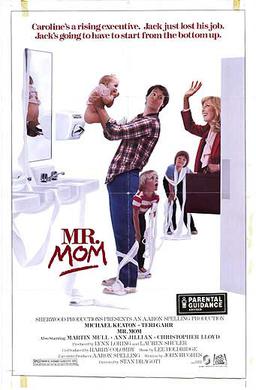
Mr. Mom (1983)

Directed by Stan Dragoti · Drama

91 minutes

Cast

Selected cast credits · Film reference

Cast credits have not been imported yet.

Everything from the episode

In the order the hosts got to it. Open a row for the discussion.

16:18

Most Rewatchable Scene

Jack's house attacking the family: Keaton versus the washing machine, dryer and self-starting vacuum

Jack's house attacking the family: Keaton versus the washing machine, dryer and self-starting vacuum

In the discussion (8)
Approx. transcript time · 00:16:18Read transcript
  • One host's candidates begin with Jack getting fired, where everybody is trying to strangle each other and Jeffrey Tambor and Christopher Lloyd share the scene, which feels very 80s and would not be written that way today; the clip is played.
  • Martin Mull, as Terry Garr's creepy boss, makes his first visit to the house and Keaton comes to the door holding a chainsaw, overalls and a backwards Lions trucker hat, the two men sizing each other up over the 220, 221 wiring line; the clip is played, and the other host decides this is where Michael Keaton and Mr. Mom invented the hipster dad seen in Brooklyn and Silver Lake.
  • A Grantland interview a friend named Daniel did with Keaton, about 12,000 words long, had him recalling the 220, 221 line as an ad lib he was really proud of, and he is fond of the movie generally.
  • The house attacking the family, with the washer and dryer going nuts, the self-starting vacuum chasing the kids and a baby being fed chili, is next; the host who had his kids alone that weekend says being thrown into the fire really is like that, down to a son microwaving three-day-old sushi.
  • The improbable, elaborately built obstacle-course race at a work function, with hundreds of people cheering, is a specific 80s thing that would not happen now, built from borrowed playground equipment for grown men; the concept of letting your boss win because it is better for you professionally is enjoyed, and Keaton throws the race at the end.
  • The Halloween scene, where Carolyn has two hours' notice to fly to Los Angeles after convincing a man to spend $11 million on her idea, is the only time the film confronts Jack losing the family; one host notes she simply stops being a mom for an hour, while the other finds her lack of guilt refreshing against the constant anxiety of content aimed at thirty-something women, and Keaton dressed as a prisoner is good in it.
  • The goofy, abrupt ending, with Angelina (as transcribed) in Jack's room with a drink as he comes out of the shower and Terry Garr arriving, plays like they ran out of film; the other host's pick is the utilities, Keaton versus the washing machine and the vacuum, which leads to the realization that ironing a grilled cheese on the ironing board came from this movie, with Craig asked whether he has done it.
  • One host has ironed a grilled cheese and calls it the best way to make one, except that the butter and cheese ruin the iron, so a dedicated grilled cheese iron would be needed, which is argued to be cheaper than a panini grill.
26:08

What’s Aged the Best?

The overmatched dad handling multiple kids; the film not treating a man at home as a novelty; Jack's real friendships...

The overmatched dad handling multiple kids; the film not treating a man at home as a novelty; Jack's real friendships with the other moms; Ann Jillian (transcribed as Angelian); Keaton watching soap operas; the Rocky, Jaws and Chariots of Fire references; the tuna-with-a-heart commercial; the abrupt ending; 1980s parenting; Martin Mull, Jeffrey Tambor and Christopher Lloyd

In the discussion (8)
Approx. transcript time · 00:26:08Read transcript
  • The overmatched dad handling multiple kids at home is always an enjoyable gimmick, and the film does not treat a man at home as a huge novelty, only as a moron at home; the mean, judgy moms still exist in 2019 on mommy boards, and the hosts credit the film for not dwelling on whether a man could stay home.
  • Jack makes real friends with the other moms, playing poker and being taken to a male strip joint; Angelian (as transcribed) was really good, remembered as the breakout star of the sitcom It's a Living about waitresses at a club, with a dance background, playing the horny divorced friend who is in on the joke, though one host cannot defend the character even while liking her.
  • Keaton watching soap operas is both aged best and aged worst: one host watched General Hospital in that era, when daytime TV with only ten channels meant game shows and soap operas and a sick day meant making sure to catch The Price is Right, and Jack goes from mocking the show to yelling at it within five minutes; Rocky training montages are always liked.
  • The pop culture references, Rocky, Jaws and a fake Chariots of Fire during the race, have aged well where timely references usually die and date a film instantly, as Wayne's World 2 does.
  • The tuna-with-a-heart commercial is very 80s but smart, since the idea that brands need a heart is exactly what every brand on Twitter does now.
  • The abrupt ending is a point in its favor: the 80s habit of saying everything and getting out is missed, since comedies now tack on four more scenes, and Night Shift ends abruptly the same way.
  • The parenting seems pretty good: no helicopter freaking out, kids who make their own lunch, the speech about giving up the blanket, no crying or punching, and the film accepts on face value that staying home with the kids is hard full-time work, which is relatively progressive for 1983; Martin Mull, Jeffrey Tambor and Christopher Lloyd are a pretty good troika.
  • To close, one host goes with Keaton watching soap operas, the other with 1980s parenting, which seemed normal and soothing rather than what was expected, prompting a joke about missing peanut allergies, ADD medication and therapists.
32:22

What’s Aged the Worst?

The hotel-room scene where Carolyn's boss makes his move and she punches him out

The hotel-room scene where Carolyn's boss makes his move and she punches him out

In the discussion (9)
Approx. transcript time · 00:32:22Read transcript
  • The trumpet-heavy theme song is very 81 to 83, as if a friend named Bob was asked to whip something up; the private plane with fur walls and tables confuses both hosts, who wonder whether it was private or an old first-class cabin.
  • The beard as a sloppy, life-falling-apart look has become the actual look for lots of people, so it aged both worst and best, and the hosts now kind of like the beard and suggest adding a baseball hat.
  • The early-80s punk babysitter with crazy makeup and purple hair; the kids' room posters of Rocky III and Eric Hipple, a really mediocre Lions quarterback from 82 and 83, arguably the worst-aged thing in any Rewatchables, explained as a Detroit local touch and compared to a Ty Detmer Eagles poster.
  • The ending is also aged worst, since the movie simply tells you to leave; the idea that a dad would know how to do nothing, not even plug in a vacuum, is different now that men know how to do laundry, which is read as an 80s exaggerate-everything trope.
  • The Me Too scene, seen in 2019 through the Harvey Weinstein stories of hotel rooms and ordered food: Carolyn reads the room, tells her boss to leave, punches him in the face when he will not, and then simply goes to tell her husband, which is very 80s and has not aged well, though women entering positions of power in the 80s made it common and every scene the two share telegraphs it.
  • The harassment plot and Joan's interest in the dad are not really needed; in 2019 the climax would be the couple fighting over parenting duties rather than fending off suitors, and 76-to-83 TV movie plots where everyone is trying to sleep with everyone are blamed; most people met at work in 1983, so the boss sizing her up reads as realistic.
  • The scene could not be done now, which is why it lands here; that the character knows exactly what to do is both depressing and impressive, navigating it like a quarterback reading a blitz and checking down, and 9 to 5, one of the biggest hits of 1980, with its boss pursuing Dolly Parton, is recalled as the precedent.
  • Earlier, stepping on the category during the scene discussion: the beard is supposed to signal Jack's life falling apart but most dads look like that now, and one host admits that a 35-year-old man with a patchy beard and an unwashed flannel shirt is what society has conditioned that host to find attractive.
  • Also earlier: Carolyn just stops being a mom for about an hour, completely uninterested in her kids, and the film does not examine it.
40:06

The Joey Pants “That Guy” Award

Miriam Flynn

Miriam Flynn

In the discussion (1)
Approx. transcript time · 00:40:06Read transcript
  • Miriam Flynn, Eddie's wife in Vacation, the lady you recognize without knowing her name.
40:35

The Ruffalo / Hanna / Rubinek / Partridge Overacting Award

Martin Mull

Martin Mull

In the discussion (1)
Approx. transcript time · 00:40:35Read transcript
  • Every Martin Mull scene: dialed up the whole time as the horny, unredeeming boss, committed to a performance that leads to him getting punched.
40:49

The Dion Waiters Award for Best Heat Check Performance

The eldest kid, who delivers the one-liners about his dad

The eldest kid, who delivers the one-liners about his dad

In the discussion (1)
Approx. transcript time · 00:40:49Read transcript
  • Angelian (as transcribed) is floated, but the other host wanted to give it to the kids, first the one with the blanket, then the elder kid who exists to deliver one-liners about how the dad knows nothing, and the award is handed to him.
50:04

Apex Mountain

Terry Garr; the concept of a Mr. Mom

Terry Garr; the concept of a Mr. Mom

In the discussion (2)
Approx. transcript time · 00:50:04Read transcript
  • Terry Garr is a yes despite not being good here, because the Tootsie, Mr. Mom and Letterman combination is her apex; Keaton is a no, Martin Mull probably not, and John Hughes a no.
  • The concept of a Mr. Mom is probably at its apex here because the film created it; Detroit as a movie city is not, since Gung Ho and Beverly Hills Cop came a year later.
54:14

Sequel, Prequel, Limited Series, or All-Black Remake

Yes; it has already been remade as a Vudu series

Yes; it has already been remade as a Vudu series

In the discussion (1)
Approx. transcript time · 00:54:14Read transcript
  • It has already been remade as a ten-episode Vudu show (transcribed as voodoo), so the answer is yes.
55:40

Who Won the Movie?

Michael Keaton

Michael Keaton

In the discussion (3)
Approx. transcript time · 00:55:40Read transcript
  • Not Terry Garr, both agree; Michael Keaton won the movie, which is not a controversial take: he is very likable and skates through a premise that could go wrong with total charm.
  • The hosts miss having a 2019 version of this era's Keaton, a funny, likable, approachable and unpredictable guy in his late twenties; Chris Evans tried to be that person but is not funny, is too obviously hot and is a bit of a jerk.
  • Keaton is handsome in an approachable, attainable way, confident without being a jerk or edgy; famous people now need a thing, while Keaton and Tom Hanks were in the running for so long because both were everymen, and nobody fills that role now despite many trying.
Podcast choices
Speaker not identified
Michael Keaton
Speaker not identified
Michael Keaton