‹ All movies
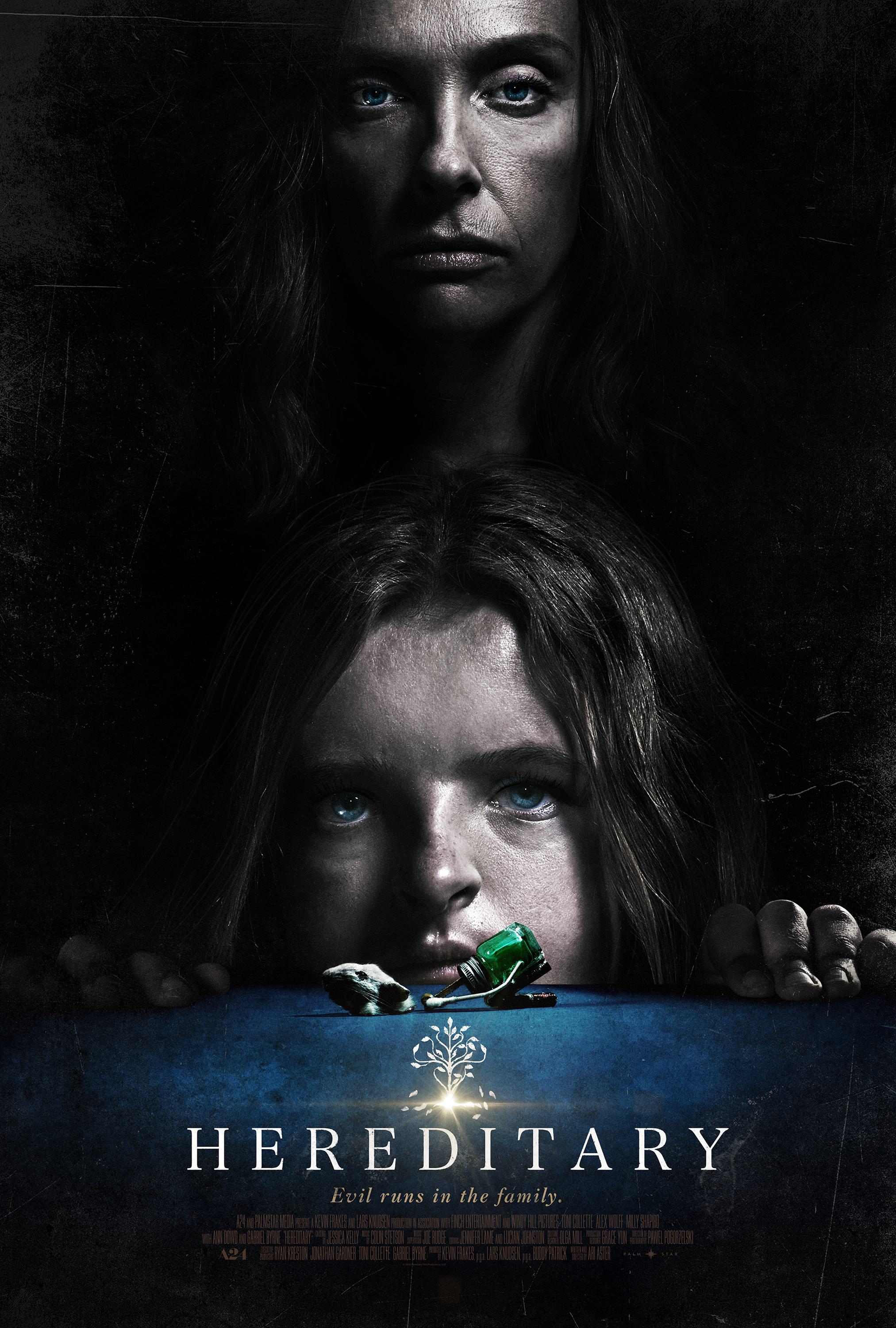
Hereditary poster

Hereditary

Cast

Selected cast credits · Film reference

Hereditary | The Rewatchables

Explore episodeClose episode

Roger Ebert's review

Rating not yet verified
In the discussion (3)
Approx. transcript time · 00:05:18Read transcript
  • Ebert had died before the film; there is no actual review or score.
  • A hypothetical three-and-a-half-star reaction is guessed for Ebert and a hostile Siskel reaction imagined; these are not genuine critic ratings.
  • A ChatGPT-generated imagined Ebert response is read aloud; it is explicitly a simulation rather than a real review.

Six Types of Horror Movies

Grisly; normal scary; popcorn; safe creepy; artsy creepy; full-fledged creepy

The panel proposes a new category here.

In the discussion (3)
Approx. transcript time · 00:08:00Read transcript
  • The first proposed types are grisly/torture horror, ordinary scary horror and teen-oriented popcorn horror, with examples and differing tolerance for gore.
  • Three creepy types follow: safe supernatural thrills, artsy discomfort and fully realized dread; Hereditary is placed in the last group rather than merely artsy horror.
  • The highest aspiration is the fully realized dread of The Shining or The Exorcist; ordinary horror is a frequent viewing preference, while prestige framing may be marketing.

Half-Assed Internet Research

Budget and gross; CinemaScore; Aster’s preparation; production and score

In the discussion (7)
Approx. transcript time · 00:16:23Read transcript
  • Aster reportedly prepared a seventy-five-page shot list for his feature debut; his meticulous technique, shorts and personal sensibility are praised.
  • The film reportedly cost $10 million and made $87.8 million, becoming A24’s highest grosser until Everything Everywhere All at Once.
  • The reported D-plus CinemaScore is discussed as a mismatch between marketing expectations and experience, with skepticism about horror scores generally.
  • An Australian family-screening mistake is reported as the whole film rather than merely its trailer; this remains the episode’s claim rather than an independently verified event.
  • Aster reportedly fought an unnamed financier over the final cut and wrote detailed biographies for every character.
  • Stetson reportedly drew score inspiration from water and animal sounds heard while walking in darkness.
  • One friend smoking with Peter is said to appear later among the cult, supporting the interpretation that its influence surrounds the family.

The Stephen A. Smith Hottest Take Award

Negotiate with Paimon; cultist nudity; hell as a blank slate; dark comedy

In the discussion (4)
Approx. transcript time · 00:17:38Read transcript
  • Hereditary is read as absurdly comic fatalism: attempts to understand or repair the family cannot prevent inherited doom.
  • Take a meeting with Paimon and negotiate for wealth and insight rather than let the family be decapitated.
  • The cultists’ rejection of clothes and shame has appeal; whether naked smiling people are scarier than dangerous animals is debated.
  • Hell-based horror is called easy to invent because its rules are unconstrained; the defense is that Aster researched actual demon lore.
In the discussion (2)
Approx. transcript time · 00:18:35Read transcript
  • Collette’s lack of a nomination is criticized, with McCarthy’s nominated performance a possible replacement; her sudden maternal confession and frazzled confidence are singled out.
  • Collette is the agreed Oscar choice.

Most Rewatchable Scene

Final stretch after Steve burns; Charlie’s telephone-pole death

In the discussion (12)
Approx. transcript time · 00:29:15Read transcript
  • Annie’s support-group family history is nominated, with the distant elevated camera slowly approaching her face as inherited catastrophe unfolds.
  • The party setup is examined: bringing Charlie strains plausibility, while the classroom’s fate discussion and the nut-filled cake suggest predestination.
  • Charlie’s decapitation is startling and effective, helped by a trailer that misleadingly positioned her as central without revealing the death.
  • Peter’s shutdown and silent return home are disturbing; holding on his face while Annie screams is praised, while shock is offered as a defense of his behavior.
  • The head with ants, Charlie cutting the bird’s head off and the designs on the telephone pole match other clues noticed on later viewings.
  • Annie’s second meeting with Joan is nominated, with a brief tangent about Dowd’s college.
  • The paint-thinner story and Annie calling her accident miniature a neutral view combine painful family history with absurd dark humor.
  • The dinner confrontation is nominated for Collette’s furious maternal speech, compared jokingly with a dysfunctional-family SNL sketch.
  • The family séance is nominated and considered an obviously dangerous decision, especially the insistence that everyone attend and recite unknown words.
  • Annie deciphering albums and books, Peter’s classroom breakdown, showing Steve the attic and Steve burning are further candidates.
  • The preferred final stretch begins with Steve burning and Peter discovering his father’s body and his mother on the ceiling; the transfer logic and piano-wire death are discussed.
  • A second choice supports the ending after Steve burns, while another explicitly chooses the telephone-pole death.

What’s Aged the Best?

House; insects; repeat-viewing clues; score; Dowd; classroom homage

In the discussion (8)
Approx. transcript time · 00:43:20Read transcript
  • The secluded Utah house, treehouse, driveway and Annie’s work area are praised as ideal horror real estate and an appealing place to live.
  • Ants and flies remain effective horror devices, with personal aversions to insects and rodents compared.
  • Repeated viewing exposes funeral cult members, the grandmother’s wishes, the bird, pole and card clues; comparison with The Sixth Sense’s twist-driven appeal is disputed.
  • The film caps a formative A24 run that introduced filmmakers and lasting audience favorites.
  • The unsettling score’s creaks and sounds create dread without functioning as ordinary listening music.
  • Peter’s head-slamming is effective sudden self-injury horror, though later films copying the device can also make it feel overused.
  • Dowd’s run through this film, The Leftovers and The Handmaid’s Tale is praised as a dark trio, with a college-dorm tangent.
  • The classroom staging is admired as a Halloween homage, including the window placement.

The Great Shot Gordo Award for Most Cinematic Shot

Opening miniature-to-room push; Steve burning

In the discussion (2)
Approx. transcript time · 00:48:10Read transcript
  • The opening push from the miniature into a real room is the principal Great Shot choice, emphasizing the deliberately constructed sets.
  • Steve burning is another shot choice, followed by a Mike Breen-style call.

The most GIFable moment

Charlie at the window; Annie’s piano wire

In the discussion (1)
Approx. transcript time · 00:49:50Read transcript
  • Charlie’s head out the window is the leading GIF choice; Annie’s piano-wire motion is another suggested reaction image.

The Butch’s Girlfriend Award for the Weakest Link in the Film

Underdeveloped friends; difficult first-viewing comprehension

In the discussion (2)
Approx. transcript time · 00:51:15Read transcript
  • Peter’s friends and prospective girlfriend could be better developed, especially their apparent lack of reaction to his sister’s death.
  • The complicated first viewing is a qualified weakness, with repeat viewings needed to connect details even if the final possession is clear.

What’s Aged the Worst?

Clicking sound; method behavior; copied head-smashing; elevated-horror label

In the discussion (4)
Approx. transcript time · 00:52:31Read transcript
  • Charlie’s clicking sound remains disturbing, especially when a spouse imitates it and when it appears beside Peter in class.
  • Wolff’s performance is defended, but reportedly demanding to be called Peter until the last shooting day is criticized as inconsiderate method acting.
  • Collette’s reported comments describe Wolff as difficult and uncollaborative while praising the result; a Jeremy Strong tangent illustrates the same issue without dismissing Wolff’s career.
  • Sudden head-smashing has become overused in later horror, and the elevated-horror label is criticized as pretentious.

Casting What-Ifs

No firm alternatives; core cast attached early

In the discussion (1)
Approx. transcript time · 01:01:54Read transcript
  • No firm alternate casting is known; Collette, Byrne and Shapiro were reportedly attached early, with Shapiro’s stage accomplishments noted.

Recasting Couch

Lucas Hedges as Peter

In the discussion (1)
Approx. transcript time · 01:02:49Read transcript
  • Lucas Hedges as Peter is proposed given his recent Manchester by the Sea and Lady Bird work.

What Would Tony Romo’s Director’s Commentary for This Movie Sound Like?

Doris Burke; Collinsworth; Ruocco; Breen; Cowherd

In the discussion (3)
Approx. transcript time · 01:03:13Read transcript
  • Doris commentary addresses Miss Joni after decades preparing for King Paimon, removing Charlie and destroying the Graham family so he can take male form.
  • Collinsworth cautions against sticking a head outside a moving car; Ruocco’s Got It and Breen’s Bang are applied to the decapitation.
  • Cowherd-style analysis treats Paimon as the dominant executive who knows the salary cap.

Really Fun Deleted Scenes

Peter finds Annie asleep in the treehouse

In the discussion (1)
Approx. transcript time · 01:06:44Read transcript
  • A deleted scene has Peter enter Charlie’s treehouse to sleep and discover Annie already there, increasing his fear of her.

Apex Mountain

Decapitations; Alex Wolff; self-beheading with piano wire; coffee before reporting a charred father (joke)

In the discussion (8)
Approx. transcript time · 01:07:53Read transcript
  • A24 loses to Everything Everywhere All at Once.
  • Collette receives initial affirmative support but is disputed in favor of Little Miss Sunshine’s career impact, with her sustained work and Knives Out noted.
  • Nut allergies and fatal child reactions are proposed; Charlie’s death is compared with the child in Jaws and another child’s fatal bee reaction.
  • Decapitation scenes are accepted over examples from Ran and Black Rain; the pole death and audible piano-wire death compete as highlights.
  • Wolff is accepted; Byrne is rejected for his 1990s work, including The Usual Suspects and Miller’s Crossing.
  • Evil treehouses are proposed as an especially strong case.
  • The Good Son and Beetlejuice Beetlejuice supply treehouse alternatives; self-beheading with piano wire is accepted, while séances and Utah are rejected or unclear.
  • Making coffee after discovering a charred father before calling police is jokingly affirmed.

Probably Unanswerable Questions

Allergy or possession; cult’s timing; demon hierarchy; Paimon’s powers

In the discussion (6)
Approx. transcript time · 01:09:23Read transcript
  • Whether Charlie’s crisis is an ordinary allergy or Paimon directing events is debated; the marked pole and possible cult placement of the deer imply orchestrated fate.
  • Whether the family already has wealth from the grandmother’s pact is wondered about, leading to jokes about Paimon supplying investment and betting tips.
  • Whether Paimon returns to school or ever inhabited Annie during intimacy is debated; one reading limits her possession to the period after Steve’s death, another points to roaming blue light.
  • The wisdom of séances and the eight kings’ hierarchy, territories, collaboration and place beneath Satan are left unanswered amid organizational jokes.
  • A possible omitted cult-sex scene is wondered about, with Midsommar offered as where Aster later explored that material.
  • Why the cult waited so long to transfer Paimon from Charlie to Peter is unanswered, with maturity offered as a guess.

Cruise or Hanks?

Hanks as Steve

In the discussion (1)
Approx. transcript time · 01:12:17Read transcript
  • Hanks as Steve wins over young All the Right Moves-era Cruise as Peter, with an invited tiebreak response supporting Hanks.

Picking Nits

Uncontrolled weed; unknown Joan; family choices; bedroom locks; police absence

In the discussion (6)
Approx. transcript time · 01:13:47Read transcript
  • Peter’s heavy marijuana use seems unchecked and may cloud his judgment; whether the cult influences it or he supplies friends is speculative.
  • Annie failing to recognize her mother’s close friend Joan seems unlikely, though estrangement and secrecy offer an explanation.
  • Steve marrying and remaining with Annie despite extreme family history and alarming behavior is questioned; attraction and her artistic success are offered as comic explanations.
  • Sending thirteen-year-old Charlie to Peter’s high-school gathering seems questionable, with wanting children out of the house or supernatural influence offered as possibilities.
  • Peter should have multiple bedroom locks after the paint-thinner incident, prompting a mock home-improvement advertisement.
  • The apparent absence of police questioning, investigation and public reporting after a child’s violent death is questioned, especially given Peter’s intoxication and return to school.

Sequel, Prequel, Limited Series, or All-Black Remake

Prestige series; Paimon’s reign; Pazuzu crossover joke

In the discussion (2)
Approx. transcript time · 01:19:38Read transcript
  • A prestige-series version is considered, but a sequel following Paimon’s reign inside Peter is particularly appealing despite lacking an obvious opposing family member.
  • A joking crossover would pit Paimon against The Exorcist’s Pazuzu.

What Piece of Memorabilia Would You Want From This Movie?

Nothing; nose padding, miniatures, chalkboard and pole alternatives

In the discussion (1)
Approx. transcript time · 01:25:25Read transcript
  • One response refuses every object; alternatives include Peter’s nose padding, miniatures, Joan’s chalkboard and the telephone pole as a Halloween decoration.

The Coach Finstock Award for Best Life Lesson

Carry EpiPen; leave danger; build a patient community

In the discussion (1)
Approx. transcript time · 01:26:03Read transcript
  • Carry an EpiPen, leave after a parent’s dangerous incident and build a strong community; the cult’s patience and coordinated execution supply the cynical community example.
In the discussion (2)
Approx. transcript time · 01:27:25Read transcript
  • Aster receives two explicit winner choices and a subsequent agreement; A24 is floated but considered already established, while Collette earns a shout-out.
  • The film’s success is credited with financing Aster’s subsequent unusual projects, particularly Beau Is Afraid.
Podcast choices
Speaker not identified
Ari Aster
Speaker not identified
Ari Aster
Speaker not identified
Ari Aster

Producer review

Intolerably horrifying; rejects this kind of horror

In the discussion (1)
Approx. transcript time · 01:28:05Read transcript
  • The invited first-time response finds the film intolerably horrifying, rejects the claim that it is funny and says films this disturbing should not be made; the reaction is explicitly personal taste.

More from the conversation

Opening chatter covers Gladiator II screenings, rental-versus-purchase pricing and physical-media convenience; flexible upgrade pricing is proposed as a joke take.
Approx. transcript time · 00:01:56Read transcript
Baseball and cold-medicine jokes precede the introduction of Hereditary as the next scary selection.
Approx. transcript time · 00:03:16Read transcript
The film is placed in the early Big Picture interview era and described as the show’s first A24 selection, marking a newer horror canon and changing distribution landscape.
Approx. transcript time · 00:05:18Read transcript
A24 horror and successful franchise revivals are contrasted with Blumhouse’s low-budget economics, leading into debate about prestige or trauma horror.
Approx. transcript time · 00:07:01Read transcript
Whether Hereditary is fundamentally a family drama with horror emerging or a thoroughly supernatural, gory cult film is disputed; elevated horror is criticized as a marketing label.
Approx. transcript time · 00:11:22Read transcript
Midsommar similarly remains visceral horror despite its sunny setting; reported Hereditary influences include family dramas and Don’t Look Now.
Approx. transcript time · 00:13:36Read transcript
Byrne’s screen presence signals unease, inspiring jokes about his marriage, Sea of Love and an angry-Bono imitation as a possible recurring voice.
Approx. transcript time · 00:15:02Read transcript
The distinction between Charlie’s body and Paimon’s possession is clarified: the discussion treats the demon as present throughout rather than arriving late.
Approx. transcript time · 00:20:01Read transcript
The grandmother’s failed plan for her son shifts toward Annie’s son, but estrangement prevents access; Charlie becomes the wrong-sex host before the intended transfer to her brother.
Approx. transcript time · 00:20:42Read transcript
Beheading as the means of releasing the spirit is proposed tentatively, supported by the bird, models and repeated decapitations; it is not presented as a verified rule.
Approx. transcript time · 00:21:50Read transcript
Inherited demons are read as depression, addiction or other family burdens, then compared jokingly with passing sports allegiances to children.
Approx. transcript time · 00:22:47Read transcript
Bargaining for sports victories is compared with a pact with dark forces, followed by disagreement about the Dodgers’ pandemic title.
Approx. transcript time · 00:24:06Read transcript
An attempted request for an angry Byrne imitation becomes a transition joke.
Approx. transcript time · 00:27:11Read transcript
A midnight festival screening is recalled alongside a frightening rear-end collision in an Uber afterward, leaving the viewer stranded on a highway and shaken on returning to the lodging.
Approx. transcript time · 00:33:01Read transcript
Family members’ repeat viewings are discussed, and the last forty minutes are identified as irresistible when encountered on television.
Approx. transcript time · 00:35:21Read transcript
A real suggestion to hold a séance at home is recalled and rejected; Ouija boards prompt jokes about demons welcoming willing victims.
Approx. transcript time · 00:39:19Read transcript
Needing coffee even after an awful discovery leads to a remembered stop for coffee during a spouse’s labor, mistakenly assumed to be another false alarm.
Approx. transcript time · 00:41:48Read transcript
Dislike of Longlegs leads to a proposed new comic commentary voice paired with Nell.
Approx. transcript time · 00:47:39Read transcript
Unexpectedly watching Lincoln at a sports bar leads to a sincere claim that it belongs on the show.
Approx. transcript time · 00:54:24Read transcript
Smile’s potential for a sports setting inspires a Russell Wilson possession joke.
Approx. transcript time · 01:01:13Read transcript
A basketball officiating tangent interrupts the transition to Apex Mountain.
Approx. transcript time · 01:07:19Read transcript
The inherited sports-curse analogy returns through an Aaron Rodgers joke.
Approx. transcript time · 01:10:23Read transcript
The delay is compared with developing a young quarterback, followed by coaching speculation.
Approx. transcript time · 01:26:54Read transcript
Whether a film can feel evil is discussed through The Exorcist and Hereditary’s ordinary medical, family and therapy scenes failing to contain dread.
Approx. transcript time · 01:29:30Read transcript
Horror taste is connected with childhood exposure and viewing conditions; whether modern realism will age differently is disputed.
Approx. transcript time · 01:30:36Read transcript
The enduring fear of The Exorcist, changing generational conventions and big-screen first viewings are compared with Blair Witch, ending in a shared-history joke.
Approx. transcript time · 01:32:19Read transcript
Craig’s producer credit is spoken with a Horlebeck transcription; scary month is explicitly said to conclude next week, establishing current participation.
Approx. transcript time · 01:33:58Read transcript