
‹ All movies
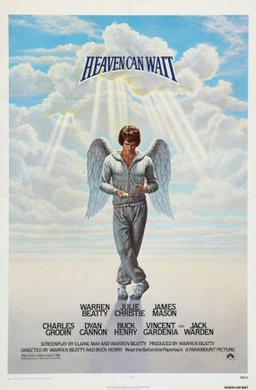
Heaven Can Wait poster

Heaven Can Wait

101 minutes

Cast

Selected cast credits · Film reference

Warren Beatty Joe Pendleton
Julie Christie Betty Logan
James Mason Mr. Jordan
Dyan Cannon Julia Farnsworth
Charles Grodin Tony Abbott
Jack Warden Max Corkle
Buck Henry The Escort
Vincent Gardenia Lt. Krim
Dolph Sweet Head Coach

Heaven Can Wait | The Rewatchables

Explore episodeClose episode

Producer credits not yet identified.

Casting What-Ifs

Muhammad Ali boxing version

In the discussion (1)
Approx. transcript time · 00:24:30Read transcript
  • The original play and 1941 Here Comes Mr. Jordan precede this adaptation; a Muhammad Ali boxing version was allegedly planned and declined, with a reported early Coppola screenplay.

Roger Ebert's review

In the discussion (1)
Approx. transcript time · 00:30:06Read transcript
  • Roger Ebert gave three stars and praised an upbeat screwball comedy with satirical digs at greed, corporate politics, adultery, football and jocks.

Most Rewatchable Scene

Last ten minutes; convincing Max; training montage and football practice

In the discussion (13)
Approx. transcript time · 00:32:15Read transcript
  • The first fifteen minutes are loved, narrowed to Max’s birthday visit that quickly establishes their friendship; another speaker favors the first eight minutes through the bike ride. The initially silent title sequence is praised for treating the player seriously.
  • Beatty’s throwing mechanics, touch passes, cadence and football terminology are praised. A prompted Craig reply prefers his physicality to Reynolds, with Mayfield comparison; other voices distinguish running versus system-quarterback styles. Mark Harmon is floated hypothetically, with uncertain chronology.
  • The Super Bowl was reportedly shot within fourteen halftime minutes at a Rams/Chargers preseason game; play calling looks authentic. F1 and Days of Thunder are comparisons for filming around live sport, followed by an uncertain Reacher sighting anecdote.
  • The tunnel accident works; dark events such as attempted murder and pollution are handled lightly, with a repeated plate gag allowing the audience to move on.
  • The body-candidate montage is liked, with wishes for several more alternatives. A Hollywood waiter and porn performer are joking imagined additions; the artificial rules are enjoyed.
  • Farnsworth’s return and the mouse panic, then Joe and Betty’s limo attraction and lingering looks, are candidates.
  • Joe telling Max the secret is called the movie’s single best part; private details and the neck adjustment finally persuade him. The reunion is appreciated. The actor-history comment at the start of351 instead continues the preceding Beatty/Christie romantic scene.
  • The servant football montage could run eight more minutes; Grodin crashing into a bush, attempted catches and Warden tossing the ball are enjoyed, with Warden’s football experience guessed.
  • The montage’s spacious backyard and Farnsworth’s first Rams practice are praised; the supposed LA house being in Northern California is a small disappointment. Grodin’s instruction to ignore offensive remarks is admired as comedy.
  • Joe’s goodbye to Betty, shooting and Super Bowl are candidates. The ending hurts because Max regains then permanently loses his friend; a speaker does not cry here despite crying at films generally. A biography analogy to Beatty moving on from friendships remains a report.
  • One final scene choice is the last ten minutes, especially Christie’s bittersweet meeting and the reassuring darkness moment.
  • Another final choice is convincing Max, with honorable praise for the boardroom’s compassion and the penny-to-save-a-thinking-fish idea. Beatty’s comic timing and the May/Henry writing support are praised.
  • The remaining final choice is training montage and football practice, especially Grodin watching him get sacked.

The most "year the movie came out" thing

Ordinary athlete lifestyles; low franchise prices

In the discussion (3)
Approx. transcript time · 00:53:18Read transcript
  • Professional athletes’ lower wealth and greater anonymity make Joe’s quiet birthday and modest house plausible; the reported first million-dollar player story illustrates the era.
  • Two voices converge on quarterback status having less celebrity value. A modern remake might motivate him with wealth, ownership or a stadium instead of playing the Super Bowl.
  • Runners-up include feathered women’s hair, gaudy mansion wallpaper, young Dick Emberg (observed) and nonexistent concussion scrutiny. The franchise price is the final number-one choice: source says17million here versus67million earlier, with19million book value; the inconsistent figures are not repaired.
In the discussion (2)
Approx. transcript time · 00:56:30Read transcript
  • Leo Farnsworth’s house is selected and explicitly also given the scene-stealing-location award.
  • Joe’s Topanga home is an alternate value argument. The mansion is reported as Filoli in Woodside, between San Francisco and San Jose, with wedding prices beginning75000; Dynasty credits and The Game are location credits. A Basic Instinct guess is rejected.

What’s Aged the Best?

Dyan Cannon; Grodin–Cannon comedy; Vincent Gardenia; Dave Grusin’s score; overtime Super Bowl; Rams–Steelers matchup; backup-quarterback popularity; California wellness; environmental concerns; Farnsworth’s rich-man pretense

In the discussion (7)
Approx. transcript time · 00:58:08Read transcript
  • Joe’s prescribed death is given as10:17am March20,2016; speakers momentarily confuse whether he would still be alive, then joke about an elderly football survivor.
  • A six-pack of Cannon includes wanting a drink, outfits, eye acting, screaming, reported partners and Lakers attendance. Her indifference during the shooting and the Grodin affair/pajamas/curtain comedy are added; Who’s Harry Crumb is called great as a comparison.
  • Gardenia’s police sergeant and the Grusin score are praised. A Gardenia month is an unrealized alternative, and Shawshank is a comparison for pleasurable musical company.
  • An overtime Super Bowl and a Rams/Steelers matchup are said to anticipate later real events. Filming is reported as September1,1977 at a Chargers/Rams preseason game; actual Rams/Steelers later played at the Rose Bowl, not the Coliseum.
  • Backup-quarterback popularity and constant switching are discussed alongside the era’s violence and interceptions.
  • California wellness and the liver/whey drink are an early cultural memory for one speaker; another places the disgusting drink in aged worst, and others say raw-organ diets persist now. These are cultural opinions, not health advice.
  • Environmental displacement concerns feel early and durable. Farnsworth’s rich impostor behavior, sailor/polo outfits and hollow status are praised as newly relevant.
In the discussion (2)
Approx. transcript time · 01:04:00Read transcript
  • Leo Farnsworth is floated then rejected as insufficiently rich-sounding; Chadwick Farnsworth is a hypothetical alternative.
  • On the formal return, Max Corkle and Joe Pendleton are chosen, the latter sounding like a quarterback.

The Great Shot Gordo Award for Most Cinematic Shot

Heaven’s clouds and terminal; tunnel-to-light transition

In the discussion (2)
Approx. transcript time · 01:04:10Read transcript
  • Buck Henry and Beatty walking through clouds to the heavenly airport is the initial shot choice.
  • A later return selects the tunnel’s blackout into light and the living character’s reappearance as moving and always loved.

Flex pick · Chris Ryan

In the discussion (2)
Approx. transcript time · 01:06:34Read transcript
  • An explicit CR flex invitation introduces the need for a Grodin/Cannon scene, contrasting her appeal with his full-pajama never-nude presentation. Chris Ryan
  • The film’s PG restraint and chaste central kiss are noted; a PG13 assumption is corrected as anachronistic. The film is said to cry out for a sex scene, with jokes about Beatty’s restraint.

The Butch’s Girlfriend Award for the Weakest Link in the Film

Two Rams quarterback deaths; Julie Christie’s hair and styling

In the discussion (3)
Approx. transcript time · 01:08:48Read transcript
  • Van cannot think of a weak link. Van Lathan
  • Two quarterback deaths or near-deaths in months are offered as a plot weakness; another speaker says that is a nitpick and corrects that Jarrett apparently survives. A Tua/Blanda possession scenario is a joke.
  • Christie’s hair and vibe are selected despite the speaker considering her exceptionally beautiful.

What’s Aged the Worst?

Rich-quarterback novelty; generic Beatty character names; quarterback statistics and safety; displacement; Betty’s absence; saxophone continuity; final-play catch

In the discussion (6)
Approx. transcript time · 01:09:50Read transcript
  • The rich-quarterback remark now sounds ordinary. Beatty’s repeated plain character names are mocked and defended as fitting his everyman roles.
  • Jarrett’s60percent completion and18touchdowns initially seem unimpressive, but a live statistical lookup mistakenly reads interceptions before correcting that18TDs ranked highly. Violent play and weak protection remain concerns; the modern Garoppolo analogy is hypothetical.
  • The planned displacement of1760 Paglim residents for a refinery raises an objection about taking homes; eminent-domain applicability in England is uncertain.
  • A demand for more displacement context meets references to urban renewal and history. Betty leaving her teaching job during the school year is questioned and defended because the school itself is threatened; her lack of partner/kids is discussed with jokes.
  • The instrument is inconsistently called clarinet/saxophone, and its unexplained appearance at Jarrett’s locker is challenged; a possible heavenly delivery is speculative.
  • The final catch/fumble looks like an incomplete pass to two speakers. Craig’s prompted response instead finds the sixty-yard overtime quarterback score under-celebrated, and the lack of announcer excitement is criticized.

The Stephen A. Smith Hottest Take Award

Horror interpretation; Mr. Jordan inventing take culture; Julie Christie as the most attractive British woman

In the discussion (5)
Approx. transcript time · 01:15:34Read transcript
  • Van calls the film horror: repeated deaths, mistaken removal and loss of memory could be torture by a devil rather than benevolent heaven. Another voice argues the lovers’ souls remain connected; Van doubts it. Van Lathan
  • A new spontaneous take casts Joe as selfishly using bodies for one game; objections note he was taken early and his hosts would die. The selection montage is compared with Final Destination as hidden horror.
  • Keeping memories would be kinder but weaken the ending. Possible Jarrett family obligations complicate possession. A horror sequel imagines competing souls, a broken saxophone and the title Heaven Will Not Wait/Get My Body Back; Mr. Jordan as devil remains speculation.
  • Mr. Jordan’s aphorism is said jokingly to invent Jim Rome’s contrarian take culture.
  • A speaker calls Christie the most attractive British woman, with Hurley the other finalist. Mirren is an alternate; Eva Green’s assumed British identity is corrected to French. Christie remains the original choice.

Van Lathan Award for Did This Movie Need More Black People?

Black teammates in the mansion; Black Max or Tom Jarrett

In the discussion (3)
Approx. transcript time · 01:21:30Read transcript
  • Joe convincing his Black teammates and bringing the receiver/linebacker rooms into the mansion is imagined as missed comedy.
  • Black Max or Jarrett is suggested; a tentative McConaughey now-imagine-he’s-Black caveat is proposed. Social consequences of becoming a Black quarterback in1978 are considered, with Derek Jenkins only an invented name.
  • A sequel with a Black backup becoming a record-breaking champion is floated, then contemporary Joe Milton play is debated.

Casting What-Ifs

Cary Grant; Diane Keaton; Arthur Penn; Mike Nichols; Peter Bogdanovich

In the discussion (4)
Approx. transcript time · 01:23:48Read transcript
  • Retired Grant reportedly declined a million dollars for Mr. Jordan, offered by Beatty with Cannon enlisted to persuade him. Mason in The Verdict and as Captain Nemo is praised, with evil Mason preferred. Keaton was allegedly the first female-lead choice; Henry reports actress testing and a preference for Christie, but the pronoun does not securely identify whose preference this was.
  • The repetition of a small group of stars in casting anecdotes is discussed; Beatty is retrospectively ranked first with Newman/Redford2a/2b for financing clout. Eastwood’s reliability and narrow fit are debated; Jack Horner is a hypothetical role for him.
  • Arthur Penn, Mike Nichols and Bogdanovich were considered before Beatty took directing duties. Henry reportedly handled other actors in scenes with Beatty, leading to a question about the division of work.
  • Henry’s biography remarks are described as bitter; a Neil Diamond Heaven Can Wait song was allegedly composed then rejected.
In the discussion (3)
Approx. transcript time · 01:27:26Read transcript
  • Cannon is initially selected as eligible, with Grodin another possible choice.
  • Warden or Mason are proposed, but Warden is in too much; Mason is kept while Cannon’s Oscar nomination and disputed billing complicate the conversation.
  • Deacon Jones is then offered for a few lines, receiving assent; no clear unanimous winner resolves all prior choices.

Recasting Couch

Original cast and Los Angeles; New Orleans alternative

In the discussion (2)
Approx. transcript time · 01:27:55Read transcript
  • One voice would change nothing and rejects moving to Foxborough because Malibu is needed.
  • New Orleans with Saints football and a spiritual/voodoo element is proposed and accepted as workable, following the horror reading.

Half-Assed Internet Research

Co-director Oscar history; Christie’s reported on-set criticism

In the discussion (2)
Approx. transcript time · 01:28:31Read transcript
  • The hosts report four co-director Oscar nomination instances: two Coen films, this film, and West Side Story; the Academy preference against pairs is a reported rule, not verified guidance.
  • Biskind’s book allegedly describes Christie insulting Beatty’s commercial choices while smiling in a wide-shot conversation. Speakers defend the quality of the preceding films and this one; ensuing nationality/history jokes are banter, not credited film facts.

Apex Mountain

First iteration of the Los Angeles Rams

In the discussion (5)
Approx. transcript time · 01:30:26Read transcript
  • Heaven Can Wait is rejected for Beatty, with Shampoo favored for enabling total control of the next project and Reds proposed for the Oscar. The long interval to Ishtar qualifies what he did with the latter success.
  • Speculation that Beatty used cocaine is immediately qualified as unknown; Christie’s1965 peak is restated.
  • Heaven/metaphysical body-swap movies prompt Chances Are love, indifference to Freaky Friday and exclusion of Dave as mere resemblance. This film is initially favored, but Big becomes the tentative alternative despite not involving heaven.
  • Grodin’s peak is Midnight Run; Warden is probably not here. The first LA Rams era gets a possible yes. Cannon’s Showtime-Lakers public identity is an alternate to the film. Overtime Super Bowls get a no with Falcons joke.
  • Rich-person mansions prompt Filoli, Citizen Kane’s Xanadu and the Batman TV mansion as candidates without a final resolved ranking.
In the discussion (2)
Approx. transcript time · 01:33:29Read transcript
  • Hanks is repeatedly chosen, though one reply is less convinced.
  • Cruise is not convincing as a quarterback for one speaker but his bike scene and commitment to the football practice would be impressive. Another reply also doubts Hanks as a quarterback.
In the discussion (2)
Approx. transcript time · 01:34:24Read transcript
  • The explicitly invited first-name contributor chooses the firing award: Joe bikes on the freeway, Warden misses game day, the lovers cannot conceal the affair or kill Joe effectively, Christie abandons principles, and the angels kill Joe twice.
  • Responses agree broadly and add the coach ignoring a clinically dead quarterback. The angels-as-demons remark recalls the earlier horror theory.

Picking Nits

Trainer authority; unfamiliar borrowed bodies; Farnsworth’s appearance; rushed Rams purchase; ownership and playing; conspicuous murder; Max’s travel

In the discussion (8)
Approx. transcript time · 01:35:09Read transcript
  • The trainer has implausible say in the quarterback decision instead of attending to players; a modern trainer comparison is a joke.
  • Entering an unfamiliar life should cause basic confusion; Farnsworth’s age, appearance and condition are never shown. A photo is suggested. Wonder Woman1984 is initially sarcastically called fantastic, then explicitly terrible, but its mirror reveal is endorsed as a useful device.
  • Max should lack time for weeks of private training; buying a team within days ignores approval and transfer processes, which are source claims rather than verified regulations.
  • The owner taking Super Bowl practice reps from Jarrett should be enormous news. A mistaken third-string account is corrected: Jarrett replaced injured Pendleton, whose nonsurgical knee recovery is discussed with steroid jokes.
  • A hypothetical investigative podcast about Farnsworth prompts disagreement over a contemporary journalist’s media tour. This is commentary, not evidence about the film plot.
  • Owner-player legality is doubted, but speakers want the1978 rules rather than asserting they know them.
  • The huge daylight rifle murder at home is ludicrously detectable, even though timing with the cannon is impressive. Discovery on Super Bowl day would create another major news story; the precise timeline is clarified during discussion.
  • Max misses the Super Bowl for the sting then reaches the Coliseum implausibly fast through game-day closures; no further nits are offered.

Is This Movie Better With…?

Jon Gruden; Ryan Ruocco

In the discussion (2)
Approx. transcript time · 01:42:00Read transcript
  • The stock additions list leads to a new Jon Gruden impression about Joe Pendleton, arm angle and alfalfa sprouts. The imagined Brett Favre beer/pills comparison in the quarterback room is parody, not a factual anecdote.
  • One participant has no impression; another returns to a Ryan Ruko (observed) call of the shooting and cannon.

Just One Oscar

Art direction

In the discussion (3)
Approx. transcript time · 01:43:20Read transcript
  • The actual art-direction win is initially chosen, with Richard Silbert tentatively named.
  • Warden is proposed for supporting actor but dropped because this was Walken’s Deer Hunter year; supporting actress is then queried.
  • Asked who won supporting actress, the replies are I don’t remember and Deer Hunter, without a named actress or a clear new choice for this film.

Probably Unanswerable Questions

Preferred movie heavens; work in heaven; afterlife uncertainty

In the discussion (5)
Approx. transcript time · 01:43:46Read transcript
  • The hosts would accept this film’s heaven and Ghost’s hell as a known package, despite uncertainty about where the plane goes.
  • Defending Your Life is aesthetically preferred for unlimited excellent food, qualified by discomfort with judgment and the question of working in heaven.
  • This Is the End receives an enthusiastic heaven endorsement credited in dialogue to Craig. What Dreams May Come has a beautiful heaven, explicitly corrected from a good-film claim to a rough movie.
  • A school anecdote reports a teacher’s water-dome/flood and mandatory-work-in-heaven claims. These are recalled religious instruction, not scientific or theological facts endorsed by extraction.
  • Gambling access and ideal heaven are joked about, then several speakers say they avoid afterlife questions. One requests moving on because the thought of nothingness provokes immediate anxiety.

The Andy and Red – Zihuatanejo Award for What Happens the Next Day?

Jarrett’s celebrity and eventual decline; Max’s breakdown

In the discussion (2)
Approx. transcript time · 01:47:54Read transcript
  • Jarrett is imagined on Superstars, a Three’s Company cameo and endorsements; a later brain-injury outcome is dark speculation, not a sequel fact.
  • Max is imagined fired, disbelieved and psychologically unraveling after losing his returned friend, then drinking, writing books and broadcasting. These are joking alternate futures, ending with a move to the English town.

What Piece of Memorabilia Would You Want From This Movie?

Farnsworth’s hats; Rams jackets; wind instrument; preseason ticket; Jarrett’s jersey

In the discussion (2)
Approx. transcript time · 01:49:13Read transcript
  • Farnsworth hats and outfits and the Rams windbreakers are wanted; one speaker reports browsing eBay for jackets.
  • The instrument called clarinet, a ticket to the actual1977 preseason game and Jarrett’s jersey are choices; the opponent is garbled as Ramsdalers here rather than silently normalized. Another reply agrees on the jersey.

Producer review

Mixed: well cast and written; slow, dated and sloppily directed

In the discussion (4)
Approx. transcript time · 01:51:08Read transcript
  • The invited contributor says high expectations from runtime, football, box office and Oscars were unmet. He did not hate it, likes the cast, but finds it dated, slow and underwhelming.
  • The opening and throwing scene feel slow with Longest Yard datedness. Asked whether it ranks last in the month, the response puts Death Wish lower; age1994 is stated in response.
  • The invited contributor loves Bruce Almighty but explains older comedy feels dated relative to his formative films. Direction seems sloppy while writing and acting are good; other speakers react with surprise.
  • Asked about Death Wish, Craig dislikes the entire movie; replies acknowledge the brutal opening and questionable politics. This is a subjective review, not a category winner.

More from the conversation

The film closes the current Big 70s Month, also called Super 70s Month. Van Lathan and CR are welcomed; Bill Simmons names himself. CR says he appeared on every month episode. The opening includes sponsorship and a movie trailer, not extra film preferences.
Approx. transcript time · 00:00:13Read transcript
The film is a childhood favorite, recalled as regularly on television and only later understood as a critical and commercial hit. Its whimsical heaven premise is compared with The Heavenly Kid and Oh God films; screwball roots in The Philadelphia Story and His Girl Friday are praised.
Approx. transcript time · 00:01:13Read transcript
Beatty’s restrained charisma, football physicality, everyman appeal and ability to embody the different lives make the movie. Brad Pitt’s Cliff in Once Upon a Time in Hollywood is a comparison. Burt Reynolds is imagined as an alternate but might be less convincing as a rich man and almost too convincing at football; character-name confusion is corrected to Joe Pendleton and Leo Farnsworth.
Approx. transcript time · 00:03:59Read transcript
A speaker likes the 2010 Peter Biskind biography while noting its sexual anecdotes would be written differently now. Pre-two is coined in conversation as an alleged new phrase and proposed as a category, not enacted. Stories of sexual stamina, vitamins and romantic behavior are reported claims, not verified biography.
Approx. transcript time · 00:06:41Read transcript
Bugsy’s reception is described as falling short of expectations despite nominations. Shampoo shocked a speaker familiar with Beatty and Carrie Fisher through earlier childhood films; it is called incredible for its adult material.
Approx. transcript time · 00:08:15Read transcript
Beatty’s entertaining major films are contrasted with Redford’s issue movies and current DiCaprio roles; the separation of serious work from fun comedy is questioned. A modern Clooney version might be only a modest streaming watch, unlike this film’s reported 100 million and Oscar stature. Beatty’s selective starring strategy and six substantial films over roughly fourteen years are discussed.
Approx. transcript time · 00:09:21Read transcript
An unranked set of alleged rejected roles is read. Gordon Gekko is endorsed as a missed opportunity. Jack Horner is reported as Beatty’s own regret, with an explicitly uncertain story that he wanted Dirk Diggler instead. Misery allegedly stalled over being confined and crippled. A speaker loves Dick Tracy while calling it a beautiful, uneven disaster. Three Christie collaborations, breakup and continued connection are reported.
Approx. transcript time · 00:12:22Read transcript
Stories of repeated takes allegedly reducing Nicholson to tears lead to debate over Beatty’s fading cultural status. His films are called among the greats, especially Parallax; Shampoo is repeatedly loved. His lack of an Unforgiven-style late revival is contrasted with Pacino’s 1990s films. Counts of past podcast subjects are speaker recollections.
Approx. transcript time · 00:14:39Read transcript
A contemporary Shampoo remake is proposed, with a January 6 setting joke. A spouse’s reaction to Beatty’s handsomeness illustrates his appeal; careful role selection is praised.
Approx. transcript time · 00:16:45Read transcript
The complicated plot recedes behind the performances. The last forty minutes are called exceptional; servant football and practice joy make the hero lovable. His quest mixes quarterback ambition, love, souls and bodily identity. Everyman boardroom scenes are explicitly loved, with the Dave budget confrontation a favorite comparison.
Approx. transcript time · 00:17:42Read transcript
Christie’s 1965 Darling Oscar and Doctor Zhivago success are called an all-time apex; the latter is reported among the century’s ten biggest films without a list. Later film choices and rejected Reds/Verdict roles are reported, with speculation about Don’t Look Now and her relationship. Asked about a personal hall of fame, Van says she is not near the top and suggests a foreign-performer wing; the ensuing comparisons are informal and unranked.
Approx. transcript time · 00:20:01Read transcript
Beatty’s romantic reputation and anecdotes involving Sutherland, Stephanie Seymour and Axl Rose are debated. Claims of thousands of partners are speculative figures, not established facts; the hosts consider the reputation’s changed cultural reception.
Approx. transcript time · 00:21:39Read transcript
The opening Malibu bicycle rides and uncrowded coastal world feel idyllic and remote from today. The solitary workout-and-shake lifestyle is jokingly compared with Russillo, whose name is garbled.
Approx. transcript time · 00:23:14Read transcript
The proposed pre-two phrase returns for a reported Dr. No casting story: Christie allegedly lost Honey Rider because Broccoli considered her breasts too small. This is unverified and illustrates the proposed framing rather than establishing a second category occurrence.
Approx. transcript time · 00:25:12Read transcript
Sports cameos, Rams/Steelers uniforms, the Coliseum and the difficult stadium corridors evoke late-1970s football. The broadcast personnel named in the discussion are source reports, not independently checked credits.
Approx. transcript time · 00:25:53Read transcript
Nine Oscar nominations surprise a speaker who regarded this as a cute childhood movie. Beatty is said to follow Welles with producing/directing/writing/acting nominations; an initial Buck Henry writing credit is corrected to co-director with Elaine May co-writer. Warden and Cannon nominations lead to praise of Warden’s mid-70s-to-Verdict reliability and early objections to the trainer’s freedom and responsibilities.
Approx. transcript time · 00:26:41Read transcript
Reported budget is9.5million plus Beatty participation, gross almost100million. A ten-film box-office list and eleventh Foul Play follow. Every Which Way But Loose is loved by one speaker; another would prioritize Pale Rider as a podcast choice and does not count it among favorite Eastwood films. Its fistfights and orangutan were a childhood grand slam.
Approx. transcript time · 00:28:50Read transcript
Pauline Kael’s adverse review calls Beatty image-conscious; the subsequent alleged hiring, sidelining and revenge story is reported without verification. A possible connection to Tarantino’s Movie Critic script is explicitly a guess. Kael’s criticism as a stimulus for Reds is debated against its earlier development, and later reviews are characterized as more cynical.
Approx. transcript time · 00:30:27Read transcript
The identity-proof scene prompts hypothetical private memories that could establish a transformed friend’s identity. Past podcast titles and the Cabots outing are examples. Text threads might be hacked; the group jokes that Craig lacks shared core memories and should build a closer personal relationship. No supernatural ability is asserted.
Approx. transcript time · 00:40:17Read transcript
A recent awkward caddie apology becomes a joking core-memory example, with a Bagger Vance allusion. A possible shared Grey screening and the small Blackhat theater audience are recalled; two people explicitly liked Blackhat.
Approx. transcript time · 00:42:22Read transcript
The fantasy of buying a team and installing oneself prompts a five-owner hypothetical list and dissent over Magic’s role. Jim Pallotta’s alleged Roma purchase, ownership rules and Cousy’s return are reports, not verified regulations/history. A LeBron owner comeback is wished for; Mazzulla, Kidd, Redick and Billups as emergency players are debated.
Approx. transcript time · 00:43:46Read transcript
Midnight Run is described as Grodin’s moment. An initial Foul Play credit is corrected to Seems Like Old Times, whose performance and film are loved. One speaker would need to rewatch before a podcast despite childhood affection; Chevy Chase’s perfect casting, dogs, slapstick and misunderstandings are praised.
Approx. transcript time · 00:48:41Read transcript
A future Brandy Booth great-dog-movies month and Chevy Chase month are jokingly proposed; neither tags this episode’s current theme.
Approx. transcript time · 00:49:46Read transcript
Douglas is compared with Beatty as a darker successor, but his ability to play quarterback is doubted. The China Syndrome is invoked as a possible exception; explicit Basic Instinct nudity prompts a joking film-shoot reconstruction, not a factual anecdote.
Approx. transcript time · 00:57:27Read transcript
A speaker imagines heaven like this film and hell like Ghost’s shadow abduction; these are beliefs and jokes, not verified claims. A blogger possession and unexpected Andor/Galactus knowledge extend the identity-proof joke.
Approx. transcript time · 01:04:51Read transcript
The host remembers Van’s flex was already delivered as his five-owner list. This retrospective cue attributes that earlier topic as a flex selection; it does not turn the list into an established global category.
Approx. transcript time · 01:34:11Read transcript
The Meet Joe Black tangent turns to Claire Forlani and missed career opportunities; Mallrats is called iconic, with Doherty also named. The ASR names remain unverified normalization candidates.
Approx. transcript time · 01:50:54Read transcript
A late spontaneous contemporary recast proposes Gosling and gets approval, qualified that he lacks Beatty’s ladies-man persona. Beatty as Ken in Barbie is imagined; Gosling’s Remember the Titans football background is recalled, with a critical remark about that character.
Approx. transcript time · 01:53:51Read transcript
The month concludes; Craig qualifies that the viewing evening and podcast were pleasant. Jack and the ASR Ronick are thanked without full names. No full spoken producer identity is established by these credits.
Approx. transcript time · 01:54:23Read transcript