‹ All movies
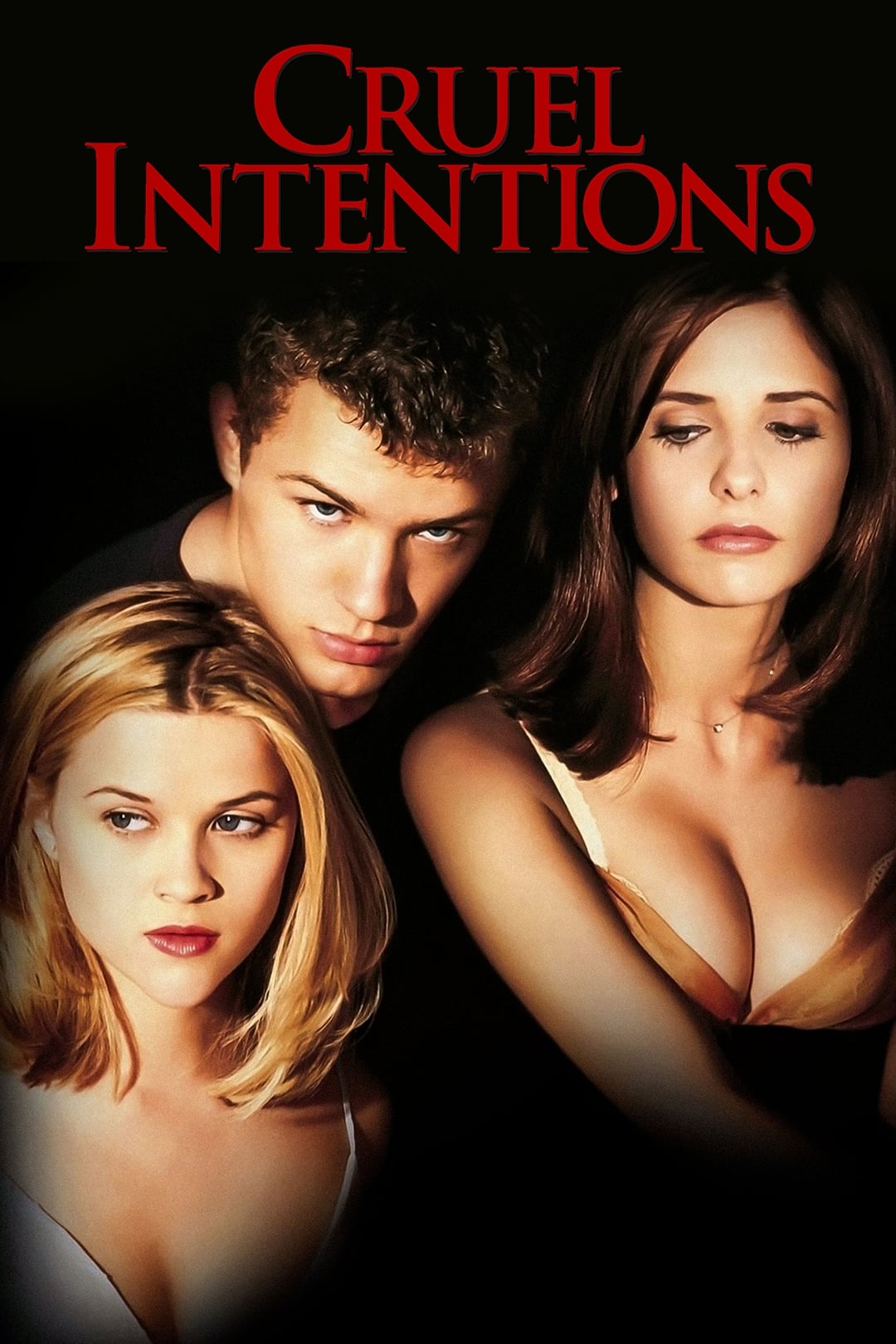
Cruel Intentions poster

Cruel Intentions

95 minutes

Cast

Selected cast credits · Film reference

Sarah Michelle Gellar Kathryn Merteuil
Ryan Phillippe Sebastian Valmont
Reese Witherspoon Annette Hargrove
Selma Blair Cecile Caldwell
Louise Fletcher Helen Rosemond

Cruel Intentions | The Rewatchables

Explore episodeClose episode

Half-Assed Internet Research

Recruitment; box office; title; dialogue; slap; costumes; pilot; kiss; rating; soundtrack rights; deleted violence

In the discussion (16)
Approx. transcript time · 00:15:36Read transcript
  • Witherspoon’s first name is reported as Laura, prompting agreement that Reese works better professionally.
  • Roger Kumble reportedly begged Witherspoon over a drunken dinner to accept a fifteen-day shoot, with her boyfriend Phillippe encouraging her.
  • The film is reported to have earned $76 million and spawned two sequels, after an initial mistaken attribution to Dangerous Liaisons is corrected.
  • An apparent Jessica Chastain appearance among the students is investigated during the discussion but not found; it is treated as a lookalike, not a confirmed cameo.
  • Baranski reportedly accepted because her daughters loved Buffy and she wanted to impress them.
  • The original title Cruel Inventions was reportedly changed after test audiences associated it with science fiction.
  • Witherspoon reportedly spent a week revising Annette’s dialogue and adding depth and quirks with Kumble, who praised her ability.
  • The breakup slap reportedly surprised Phillippe, whose reaction was genuine; the intensity allegedly made him vomit after the take.
  • Cecile’s red hoodie reportedly invoked Little Red Riding Hood.
  • An NBC pilot centered on Sebastian and Annette’s son Bash Casey was developed, with Gellar agreeing to return before the network declined it; the group welcomes that cancellation.
  • The Gellar–Blair kiss won an MTV best-kiss award; Gellar reportedly praised Blair’s soft skin and contrasted it with irritation from other screen kisses.
  • Blair is reported as three to five years older than the other young leads.
  • Producer Neal Moritz reportedly contracted for an R rating rather than a softer classification.
  • The escalator/intimacy sequence originally sought the Smashing Pumpkins song To Sheila, but Billy Corgan refused permission.
  • A filmed scene of Sebastian hitting Kathryn was removed to leave her later claim ambiguous; the group argues that showing it would defeat his rapid redemption.
  • Bittersweet Symphony reportedly cost nearly $1 million, about ten percent of the budget, after roughly 200 alternatives failed; the precise timing of the Rolling Stones rights dispute remains uncertain.

Casting What-Ifs

Katie Holmes; Brittany Murphy; Witherspoon’s earlier refusals

In the discussion (4)
Approx. transcript time · 00:15:36Read transcript
  • Witherspoon reportedly declined Scream; Fear is preferred as her path, with concern that the Scream ensemble might have trapped her in a teen-star identity.
  • Witherspoon also reportedly passed on Urban Legend, which receives a negative assessment.
  • Katie Holmes was considered for Annette, but Kumble reportedly doubted her strength of character; one response thinks she would fit, while others worry about a low-energy pairing with Phillippe.
  • Brittany Murphy was wanted for Cecile but was unavailable.

Picking Nits

Chemistry; escalator continuity; travel timing; absent parents; clothes; collision; bathroom recognition

In the discussion (8)
Approx. transcript time · 00:19:53Read transcript
  • Phillippe’s charisma and chemistry with Witherspoon are disputed; the claim that off-screen romance impairs screen chemistry is countered with Pitt/Jolie and Cruise/Kidman.
  • The escalator appears stationary for the first steps and moving after the camera angle changes, suggesting stitched takes.
  • Penn Station is considered implausibly romantic, with its actual escalators imagined as obstructed rather than a setting for reconciliation.
  • The Penn Station reunion’s timing and Sebastian’s rapid arrival from the Queensboro Bridge seem implausible.
  • Absent parents seem especially implausible for Annette, whose father is a headmaster, even if wealthy city teenagers might have inattentive traveling parents.
  • The man discovered in the trundle bed walks into the house in his underwear, prompting questions about retrieving his clothes and encountering servants; the spoken actor name is inconsistent.
  • Sebastian’s fatal collision is criticized as staged and physically unconvincing; the participants think the impact might be survivable and that he had room to avoid it.
  • Annette and Kathryn pretending not to recognize each other in the bathroom is challenged, with uncertainty about funeral attendance; others defend the behavior as a social power play.

Roger Ebert's review

In the discussion (1)
Approx. transcript time · 00:22:27Read transcript
  • Ebert awarded three out of four stars; his praise for its intelligence and mercilessness surprises the group.

Most Rewatchable Scene

The ending and final five minutes

In the discussion (10)
Approx. transcript time · 00:28:00Read transcript
  • The initial wager establishes the story and lands before the later encounters become excessively theatrical; the blue walls also receive praise.
  • Witherspoon making faces at Sebastian in the car is nominated, though another response finds her scenes comparatively flat and blames her scene partner.
  • The Colorblind escalator reunion is praised for its memorable visual and musical impact; the ensuing loss-of-virginity scene divides reactions, including amusement at its earnest exchange.
  • The breakup brings unusually convincing acting from Phillippe and a strong emotional response from Witherspoon.
  • Kathryn’s unexpected double-cross of Sebastian is nominated.
  • Sebastian writing the letter to Witherspoon’s character is praised together with the Aimee Mann musical cue.
  • The closing five minutes are the emphatic final preference: the cocaine cross, public humiliation, slow-motion reactions and final drive are considered visually enduring.
  • The pool scene and Cardigans cue are nominated; Sebastian’s gift of a swimsuit is considered absurdly intimate, with disagreement about when such a gift could be welcome.
  • The monogrammed backpack gift receives approval, while the sequence of gifts is uncertain and jewelry is suggested as an alternative.
  • The final bathroom confrontation between the two female leads and Bittersweet Symphony complete the praised ending.

The most "year the movie came out" thing

Email is for geeks and pedophiles

In the discussion (6)
Approx. transcript time · 00:33:36Read transcript
  • The special 1999 category names the email insult as the winner, with Counting Crows underscoring a loss-of-virginity scene as runner-up.
  • Sebastian’s unusually small, expensive phone and Sean Patrick Thomas’s prominent casting are additional period markers.
  • Seventeen magazine’s plot importance and Mrs. Caldwell’s Colin Powell donation defense of her racial attitudes are additional nominees.
  • Annette’s clothing and bras are retrospectively suggested as period markers; the styling is considered comparatively frumpy and possibly deliberate.
  • The published teenage virginity essay is singled out more precisely as a period marker; comparable contemporary personal essays would appear online or on social media.
  • The Brady Bunch reference in Kathryn’s speech is suggested as another generational marker.

What’s Aged the Best?

Soundtrack; Jaguar; real estate; Gellar; quiet-time line; cocaine-cross reveal

In the discussion (11)
Approx. transcript time · 00:35:19Read transcript
  • Sebastian’s 1956 Jaguar XK140 Roadster is admired despite a report that Witherspoon found it unstable to drive and concern about its safety.
  • Cecile’s quiet-time line became a recurring household joke.
  • The cocaine-cross reveal, the spoon and Gellar’s tearful reaction remain particularly effective.
  • The Upper East Side and Central Park West geography generally feels convincing, with the characters’ nearby homes making park walks plausible.
  • The soundtrack’s Every You Every Me, Praise You, Coffee and TV, Bedroom Dancing, Colorblind and You Could Make a Killing are praised.
  • Lovefool is singled out despite its absence from the soundtrack album, and Bittersweet Symphony is considered a defining song of the decade.
  • The soundtrack wins broad final agreement, with the car also favored; its durability is contrasted with other dated or overly corny soundtracks aimed at young women.
  • The homes, blue walls, Selma Blair’s character’s apartment and hardwood floors receive enthusiastic approval.
  • Gellar’s performance is belatedly praised as a possible aged-best entry, distinct from the diminished novelty of her casting.
  • Paying for Bittersweet Symphony is explicitly judged an excellent decision because it defines the ending and the movie.
  • The luxurious trundle bed and Cecile’s room receive belated praise.

Probably Unanswerable Questions

Estate location; collision intent; Annette’s forgiveness; Sebastian’s identity

In the discussion (5)
Approx. transcript time · 00:40:51Read transcript
  • The estate’s location is unresolved: Connecticut, Long Island and Westchester possibilities conflict with references to the island, Penn Station and the property’s scale.
  • Sebastian’s apparent leap toward the cab raises the possibility of a partially intentional death, without settling the interpretation.
  • Annette’s fond memory of Sebastian is questioned given the wager and diary; her controlled, thoughtful persona seems inconsistent with falling for his limited effort and gifts.
  • Sebastian’s contempt for women and comfort with Gregory prompt speculation about unacknowledged attraction, but the group explicitly cannot determine his sexuality.
  • A hypothetical later encounter between Sebastian and Gregory is imagined if Sebastian survived, without treating it as established character history.

What’s Aged the Worst?

Homophobia; internet humiliation; Mrs. Caldwell; Sebastian’s redemption; diminished stunt-casting impact

In the discussion (5)
Approx. transcript time · 00:45:31Read transcript
  • Sebastian’s reprehensible behavior and nevertheless effective redemption make the audience’s sympathy uncomfortable; the antihero-origin claim is repeated as a provocative joke.
  • Mrs. Caldwell’s obliviousness is criticized, particularly accepting Cecile’s shopping explanation despite her disheveled appearance and the early hour.
  • The homophobia and Joshua Jackson’s Gregory characterization are emphatic choices; his reported defense of the role as stereotype-challenging is rejected.
  • Sebastian’s opening public internet humiliation of Tara Reid’s character is judged especially troubling and is discussed as behavior that would end a contemporary remake almost immediately.
  • Casting Buffy’s Gellar as a brunette villain no longer carries its original shock, although her actual performance is strongly defended.
In the discussion (5)
Approx. transcript time · 00:54:56Read transcript
  • Phillippe receives agreement: this film positioned him to headline subsequent movies, even though those films were disappointing.
  • Gellar receives agreement on the combination of Buffy’s popularity, a spin-off signaling influence and her admired Saturday Night Live hosting.
  • Witherspoon is rejected without hesitation.
  • Counting Crows are rejected despite this soundtrack’s impact; the earlier album era and the singer’s high-profile Friends-star relationships are preferred, while Dawson’s Creek exposure is also recalled.
  • Cocaine crosses receive an affirmative nomination for this conspicuous use.
In the discussion (3)
Approx. transcript time · 01:00:02Read transcript
  • Blair is the disputed choice: two responses find the performance excessive, particularly her dance after learning about orgasms, while another enjoys the comedy.
  • The exaggerated adolescent physicality is compared with Maggie Grace playing a younger character in Taken.
  • Blair’s defender enjoys the picnic kiss, screwball dynamic with Gellar and post-sex quiet-time exchange; another response likes some scenes but thinks she sometimes overplays them.
In the discussion (5)
Approx. transcript time · 01:06:25Read transcript
  • The exchanged insults about the absent parents in Bali and the maid are nominated.
  • The Colin Powell donation defense and email insult are nominated again.
  • Kathryn’s refusal to make arrangements with losers and Cecile’s Long Island iced-tea remark are additional candidates.
  • The quiet-time line is the explicit final favorite and receives agreement.
  • Kathryn’s Marcia Brady speech is strongly advocated as a memorable alternative.

Sequel, Prequel, Limited Series, or All-Black Remake

Possible, with doubts about the themes

In the discussion (1)
Approx. transcript time · 01:08:32Read transcript
  • A ten-episode Netflix version seems possible but its sexual themes raise doubts; contemporary teen shows demonstrate that provocative material would not itself prevent production.

Recasting Couch

Noah Centineo; Joe Keery, tentative; Charlie Heaton

In the discussion (1)
Approx. transcript time · 01:14:09Read transcript
  • Contemporary possibilities include Noah Centineo and Stranger Things actors, with Joe Keery’s name tentatively recalled and Charlie Heaton proposed as a more convincing bad-boy fit.

More from the conversation

The introduction identifies this as a rerun of the Luminary Rewatchables 1999 discussion recorded four years earlier, following Eyes Wide Shut and preceding a return to new episodes.
Approx. transcript time · 00:02:11Read transcript
The original discussion follows American Pie, pairing two films now viewed as inappropriately or confusingly aged.
Approx. transcript time · 00:04:51Read transcript
Enjoyment and nostalgia coexist with discomfort about the film’s behavior; the cast, soundtrack and contemporary Witherspoon–Phillippe romance remain attractions.
Approx. transcript time · 00:05:20Read transcript
The sexual wager and hidden-motive romance formula is compared with She’s All That, The Perfect Date and 10 Things I Hate About You; the latter’s payment and prom arrangement are distinguished from a wager.
Approx. transcript time · 00:06:11Read transcript
The literary and Dangerous Liaisons ancestry made a teenage adaptation appealing; the earlier film’s cast, acclaim and Michelle Pfeiffer performance are recalled.
Approx. transcript time · 00:07:28Read transcript
An opening-Friday San Francisco viewing with a friend was satisfying, part of a trip that also included a first Warriors game and Las Vegas.
Approx. transcript time · 00:08:19Read transcript
The late-1990s teen-star wave connects I Know What You Did Last Summer, Party of Five and Scream without a universally named actor pack.
Approx. transcript time · 00:08:44Read transcript
Teen access through sneaking into theaters, VHS rentals and repeated cable viewing is recalled, alongside anxiety about breaking age restrictions.
Approx. transcript time · 00:09:36Read transcript
Awkward parental theater experiences include Jerry Maguire, He Got Game before Shabbat services and An Officer and a Gentleman.
Approx. transcript time · 00:10:53Read transcript
Likable emerging stars and musical cues make the absurd plot compelling; the film is also likened to a sustained music video.
Approx. transcript time · 00:11:19Read transcript
The Upper East Side setting offered outsiders a glamorous, supposedly adult world, and the sexual material attracted young viewers.
Approx. transcript time · 00:12:12Read transcript
A theater with separate balcony seating let some children and parents watch apart; the forbidden teen-viewing tradition is compared with Fast Times at Ridgemont High and Superbad.
Approx. transcript time · 00:13:03Read transcript
Witherspoon was regarded as an early star prospect through her early films, with Pleasantville marketing explicitly promoting her and Tobey Maguire as future major actors.
Approx. transcript time · 00:13:53Read transcript
Cruel Intentions and Election demonstrated Witherspoon’s range in one year; her distinct presence and quick transition from teenage to adult roles receive praise.
Approx. transcript time · 00:14:45Read transcript
Freeway’s unusual cable afterlife is remembered as an early demonstration of Witherspoon’s ability.
Approx. transcript time · 00:16:28Read transcript
A celebrity-relationship theory argues that Witherspoon and Phillippe began at comparable career levels but her Election and Sweet Home Alabama ascent destabilized their partnership; the analogy extends to LeBron James and Dwyane Wade, with hope that couples could handle unequal success.
Approx. transcript time · 00:17:46Read transcript
Phillippe’s suitability for Succession, ER and The Resident is debated against concerns about his likability and later work.
Approx. transcript time · 00:19:28Read transcript
Defenses of Phillippe include I Know What You Did Last Summer, 54 and Igby Goes Down; interest remains in 54’s alternate bisexual-triangle version, while his repeated smarmy persona draws criticism.
Approx. transcript time · 00:20:45Read transcript
Two responses defend Phillippe in Crash, with Sandra Bullock also praised despite the film’s controversial reputation.
Approx. transcript time · 00:21:36Read transcript
The hosts jokingly position Sebastian and Kathryn as early antiheroes alongside Tony Soprano, while distinguishing Sebastian’s redemption from Kathryn’s punishment.
Approx. transcript time · 00:22:54Read transcript
Kathryn’s speech about confidence, sexual double standards and her public persona is defended as a valid critique despite her cruelty; the redemption imbalance raises gender-politics concerns.
Approx. transcript time · 00:23:44Read transcript
The adaptation closely follows the French story’s names and music-teacher plot, while the original’s smallpox ending is contrasted with this film.
Approx. transcript time · 00:24:34Read transcript
Heavy-handed sexual encounters and costumes are absurd but defended as deliberately excessive and self-aware.
Approx. transcript time · 00:24:59Read transcript
Joshua Jackson, Christine Baranski, Selma Blair and Swoosie Kurtz fully commit to the heightened style; Louise Fletcher’s presence puzzles, and Phillippe is judged less consistently committed.
Approx. transcript time · 00:25:24Read transcript
The film’s distinctions between opposite sides of Central Park receive early praise, with fuller geography discussion postponed.
Approx. transcript time · 00:26:41Read transcript
Witherspoon, Gellar and Phillippe are compared with LeBron James, Dwyane Wade and Carmelo Anthony; Witherspoon’s sustained prominence and producing career drive the LeBron analogy.
Approx. transcript time · 00:36:35Read transcript
Drew Barrymore and Kate Hudson are considered brief competitors in Witherspoon’s romantic-comedy lane; Jennifer Lawrence and Emma Stone enter a discussion of the contemporary blonde leading-actress role.
Approx. transcript time · 00:37:52Read transcript
Witherspoon’s disciplined persona and relative wholesomeness are contrasted with Lawrence’s image, with disagreement about their perceived sexiness.
Approx. transcript time · 00:38:43Read transcript
Romeo + Juliet, Beverly Hills 90210 and local concerts are remembered as routes to discovering the Cardigans and other soundtrack artists.
Approx. transcript time · 00:42:33Read transcript
Shared enthusiasm for celebrity real estate extends to the Vanderpump Rules cast’s new Valley homes.
Approx. transcript time · 00:44:40Read transcript
Katie Holmes’s filmography and departure from the Batman sequel prompt disagreement and an explicitly alleged claim about Tom Cruise’s influence.
Approx. transcript time · 00:49:23Read transcript
The continued marriage of Gellar and Freddie Prinze Jr. is celebrated, contrasted with the Witherspoon–Phillippe relationship and interpreted through the earlier career-status theory.
Approx. transcript time · 00:55:22Read transcript
A firsthand memory of attending Gellar’s Saturday Night Live episode includes sneaking in below the age limit, the family-dinner sketch and David Boreanaz and Seth Green appearing.
Approx. transcript time · 00:55:47Read transcript
A recollection of casual cocaine use at teenage parties makes a theatrical crucifix container seem plausible, although that specific container was not witnessed.
Approx. transcript time · 00:57:30Read transcript
The popularity and later scarcity of trundle beds prompt memories of sleepovers and speculation about children filling the drawer with toys.
Approx. transcript time · 01:02:35Read transcript
Teen television’s treatment of sex and drugs is compared across 13 Reasons Why, Euphoria and Skins, with concerns about shock value and suicide depiction.
Approx. transcript time · 01:08:32Read transcript
Cruel Intentions is distinguished from relatively sexless teen romances and horror films that punish sexual activity; Fast Times and American Pie provide different exceptions.
Approx. transcript time · 01:09:50Read transcript
Andrew Gruttadaro’s argument is recalled that the film pushed the 1990s teen-movie wave to its limit, after which a later revival became more earnest.
Approx. transcript time · 01:12:25Read transcript
The film’s era is linked to pre-ubiquitous-internet moviegoing, rentals and theater sneaking, with speculation that its meme potential would make a contemporary Netflix release popular.
Approx. transcript time · 01:13:18Read transcript
Gellar’s smaller-than-expected subsequent film career is debated through Buffy typecasting, lingering on television and poor film choices.
Approx. transcript time · 01:16:43Read transcript
Harvard Man, Scooby-Doo and The Grudge films illustrate Gellar’s later choices; the lack of a Sweet Home Alabama-style romantic comedy is lamented.
Approx. transcript time · 01:17:34Read transcript
Witherspoon’s avoidance of a Scream association is contrasted with Gellar and Jennifer Love Hewitt’s difficulty escaping teen-star identities; John Stamos’s ER tenure complicates assumptions about being too famous to join an existing series.
Approx. transcript time · 01:18:00Read transcript
The original closing announces Big Daddy and family viewings; the rerun outro promotes new episodes and archived video editions.
Approx. transcript time · 01:19:16Read transcript