‹ All movies
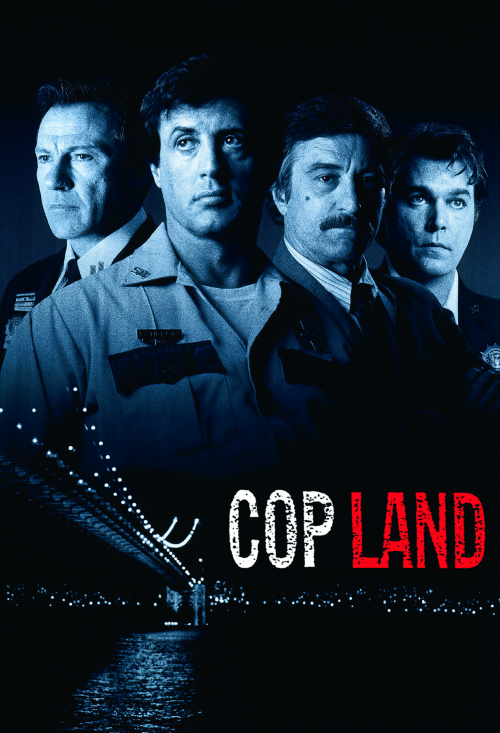
Cop Land poster

Cop Land

105 minutes

Cast

Selected cast credits · Film reference

Sylvester Stallone Freddy Heflin
Harvey Keitel Ray Donlan
Ray Liotta Gary Figgis
Robert De Niro Moe Tilden
Peter Berg Joey Randone
Janeane Garofalo Cindy Betts
Robert Patrick Jack Rucker
Michael Rapaport Murray Babitch
Annabella Sciorra Liz Randone
Noah Emmerich Bill Geisler
Cathy Moriarty Rose Donlan

Cop Land | The Rewatchables

Explore episodeClose episode

Most Rewatchable Scene

Figgsy at the Four Aces; “You blew it”

In the discussion (10)
Approx. transcript time · 00:14:59Read transcript
  • The diagonal speech, wordless Keitel–De Niro coffee-shop tension and ensemble bar scenes are early favorites.
  • Superboy’s shooting and staged jump launch the plot with enjoyable bar, bridge and evidence-planting details; Calderon’s suspicion and the bottle causing the blowout are praised.
  • Keitel and De Niro’s reunion and guarded Amish exchange make the hosts want more scenes together.
  • The bar sequence moves from Berg’s gambling dispute through Patrick’s dart confrontation and Figgsy’s demand not to be shut out; it is a leading choice.
  • Ray’s attempted pool drowning of Superboy is a strong dramatic candidate despite upcoming nitpicks.
  • Both Stallone–De Niro confrontations work, especially the famous “You blew it” tirade and the immediate realization that Freddy has revived the case.
  • Figgsy rejecting Freddy’s justice and warning that being right is not a bulletproof vest is another favorite.
  • The final shootout and De Niro’s shouted “Go to lunch” case closure are nominated.
  • The rooftop sequence with Berg is praised for Serpico-like tenement geography and dead ends.
  • The whole Figgsy bar sequence is explicitly selected as a Sopranos precursor; “You blew it” receives the other explicit final choice.

Roger Ebert's review

In the discussion (1)
Approx. transcript time · 00:23:29Read transcript
  • Ebert gives two stars for too much material packed into the running time; the hosts agree with that diagnosis while wanting at least two-and-a-half stars.

What’s Aged the Worst?

Voiceover; Superboy cover-up plan; absent sports; drunk driving; young Freddy casting; Stallone’s regret

In the discussion (7)
Approx. transcript time · 00:24:09Read transcript
  • Weinstein’s editing reputation prompts speculation about cuts, and the opening/closing De Niro voiceover is criticized for explaining what the images already establish.
  • Ray’s plan to hide Superboy, stage a funeral, then display him at a large party before deciding to kill him is criticized as incoherent; a hoped-for mob-funded relocation partly explains the initial plan.
  • The cover-up’s public party, sudden murder decision and failure to pursue a simpler self-defense account are debated; Ray’s corrupt network risks collapsing if any participant flips.
  • The Four Aces should show more Yankees, Devils or other sports on television.
  • Casual drunk driving, including taking a blacked-out Freddy to his car rather than home, now looks especially bad.
  • Young Freddy’s flashback casting is unconvincing, and Moriarty’s changed appearance since Raging Bull surprises.
  • Stallone’s later belief that this hurt his career disappoints the hosts, who think he should value its cult following and his established achievements.

What’s Aged the Best?

Stars working for scale; De Niro with Stallone; attack on Freddy’s good ear;1990 s Jersey; Falco smoking

In the discussion (13)
Approx. transcript time · 00:32:24Read transcript
  • The lost era of ambitious indie ensembles working for scale is fondly remembered.
  • De Niro and Stallone sharing scenes felt monumental before De Niro’s later commercial comedies; Jackie Brown and Wag the Dog enhance his 1997 run.
  • Firing beside Freddy’s good ear is an effective escalation of cruelty, compared with targeting a wrestling injury or McClane’s bare feet.
  • Mid-1990s New Jersey clothes and atmosphere are enjoyed.
  • Falco smoking is an especially enthusiastic attraction choice.
  • Falco and Liotta’s convincing smoking and intimacy are singled out, with the cast’s general familiarity with cigarettes praised.
  • Freddy’s Carlton cigarettes and Lethal Weapon pinball establish character economically: he wants to be a supercop.
  • The portrayal of a closed white-cop community has disturbing contemporary resonance; reportedly cut racism scenes and the bridge exchange about saving Black children deepen the critique, though it is not nuanced.
  • Mangold's sustained career is an aged-best choice.
  • Young muscular Berg and the returning fashion of Randone's shoes and motorcycle are enjoyed.
  • The rare, well-chosen Springsteen uses and restraint with needle drops keep the score effective.
  • Six future Sopranos performers are listed: Falco, Ventimiglia, Patrick, Sciorra, Sirico and Nascarella.
  • The satellite town and bar feel authentic to childhood experience of cop bars: welcoming to children yet increasingly boisterous and intimidating.

Probably Unanswerable Questions

Music taste; chokehold officer; Keitel/De Niro swap; De Niro’s casting; podcasters; unseen cocaine use

In the discussion (5)
Approx. transcript time · 00:39:12Read transcript
  • Freddy’s Gould records, opera recommendations and Springsteen taste invite speculation about hearing loss or loneliness; future online music and conspiracy interests are imagined.
  • More background on the imprisoned chokehold officer and his potential to expose Ray would help, especially when other events already receive flashbacks.
  • Switching Keitel and De Niro could improve the larger Ray role but would lose the iconic tirade.
  • De Niro's reason for taking the small part is unknown; liking the script is suggested.
  • Figgsy’s cocaine use is inferred throughout despite never being shown directly; the allergy excuse is recalled.

The Great Shot Gordo Award for Most Cinematic Shot

Ray beside the pool; wide shot of Freddy with river and bridge

In the discussion (1)
Approx. transcript time · 00:41:46Read transcript
  • Two choose Ray beside the illuminated aboveground pool; the wide Stallone/river/bridge composition opening the shootout is the other signature image.
In the discussion (2)
Approx. transcript time · 00:42:41Read transcript
  • The film is almost too tight for a break, but the three-minute home visit is chosen despite affection for Stolen Car and the scene’s emotional purpose.
  • The Freddy/Liz visit feels perfunctory: their childhood history is interesting, but the romantic thread needs either more development or removal.

Picking Nits

Ages; moving-car shooting; rooftop fight; affair clarity; news photo; fugitive/napkin/pool logistics; arson; voiceover

In the discussion (11)
Approx. transcript time · 00:43:55Read transcript
  • The actors do not look like contemporaries despite their characters growing up together.
  • Superboy landing so many shots into a moving car is doubted, with the collision offered as part of what confused responders.
  • The rooftop fight’s rounds, assistants and prolonged brawl look like a boxing match or comic-book-villain encounter rather than an arrest.
  • Whether Ray’s deliberate failure to save Randone clearly communicates retaliation for the affair is debated; the producer says he understood it.
  • The conveniently published, sinister-looking photograph of the corrections officer is too obvious.
  • Superboy is an incompetent fugitive who cannot stay hidden beneath the blanket.
  • The drink-and-napkin warning is questioned because the glass could smear the ink; simply taking him aside seems easier.
  • A remote murder would make more sense than killing Superboy in Ray's backyard pool.
  • Burning his own house down seems an unnecessarily difficult way for Figgsy to raise money, with debts offered as context.
  • The opening voiceover lacks an ongoing point-of-view function; the hosts reconsider whether the ending actually uses a title card instead.
  • Figgsy’s abrupt full-stop freeway turnaround is criticized as a movie trope that would be dangerous and implausible in ordinary driving.

The Stephen A. Smith Hottest Take Award

Randone’s wager was defensible; De Niro top-ten rewatchability; Stallone’s weight-gain mistake

In the discussion (4)
Approx. transcript time · 00:51:22Read transcript
  • Randone’s Bulls wager is defended through a speculative 1996 Knicks playoff reconstruction: a 13-point loss nearly covers 12, countered by the rule against betting on Jordan.
  • A top-ten De Niro performance claim is narrowed to top-ten rewatchability after a formidable career list, with the “You blew it” scene more tempting to revisit than Raging Bull.
  • Stallone’s weight gain is speculated to have changed his face after weight loss and prompted later cosmetic work; this is a personal theory, not a documented explanation.
  • The producer judges the De Niro take the hottest of the three.

Top Ten List

Ten De Niro pantheon performances

In the discussion (2)
Approx. transcript time · 00:53:08Read transcript
  • The ten immediate pantheon choices are The Godfather Part II, Taxi Driver, Mean Streets, Raging Bull, Midnight Run, Casino, Heat, The King of Comedy, The Deer Hunter and Goodfellas.
  • This Boy’s Life, Cape Fear, Awakenings, The Irishman, The Intern, Jackie Brown and The Mission are additional debated comparisons; Midnight Run is placed first for rewatchability.

Casting What-Ifs

Liotta and Stallone sought opposite roles; Gary Sinise offered Freddy

In the discussion (2)
Approx. transcript time · 00:57:31Read transcript
  • Liotta reportedly wanted Freddy and Stallone wanted Figgsy; switching them is judged likely to weaken the movie.
  • Sinise was reportedly offered Freddy and would bring gravity but a smaller, more stepped-on presence than Stallone’s gentle giant.
In the discussion (2)
Approx. transcript time · 00:59:05Read transcript
  • Keitel’s high-energy scolding seems wrong for a controlled character, with his performance compared to a declining star coasting; the counterargument is that his yelling is enjoyable.
  • The staged bridge panic is deliberately exaggerated within the story, while Liotta and De Niro’s intensity is defended as appropriate.

Recasting Couch

Swap Falco and Garofalo; Rock as Freddy, Downey as Figgsy

In the discussion (4)
Approx. transcript time · 01:02:19Read transcript
  • Switching Falco into the deputy role and Garofalo into Falco’s role is the proposed fix.
  • A modern version with the Rock as Freddy and Downey as Figgsy appeals, though both may now be too old.
  • Selena Gomez as the deputy is floated.
  • The Rock's physique makes casting him as Freddy difficult.
In the discussion (4)
Approx. transcript time · 01:04:05Read transcript
  • Liotta is ineligible, Patrick may have too much screen time, and Berg, Falco and Calderon are candidates in an ensemble built for brief showcases.
  • Spencer’s bridge command scene earns a nomination for the pleasure of a cop demanding floodlights and divers.
  • Berg’s wounded entrance and stairway charge are favored.
  • Method Man’s distinctive contact lens and rooftop performance prompt a final explicit vote for him.

Half-Assed Internet Research

Washingtonville inspiration; deleted racism scenes; residency disclaimer; motorcycle; De Niro mustache

In the discussion (5)
Approx. transcript time · 01:06:14Read transcript
  • Mangold’s hometown Washingtonville, especially Worley Heights with current/former NYPD residents, reportedly inspired Garrison.
  • Two deleted scenes concern chasing Black motorists and disproportionate ticketing; the hosts wish both had remained.
  • The end-credit disclaimer about officers living outside New York conflicts with the fictional transit-authority loophole, while real Long Island cop enclaves seem plausible.
  • Randone’s motorcycle is identified as a 900 cc Hinckley Triumph Thunderbird.
  • De Niro’s longer mustache in the final handoff reportedly comes from Jackie Brown filming continuity.

What Piece of Memorabilia Would You Want From This Movie?

Lethal Weapon 3 pinball; Ray’s tracksuit; Moe’s sandwich; car choices

In the discussion (3)
Approx. transcript time · 01:07:26Read transcript
  • Randone’s Triumph motorcycle is an early memorabilia possibility.
  • The pinball machine, Keitel’s white-and-pastel-blue tracksuit and remaining turkey sandwich are desired.
  • The sports car and Figgsy’s unidentified car are admired, while Superboy’s Honda is rejected; imagining Figgsy heading to Atlantic City rather than the Bahamas extends the car discussion.

Apex Mountain

Pre-Sopranos Jersey cop scumbags

In the discussion (5)
Approx. transcript time · 01:07:56Read transcript
  • Stallone, Liotta and Mangold are each rejected for Apex here.
  • Rapaport is near a strong run of Zebrahead, True Romance, Beautiful Girls, Kiss of Death and this film, but Beautiful Girls is preferred.
  • Pre-comedy De Niro is considered, with Heat too close for a firm choice; the initially overstated 1997 output is corrected to Cop Land, Jackie Brown and Wag the Dog.
  • Emmerich is rejected here; The Truman Show and The Americans compete as his peak, with Pride and Glory also praised.
  • Pre-Sopranos Jersey cop scumbags wins as the narrow affirmative topic, with no performer receiving a clear yes.

Sequel, Prequel, Limited Series, or All-Black Remake

Prestige TV; prequel about Garrison’s founding

In the discussion (1)
Approx. transcript time · 01:14:46Read transcript
  • Two prefer a prestige series with new cops rotating in, compared with early HBO and The Corner; the alternative is a mafia-linked prequel about establishing the town.
In the discussion (1)
Approx. transcript time · 01:18:54Read transcript
  • Liotta receives the single-Oscar choice and agreement, followed by enjoyment of his diagonal-moving speech.

The Coach Finstock Award for Best Life Lesson

Move diagonally; avoid waterfront New Jersey

In the discussion (1)
Approx. transcript time · 01:21:45Read transcript
  • Figgsy’s confusing directions are interpreted as adapting rather than expecting a straight path through life; avoiding the waterfront part of New Jersey is the other lesson.

Producer review

Loved the movie, especially Stallone

In the discussion (1)
Approx. transcript time · 01:25:31Read transcript
  • The invited producer enthusiastically praises the film and heavier Stallone as his favorite element.

More from the conversation

The episode memorializes Ray Liotta soon after his death and introduces categories from a recent selection show; Cop Land is proposed as his second-best role after Goodfellas, with Something Wild, Field of Dreams and his ER appearance considered.
Approx. transcript time · 00:02:23Read transcript
Figgsy’s drug-fueled volatility contrasts with Freddy’s stillness; unlike Goodfellas’ final cynic, he retains brokenhearted belief in justice despite his own arson and theft.
Approx. transcript time · 00:03:59Read transcript
Liotta’s post-Goodfellas run—Unlawful Entry, No Escape, Corrina Corrina, Operation Dumbo Drop, Unforgettable and Turbulence—is viewed as missed star opportunities; prestige television, Oz or character parts might have served him better, with later Shades of Blue and Marriage Story pointing that way.
Approx. transcript time · 00:06:54Read transcript
Scorsese’s story of Liotta approaching him about Goodfellas illustrates authenticity; Cop Land’s New York/Jersey ensemble feels credible, with Garofalo reserved as an objection.
Approx. transcript time · 00:09:03Read transcript
The film belongs to the post-Pulp Fiction indie boom, with a scale-paid ensemble and a deliberately heavier, restrained Stallone as its central publicity hook.
Approx. transcript time · 00:10:01Read transcript
Stallone’s claimed slump is questioned against an enjoyable 1993–1997 run of Cliffhanger, Demolition Man, The Specialist, Judge Dredd, Assassins and Daylight; Cop Land, Creed and First Blood show his capacity for restrained acting.
Approx. transcript time · 00:11:41Read transcript
The gap between Cop Land and Creed contains few ambitious Stallone acting choices, despite earlier failed comedy experiments; Jack Horner is a hypothetical test and his forthcoming Sheridan series is intriguing, while Cop Land’s Oscar buzz is considered excessive.
Approx. transcript time · 00:12:57Read transcript
The ending initially disappointed expectations of a Goodfellas-style crime film but improves when understood as a New Jersey western, with High Noon’s lone-man mission and intense wordless encounters.
Approx. transcript time · 00:14:22Read transcript
The ensemble is celebrated through graying, grouchy De Niro, Patrick’s mustache, Berg, Rapaport, Sciorra, Emmerich, Moriarty, Spencer, Yoba, Vincent, Falco, Calderon, Harry, Sirico’s photograph and Altman; Calderon’s limited career is regretted.
Approx. transcript time · 00:15:22Read transcript
Mangold’s range spans Cop Land, Girl Interrupted, Walk the Line,3:10 to Yuma, The Wolverine, Logan and Ford v Ferrari; his stories often center on self-reliant outsiders, with an artist-family background and strategic adaptation to industry trends.
Approx. transcript time · 00:17:21Read transcript
Cop Land’s indie-crime timing, Logan’s western/samurai ambition and Walk the Line after Ray illustrate Mangold finding personal stories within viable formats; his films are praised as lean despite blockbuster expectations.
Approx. transcript time · 00:19:05Read transcript
The varied filmography and 3:10 to Yuma remake show western influences; an unnamed Jackman romance is recalled as a weaker exception, while Ford/Hawks/Kurosawa comparisons seem earned.
Approx. transcript time · 00:20:50Read transcript
The reported $15 million budget and $63 million gross exceed expectations, but contemporary hype and Miramax fatigue may explain its muted reception; cable rewatches helped it, as with Rounders, and its density resembles an entire television season.
Approx. transcript time · 00:21:48Read transcript
More time with the Jersey cops and Four Aces would be welcome, but ten hours centered on Freddy would be excessive.
Approx. transcript time · 00:23:03Read transcript
The film’s cult stature improves as its ensemble’s later careers become familiar, and its many self-contained scenes make cable entry points obvious.
Approx. transcript time · 00:49:31Read transcript
De Niro’s 1995–1997 run is enumerated: Casino, Heat, One Hundred and One Nights; The Fan, Sleepers, Marvin’s Room; Cop Land, Jackie Brown, Wag the Dog. Great Expectations and Ronin precede Analyze This’s shift toward comedy.
Approx. transcript time · 01:08:59Read transcript
The film is affectionately called the best three-star movie: tonally flawed but packed with great actors and scenes.
Approx. transcript time · 01:14:16Read transcript
The ending could stop at the handoff; explanatory news montages lead to an extended joke about Superboy hosting a Giants podcast and calling a sports radio show.
Approx. transcript time · 01:23:34Read transcript
The full closing producer credit precedes satisfaction with the expanded categories and the recording length.
Approx. transcript time · 01:26:49Read transcript