The film is described as the first sports comedy centered on children and an early critique of overbearing youth-sports parents.
Matthau’s Tony, supporting Oscar, two lead nominations and ten Lemmon collaborations are recalled.
O’Neal reportedly recalled Tarantino’s first fan letter and an uncomfortable later request to wear her childhood Bears uniform.
A 9 million budget,43 million gross and tenth-place 1976 ranking are reported, alongside Rocky’s success as a sports-film turning point.
The child actors’ ages are listed: Lupus six, Miguel eight, Tanner ten, Ahmad, Amanda and Engelberg twelve, Ogilvie thirteen, and Toby, Kelly and Rudy fourteen.
The Aguilar actors reportedly did not speak Spanish and were taught their lines, despite playing boys who could not speak English.
Reported compensation was $750,000 plus ten percent of theatrical box office for Matthau and $350,000 plus a profit percentage for O’Neal.
Bill Lancaster reportedly based the film on his father, Burt Lancaster; his three screenplays are identified as this film, The Bad News Bears Go to Japan and The Thing.
Buttermaker’s changes unfold subtly without explanatory speeches; reconnecting with Ahmad in the tree is a rare visible turning point.
Breaking Training is praised as a rare naturally satisfying sports sequel, featuring the unsupervised drive to Houston and the Astrodome.
Lying to children while parenting is praised.
The Kentucky Fried Chicken bucket looks unusually appetizing; the full name is considered more evocative than KFC and compared with Popeyes.
Kelly’s believable age, motorcycle, smoking, jacket and coordination make him an archetypal cool troubled kid; Bender and a doomed soldier are comparisons.
Tanner is compared with Culkin crossed with Bill Burr.
Ahmad is appreciated as a then-uncommon Black child character with distinct sibling insecurity, Hank Aaron admiration and a successful bunt.
Ahmad subverts the assumption that the Black child must be the best athlete, with sibling comparisons and Muslim identity adding individuality.
Engelberg’s comedy, hitting and trash talk are praised, including the flood-the-valley pool joke; the sequel actor and Sandlot analogue are compared.
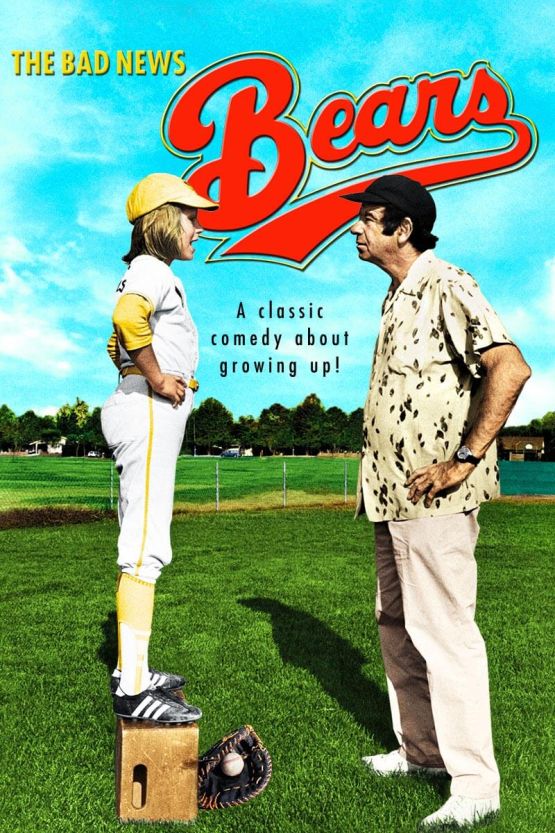
Mid 1970 s Los Angeles and Jack Davis’s illustrated poster are appreciated.
A parental lawsuit creating a team for excluded players anticipates later youth-sports entitlement and feels specifically Los Angeles.
Chico’s Bail Bonds is described as a real business incorporated into the film.
Cheap Igloo coolers, removable beer tabs and large cans evoke the era; unbelted convertible rides are recalled with ironic affection.
Turner’s overbearing youth-coach behavior feels increasingly relevant as private training and parental pressure grow.
Real beer brands are praised over invented labels; the spoken list includes Coors, Lucky Lager, Mickey’s, Pabst, Schlitz, a garbled brand, Miller High Life and Budweiser while claiming seven.
O’Neal’s pitching is convincing; she reportedly trained for weeks and performed most throws with occasional doubling.
Bizet’s Carmen music is considered central to the film.
Ogilvie’s statistics, walks and defensive shifts anticipate Bill James and Moneyball; the Joey-Engelberg rivalry is also praised.
The opening credits efficiently introduce Buttermaker, Toby, Kelly and Turner while establishing the coach’s drinking.
The first practice establishes the misfits’ incompetence through bunting confusion and chocolate on the ball; Necessary Roughness is compared as an heir.
The Yankees’ first-game rout includes Tanner throwing his glove and Turner encouraging withdrawal.
The attempted team resignation follows Tanner fighting the seventh grade and prompts Buttermaker’s quitting-is-a-hard-habit lesson.
Amanda loses air hockey to Kelly, walks out defeated and argues with Buttermaker about the resulting Rolling Stones date.
Kelly monopolizing the game exposes the cost of relying on one star and reflects a familiar youth-sports temptation.
Kelly’s winning hit receives little celebration after his teammates resent his monopoly.
The final game’s brawl and Engelberg-Turner rivalry lead to Turner striking his son and Joey deliberately allowing a run; the slap would create a modern public scandal.
Buttermaker chooses to play everyone and Lupus makes the emotional catch, establishing a much-reused weakest-player-comes-through trope.
The final rally ends with Kelly reaching across an intentional walk, being called out at home and Tanner rejecting the trophy; Kelly is thought visibly safe.
The entire final game is the agreed most-rewatchable sequence, with Joey holding the ball a pinpoint choice.
The Ahmad tree conversation is a separate personal favorite: an invented Hank Aaron 42-error story restores belief and shows Buttermaker’s coaching instincts.
The ballet-window visit is recalled as an omitted favorite: Engelberg eats chicken, Kelly flirts and Amanda is embarrassed.