‹ All movies
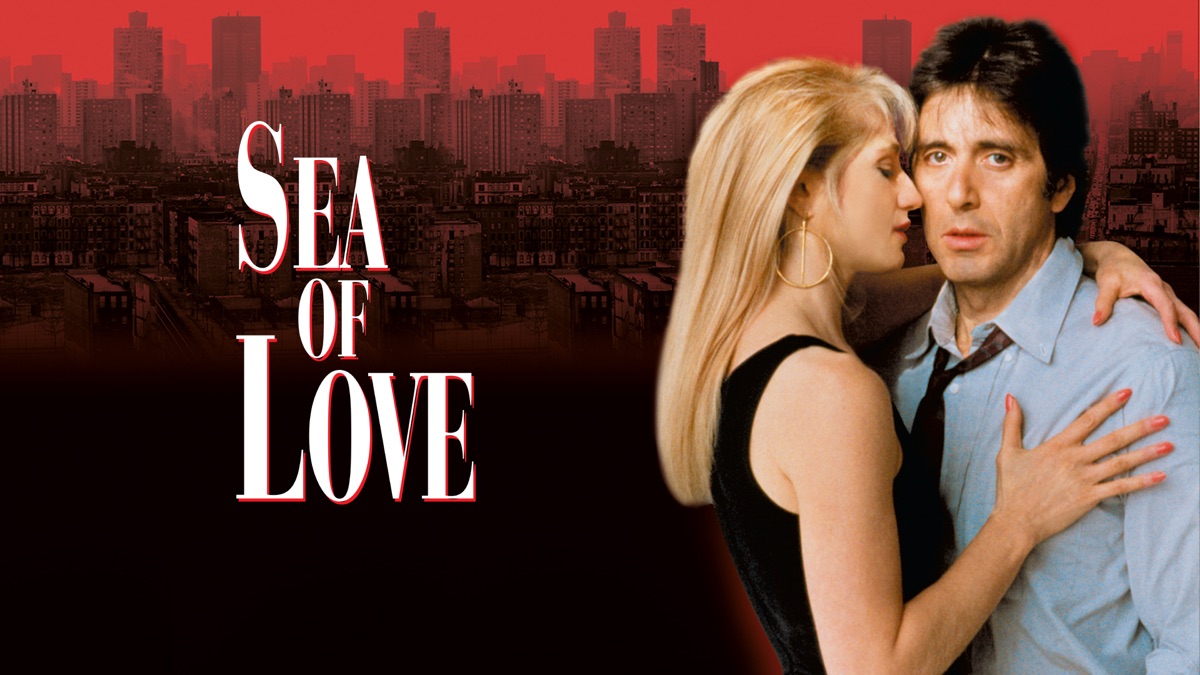
Sea of Love poster

Sea of Love

113 minutes

Cast

Selected cast credits · Film reference

Al Pacino Frank Keller
Ellen Barkin Helen Cruger
John Goodman Sherman
William Hickey Frank Sr.
Paul Calderon Serafino
Larry Joshua Dargan
John Spencer Lieutenant

Sea of Love | The Rewatchables

Explore episodeClose episode

Roger Ebert's review

In the discussion (3)
Approx. transcript time · 00:21:01Read transcript
  • Ebert welcomes Pacino’s sharp, complicated return to the street-role presence of his 1970s work.
  • Ebert awards three stars and singles out the leads’ chemistry and Barkin’s forceful sexuality.
  • Ebert objects that the late killer reveal violates fair whodunit expectations.

Half-Assed Internet Research

Budget and gross; spontaneous ending; deleted scenes; Price’s source; director change; Toronto interiors

In the discussion (6)
Approx. transcript time · 00:36:22Read transcript
  • The stated budget is $19 million and gross $110.9 million; possible inclusion in a future box-office theme is discussed rather than established.
  • A director-commentary account confirms the passerby bump in the final scene was retained for Pacino’s spontaneous recovery.
  • Deleted scenes include a mistaken confrontation with a child’s bodyguard and a visit from Frank’s pregnant ex-wife, played by Bracco.
  • Harold Becker replaced Gregory Hoblit as director.
  • Price adapted ideas from The Ladies’ Man, which grew out of a Penthouse assignment investigating public sexual venues.
  • The interiors were filmed in Toronto, consistent with the apartments’ unusually large size.

Most Rewatchable Scene

First sex scene (two choices); late-night convenience-store rendezvous

In the discussion (18)
Approx. transcript time · 00:37:43Read transcript
  • The fake Yankees event traps wanted fans.
  • The cops devise the rhyming personal-ad and fingerprint scheme.
  • The unsuccessful dates include a disappointed woman in a wig and another who identifies Frank’s cop eyes.
  • Helen’s red-jacket introduction and blunt rejection unsettle Frank.
  • Frank runs into Helen while awkwardly selecting fruit and arranges another date despite his partner’s warning.
  • Frank and Helen’s late-night bar conversation establishes their attraction.
  • The sex scene begins with suspicion over a starter pistol and Helen being shut in the closet.
  • Helen’s physical dominance and Frank’s exhausted morning make the first sex scene especially funny; it receives two final choices.
  • The shoe-store confrontation with two aggressive customers leads to Frank’s angry speech.
  • Frank apologizes in the kitchen, then notices the personal ads on the refrigerator.
  • Helen playing Sea of Love renews suspicion that she is the killer.
  • The fight with Rooker culminates in the villain falling from the window.
  • The final street reconciliation benefits from Pacino being bumped and recovering naturally.
  • Drunk Frank calls his ex-wife from bed claiming appendicitis.
  • Frank complains about his ex-wife within earshot of her new partner, culminating in a detectives’ party fight.
  • The Long Island wedding is an additional candidate.
  • The late-night convenience-store meeting after Frank’s request that Helen omit underwear is the other final favorite.
  • Pacino and Goodman confronting the personal-ad writer in front of his family is an additional remembered scene.

Picking Nits

Personal ads display; Helen’s tolerance; coworker conflict; Helen Keller name; unseen stalking

In the discussion (6)
Approx. transcript time · 00:47:02Read transcript
  • Keeping multiple singles ads displayed beside the child’s artwork is suspiciously conspicuous.
  • Helen tolerates implausibly many warning signs: confinement, drinking, dishonesty, workplace aggression and being treated as a murder suspect.
  • Frank admitting he was investigating Helen when they met makes the relationship even harder to accept.
  • Frank should not have to keep working beside his former wife’s new partner.
  • Marriage would make Helen’s name Helen Keller, an awkward coincidence the script never acknowledges.
  • How the killer tracks every date without Helen noticing remains doubtful, despite the predictable shoe-store schedule.

What’s Aged the Best?

Yankees fans; cameos; drunken cops; Jenkins; Spencer; karate; loafers; records; Price dialogue; racist blame-shifting, bitterly qualified

In the discussion (10)
Approx. transcript time · 00:52:30Read transcript
  • The late-1980s Yankees fans and Dave Winfield reference remain entertaining.
  • Samuel L. Jackson’s early cameo run is fondly recalled.
  • Drunken cops calling former partners remain an effective movie trope.
  • Richard Jenkins seems unchanged across decades.
  • John Spencer’s lieutenant and his blunt matchmaking dialogue are highlights.
  • Pacino doing karate during the detectives’ party remains funny.
  • Frank proudly displays the loafers Helen gave him.
  • The prediction that records could become valuable collectibles proves prescient.
  • The killer blaming Black people is framed as a bitterly persistent tactic, also nominated as aged worst.
  • Richard Price’s New York dialogue holds up.

What’s Aged the Worst?

Racial blame; dated ads, disputed; clothes and decor; stepfather introduction; teeth; suspect description; fake Rizzuto; shaming; deleted Bracco scene

In the discussion (10)
Approx. transcript time · 00:55:12Read transcript
  • The killer’s racist blame-shifting is a negative candidate despite its continuing plausibility.
  • Newspaper dating ads are dated technologically, but their social mechanics are defended as enduring.
  • The men’s stretched-out white sleeping shirts look unpleasant.
  • Frank’s cartoon-alligator shower curtain exemplifies poor divorced-man decor.
  • Helen’s premature introduction of Frank as the child’s new stepfather is criticized.
  • Pacino’s yellow teeth and the unbrushed morning kissing are unappealing.
  • Frank’s description of a Black suspect’s hair is dated and uncomfortable.
  • Modern image searches would expose the fake Phil Rizzuto in the Yankees sting.
  • Frank shaming Helen for dating is hypocritical, even if the behavior persists today.
  • Deleting the ex-wife scene loses useful emotional depth; its defense may partly reflect affection for Lorraine Bracco.

The Great Shot Gordo Award for Most Cinematic Shot

Final street reconciliation; Lincoln Center crossing; mattress murder setup

In the discussion (3)
Approx. transcript time · 00:57:03Read transcript
  • Frank crosses from the surveillance van toward the restaurant with Lincoln Center visible.
  • The final reconciliation lets the couple recede into the street crowd.
  • The killer making victims lie against the mattress is a memorable image.

The Butch’s Girlfriend Award for the Weakest Link in the Film

Insufficiently established killer reveal

In the discussion (3)
Approx. transcript time · 00:59:06Read transcript
  • Rooker’s killer is insufficiently established before the reveal; another scene could have made him more memorable.
  • Making Goodman the killer is proposed as an alternative twist, drawing on his enthusiasm for nightlife and insistence on partnering.
  • The racial misdirection disappears without meaningful development.

The Stephen A. Smith Hottest Take Award

Barkin deserved a Sopranos arc

In the discussion (1)
Approx. transcript time · 01:10:10Read transcript
  • Barkin should have received a substantial Sopranos arc: a mistress, rival mob boss, madam or Carmela’s sister are proposed. Replacing Carmela is questioned because her sexual energy and confrontations differ from Falco’s; a car-saleswoman mistress is another favored idea, with its actor identity confused in the transcript.

Apex Mountain

Ellen Barkin; personal-ad murder movies; late-1980s Yankees fans

In the discussion (8)
Approx. transcript time · 01:17:27Read transcript
  • Pacino is rejected.
  • Barkin’s late-1980s period receives agreement, with this film narrowly preferred to The Big Easy.
  • Goodman’s peak is placed later around Roseanne and The Big Lebowski.
  • Personal-ad dating murder movies receive an affirmative selection.
  • The title song is proposed, but its original popularity is raised as a competing peak.
  • Pacino characters named Frank are ranked Slade, Serpico, Keller, with mild consideration of Serpico first.
  • Late-1980s Yankees fans receive an affirmative selection.
  • Rooker is rejected, with Cliffhanger suggested instead.

Probably Unanswerable Questions

Yankees-sting legality; cigarette count; Helen’s mother; relationship duration

In the discussion (4)
Approx. transcript time · 01:22:24Read transcript
  • The legal basis for the Yankees sting and immediate celebratory drinking are questioned.
  • An informal count finds twelve on-screen Pacino cigarettes, with possible omissions acknowledged.
  • Helen’s mother’s opinion of the relationship remains uncertain.
  • The relationship’s likely short duration is questioned.

Sequel, Prequel, Limited Series, or All-Black Remake

Dating-app remake; all-Black cast; undercover restaurant series

In the discussion (3)
Approx. transcript time · 01:22:55Read transcript
  • A present-day dating-app remake is favored, with App of Love, Swipe Dead and Last Swipe floated as titles.
  • An all-Black cast is proposed, with disagreement over Michael B. Jordan and concern that Helen requires an older actor than Sydney Sweeney.
  • An undercover-cop restaurant operation could support its own scripted series.

The Coach Finstock Award for Best Life Lesson

Leave the partner who investigated you as a killer

In the discussion (2)
Approx. transcript time · 01:28:53Read transcript
  • End a relationship with someone who slept with you while investigating you as a possible serial killer.
  • Being asked about fingerprinting your genitals is another sign that the relationship has gone wrong.

More from the conversation

A first viewing prompted by Netflix discovery produces strong enthusiasm, while renewed streaming popularity gives a neglected thriller another audience.
Approx. transcript time · 00:02:50Read transcript
Richard Price’s dialogue and New York atmosphere are praised alongside his later television and screenwriting career.
Approx. transcript time · 00:03:43Read transcript
Body Heat, Jagged Edge, Black Widow, 9½ Weeks and Basic Instinct exemplify romances driven by attraction to a potentially dangerous partner.
Approx. transcript time · 00:04:15Read transcript
Modern relationship dramas are contrasted with the film’s focus on sexual power and desire rather than adjudicating workplace or gender politics.
Approx. transcript time · 00:05:17Read transcript
Pre-internet dating heightens uncertainty about a stranger’s identity, history and potential danger.
Approx. transcript time · 00:07:06Read transcript
Frank’s divorce, lonely father and fading professional purpose make the new relationship feel like a return to life.
Approx. transcript time · 00:08:35Read transcript
Pacino and Barkin’s unusual pairing produces both genuine chemistry and comic memories of the sex scene.
Approx. transcript time · 00:09:19Read transcript
Frank’s drinking shapes his behavior and individual scenes, making the film a credible portrait of addiction and midlife crisis.
Approx. transcript time · 00:10:44Read transcript
Frank’s sexual submission contrasts with his authority and behavior elsewhere in the film.
Approx. transcript time · 00:11:22Read transcript
Pacino’s other romantic roles often show troubled or controlling relationships rather than stable intimacy, though his sensitivity remains attractive.
Approx. transcript time · 00:11:58Read transcript
A New Yorker profile and Keaton’s writing are recalled as evidence of Pacino’s elusive personal appeal.
Approx. transcript time · 00:13:44Read transcript
Siskel and Ebert’s dismissal of Pacino’s 1980s work contrasts with Scarface’s central place in a younger New York hip-hop generation’s imagination.
Approx. transcript time · 00:15:06Read transcript
Cruising, Author! Author! and the initially disappointing reception of Scarface precede Revolution’s failure and Pacino’s four-year film hiatus.
Approx. transcript time · 00:16:41Read transcript
Pacino’s withdrawal is especially striking beside De Niro and Hoffman’s continuing prominence.
Approx. transcript time · 00:18:20Read transcript
Stage work and The Local Stigmatic occupied the hiatus; a later profile describes it positively, while Keaton reportedly urged a financially necessary screen return.
Approx. transcript time · 00:18:47Read transcript
Daniel Day-Lewis offers a partial comparison, but abandoning movies entirely seems rarer than shifting into supporting roles.
Approx. transcript time · 00:19:14Read transcript
The performance catches Pacino before his later more consistently shouting persona.
Approx. transcript time · 00:20:21Read transcript
Generational exposure reshapes an actor’s reputation: Scarface and different phases of Day-Lewis’s career dominate for different viewers.
Approx. transcript time · 00:21:45Read transcript
Sea of Love, renewed Scarface popularity and impending Godfather III revive Pacino’s standing alongside De Niro’s own resurgence.
Approx. transcript time · 00:23:26Read transcript
Frank updates Pacino’s idealistic young New York cop persona into a weary veteran who cannot imagine life without the job.
Approx. transcript time · 00:24:12Read transcript
Smoking in bed is treated as an extreme habit, prompting personal memories and comparisons with smoking during meals.
Approx. transcript time · 00:25:07Read transcript
Barkin’s candid interviews and the label of difficult actress expose a gendered double standard compared with celebrated demanding male actors.
Approx. transcript time · 00:28:21Read transcript
Younger viewers first encounter Barkin through Ocean’s Thirteen and her social-media presence rather than her earlier stardom.
Approx. transcript time · 00:29:47Read transcript
Barkin’s early career runs through Diner and Eddie and the Cruisers to a star-making Big Easy performance with Dennis Quaid.
Approx. transcript time · 00:30:57Read transcript
Her introductory close-up, distinctive face, eye contact and red outfit immediately dominate the date scene and convey dangerous attraction.
Approx. transcript time · 00:31:48Read transcript
Switch and This Boy’s Life fail to sustain equivalent stardom; her later Animal Kingdom role prompts reflection on opportunities denied older actresses.
Approx. transcript time · 00:34:26Read transcript
The supporting cast gathers future familiar faces, including Jenkins, Goodman, Rooker, Calderon, Spencer and Jackson.
Approx. transcript time · 00:35:39Read transcript
The Yankee sting seems plausible because committed New York fans would eagerly attend the promised meet-and-greet.
Approx. transcript time · 00:37:43Read transcript
The late-night bar scene captures practiced drinking habits, cash on the counter and an atmosphere of familiarity.
Approx. transcript time · 00:42:10Read transcript
The sex scene reverses Frank’s rough treatment when Helen physically takes control and leaves him exhausted the next morning.
Approx. transcript time · 00:44:09Read transcript
A modest shoe store sustaining a manager and staff feels specific to an earlier New York economy.
Approx. transcript time · 00:45:37Read transcript
A first-time viewer expects Helen to be the killer because of genre conditioning, despite evidence that she is an ordinary mother and employee.
Approx. transcript time · 00:47:40Read transcript
Frank’s conspicuous new loafers illustrate how a new relationship changes a person’s appearance.
Approx. transcript time · 00:54:17Read transcript
Newspaper personals are defended as an earlier version of app dating, with the same awkward preliminary conversation.
Approx. transcript time · 01:02:35Read transcript
The title song divides opinion between beautiful, ordinary and overused.
Approx. transcript time · 01:06:29Read transcript
Possible Sopranos roles for Barkin include mistress, mob boss, madam and Carmela’s sister; replacing Falco is resisted because their strengths differ.
Approx. transcript time · 01:10:10Read transcript
The lonely older date’s disappointment is praised as a sharply observed small performance.
Approx. transcript time · 01:15:03Read transcript
A hypothetical all-Black remake leads to a sharp disagreement about Michael B. Jordan’s acting.
Approx. transcript time · 01:24:13Read transcript
Goodman’s warmth and physical contrast with Pacino are praised, though inviting a near-stranger to his daughter’s wedding seems comically generous.
Approx. transcript time · 01:29:36Read transcript
The closing first-time review enjoys the dangerous attraction, predicts Helen is not the killer but misses Rooker, and praises the recurring New York locations.
Approx. transcript time · 01:33:00Read transcript
A proposed sex-and-murder theme is retrospective or future programming, not a verified current theme.
Approx. transcript time · 01:33:00Read transcript
Nostalgia for familiar New York locations and working-class neighborhoods leads to a joking wish for the old city, tempered by acknowledgement of modern improvements.
Approx. transcript time · 01:34:42Read transcript