
‹ All movies
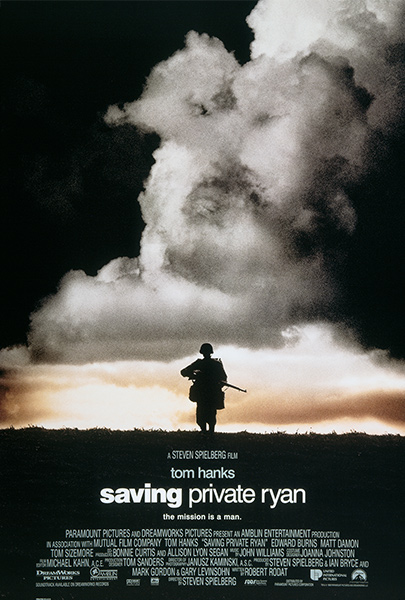
Saving Private Ryan poster

Saving Private Ryan

170 minutes

Cast

Selected cast credits · Film reference

Tom Hanks Captain John H. Miller
Tom Sizemore Technical Sergeant Michael Horvath
Edward Burns Private Richard Reiben
Matt Damon Private James Francis Ryan
Barry Pepper Private Daniel Jackson
Adam Goldberg Private Stanley Mellish
Vin Diesel Private Adrian Caparzo
Giovanni Ribisi T-Medic Irwin Wade
Ted Danson Captain Fred Hamill
Jeremy Davies Corporal Timothy Upham
Paul Giamatti Sergeant William Hill
Dennis Farina Lieutenant Colonel Walter Anderson
Joerg Stadler Steamboat Willie
Max Martini Corporal Henderson
Dylan Bruno Toynbe
Ian Porter Trask
Julian Spencer Garrity
Steve Griffin Wilson
Marc Cass Fallon
Markus Napier Major Hoess
Neil Finnighan Ramelle Paratrooper
Peter Miles Ramelle Paratrooper
Paul Garcia Field HQ Major
Seamus McQuade Field HQ Aide
Ronald Longridge Coxswain
Adam Shaw Delancey
Rolf Saxon Lieutenant Briggs
Corey Johnson Radioman
Loclann Aiken Soldier on the Beach
John Barnett Soldier on the Beach
Maclean Burke Soldier on the Beach
Victor Burke Soldier on the Beach
Aiden Condron Soldier on the Beach
Paschal Friel Soldier on the Beach
Shane Hagan Soldier on the Beach
Paul Hickey Soldier on the Beach
Shane Johnson Soldier on the Beach
Laird Macintosh Soldier on the Beach
Brian Maynard Soldier on the Beach
Martin McDougall Soldier on the Beach
Mark Phillips Soldier on the Beach
Lee Aaron Rosen Soldier on the Beach
Andrew Scott Soldier on the Beach
Matthew Sharp Soldier on the Beach
Vincent Walsh Soldier on the Beach
Grahame Wood Soldier on the Beach
John Sharian Corporal
Glenn Wrage Doyle
Crofton Hardester Senior Medical Officer
Martin Hub Czech Wehrmacht Soldier
Nigel Whitmey Private Boyd
Sam Ellis Private Hastings
Erich Redman German #1
Tilo Keiner German #2
Stephan Grothgar German #3 / Voice on Bullhorn
Michelle Evans Jean’s Wife
Martin Beaton Jean’s Son
Anna Maguire Jean’s Daughter
Nathan Fillion Minnesota Ryan
Leland Orser Lieutenant DeWindt
Michael Mantas Paratrooper Lieutenant
David Vegh Paratrooper Oliver
Ryan Hurst Paratrooper Mandelsohn
Nick Brooks Paratrooper Joe
Sam Scudder Paratrooper #1
John Walters Old French Man
Dorothy Grumbar Old French Woman
James Innes-Smith MP Lieutenant
Harve Presnell General Marshall
Dale Dye War Department Colonel
Bryan Cranston War Department Colonel
David Wohl War Department Captain
Eric Loren War Department Lieutenant
Valerie Colgan War Department Clerk
Amanda Boxer Mrs. Margaret Ryan
Harrison Young Ryan as Old Man
Kathleen Byron Old Mrs. Ryan
Rob Freeman Ryan’s Son
Thomas Gizbert Ryan’s Grandson
Nina Muschallik Ryan’s Granddaughter (uncredited)
Taylor Murphy Sergeant Blaine (uncredited)
Mac Steinmeier Waffen SS Soldier (uncredited)
Derek Lea Bangalore Assistant (uncredited)
Leo Stransky German Sniper (uncredited)
Vincent Ventresca Soldier on Beach (uncredited)

Saving Private Ryan | The Rewatchables

Explore episodeClose episode

Most Rewatchable Scene

Final bridge battle at Ramelle; sniper duel

In the discussion (20)
Approx. transcript time · 00:04:59Read transcript
  • The opening beach sequence is recalled as physically overwhelming in a theater, creating a wish for an intermission and a need for the slower material afterward.
  • The notification of Mrs. Ryan, including the long drive and music, creates an emotional change after the beach; the sentimentality is questioned while its emotional force is acknowledged.
  • Blood hitting the camera lens during the landing is remembered as an especially shocking detail.
  • The Omaha Beach sequence makes the geography and movement toward the bunkers legible while making survival seem nearly impossible.
  • A soldier retrieving his own arm is singled out from the beach landing.
  • The reveal that a dragged body is only a torso is another striking landing detail.
  • Miller’s revelation that he is a teacher, breaking up the Burns–Sizemore confrontation, is called the key to Hanks’s performance.
  • Omaha Beach is treated as one continuous most-rewatchable scene.
  • Miller using a little mirror to locate the firing position and bringing over Pepper’s sniper to turn the situation around is singled out.
  • Caparzo’s death leads into a surprise armed standoff when the wall collapses, briefly resembling a Tarantino confrontation.
  • The quiet church conversation is praised for letting the audience know the soldiers, especially Wade’s story about pretending to sleep when his mother came home.
  • Wade’s death is singled out for Ribisi’s suddenly pale face, his realization about his liver, his request to raise his legs, and the others giving him morphine.
  • Horvath’s confrontation with Reiben and Miller’s explanation of his mission and desire to get home are praised as a great five-minute sequence.
  • The final battle is nominated for the tension built around the approaching tank.
  • The sniper’s last stand in the tower, ending as he sees the tank aim at him, is singled out.
  • Mellish’s fight with the German soldier is described as uniquely vicious and disturbing, including the killer’s whispered urging to stop struggling.
  • Upham’s collapse during the final battle prompts an angry response, while another speaker notes that the film is designed to create that reaction.
  • Horvath and a German throwing their helmets at each other is singled out before Horvath’s death.
  • The final battle is preferred for rewatching because its geography is laid out in advance, its adventure structure is clearer, and the audience is invested in the characters.
  • Defending the bridge at Ramelle is the explicit final selection, with the brief sniper duel and identification of the shooter in the bell tower offered as another especially replayable sequence.

Apex Mountain

Ribisi; filmed combat; Kaminski; Pepper; taking gum from another person’s mouth

In the discussion (13)
Approx. transcript time · 00:30:33Read transcript
  • Ribisi is called an Apex Mountain candidate during the introductory awards discussion.
  • Spielberg is rejected as an Apex.
  • Hanks is rejected, with the period after Forrest Gump preferred.
  • Damon is rejected as an Apex.
  • Burns is disputed: She’s the One is preferred as his moment of opportunity, while Ryan is defended as a larger role in a major film; the absence of subsequent momentum is held against Ryan.
  • The broader World War II movie Apex question remains debated, with Stalag 17, From Here to Eternity, Where Eagles Dare, The Guns of Navarone, The Great Escape, Von Ryan’s Express, and Castle Keep among the alternatives.
  • Filmed combat receives an explicit affirmative Apex assessment and agreement.
  • Kaminski receives an affirmative Apex assessment.
  • Sizemore is rejected as an Apex.
  • The transition from young to old Ryan is proposed for morphing, but its dissolve is distinguished from Terminator 2’s effects and Mystique in Days of Future Past is preferred by another speaker.
  • Pepper receives a yes, with 25th Hour offered as another personal preference.
  • Picking up one’s own arm and the expression FUBAR are raised without a settled affirmative selection; the claim that this film invented FUBAR is explicitly rejected.
  • Taking gum out of another person’s mouth is offered as an Apex, followed by disgust and discussion of the different rules for spouses or children.

What’s Aged the Best?

Title; personal tokens; pencil callback; Hanks; young cast; returning German; Farina and Danson; older Ryan; cinematography; squad archetypes; barn story

In the discussion (17)
Approx. transcript time · 00:52:24Read transcript
  • The title receives an enthusiastic ten-out-of-ten assessment; Horvath speaking the title adds to its appeal for one speaker.
  • Horvath’s title speech is criticized as corny and stapled into the film, but defended through its resemblance to Sizemore’s bank-is-worth-the-risk speech in Heat.
  • Horvath collecting dirt from different countries is praised as a small character detail.
  • Mellish crying after receiving the Hitler Youth knife is praised as another meaningful personal token.
  • The pencil is praised as a recurring detail, from Miller responding to Upham’s typewriter question to the later need to write a note for a deaf soldier.
  • Hanks’s performance is praised again.
  • The young Damon, Giamatti, Cranston, and Diesel are praised.
  • The spared German returning works as an action-movie device despite Goldman’s objection; his return is defended as plausible because he rejoins other Germans rather than appearing alone.
  • Farina and Danson’s unexpected appearances are enthusiastically praised, with Farina receiving the stronger joking exclamation-point rating.
  • The older Ryan is praised for looking like an aged Damon, and the image’s later use as an aging meme is noted.
  • Ryan’s attentive family at the cemetery is admired and contrasted jokingly with how the speakers’ own children might behave.
  • Kaminski’s cinematography is praised for lens-coating changes, shutter timing, and bleach-bypass treatment.
  • Saving Ryan’s Privates is nominated as an especially funny porn-parody title, without a claim to having seen it.
  • Watching Burns’s scenes while joking that he is in one of his own romantic dramas is described as a recurring pleasure.
  • The squad’s archetypes are praised as a strong lineup: Brooklyn guy, Italian guy, Jewish guy, religious guy, writer, medic, sergeant, and captain.
  • Ryan’s crude story is now appreciated more because its awkwardness and Miller’s patient reaction show the gap between a young soldier and an experienced teacher.
  • The film is credited with establishing the cloudy, foggy visual style of the later Spielberg–Kaminski partnership, contrasted with Amistad.

The Butch’s Girlfriend Award for the Weakest Link in the Film

Post-landing exposition; disputed dog-tag scene

In the discussion (2)
Approx. transcript time · 01:06:51Read transcript
  • The thirteen-minute section between Omaha Beach and Miller receiving his mission is considered too long and reducible to about four or six minutes.
  • The dog-tag scene is questioned as another unnecessary round of squad banter; others defend the story and explain the passing soldiers’ reaction as resentment at treating the dead flippantly.

What’s Aged the Worst?

Earn this; cemetery dialogue; photographing son; Stone’s criticism; reduced personal enthusiasm

In the discussion (9)
Approx. transcript time · 01:08:47Read transcript
  • Oliver Stone’s criticism of the film as promoting the good-war idea is called self-serving and overly restrictive about who can make war films.
  • The objection leads to a debate about whether exciting combat and heroic sacrifice undermine an anti-war message, including comparisons with Platoon; Ryan is defended as celebrating sacrifice without making war attractive.
  • Earn this is questioned as unclear, difficult to hear, and less profound than intended; make this matter is proposed as an alternative, while another view finds the original acceptable.
  • The older Ryan asking his wife whether he led a good life is strongly criticized as an overexplicit, sentimental ending to a film otherwise effective at showing rather than explaining.
  • Removing the prologue and epilogue entirely is proposed, with the counterargument that their sentimentality helped the film’s popularity; a narrower suggestion keeps the grave visit but removes the wife’s reassurance.
  • The invited producer response calls the line cheesy but argues that the moment, perhaps with different wording, needed to remain.
  • The cemetery scene is faulted for writing and acting, while the underlying idea that a survivor would reflect on whether he lived well is defended as reasonable.
  • Ryan’s son taking photographs during the cemetery walk is called irritating, with the wife’s reaction noticed.
  • One speaker questions his own reduced enthusiasm for Ryan compared with other Spielberg favorites despite its importance and the injustice of its Oscar loss; the painful opening and visible flaws are contrasted with Jaws, Raiders, and Close Encounters.

The Stephen A. Smith Hottest Take Award

Burns’s unrealized movie-star career; Out of Sight or The Truman Show for Best Picture

In the discussion (9)
Approx. transcript time · 01:20:28Read transcript
  • The suggestion that the last battle is better than the first is considered but withdrawn as a take the speaker does not fully believe.
  • Burns is praised as excellent and as a potential major mainstream star whose focus on writing and directing repetitive personal films limited his acting career.
  • Burns is imagined in the commercial lane Affleck occupied, including Reindeer Games and Pearl Harbor; Affleck replacing him in Ryan is considered possible but inferior.
  • Burns’s familiar Long Island charm is described as appealing for a few hours but lacking a further dimension, beginning a counterargument about his range.
  • Burns’s films are described as variations on the same romantic problem; his real-life attractiveness and relationships make his unlucky-in-love persona less convincing. His screen presence is distinguished from acting range.
  • The gap before 15 Minutes and the subsequent film choices are cited as missed opportunities for a cop or crime movie; replacing Norton in 25th Hour is floated but Norton’s greater acting ability is acknowledged.
  • A Long Island crime film is imagined as a direction Burns never pursued, with the geographical difficulty of escaping after a bank robbery becoming a joke.
  • The assumption that Ryan deserved Best Picture is challenged through a present-day preference for watching Out of Sight, leading to a debate about what Oscars should reward.
  • The Truman Show is proposed as the more original and prescient film of its moment, with Carrey at his peak.

The Joey Pants “That Guy” Award

Deaf soldier recognized from Remember the Titans; Max Martini; Dale Dye

In the discussion (3)
Approx. transcript time · 01:31:46Read transcript
  • The soldier who cannot hear, recognized as Gary from Remember the Titans, is selected without the performer’s name being supplied.
  • Max Martini is selected and praised for his voice and final-battle appearance; his eligibility as a that-guy actor is questioned.
  • Dale Dye, admonished by General Marshall, is another that-guy selection.
In the discussion (4)
Approx. transcript time · 01:32:37Read transcript
  • A three-tier split is suggested for squad members, other soldiers, and cameos, but squad members are then excluded from the heat-check category because they are central characters.
  • Farina is a cameo heat-check choice.
  • Giamatti is another cameo heat-check choice.
  • Cranston is another cameo heat-check choice.

What Piece of Memorabilia Would You Want From This Movie?

Omaha sand tin; full dirt collection and knapsack; Wade’s liver; morphine

In the discussion (4)
Approx. transcript time · 01:57:26Read transcript
  • Horvath’s Omaha Beach sand tin is selected.
  • Another memorabilia preference expands to Horvath’s knapsack and all his tins of dirt.
  • Wade’s liver is offered as a joking memorabilia choice.
  • Wade’s morphine is another memorabilia choice.

The Coach Finstock Award for Best Life Lesson

War is hell; kill the bad guy when you can; earn this

In the discussion (3)
Approx. transcript time · 01:57:44Read transcript
  • War is hell is a stated lesson.
  • The discussion says to kill the captured Nazi rather than release him.
  • Earn this is another stated lesson.