‹ All movies
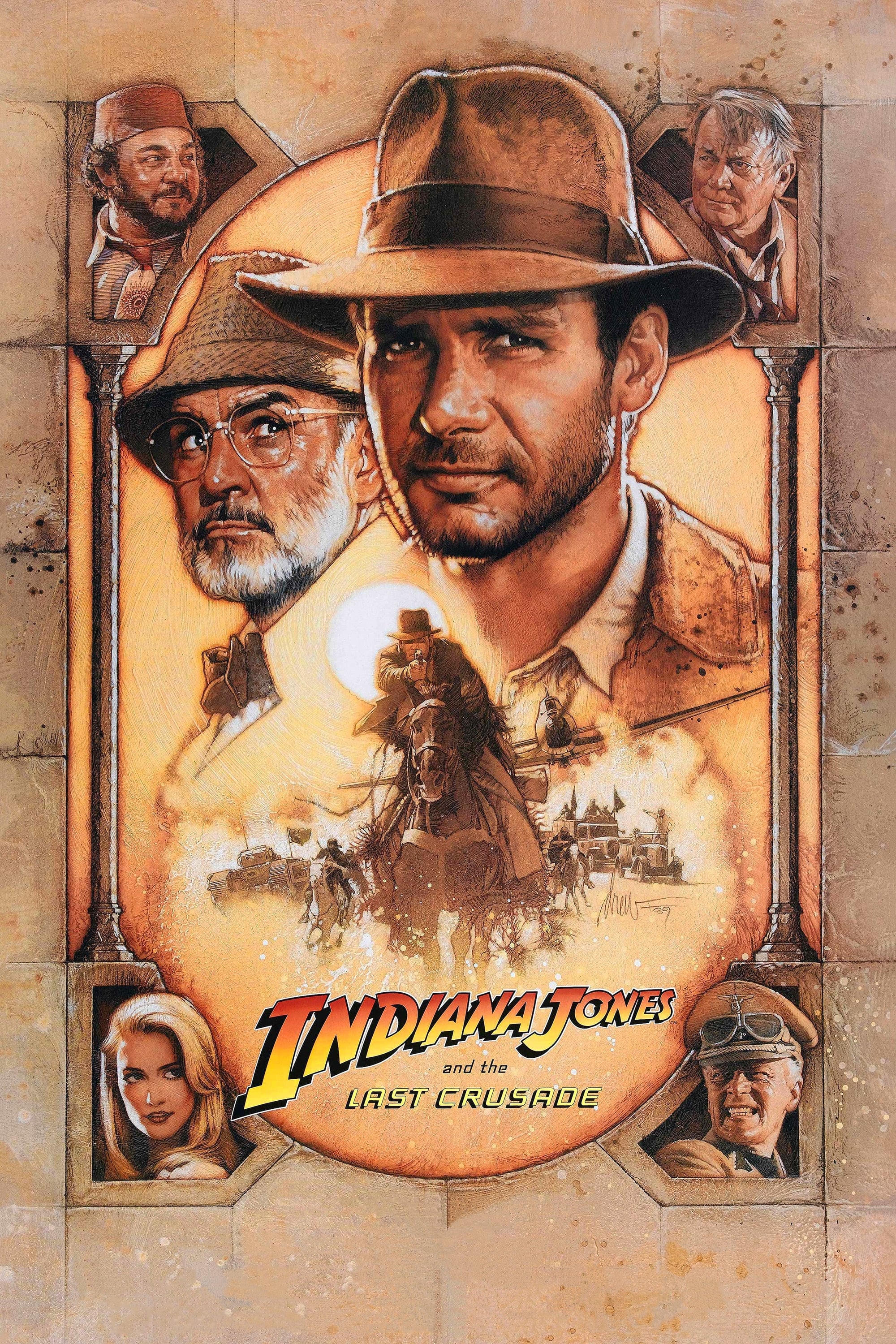
Indiana Jones and the Last Crusade poster

Indiana Jones and the Last Crusade

127 minutes

Cast

Selected cast credits · Film reference

Harrison Ford Indiana Jones
Sean Connery Professor Henry Jones
Denholm Elliott Marcus Brody
Julian Glover Walter Donovan
River Phoenix Young Indy
Robert Eddison Grail Knight
Richard Young Fedora
Alexei Sayle Sultan
Alex Hyde-White Young Henry
Paul Maxwell Panama Hat
Isla Blair Mrs. Donovan
J.J. Hardy Herman
Bradley Gregg Roscoe
Jeff O'Haco Half Breed
Vince Deadrick Sr. Rough Rider
Marc Miles Sheriff
Ted Grossman Deputy Sheriff
Tim Hiser Young Panama Hat
Larry Sanders Scout Master
Will Miles Scout #1
David Murray Scout #2
Frederick Jaeger World War One Ace
Jerry Harte Professor Stanton
Billy J. Mitchell Dr. Mulbray
Martin Gordon Man at Hitler Rally
Paul Humpoletz German Officer at Hitler Rally
Tom Branch Hatay Soldier in Temple
Graeme Crowther Zeppelin Crewman
Luke Hanson Principal SS Officer at Castle
Chris Jenkinson Officer at Castle
Nicola Scott Female Officer at Castle
Louis Sheldon Young Officer at Castle
Stefan Kalipha Hatay Tank Gunner
Peter Pacey Hatay Tank Driver
Pat Roach Gestapo
Suzanne Roquette Film Director
George Malpas Man on Zeppelin
Julie Eccles Irene
Nina Armstrong Flower Girl
Vic Armstrong German Soldier (uncredited)
Dickey Beer German Agent (uncredited)
Jack Carter SS Soldier (uncredited)
Graham Cole Henchman (uncredited)
Bert Crome Zeppelin Passenger (uncredited)
Peter Diamond German Soldier (uncredited)
Hugh Elton Zeppelin Passenger (uncredited)
Albert Evansky Librarian (uncredited)
Norman Gay Zeppelin Passenger (uncredited)
Nick Gillard Tank Crewman Hit by Periscope (uncredited)
Martin Grace German Soldier (uncredited)
Paul Heasman Castle Brunwald Officer (uncredited)
Colin Hunt German Officer (uncredited)
Ronald Lacey Gestapo (uncredited)
Derek Lyons German Soldier (uncredited)
Paul Markham Airport Passenger SA Officer (uncredited)
Wayne Michaels German Agent (uncredited)
Orla Pederson Gestapo (uncredited)
Lee Richards Zeppelin Passenger (uncredited)
Michael Sheard Adolf Hitler (uncredited)
Lee Sheward Radio Op (uncredited)
Tip Tipping Tank Crewman (uncredited)
Chris Webb Castle Brunwald Radio Officer (uncredited)

Indiana Jones and the Last Crusade | The Rewatchables

Explore episodeClose episode

Half-Assed Internet Research

Spielberg interviews; abandoned scripts; casting and rewrites; box office; stunts; costumes; rats; Eddison; Stoppard

In the discussion (25)
Approx. transcript time · 00:03:02Read transcript
  • Spielberg and Lucas reportedly made a handshake commitment to three Indiana Jones films.
  • In a 1989 Premiere interview Spielberg criticized Temple of Doom as too dark and impersonal and described the next film as an apology.
  • Spielberg’s Premiere remarks show growing willingness to attempt material unlike his established films, using Raging Bull as the example.
  • Spielberg was considering Big and spent five months on Rain Man before Last Crusade, creating a major career counterfactual.
  • Spielberg said overseeing Amblin films such as Gremlins, Back to the Future, Who Framed Roger Rabbit, The Money Pit and Amazing Stories reduced his own directing output.
  • Spielberg’s Premiere interview praises Casualties of War and Scorsese’s risk-taking while worrying that everyone is taking risks except him.
  • Lucas’s early Monkey King treatment and Columbus script included a Nazi bar owner, undead combat and deadly human chess; concerns about depicting African people helped end that direction.
  • Connery reportedly reshaped a more elderly, crotchety father into a roaming scholar with more vitality.
  • The reported budget is $48 million and worldwide gross first $472.2 million, then approximately $450 million; it is described as the worldwide annual leader.
  • The film won sound-effects editing and received other Oscar nominations.
  • The Siskel and Ebert episode also covered Miracle Mile, Pink Cadillac and Road House; both rejected Road House, and Siskel rejected Last Crusade as too familiar.
  • Ford coached Phoenix’s gestures and mannerisms and recommended him after The Mosquito Coast.
  • The adventurer in the opening was reportedly intended as Abner Ravenwood, Marion’s father and Indy’s alternative mentor; making that explicit would strengthen the origin.
  • The stated filming ages are Ford 46, Connery 58 and Doody 21.
  • Brody was reportedly made much goofier than in the first film, despite Elliott’s acting stature.
  • The Young Indiana Jones television series began in 1992 and reportedly sought Phoenix, who declined.
  • The knight’s actor, Robert Eddison, is described as a distinguished stage performer returning to screen after a 1948 appearance; this is a reported claim.
  • Ford performed many stunts and reportedly impressed stunt professionals enough to imagine an alternate stunt career.
  • Elliott reportedly had AIDS and was ill during production; his 1992 death is recalled.
  • Many Nazi uniforms were reportedly authentic items found in Germany.
  • Rats were bred to avoid disease, with conflicting counts of 2,000 and 7,000 acknowledged.
  • A Jackson set visit with a child is recounted through claims from Leaving Neverland, including meeting Ford and trying the whip; these remain reported documentary allegations.
  • The reported body count is 50, including 13 by Indy, above the participants’ initial estimates.
  • Phoenix and Connery both died on Halloween, in 1993 and 2020 respectively, a 27-year gap.
  • Stoppard’s uncredited dialogue contribution is reported, possibly almost all dialogue according to an uncertain remembered Spielberg statement; the father-son exchanges are praised.

Roger Ebert's review

In the discussion (1)
Approx. transcript time · 00:32:01Read transcript
  • Ebert gave 3.5 stars, praising the craft and fun while acknowledging Raiders’ original breakthrough could not be repeated.

Most Rewatchable Scene

Venice brother’s tomb (two choices); Phoenix prologue (one choice)

In the discussion (16)
Approx. transcript time · 00:38:22Read transcript
  • The young-Indy Phoenix prologue is the initial favorite, a miniature star vehicle that could have supported a longer film.
  • Finding the brother’s tomb in Venice, the rats and the wooden-boat chase form another candidate sequence.
  • Indy finding his father establishes the Junior dynamic, followed by Elsa’s betrayal.
  • The floor-on-fire exchange and chair escape are praised for opposite-facing comic delivery.
  • Rotating fireplaces, secret stairs and the motorcycle chase are enjoyed as adventure devices.
  • The tank fight and apparent cliff fall are nominated, with later Fast and Furious imitations noted.
  • Henry being shot turns the quest object into the only way to save his life.
  • The final trials—kneeling, God’s footsteps and the leap of faith—are enjoyed.
  • The Nazi collaborator drinking from the wrong cup and rapidly aging is a highlight.
  • Elsa’s fatal reach and Henry finally addressing his son as Indy deliver the emotional resolution.
  • The first fifteen and final twenty minutes are considered strongest, with the castle sequence another favorite.
  • Throwing a man from the blimp onto luggage is an excellent sight gag.
  • Henry accidentally shooting off the plane’s tail and pretending enemy fire caused it is another comic highlight.
  • Two final preferences select finding the brother’s tomb: breaking the floor, X marking the spot and the Ark callback combine essential Indy pleasures.
  • The Phoenix prologue is the remaining final choice because it immediately attracts a repeat viewer.
  • The belatedly recalled joke contrasts Indy’s extravagant claims about Brody’s abilities with Brody helplessly seeking an English speaker.

Apex Mountain

Doody; Ford’s second peak, qualified; Grail’s second peak, disputed; Cross of Coronado, joking

In the discussion (13)
Approx. transcript time · 00:40:36Read transcript
  • Crucifixes are rejected as a general peak against Christ and The Exorcist, while the Cross of Coronado receives a narrowly qualified joke claim.
  • Ford is not at his overall peak but this belongs to a second career peak.
  • The Grail is a joking second peak after the crucifixion; preference between this film and Monty Python’s version remains split.
  • Snakes lose to Anaconda for Apex.
  • Rats are a possible Apex, with First Blood competing.
  • Connery is rejected for Apex.
  • Spielberg is rejected for Apex.
  • Lucas is rejected for Apex.
  • Doody receives yes.
  • Zeppelins prompt conflicting reactions and alternatives of Black Sunday and Led Zeppelin.
  • Rolling severed heads are rejected, with Eight Heads in a Duffel Bag proposed as competition.
  • Nazi stooges lose to Raiders’ Toht.
  • Donovan’s midday black-tie party is considered second to the Wolf’s Pulp Fiction gathering.

Picking Nits

Loose bindings and lighter; trusting Elsa; Grail’s geographic limits

In the discussion (3)
Approx. transcript time · 00:44:11Read transcript
  • Loose bindings and leaving prisoners a lighter make the chair escape too easy; tipping the chair is another possible escape method.
  • Indy should have been more suspicious of Elsa rather than blinded by attraction.
  • The Grail’s geographic limits undermine its danger and usefulness: leaving removes eternal life, raising why it needs guarding at all; the rule appears designed to avoid an immortal father.

What’s Aged the Worst?

Plane effects; age gap; Scottish accent, disputed; pants anecdote; layovers and maps; fistfights; Grail guardians

In the discussion (8)
Approx. transcript time · 00:48:34Read transcript
  • The plane sequence’s effects look like two actors on a soundstage, though a defender still prefers them to modern effects.
  • Indy’s accent is criticized, then corrected from Irish to Scottish and defended as an intentional joke.
  • The twelve-year father-son actor age gap and effects are recalled as weaknesses.
  • The reported habit of Connery removing his tweed pants off-camera was treated as funny then but would meet a different reaction now.
  • The many layovers on the Venice flight make 1930s air travel look arduous.
  • The red-line map inserts feel less sophisticated than the surrounding high-end filmmaking.
  • Long fistfights feel harder to revisit after John Wick 4.
  • The Grail-protecting order’s willingness to die for an object they have never seen strains belief; its defenders compare the mythology with other action worlds and emphasize preventing misuse.

The Stephen A. Smith Hottest Take Award

More Indy adventures; full Phoenix prequel; blimp travel revival, disputed

In the discussion (3)
Approx. transcript time · 00:49:30Read transcript
  • The series could have produced adventures every two years, perhaps fifteen films, instead of treating the material as exhausted.
  • Blimps should return as a relaxed way to travel; voyage length, speed and fire risks draw strong objections.
  • A full Phoenix prequel in 1989, with this film delayed or replacing Temple of Doom, is proposed as a missed opportunity.

What’s Aged the Best?

Grail guardians; Nazis; shared lover, qualified; stakes; Hitler autograph; Scottish accent; mythology; Glover

In the discussion (8)
Approx. transcript time · 00:51:42Read transcript
  • The secret Grail-protecting order is an appealing adventure concept.
  • Nazis remain ideal villains, with their leader appearing and the familiar expression of hatred enjoyed.
  • Father and son both having slept with Elsa is admired as a bold 1989 choice, then complicated by the actors’ age differences.
  • The warning that Nazi possession of the Grail would unleash evil sets up the stakes effectively, though the claim is teasingly questioned.
  • Hitler unexpectedly autographing the diary is a smart suspenseful joke.
  • Ford’s fake Scottish accent before meeting Connery is enjoyed.
  • The Chronicles of St. Anselm, Grail brotherhood and Templar references create interesting mythology to investigate.
  • Glover’s convincing villain turn and long screen career hold up.
In the discussion (4)
Approx. transcript time · 00:58:52Read transcript
  • The blimp restaurant is the location choice.
  • The blimp restaurant receives another choice.
  • An initially uncertain father-son conversation location is discussed without resolution.
  • The Venice square where Indy emerges from a manhole among outdoor café tables is admired.

Is There a Better Title for This Movie?

Holy Grail; His Dad; Junior and Senior; The One with Sean Connery

In the discussion (4)
Approx. transcript time · 01:11:11Read transcript
  • Indiana Jones and the Holy Grail is proposed; avoiding an explicitly Christian title is one suggested reason it was not used.
  • Indiana Jones and His Dad is a joking alternative title.
  • Indiana Junior and Senior is another joking title.
  • The One with Sean Connery is another joking title.

Casting What-Ifs

Peck or Pertwee as father; Redman as Elsa; Olivier as knight

In the discussion (4)
Approx. transcript time · 01:16:14Read transcript
  • Gregory Peck was reportedly a backup father choice if Connery declined.
  • Jon Pertwee was another reported backup father choice.
  • Amanda Redman reportedly declined Elsa because of a fear of rats.
  • Olivier was reportedly considered for the Grail knight but died.

Best Race Horse Name from This Movie

Crusade; Last Crusade; Cup of Christ; Zeppelin Rising; X Marks the Spot

In the discussion (5)
Approx. transcript time · 01:27:06Read transcript
  • Crusade is a racehorse-name candidate.
  • Last Crusade is another racehorse-name candidate.
  • Cup of Christ is proposed, provoking a resurrection joke.
  • Zeppelin Rising receives agreement.
  • X Marks the Spot is a late choice.

Sequel, Prequel, Limited Series, or All-Black Remake

Most options already used; no all-Black cast version

In the discussion (1)
Approx. transcript time · 01:29:51Read transcript
  • The franchise has already covered most options except an all-Black cast; chronological viewing order is corrected to Temple of Doom, Raiders, Last Crusade, Crystal Skull and Dial of Destiny.

Just One Oscar

Sean Connery, supporting actor

In the discussion (1)
Approx. transcript time · 01:31:18Read transcript
  • Connery for supporting actor receives agreement despite his recent Untouchables win.

Probably Unanswerable Questions

Grail as performance enhancement; Ford’s screen-punching record

In the discussion (2)
Approx. transcript time · 01:33:38Read transcript
  • The Grail’s healing is jokingly compared with performance-enhancing drugs.
  • Ford may have punched more people on screen than any ordinary American-style hero, with martial artists and boxers excluded from the comparison.

The Coach Finstock Award for Best Life Lesson

Chase belief, not prizes; pause before choosing a cup

In the discussion (2)
Approx. transcript time · 01:37:57Read transcript
  • Chase what you believe in rather than treating the Grail merely as a prize; Elsa’s motives remain debated.
  • After a lifetime searching for the Grail, pause to identify the right cup instead of immediately trusting Elsa.

Producer review

Adoration for film and Ford; trilogy continuity; Grail works within the film

In the discussion (2)
Approx. transcript time · 01:40:44Read transcript
  • The invited review adores the film, names Raiders as a favorite and Ford as an all-time favorite, and values directors maintaining a trilogy.
  • The invited final Grail response separates skepticism about religion from accepting the device within the movie.

More from the conversation

The opening contrasts anxiety about theatrical movie performance with ongoing television conversation after Succession, including The Idol.
Approx. transcript time · 00:01:08Read transcript
Temple of Doom’s reputation has fluctuated through criticism and revival; its unusually mean spirit helps explain Spielberg’s desire to lighten the third film.
Approx. transcript time · 00:03:02Read transcript
Last Crusade is framed as an apparent endpoint to Spielberg’s 1980 s blockbuster dominance before an unexpectedly rich later career.
Approx. transcript time · 00:04:49Read transcript
After The Color Purple and Empire of the Sun, the film offers pleasure, humor and heart; Raiders remains the best but Last Crusade is a personal favorite.
Approx. transcript time · 00:05:50Read transcript
The larger tank-and-explosion action anticipates the visual scale of later films such as War of the Worlds and Minority Report.
Approx. transcript time · 00:06:27Read transcript
The post-E.T. period combines Amblin producing with a search for a more adult directorial identity.
Approx. transcript time · 00:06:45Read transcript
Spielberg ultimately refuses to choose between blockbuster play and serious adult work, pairing Jurassic Park with Schindler’s List and continuing through AI, Minority Report, Amistad and Munich.
Approx. transcript time · 00:08:45Read transcript
A behind-the-scenes water-shoot joke recalls Jaws while showing Spielberg still as a working filmmaker rather than a distant cultural institution.
Approx. transcript time · 00:09:46Read transcript
Spielberg’s claim that Rain Man was emotionally distancing is challenged, especially through the head-touching scene.
Approx. transcript time · 00:10:20Read transcript
Always and Hook complicate the idea of an uninterrupted post-E.T. winning streak before the exceptional 1993 reset.
Approx. transcript time · 00:11:12Read transcript
Hook’s production journalism and Roberts’s celebrity scrutiny would make an interesting future episode.
Approx. transcript time · 00:11:50Read transcript
Spielberg’s producing fingerprints are considered essential to enduring films even without his writing or directing them.
Approx. transcript time · 00:12:17Read transcript
Spielberg’s admiration for De Palma and Scorsese is interpreted through their older-brother status and his anxiety about taking thematic risks.
Approx. transcript time · 00:13:03Read transcript
Last Crusade becomes a revealing personal Spielberg film when viewed after The Fabelmans: circus-train imagery, a withholding intellectual father, complicated family affection and horizon-line endings connect them.
Approx. transcript time · 00:14:24Read transcript
The Grail works because Spielberg treats it as a father-son metaphor while Lucas supplies genuine interest in myth and the quest.
Approx. transcript time · 00:16:38Read transcript
Connery’s late-1980 s run includes The Untouchables, The Presidio, Last Crusade, The Hunt for Red October and The Russia House; adding him is considered the film’s decisive advantage.
Approx. transcript time · 00:18:43Read transcript
The father-son chemistry is so good that more quiet scenes together, even at the expense of early material, are desired.
Approx. transcript time · 00:19:25Read transcript
Ford’s second prime is illustrated by Working Girl, Last Crusade, Presumed Innocent, Regarding Henry, Patriot Games, The Fugitive and Clear and Present Danger.
Approx. transcript time · 00:20:59Read transcript
Regarding Henry, Rain Man and Awakenings are compared as films in which forceful stars play psychologically or neurologically diminished characters.
Approx. transcript time · 00:21:16Read transcript
Ford may outrank Hanks and Cruise in lasting films, with Star Wars and Raiders decisive; even The Mosquito Coast and Regarding Henry remain watchable.
Approx. transcript time · 00:22:04Read transcript
Behind-the-scenes footage of Ford traveling by boat in Venice is admired as an extraordinary image of movie-star cool.
Approx. transcript time · 00:22:39Read transcript
The film explains Indy’s iconography while also seeming to explain Ford’s own screen identity.
Approx. transcript time · 00:23:08Read transcript
Ford combines everyday athletic credibility, charisma and believable scholarship; Costner is the closest comparable star, with imagined exchanges between The Fugitive, No Way Out and Indiana Jones roles.
Approx. transcript time · 00:23:22Read transcript
Disliking Ford is treated as almost unimaginable because his roles appeal across generations and tastes.
Approx. transcript time · 00:24:50Read transcript
Ford’s late career alternates acceptance of older supporting roles with revivals of Star Wars, Blade Runner and Indiana Jones, benefiting from Hollywood nostalgia.
Approx. transcript time · 00:25:46Read transcript
Ford’s delighted reaction to David Blaine’s magic prompts memories of Foxx, his daughter, Harrelson and West appearing in the special.
Approx. transcript time · 00:26:44Read transcript
Spielberg’s unusually candid criticism of 1988 films is contrasted with modern reluctance to criticize friends’ work.
Approx. transcript time · 00:28:33Read transcript
The 1989 box-office fifteen are enumerated: Batman, Last Crusade, Dead Poets Society, Lethal Weapon 2, Look Who’s Talking, Honey I Shrunk the Kids, Back to the Future Part II, Ghostbusters II, Driving Miss Daisy, Parenthood, When Harry Met Sally, The War of the Roses, The Little Mermaid, Steel Magnolias and Christmas Vacation.
Approx. transcript time · 00:29:35Read transcript
The original-screenplay field reveals a strong independent turn: When Harry Met Sally, Sex, Lies, and Videotape, Do the Right Thing, Crimes and Misdemeanors and Dead Poets Society.
Approx. transcript time · 00:30:11Read transcript
A first viewing with a devoted Ford fan was entirely satisfying, though Raiders has received more repeat viewings.
Approx. transcript time · 00:30:57Read transcript
The sequel partly replays Raiders’ successful structure, defended as inherent in the adventure-serial format.
Approx. transcript time · 00:31:32Read transcript
Back to the Future’s sports-almanac plot prompts a personal gambling-origin joke.
Approx. transcript time · 00:34:26Read transcript
A same-year sequel inventory includes Star Trek V, The Karate Kid Part III, Naked Gun, Nightmare on Elm Street, Friday the 13 th Part VIII, Halloween 5, Police Academy 6, Hellraiser II and Another 48 Hrs.; chronology and installment numbers are conversationally uncertain rather than independently confirmed.
Approx. transcript time · 00:35:11Read transcript
Police Academy and Weekend at Bernie’s memories lead to discussion of vanished spoof franchises and a younger viewer rejecting Airplane! despite its defenders.
Approx. transcript time · 00:35:56Read transcript
Phoenix is considered a plausible heir to Ford’s blend of approachability, scholarship and toughness, with DiCaprio later occupying some of that space.
Approx. transcript time · 00:38:59Read transcript
Doody’s Irish identity is a surprise because her Austrian performance is convincing; the betrayal prompts comparison with other recent episodes.
Approx. transcript time · 00:42:45Read transcript
The genre’s elaborate captivity is compared with Scott Evil’s sensible suggestion to kill the prisoner immediately.
Approx. transcript time · 00:44:42Read transcript
More possible quests are imagined around Egypt, China, Jerusalem and the Seven Wonders, with Ford’s physical stunt burden offered as a reason not to keep making sequels.
Approx. transcript time · 00:49:51Read transcript
The Grail’s historical mythology divides opinion: skepticism about miraculous powers meets childhood Arthurian enthusiasm and acceptance that it works within the film.
Approx. transcript time · 00:51:54Read transcript
The Grail is compared with an NBA championship, leading to preference for the old cup-shaped trophy and a Stanley Cup tangent.
Approx. transcript time · 00:53:39Read transcript
Blimp travel inspires a desired return to socializing during a journey, but slow speeds and disaster risk undermine the fantasy; an announced 2026 voyage business is discussed as episode-era research.
Approx. transcript time · 00:58:52Read transcript
The blimp argument continues through Hindenburg, Led Zeppelin’s album cover, uncertain speed figures, a floating film festival and comparison with post-Titanic passenger ships.
Approx. transcript time · 01:00:42Read transcript
The practical desire is for aircraft restaurants and space to socialize, leading to double-decker planes, Concorde and Midnight Run’s staircase-and-phone fantasy.
Approx. transcript time · 01:02:53Read transcript
Marion’s toughness and Karen Allen’s presence are thought to elevate the films; her absence weakens the sequels’ female roles.
Approx. transcript time · 01:05:14Read transcript
The Indiana Jones timeline is corrected: Temple of Doom precedes Raiders, while Last Crusade follows it.
Approx. transcript time · 01:14:45Read transcript
A legacy theme connects the father, later son and later goddaughter across the series; a contemporary Young Indiana Jones show might receive major streaming support.
Approx. transcript time · 01:15:32Read transcript
The films’ snakes, bugs and rats prompt personal fear comparisons; Spielberg’s subsequent production of Arachnophobia is noted.
Approx. transcript time · 01:19:48Read transcript
Fear of dark flooded caves is contrasted with Indy’s long experience of danger.
Approx. transcript time · 01:23:33Read transcript
Midday black-tie gatherings prompt personal Vegas and awards-luncheon anecdotes.
Approx. transcript time · 01:25:31Read transcript
Ford’s flirting is admired as unusually charming without becoming creepy.
Approx. transcript time · 01:27:47Read transcript
The film’s exclusion from major Oscars is criticized as genre-and-sequel bias despite its quality.
Approx. transcript time · 01:31:36Read transcript
The 1989 Oscars discussion objects to Driving Miss Daisy beating other films, Pfeiffer losing to Tandy, Bridges’s omission, Lee losing screenplay to Dead Poets Society and missing directing recognition alongside Soderbergh.
Approx. transcript time · 01:32:11Read transcript
The directing field is recalled as Sheridan for My Left Foot, Branagh for Henry V, Weir for Dead Poets Society, Allen for Crimes and Misdemeanors and winner Stone for Born on the Fourth of July; Lee could have fit despite the strong group.
Approx. transcript time · 01:32:52Read transcript
Harrison Ford’s career-long reliance on a believable right cross prompts comparisons with martial-arts stars, boxing and wrestling moves.
Approx. transcript time · 01:33:57Read transcript
A request for directors to stay through trilogies is qualified by Nolan, Jackson, Soderbergh, Coppola and Stahelski examples, followed by holiday Hobbit-viewing memories.
Approx. transcript time · 01:40:44Read transcript
Ford’s humor is compared with Keaton and Chaplin; his ordinary-person silliness is a central appeal.
Approx. transcript time · 01:41:56Read transcript
What Lies Beneath exploits Ford’s heroic reputation to make villainy surprising, contrasted with the assumed innocence of his Fugitive and Presumed Innocent characters.
Approx. transcript time · 01:42:35Read transcript
Six Days Seven Nights is defended as an overlooked action comedy whose publicity overshadowed it; K-19, Random Hearts and Morning Glory are revisited, while Sabrina is called unnecessary.
Approx. transcript time · 01:43:11Read transcript
Regarding Henry’s injury-to-redemption premise is revisited as bizarre but emotionally persuasive to a child viewer.
Approx. transcript time · 01:43:59Read transcript
The apparent decline of adventure films is attributed to a more familiar world, failed Raiders imitators and superhero competition; Uncharted, Jumanji, the Chamberlain adventure and The Golden Child are discussed.
Approx. transcript time · 01:44:16Read transcript
Adventure is distinguished from action by puzzle-solving and historical mystery, with archaeology making travel to ancient sites more natural than spy or criminal plots.
Approx. transcript time · 01:45:08Read transcript
Romancing the Stone is recommended as a successful comparable adventure, with Douglas and Turner’s stardom and its sequel recalled.
Approx. transcript time · 01:45:55Read transcript
The Da Vinci Code series and The Lost City are later attempts, but the latter’s overt comedy contrasts with Indy’s dry physical humor.
Approx. transcript time · 01:46:06Read transcript
A joke adventure to recover missing Grantland merchandise closes the discussion.
Approx. transcript time · 01:46:44Read transcript
Craig Horlbeck is explicitly credited as producer.
Approx. transcript time · 01:47:35Read transcript