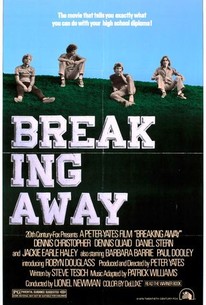
Steve Tesich is the first winner choice because of the Academy Award.
Quaid is considered through the category’s career-benefit definition but explicitly rejected; Indiana is proposed for the film’s portrait of the state.
Peter Yates is the settled choice for a film that strengthens his place among major directors; Bullitt and Breaking Away are described as his enduring signature works.
Indiana receives renewed support as the subject of a love letter, and Barbara Barrie is proposed for the performance and long subsequent career.
The final recap establishes a three-way split: Peter Yates, Barbara Barrie and the state of Indiana. Tesich’s earlier nomination is not retained as a final choice.
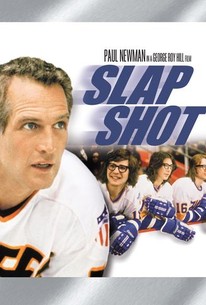
Nancy Dowd spent time with her brother's Johnstown Jets team and recorded locker-room conversations for the dialogue.
The real team's Hanson brothers led the team in penalty minutes; Dave Killer Carlson draws on Dave Killer Hanson.
The cited budget is $6 million and the gross $28 million.
The colloquial Quebec French dub helped make the film a major favorite among French-speaking Canadians.
Rinks included Cambria County War Memorial, Starr Rink at Colgate, Utica Memorial Auditorium and Onondaga County War Memorial as Hyannisport.
Reggie was based on Long Island Ducks player-coach John Brophy, whose name was reused for the drunken opposing center.
The Jets' later history included a flood interruption, a short return and closure; the Carlson brothers were born close together and led the team in penalty minutes.
Jim Carr's toupee was modeled on Johnstown sportscaster Bill Wilson's wig.
The Carlson brothers said extras threw real punches during the crowd-fight shoot. Summer filming required pretending it was cold in heavy clothing.
Oglethorpe drew on Goldie Goldthorpe, credited with 25 fighting majors before Christmas in one season.
Real crowd fights and a pregame fight triggered by opponents wearing novelty glasses supplied incidents for the film.
Nancy Dowd's subsequent work included Coming Home and uncredited work on Straight Time, North Dallas Forty and Ordinary People, plus SNL; her brother played Oglethorpe.
No written Ebert review was located. Reports say both television critics initially disliked it and later reconsidered; Siskel's reversal is described more confidently. No star score is stated.
Jim Carr's opening interview with the goalie, including the microphone adjustment and the explanation of penalty-box shame.
The opening crowd insults, national anthem and drunk player immediately establish the team's world.
Reggie meets the Hansons, finds their toy cars and complains to Joe, who tells the Eddie Shore story.
The players watch television together in the hotel while the goalie demands a trade and Hanrahan's wife calls.
Reggie's escalating taunts provoke Hanrahan; the goalkeeper's appearance and Newman's reactions make the sequence especially funny.
Reggie turns Dave into Killer, then unleashes the Hansons. This is called the most rewatchable stretch and one of the great sports-film sequences.
The Hansons' attack includes the puck hitting the organist, his later protective helmet and a brother diving toward an opponent behind the net.
The pregame brawl and the crowd fight after the keys hit a Hanson are additional choices.
McCracken and Carlson's stick fight, Ned punching Reggie, and Reggie's confrontation with Jim Carr are nominated.
Ned's hostile interview answers about his father and trouble at home.
The Syracuse player introductions delight the hosts, especially their bizarre criminal histories and Jim Carr's delivery.
Further nominations include the final bench-clearing brawl, Reggie and Suzanne's intimate conversation, Lily's scenes and Reggie's confrontation with owner Anita.
The unanimous choice is the Hansons being unleashed.
The hockey footage's wide shots and close action look remarkably convincing; helmetless players help.
The arena's plain War Memorial name is preferred to corporate naming rights.
The scrappy team versus ownership story remains a strong sports trope, and the cast is full of recognizable emerging actors.
Newman's fur-trimmed leather jacket and brown leather leisure suit.
Awkward local sports interviews and Crouse with Newman before The Verdict.
Francine's distinctly 1970 s appearance, and the fashion-show threat to expose oneself followed by offscreen screams.
The Deep Throat and Meatball double-feature marquee.
Reggie's unbothered reply to McCracken's sexual insult.
The obnoxiously horny teammate is an enduring type, though his conduct would now violate workplace rules.
The talented player who refuses to fight, compared with real hockey stars and their enforcers.
The mass mooning at Hyannisport.
Melinda Dillon's nude scene is recalled as an early formative movie experience.
The unranked early movie-nudity roster includes Melinda Dillon, Lacey Underall in Caddyshack, the Shining bathtub woman, the Animal House women, Airplane’s faceless topless woman, Phoebe Cates, Jamie Lee Curtis, Linda Hamilton, Apollonia in Purple Rain, Joyce Heiser (ASR) in Just One of the Guys, Apollonia Corleone and Total Recall’s three-breasted woman. The Shining room number is corrected from 217 to 237.
Rhiannon accompanies Lily arriving in the blue van.
Right Back Where We Started From is the alternative, preferably its first appearance; repeated use almost turns it into a theme rather than a needle drop.
One host has no weak link and explicitly rejects Lily. Another offers the striptease and sudden forfeit.
The striptease is defended as uniquely inspired, but the forfeit denies a satisfying sports victory and makes little sense when McCracken could simply be ejected.
Displaying discussions 4153 - 4164 of 7108 in total