Myers reportedly declined a third Wayne's World to develop Austin Powers, prompting renewed interest in the Myers–Carvey split.
The reported origin story has The Look of Love on the car radio prompting Myers to use a swinging-English character voice for his wife, then write the film in three weeks.
The original film's MTV promotional special is recalled as a strange artifact of extensive movie-centered television promotion before internet marketing became dominant.
Fat Bastard's daily makeup time is corrected from the circulated seven hours to two and a half.
Heather Graham reportedly appeared in a much longer Goldmember cut before her scenes were removed; her gold-painted Details cover is recalled, with speculative connection to her casting.
Demi Moore's executive-producer credit on all three films prompts uncertainty about her involvement; the Todd sisters' producing relationships are offered as a possible explanation.
Jay Roach is affirmed for Apex, with the film's success launching a substantial comedy career and later political films and television work.
Mike Myers is emphatically affirmed for Apex based on his post-film power, and Verne Troyer is affirmed without hesitation.
Heather Graham is affirmed for Apex, with the film's commercial scale, Bowfinger and magazine prominence outweighing Boogie Nights' prestige.
Dr. Evil impressions are proposed for Apex rather than assuming audiences recognized Lorne Michaels; the revived VW Beetle gets only a maybe, and mailbags are rejected.
Random-song soundtracks receive an affirmative Apex response; Lenny Kravitz is tentatively proposed through American Woman and its Graham video.
Rob Lowe's comic reinvention, resilience and concurrent West Wing role prompt a late Apex reconsideration, but his 1980 s leading-man period is preferred for greater power.
Vanessa being a Fembot throughout the previous film is a nitpick, but the sequel's willingness to dismiss logic and wink at the camera is praised; time-travel handwaving is compared to Avengers: Endgame.
Number Two returning after apparently dying in the first film's fire pit is questioned, while the lack of required logic makes nitpicking difficult.
Whether mojo inspired Viagra is corrected by checking the drug's 1998 approval, preceding the sequel; mojo as a Viagra proxy is then proposed as an inference.
The ending's claim that Austin always had mojo conflicts with his earlier inability to perform after its theft; licking the spilled mojo off the floor is proposed as an alternative.
The two Austins ending is enjoyed, including its implied sexual encounter with Felicity.
Mike Myers receives the winner choice, with Heather Graham a personal sentimental alternative before the answer returns to Myers.
Myers is reaffirmed as winner; whether this was his last great moment divides the discussion between comedy specifically and Shrek's larger cultural importance.
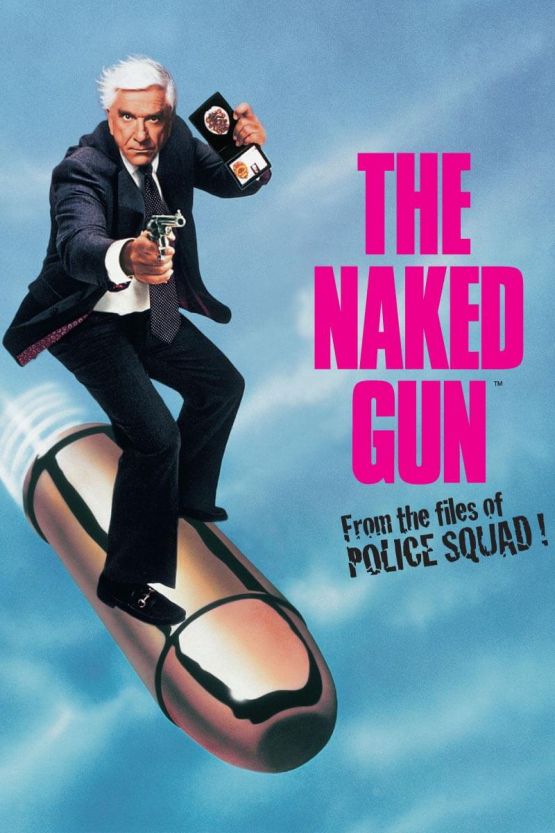
The short-lived Police Squad series supplied recycled jokes and the film’s subtitle; its six-episode run, early cancellation and Nielsen Emmy nomination are recalled.
The film reportedly cost12million, grossed154million and ranked eighth in1988, leading to two sequels.
A reported Cameron anecdote says Simpson was considered too likable to play the Terminator’s ruthless killer.
A Spy article reportedly traced borrowed or parodied material to Get Smart, Pink Panther, Telefon and Farewell My Lovely.
The real queen reportedly later attended an Orioles-Athletics game and met Jackson in the dugout.
The film, A Fish Called Wanda and Who Framed Roger Rabbit all reportedly used steamroller deaths in1988.
A dancer credited as Johnny Disco reportedly performed Drebin’s umpire dancing.
Ludwig feeding fish reportedly parallels Game of Death; stabbing the fish with a pen is not claimed part of the original.
The desired Brewers became the Mariners; the Dodgers allegedly rejected team involvement but allowed the stadium. Exterior, establishing and action shots are identified as Angels, Wrigley and Dodger venues.