Categories & segments

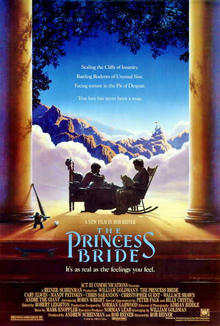
The Princess Bride poster
The Princess Bride

Casting What-Ifs

A serialized Renaissance caper; Matthew Goode as Westley; Buttercup unresolved; Wallace Shawn may return

In the discussion (5)
Approx. transcript time · 00:28:36Read transcript
  • The story could expand into ten episodes and further adventures around the Dread Pirate Roberts identity.
  • Former wrestlers and basketball players offer more modern giant options, including Blake Griffin.
  • Buttercup is judged the hardest role because the story depends on a singular combination of beauty and personality.
  • Matthew Good is the direct Wesley choice, provided he remains brunette.
  • Wallace Sean is difficult to replace, so a remake might retain him in a smaller role.
In the discussion (6)
Approx. transcript time · 00:31:52Read transcript
  • Wallace-Shon is removed because his role is an essential part rather than a role-player heat check.
  • Andre the Giant and Mandy Patinkin are also ruled too central.
  • Chris Sarandon wins for playing the biggest prick without worrying about the movie’s wonderful overacting.
  • Billy Crystal and Christopher Guest are explicit eligible alternatives.
  • Christopher Guest has a pivotal but very small final-third role under heavy makeup.
  • The panel says everybody overacts in a wonderful way, while Sarandon fully commits to the villain’s humiliation.
The Princess Bride poster
The Princess Bride

Unintentional Comedy Award

Andre the Giant’s line delivery; Cary Elwes’s heartthrob status

In the discussion (3)
Approx. transcript time · 00:35:10Read transcript
  • The film’s intentional, tongue-in-cheek comedy makes unintentional moments hard to separate.
  • Andre’s hard-to-understand line delivery is funny in a way no other performer could reproduce.
  • Carrie always being a heartthrob is offered as the personal second answer.
The Princess Bride poster
The Princess Bride

Probably Unanswerable Questions

Westley waiting until Buttercup is captured to return, Buttercup failing to recognize him, and whether “iocane” is a cocaine joke

In the discussion (3)
Approx. transcript time · 00:37:05Read transcript
  • Westley’s long absence and decision to return only after Buttercup is endangered are questioned.
  • Buttercup’s inability to recognize Wesley through a simple disguise is called ridiculous but consistent with fairy-tale convention.
  • The name “iocane powder” prompts an unresolved question about a cocaine joke.
The Princess Bride poster
The Princess Bride

The Neil McCauley “A Book about Metals” Award for Best Line from the Movie

The source-limited “My name is Inigo Montoya” introduction

In the discussion (3)
Approx. transcript time · 00:40:13Read transcript
  • The recognizable “My name is Inigo Montoya” introduction wins because its context makes the reference immediate; the full canonical continuation awaits audio verification.
  • “Inconceivable” and “as you wish” are strong alternatives.
  • Mandy Patinkin’s performance is praised as an anchor with the story’s clearest moral arc.
In the discussion (3)
Approx. transcript time · 00:43:47Read transcript
  • Andre the Giant is one winner because the documentary release makes this his week and his presence bridges the film and wrestling.
  • William Goldman and Rob Reiner receive supporting cases for the idea and execution.
  • The other final choice is the performer rendered “Sean,” praised for bringing outsized personality and impeccable delivery to a plot-heavy movie.
Podcast choices
Speaker not identified
Andre the Giant
Speaker not identified
Wallace Shawn
In the discussion (8)
Approx. transcript time · 00:20:12Read transcript
  • Walter and Donny were written for their actors, while the Big Lebowski drew the casting search.
  • Marlon Brando was reportedly the Coens’ dream choice, but his improvisational production style could have disrupted the tightly scripted film.
  • Robert Duvall reportedly disliked the script, Anthony Hopkins did not want to play an American, and Gene Hackman was taking an acting break.
  • A second list reportedly included Mailer, Scott, Falwell, Griffith, Buckley and Borgnine.
  • The panel concludes that Huddleston was the right landing point.
  • Mailer would have been an incredible Jackie Treehorn, rather than necessarily the Big Lebowski.
  • Vidal is considered a perfect possibility.
  • Borgnine would have been fine, though the final Huddleston choice is considered right.
The Big Lebowski poster
The Big Lebowski

Most Rewatchable Scene

“Over the Line” (strongest preference); the first Big Lebowski visit and quieter moments

In the discussion (11)
Approx. transcript time · 00:23:05Read transcript
  • The opening home invasion, rug violation, Bob Dylan credits, and slow-motion bowling are nominated as one immediate entry into the movie’s dream state.
  • Walter threatening Smokey over the line and the Jesus introduction are nominated.
  • The bowling-alley “Chinaman” nomenclature argument and the following Brandt/Big Lebowski introduction are nominated as a connected sequence.
  • The first confrontation between the Dude and the Big Lebowski is praised for balancing loud moral fury against the Dude’s calm confusion.
  • “Over the Line” becomes one participant’s clear choice for its escalation from league rules to an armed threat.
  • The dude’s bathtub is cited as a favored quiet image, though not enough happens to make it a full scene choice.
  • Knox Harrington’s German giggling and the fake apartment bar are nominated.
  • The Dude and the private detective’s brother-Seamus conversation is nominated for its Raymond Chandler syntax.
  • The panel ultimately treats the entire movie as a continuous flow that resists extracting one winner.
  • The Dude’s conversation with the Stranger and the toe discussion in the diner are additional scene nominations.
  • Treehorn’s supposedly important note becoming an obscene doodle is recalled as an especially funny scene; folding it into his pocket makes the gag even better.
The Big Lebowski poster
The Big Lebowski

What’s Aged the Best?

The film’s timelessness itself

In the discussion (6)
Approx. transcript time · 00:31:04Read transcript
  • The dialogue, setting, music and plot still feel fresh, with an influence on later comedies.
  • The Dude and Walter’s grief after Donny’s ashes scene lands with greater emotional force as the viewer ages.
  • The Coens avoid transient gadgets and signifiers, anchoring the movie in Bush-era context while allowing it to float across decades.
  • The movie initially looks like an eighties NBC drama, but deliberate beautiful shots emerge, including the bowling feet.
  • Bowling alleys, Ralphs, apartment courtyards, Redondo, and other Los Angeles locations still look and feel recognizable.
  • Jackie Treehorn’s prediction about electronic erotic media is judged unexpectedly prescient in the era of synthetic celebrity porn and virtual reality.
The Big Lebowski poster
The Big Lebowski

What’s Aged the Worst?

The discussion raises qualified concerns about Jesus and Bunny’s caricatures, alongside changing marijuana culture; Jesus is still considered funny without closer scrutiny.

In the discussion (4)
Approx. transcript time · 00:37:55Read transcript
  • Jesus remains funny when unexamined, but closer scrutiny raises qualified discomfort with the character and the film’s cultural politics.
  • A modern Dude might carry a vape pen, which would remove physical comedy and the romantic outsider quality of his tiny joints.
  • Bunny is confined to a dumb porn performer, trophy wife, and gold digger without interior life, a portrayal made more uncomfortable by Tara Reid’s later public treatment.
  • The already-filmed Going Places spinoff is reportedly intended to explain that Jesus was framed for the accusation.
Displaying discussions 3769 - 3780 of 3876 in total