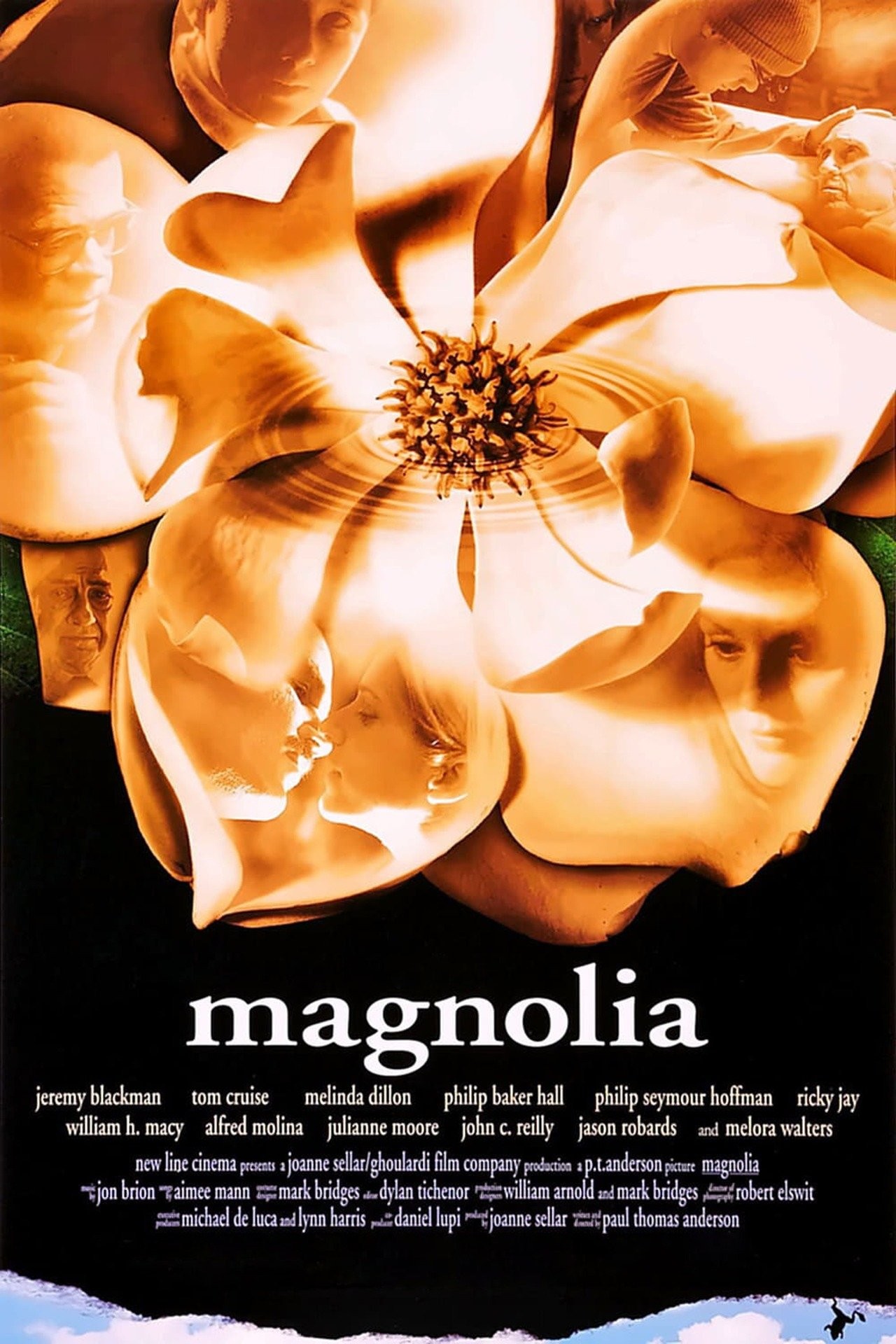
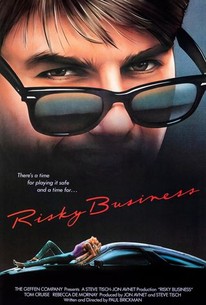
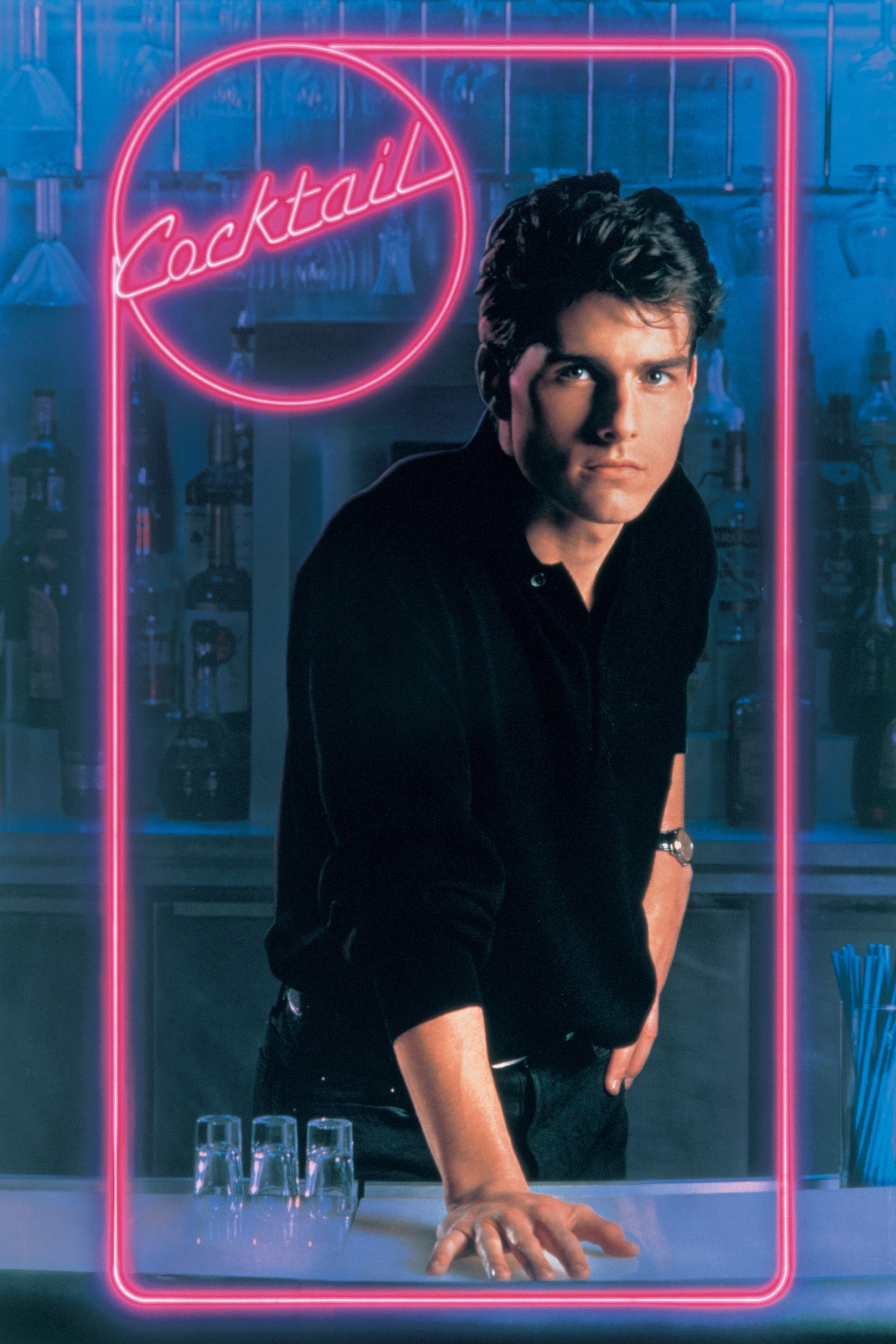
The reported budget is 37 million and gross 48.5 million; Cruise’s presence is thought commercially helpful. — Sean Fennessey
Repeated 8–2 references reportedly invoke Exodus’s frog plague, including the blackjack vignette; elaborate Easter eggs are criticized as unnecessary. — Sean Fennessey
Anderson reportedly asked Cruise to draw on his father’s death for the bedside scene, requiring considerable trust. — Sean Fennessey
The documentary That Moment reportedly shows extensive planning meetings necessary for the complex filming. — Sean Fennessey
A large research collection is deliberately not read in full; the Apple performance-art documentary story is revisited, and Hoffman reportedly said Cruise improvised after refusing to cry, prompting Hoffman’s genuine tears.
Anderson reportedly resisted Cruise-focused marketing and designed the poster and edited the trailer himself, provoking criticism of unchecked control. — Sean Fennessey
Network was reportedly screened for the production team; Anderson’s Quiz Kids Challenge assistant job informed the film. — Sean Fennessey
Reported trivia includes A Day in the Life as a structural model, 190 uses of the profanity and a working seduction-infomercial phone number playing Cruise’s pitch. — Sean Fennessey
More than 7,900 rubber frogs were reportedly used, with others digital; the effects are considered convincing.
The introduction identifies this discussion as the origin of Linda Partridge joining the overacting award name. — Chris Ryan
Julianne Moore’s pharmacy scene prompts renaming the award for Linda Partridge; the intensity is considered overwhelming and unrealistic.
Linda Partridge formally replaces Rubinek in the award name; Cruise is considered but defended through the complete emotional arc, while Bowen remains a contender.
Cruise is emphatically chosen over Hanks, imagined embracing prison training, bodybuilding and shanking; the running category tally becomes 1–1. — Bill Simmons
Cruise wins, with De Mornay and Brickman as silver medalists. A second response gives Cruise the career-based edge but says Brickman wins when considering the moment itself. — Bill Simmons
Eyes Wide Shut; All the Right Moves for a 1983 Cruise pairing; Ferris Bueller's Day Off for a contrasting Chicago teenager who resists adulthood and work.
Cruise is rejected and Brickman affirmed. One host chooses this for high-quality 1980 s teen movies over Fast Times, while another prefers Say Anything. — Bill Simmons
Chicago suburban films leads to a four-film grouping: Home Alone, Ferris Bueller, Risky Business and Thief. — Bill Simmons
Porsche receives a strong case for inspiring a generation's aspirations, but no explicit final yes. — Bill Simmons
Pimps loses to earlier cultural examples; In the Air Tonight loses to Miami Vice; Pantoliano and Pinchot are rejected, while De Mornay's later blockbusters challenge this film. — Bill Simmons
The Drake is considered but other appearances, including My Best Friend's Wedding, prevent a settled answer. — Chris Ryan
Risky Business can be viewed as a prequel to Eyes Wide Shut, with Joel's experience shaping the later sexually curious doctor. — Chris Ryan
Joel Goodson is ranked Cruise's second-best role after Jerry Maguire, ahead of Charlie in Rain Man and Ron in Born on the Fourth of July; unlike familiar action characters, Joel is unique. — Bill Simmons
The opening ten minutes: train credits, dream and poker-table banter about pedaling home to masturbate. — Bill Simmons
Miles's what-the-fuck speech ties risk-taking to freedom, opportunity and business success. — Bill Simmons
The frozen dinner followed by Cruise's Old Time Rock and Roll dance, whose fame now exceeds the movie's. — Bill Simmons
The brief get-off-the-babysitter fantasy, with Ron Dean as the police sergeant. — Bill Simmons
The Porsche chase after leaving the Drake, especially Miles's trig-midterm and killer-pimp line, remembered as a huge theatrical laugh. — Bill Simmons
Miles's throw-up aside and the Porsche slogan payoff cap the chase; Guido tapping the window with a gun abruptly raises the danger.
The Porsche rolling into the lake, with convincingly stoned Cruise and the temporary relief before the dock collapses. — Bill Simmons
Joel's unraveling after the accident and frantic run upstairs to Lana are visually inventive. — Bill Simmons
Joel becomes a pimp, recruiting friends and comparing dating costs with paid sex at the burger joint. — Bill Simmons
The brothel party is clearly staged within the familiar house, then Rutherford's arrival produces another surprise and the University of Illinois punchline. — Bill Simmons
Joel buys his belongings back, including the negotiation over the artsy-fartsy object. — Bill Simmons
The released ending's human-fulfillment line and residual hope are defended, though the original lake-view ending also works. — Bill Simmons
Final preferences include Joel's pimp transformation and street recruitment, plus the car chase and Lana's amused reactions. — Bill Simmons
Craig argues that the dance scene overshadowed a richer movie and would not make his personal top ten scenes; he also finds Joel's dress-shirt, underwear and socks outfit strange. — Craig Horlbeck