
‹ All people

Film credit

Robin Wright

Stats

Episodes featuring their films
4
Movies in this archive
3

Rewatchables episodes featuring Robin Wright’s films

Forrest Gump

1994 film

Bill Simmons · Chris Ryan · Sean Fennessey · Mallory Rubin

Aired February 13, 2024

Forrest Gump

1994 film

Bill Simmons · Sean Fennessey

Aired June 21, 2018

Moneyball

2011 film

Bill Simmons · Chris Ryan

Aired August 7, 2017

Displaying all 4 episodes

Mentioned in discussions

Forrest Gump

Picking Nits

How long Forrest waited at a bus stop six blocks from his destination; what he did from 1970 to 1974 beyond ping pong; the running scene; why Jenny never found a decent man; why Jenny leaves the morning after sleeping with Forrest

In the discussion (8)
Approx. transcript time · 00:48:13Read transcript
  • How long was Forrest at that bus stop? It is plausible he sat there nine hours missing every bus or waiting for one that did not exist, and he cannot read a map because his destination was six blocks away; he had a 70 IQ, so it is not offensive to call him a dummy.
  • What did Forrest do from 1970 to 1974? After the rally and Jenny leaving there is ping pong for the service and travel, then Watergate and Nixon's resignation in late 1974, so the hosts conclude he played ping pong for the United States for years; one would have added another job, but the film is already two hours twenty-five minutes. Forrest throws away the seventies on five years of ping pong and three and a half years of running.
  • Asked to defend the running scene, one host reads it as a moment when you do not know what to do after a breakup and need to physically vent, a micro-metaphor inside the film's bigger metaphor; the jokey parts, the Have a Nice Day shirt and the 'shit happens' bumper sticker, feel like an SNL sketch. The other still calls it terrible with ridiculously on-the-nose music.
  • Why did Jenny never find the right guy at all those protests, say a Georgetown law student who became enamored with her? The armchair-psychologist answer is that her past means she does not know how to make good choices and what she values in a man is not good for her.
  • The biggest nit in the movie: why Jenny leaves the next morning after finally sleeping with Forrest, which is never discussed. It was listed under unanswerable questions but moved here; in a silly, absurd movie it was the one part that did not make sense.
  • Possibilities offered: the night was a disappointment, as she might have expected from their college encounter; or it was a great night and her tendency when happy is to sabotage it; or it is simply poorly written, which is probably the real reason. Forrest's sex life is weird in the film, with the New Year's Eve prostitute and little else, something a sequel might have addressed.
  • Leaving the Medal of Honor on the table right after 'I'm not a smart man but I know what love is' is the meanest thing you could do to the guy, compared to floating a terrified dog, Olivia, the least favorite of three, out into the middle of a pool on a raft, which the other calls the craziest metaphor ever for this movie. It was calculated: she packed, left the medal on the nightstand and called a cab that would take forty minutes in the middle of nowhere in Alabama.
  • Two more theories: she knows Forrest is a dumb loser and tough hang she cannot be around any more, having known him all her life, though Robin Wright is too sympathetic for that to read; or she knows she is pregnant and cannot have a family with him, though then you would leave a month later. There was no protection, probably not Jenny's first time, and Forrest would not have been in control; an extra scene of her being sick two months later before leaving would have made more sense.
In the discussion (5)
Approx. transcript time · 00:43:27Read transcript
  • Tom Hanks with back-to-back Oscars makes the case. One host wonders whether it should be Castaway; the other argues this is his most commercial movie, won his second Oscar and cemented him as the alpha dog in Hollywood, the most bankable actor, who could make any movie he wanted, and it is probably his most iconic performance. A League of Their Own is preferred as funnier but conceded not to be an apex since he had not won an Oscar yet.
  • Gary Sinise did ten seasons of CSI New York, and whether this can be topped is left as an open question. One host was never a giant Sinise fan, though he is really good here and creepy in Ransom in a way that made him dislike the man; he is also in The Green Mile, without many great performances, and the verdict is that this is definitely his Apex Mountain.
  • Zemeckis is not a yes: Back to the Future, a hundred out of a hundred times. One host had forgotten Zemeckis made Back to the Future and calls himself a dumbass; Who Framed Roger Rabbit is loved and What Lies Beneath is underrated, though not in one household.
  • Robin Wright is called her most complete performance with the most to do, unlike The Princess Bride where she is beautiful but barely on screen, and her career apex; the rejoinder is that she did not win the Oscar.
  • Michael T. Williamson (as transcribed) is an absolute yes; he had a good hoop show on Showtime, and Chris Ryan only wanted to be on this episode to talk about his performance in Heat.
Forrest Gump

Casting What-Ifs

Harry Anderson was Zemeckis's first choice for Forrest; Bill Murray, John Travolta and Chevy Chase turned it down; David Alan Greer (as transcribed), Dave Chappelle and Ice Cube turned down Bubba and Tupac auditioned; Jodie Foster, Nicole Kidman and Demi Moore turned down Jenny; Terry Gilliam and Barry Sonnenfield (as transcribed) turned down directing

In the discussion (6)
Approx. transcript time · 00:33:52Read transcript
  • Robert Zemeckis's first choice for the title role was Harry Anderson, who was unavailable because of a commitment to Dave's World on CBS. — Sean Fennessey
  • The late Harry Anderson as Forrest Gump is dumbfounding; it might have been good but a different, smaller movie, and Anderson was not that famous even then.
  • Bill Murray, John Travolta and Chevy Chase turned down Forrest; Travolta has called it one of the biggest regrets of his career. The hosts think Travolta would have been terrible, that he kind of played Forrest Gump in Phenomenon, which one still rides for, and that Michael was him trying to get back to that moment.
  • David Alan Greer (as transcribed), Dave Chappelle and Ice Cube turned down Bubba. Ice Cube refused to play an idiot and is literally too smart for the part; Chappelle thought the movie would bomb, regretted it and worked with Hanks four years later on You Got Mail (as transcribed); Tupac auditioned for Bubba, which would not have worked. Bubba's name is Buford Blue.
  • Jodie Foster and Nicole Kidman turned down Jenny and both could have been good; Demi Moore also turned it down and would have been too old to pull off the high school and college stretch that Robin Wright managed, with a tangent on when Striptease came out.
  • Terry Gilliam and Barry Sonnenfield (as transcribed) turned down directing; Gilliam's version would have been amazing and a lot different. Hanks was probably not the first choice because he was unavailable. Bill Murray would not work: he only played dumb as Carl in Caddyshack, for comedy, and What About Bob is the craziest he has gone.
Forrest Gump

What’s Aged the Worst?

The soundtrack's obviousness; the CGI, especially John Lennon's mouth; Forrest's mother sleeping with the principal; the three-and-a-half-year run; Bubba; Jenny's journey, defended; Sally Field being only ten years older than Hanks

In the discussion (9)
Approx. transcript time · 00:26:55Read transcript
  • The CGI was groundbreaking in 1994 but the Ringer office could do better now, and Jurassic Park a year earlier had much better CGI. John Lennon talking with his mouth moving to different words looks like the Ringer's social videos such as Bill Belichick as Scarface; the ping pong ball, by contrast, looks great.
  • Zemeckis and Hanks made a great deal of money from this film and Zemeckis also made Back to the Future, so the hosts ask him to spend 1.5 million on the CGI for a 25th anniversary home release; George Lucas did that with the original Star Wars trilogy and people flipped out, and Star Wars fans are called lunatics, with the producer asked to cut the remark and then told not to.
  • Forrest's mother sleeping with the school principal is a delightful scene that has probably aged badly in certain corners.
  • Forrest ran for three years, two months, fourteen days and sixteen hours, from July 5, 1976 to September 19, 1979.
  • Somebody running for three and a half years is absurd: who was getting his checks from the shrimp company, who ran the bank, who mowed his lawn; the defense is that he was a simple man who did not need possessions. The scene is called absolutely idiotic, nine months would have been fine, no decade exists where anyone would do that, and he does it in the same pair of Nike Cortez.
  • The movie is meant to be a parable, but the run is more than ridiculous, one of the few parts that should not make sense on screen. One thing to like is that he breaks out the Castaway beard as foreshadowing, though the makeup is not good; in Castaway it was real, and the lesson was learned.
  • Bubba has not aged well, too broad as a character, a second superhero with the same power; the counter is that two undereducated guys with sweethearts underscores the friendship of dumbass soulmates.
  • Jenny's journey is a tough thirty-year stretch of a rough home, bad men, coke and heroin, but the film showed many young people the effects of child abuse, an honest if not raw attempt; it is a little facile that everything in her life traces back to her childhood, and unfortunate that everything that happens to Forrest is great and everything that happens to Jenny is bad, yet Robin Wright is so empathetic that the character works and it has not aged poorly.
  • Sally Field is only ten years older than Tom Hanks and they co-starred in Punchline ten years earlier, which is obvious when Forrest comes home from Vietnam and she is aged up; it looks like someone twenty years old cancelled at the last second and they had to audible.
Forrest Gump

What’s Aged the Best?

Robin Wright; the redemption of Lieutenant Dan and Sinise's performance; the soundtrack, disputed and also filed under what aged worst
In the discussion (6)
Approx. transcript time · 00:23:14Read transcript
  • Robin Wright looks great; one host is in her corner and in Michelle Pfeiffer's corner for life.
  • The soundtrack has smart choices, like the Midnight Cowboy theme when Forrest wheels Lieutenant Dan around New York in 1970, with Sinise hitting a cab and saying 'I'm walking here' from a wheelchair. One host found it too on the nose and hokey as an adult, the other liked it as over the top. There are at least four and in fact six Doors songs; rock critics consider the Doors terrible, but Zemeckis is not a rock critic.
  • The gimmick of Forrest intersecting with fifty years of American history should not have worked but is enjoyed, moving from Vietnam to the disco and post-disco eras; whether the scenes with historical figures actually work is saved for what aged worst.
  • The soundtrack identified cool songs for young people but is the most obvious soundtrack of all time; it set up a bad run of Creedence and Fortunate Son in every movie and calcified classic rock as the soundtrack for boomer filmmakers through the nineties, so it goes in what aged worst too. One host just likes hearing Running on Empty and the Doors because he never listens to classic rock anymore, like a jukebox from a dead era.
  • Movies have ruined songs: Sloop John B, Sugar Pie Honey Bunch by the Four Tops in Disney sports movies like Remember the Titans, and Ain't No Mountain High Enough.
  • The redemption of Lieutenant Dan has aged really nicely, with his wife Susan, titanium legs and the Apple investment; Sinise's performance is awesome.
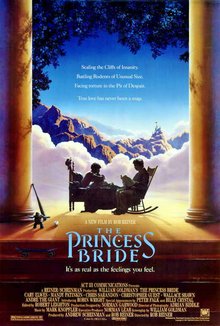
The Princess Bride

What’s Aged the Best?

The timeless theatrical style, tactile roughness, Robin Wright, and the Fire Swamp danger

In the discussion (4)
Approx. transcript time · 00:23:09Read transcript
  • The fantasy is not tied to a particular era of visual technology, which helps the theatrical sets remain timeless. — David Shoemaker
  • Visible improvisation, practical roughness, and small human details make the movie feel alive rather than digitally polished. — David Shoemaker
  • Robin Wright is the emphatic person who aged best, both for her original performance and continuing screen presence. — Juliet Litman
  • Buttercup sinking into the sand and the rodent attack still play as genuinely frightening physical danger. — Juliet Litman
The Princess Bride

Half-Assed Internet Research

Goldman’s novel and rights, Reiner and Lear’s support, Wright and Elwes’s careers, exact casting, Andre’s wrestling schedule and physical limits, and Goldman writing Fezzik with Andre in mind

In the discussion (13)
Approx. transcript time · 00:02:42Read transcript
  • Rob Reiner directed the film from William Goldman’s 1973 novel, and the grandfather framing preserves the book’s asides and genre commentary. — Juliet Litman
  • 20th Century Fox paid Goldman $500,000 for the rights in 1973 but did not make the movie; Goldman later bought the rights back. — Juliet Litman
  • Norman Lear produced the film and is credited with signing off after Rob Reiner selected the lead actor. — Juliet Litman
  • Reiner wanted Carrie Elways after Lady Jane, while Robin Wright’s late audition is described through the story of her appearing backlit at Goldman’s door. — Juliet Litman
  • Andre the Giant was the first choice, but an apparent Tokyo wrestling commitment initially made him unavailable. — Juliet Litman
  • Andre’s back surgery required the production to rig Robin Wright, use a masked double for impact, and put Carrie Always on a box for close shots. — David Shoemaker
  • Kareem Abdul-Jibar, Lou Forigno, a Scottish strongman, and the actor known from Twin Peaks were considered while Andre was unavailable. — Juliet Litman
  • Robin Wright’s post-film career discussion highlights Forrest Gump, House of Cards, She’s So Lovely, the film rendered “white old Leander,” and Wonder Woman. — Juliet Litman
  • The actor rendered Carrie Always is described as an ideal fairy-tale lead whose later career moved through spoofs and villain roles. — David Shoemaker
  • The Crush and Clueless discussion traces Alicia Silverstone’s career around the Aerosmith-video period. — Juliet Litman
  • The production contacted the WWF because Andre’s wrestling bookings controlled his availability. — David Shoemaker
  • Andre’s availability is compared with the Michael J. Fox and Back to the Future scheduling story. — David Shoemaker
  • William Goldman was a wrestling fan who reportedly wrote the novel with Andre in mind and asked casting to find someone like him. — David Shoemaker
Displaying discussions 13 - 19 of 19 in total

Films in the archive


