
‹ All movies
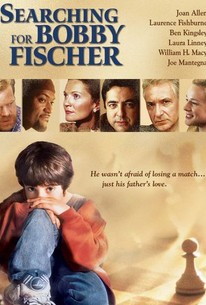
Searching for Bobby Fischer poster

Searching for Bobby Fischer

110 minutes

Cast

Selected cast credits · Film reference

Ben Kingsley Bruce Pandolfini
Joe Mantegna Fred Waitzkin
Joan Allen Bonnie Waitzkin
Robert Stephens Poe’s teacher
David Paymer Kalev
William H. Macy Tunafish father
Max Pomeranc Josh Waitzkin
Austin Pendleton Asa Hoffman
Tony Shalhoub Chess club member
Josh Mostel Chess club regular
Dan Hedaya Tournament director
Laura Linney School teacher
Anthony Heald Fighting parent
Michael Nirenberg Jonathan Poe

Searching for Bobby Fischer | The Rewatchables

Explore episodeClose episode

Producer credits not yet identified.

The Butch’s Girlfriend Award for the Weakest Link in the Film

Too little Vinnie; underused sister; disappearing professor

In the discussion (4)
Approx. transcript time · 00:21:01Read transcript
  • More Fishburne is wanted: the relationship skips its early testing phase and Vinnie lacks the arc given to Kingsley and the father. Whether the mother gets an arc is debated.
  • The underused younger sister is criticized as generic sibling baggage; others defend her effect on family psychology and her refusal to play chess as showing Josh’s difference.
  • The professor needs more scenes as an antagonist and disappears after an outsized introduction.
  • Fishburne needs another 15 minutes and more wisdom; his absence from the family home and travel funding provoke questions.

The Stephen A. Smith Hottest Take Award

More Vinnie; chess beats screen basketball; competitive contempt; mother–Vinnie affair

In the discussion (4)
Approx. transcript time · 00:23:01Read transcript
  • The park community could support its own film; two additional Vinnie scenes would clarify his work, personality and emotional insight. The father’s druggie label seems poorly supported and possibly prejudiced.
  • Charles argues chess is more enjoyable and harder to perform convincingly onscreen than basketball; others counter that visibly bad physical sports acting is much more distracting.
  • Charles argues Bruce is right about competitive contempt and that the offered draw helped normalize participation trophies; the provocation is amusedly received rather than treated as evidence.
  • Van imagines the mother’s support for park chess masking an affair with Vinnie, extending the earlier divorce joke.

What’s Aged the Best?

Script and narration; New York; comeback rhythm; parental pressure; rival; shoes; adult feuds

In the discussion (11)
Approx. transcript time · 00:29:12Read transcript
  • Zaillian’s script integrates distinct arcs, narration and stock footage; the child’s opening voice has aged particularly well.
  • The claustrophobic, lived-in New York chess spaces are praised, comparable with Rounders; Josh’s comfort in the intimidating club shows his love.
  • Editing, clock sounds and swelling music convey regained confidence like a sports comeback; Josh’s trick-or-treat jab signals his return.
  • Opening narration and tournament-parent culture endure; a charter-school anecdote recalls chess students occupying the highest academic-status tier.
  • Pressure after becoming number one is a universal gunslinger dilemma: winning becomes expected and defeat catastrophic. Josh’s later loss of love for chess adds poignancy to the upbeat ending.
  • The Young Fischer callback shifts from Josh to the rival, compared with overhyping young basketball prospects.
  • Vinnie’s first encounter shows insight into Josh’s combination play and his promise to watch out for him.
  • The rival’s ominous appearance and intimidating presence make him a child Drago despite discomfort about portraying an actual child as evil.
  • The rival and professor resemble Drago and his trainer, their isolation and contempt constructed to intimidate Josh.
  • Josh’s Reebok pump shoes are admired, with childhood memories of parents refusing to buy them.
  • Fighting tournament parents and nosy teachers remain recognizable; the professor’s gratuitous application visit is admired as pure psychological warfare against Bruce and Josh.

Most Rewatchable Scene

Fred confronts the teacher

In the discussion (13)
Approx. transcript time · 00:38:54Read transcript
  • Josh initially avoids beating his father until encouraged, illustrating tenderness rather than lack of skill.
  • Josh beating Shalhoub’s player and offering candy is a favorite one-scene appearance.
  • Parents banished from the tournament rely on child messengers; their willingness to be confined reveals how much the competition matters to them.
  • The teacher confrontation and Fred’s defense of his son’s gift are called an easy winner and perhaps Mantegna’s greatest acting. Whether his fury is justified versus embarrassing is disputed; modern spectators would record it.
  • After Josh loses in seven moves, his request that his father stand closer resolves the rain scene through vulnerability. The child actor’s quiet, perceptive sadness and ability to hold his own with major actors make it work.
  • Bruce revealing the certificates are meaningless shatters Josh, and the mother expels him. The scene suggests Bruce’s unresolved trauma; a Black household is imagined intervening sooner, while the child’s love of stickers is questioned then defended by his age.
  • The parents’ argument defends Josh’s decency and threatens separation if competitive pressure destroys it.
  • Fred offers to let Josh quit, but the boy insists it is more than a game; restoring the trophies and taking him back to Vinnie completes the reconciliation.
  • Vinnie’s park lesson restores instinct and risk-taking, urging Josh to play the opponent rather than merely protect the board.
  • Bruce warns Fred how damaging a fall can be, and Fred replies that he understands; Bruce’s vulnerability shows.
  • Bruce’s framed certificate and declaration of pride before the final match supply an emotional reconciliation.
  • The final match combines psychological pressure, the queen motif, board visualization and the offered draw. Josh wins by integrating rather than suppressing his personality.
  • Van and Bill choose the teacher confrontation, while Charles chooses the reunion with Vinnie.

What’s Aged the Worst?

Park prejudice; Fischer’s later legacy; fishing trip disputed

In the discussion (3)
Approx. transcript time · 01:10:23Read transcript
  • The mother’s fear of Black men in the park is criticized; later visits show a more beautiful Washington Square, with the older setting acknowledged.
  • Fischer’s later reputation and decline undermine the romantic tortured-genius framing; other volatile sports figures illustrate a formerly tolerated archetype.
  • A two-week fishing reward sounds miserable to two hosts, while Van strongly defends fishing with one’s father and recalls a lake trip.

Is There a Better Title for This Movie?

Bring the Queen Out; Me and Vinnie; Checkmate; questioning Fischer

In the discussion (1)
Approx. transcript time · 01:23:10Read transcript
  • Bring the Queen Out, Me and Vinnie, Checkmate and question-mark variations are proposed because Fischer’s later reputation makes the existing title uncomfortable.

Apex Mountain

Chess movies; Max Pomeranc; ambitious 1993 children’s films; Washington Square Park, personally

In the discussion (5)
Approx. transcript time · 01:35:04Read transcript
  • Chess movies and Pomeranc are affirmed; Mantegna is rejected in favor of Godfather III’s greater contemporaneous impact despite the film’s possible belated stature.
  • A case is endorsed for ambitious 1993 children’s live-action films, citing The Sandlot, Cool Runnings, Hocus Pocus and Homeward Bound, plus animated Batman: Mask of the Phantasm and The Nightmare Before Christmas.
  • Bringing the queen out early is floated and turns into suggestive wordplay and a discussion of which chess piece suits Van; no clear settled award follows.
  • Kingsley and Allen are rejected, with The Contender proposed for Allen. Fishburne’s 1993 Oscar run is argued for but challenged by Morpheus and The Matrix’s lasting cultural identification.
  • Evil kids is rejected. Washington Square Park is personally affirmed for this movie, while I Am Legend and When Harry Met Sally are raised as comparisons without resolving the broader claim.

Is This Movie Better With…?

Jackson; Trejo; Buscemi as father or tournament parent

In the discussion (1)
Approx. transcript time · 01:48:24Read transcript
  • Jackson and Trejo as Vinnie are recalled; Buscemi could play the father or a tournament parent such as the Paymer role.

Just One Oscar

Zaillian’s screenplay; the film also suggested

In the discussion (1)
Approx. transcript time · 01:48:48Read transcript
  • Zaillian’s screenplay receives agreement; the film itself is another suggestion. Its cinematography nomination is corrected from a claimed win.

What Piece of Memorabilia Would You Want From This Movie?

Knight; framed certificate; pump shoes; candy; chess table

In the discussion (1)
Approx. transcript time · 01:54:58Read transcript
  • The knight piece, framed master certificate, original pump shoes, candy and furniture-style chess table are considered; one participant initially has no choice before selecting the table.

The Coach Finstock Award for Best Life Lesson

Competitive contempt; impressing Dad; multiple sports

In the discussion (2)
Approx. transcript time · 01:55:56Read transcript
  • Have contempt for your enemies is affirmed over the original impress-your-dad suggestion; the mother-child bond and power of paternal disappointment are discussed.
  • Craig recommends encouraging multiple sports rather than forcing early specialization.

Who Won the Movie?

Josh and the Waitzkin family; chess also considered

In the discussion (1)
Approx. transcript time · 01:58:03Read transcript
  • Chess is an initial choice, but Josh or the Waitzkin family’s favorable portrayal becomes the preferred answer; Mantegna is a conditional actor choice, not an independent final winner. The character’s humanity is explicitly distinguished from any one actor.
Podcast choices
Speaker not identified
Josh Waitzkin