‹ All movies
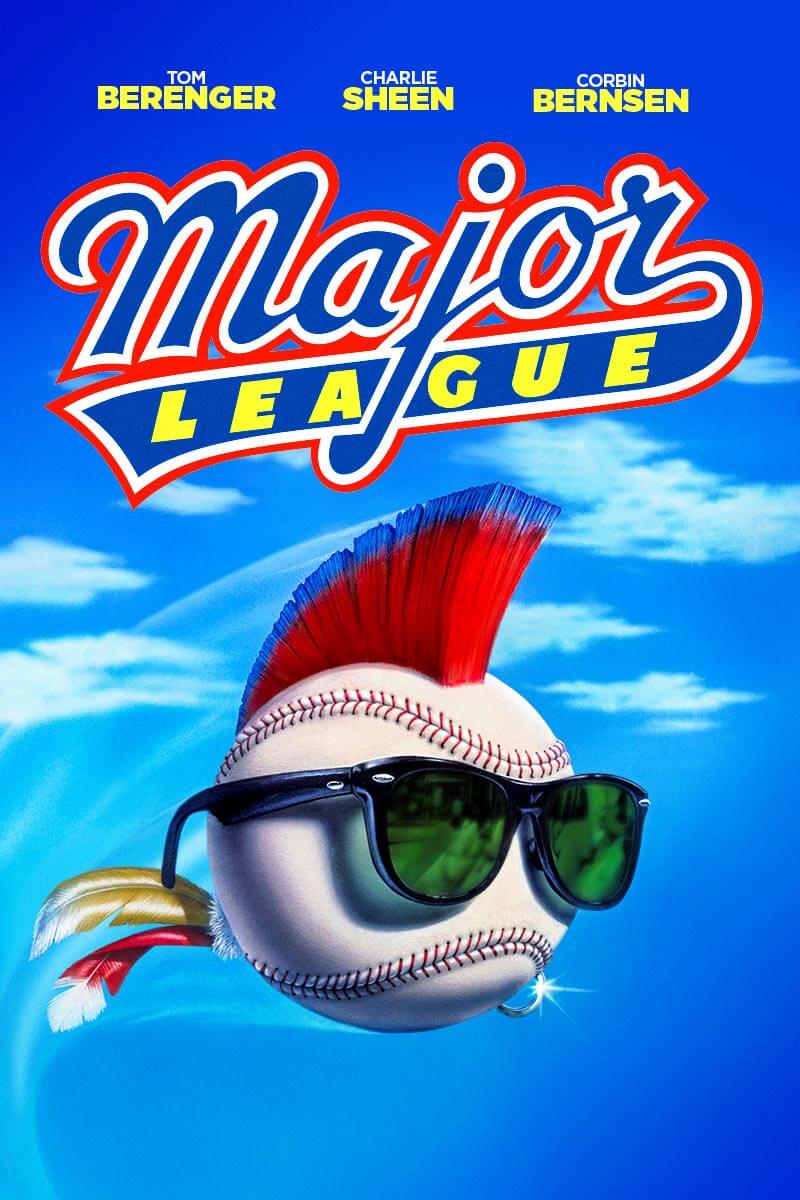
Major League poster

Major League

102 minutes

Cast

Selected cast credits · Film reference

Tom Berenger Jake Taylor
Charlie Sheen Ricky Vaughn
Corbin Bernsen Roger Dorn
Margaret Whitton Rachel Phelps
James Gammon Lou Brown
Rene Russo Lynn Wells
Wesley Snipes Willie Mays Hays
Charles Cyphers Charlie Donovan
Chelcie Ross Eddie Harris
Dennis Haysbert Pedro Cerrano

Major League | The Rewatchables

Explore episodeClose episode

Producer credits not yet identified.

Most Rewatchable Scene

The final-game run is the preferred stretch, especially Pedro Cerrano’s home run through Rick Vaughn’s strikeout of Clu Haywood; the training-camp introductions, Jobu scenes, Wild Thing entrance, and the American Express commercial are alternatives.

In the discussion (8)
Approx. transcript time · 00:22:25Read transcript
  • The first spring-training arrival, the red-tag reveal, and Serrano's first Jobu scene are nominated early.
  • The 'screw the owner, let's do this' scene where the manager gathers the team is another nominee.
  • Serrano's home run in the Yankees game is treated as one of the strongest choices.
  • Rick Vaughn’s Wild Thing entrance and walk from the bullpen are nominated separately from his final strikeout.
  • Vaughn striking out Haywood, including the pitch selection and Haywood's reaction, is a central finalist.
  • The running bunt, Willie Mays Hayes scoring, and the team celebration are praised as well-filmed final-game moments.
  • Rembert Browne adds the team’s American Express commercial as an alternative rewatchable scene. Rembert Browne
  • The discussion settles on the whole final-game run, with the home run through the strikeout singled out as the peak.

What’s Aged the Best?

Bob Uecker’s Harry Doyle broadcasts win. The alternatives are Jake Taylor’s bunt; the film’s slow motion; the Cleveland opening; credible baseball-player casting and Charlie Sheen’s physicality; the season-long structure and specialized roster; Lou Brown; baseball texture; Yankees villainy; the manager’s hunch; worst-to-first baseball magic; closer entrance music; and the profane R-rated tone.

In the discussion (15)
Approx. transcript time · 00:30:27Read transcript
  • Having Jake Taylor win with a surprise bunt instead of a home run is introduced as an Aged Best answer.
  • The movie’s slow motion, especially Willie Mays Hayes running in pajamas during the opening, is offered as another Aged Best answer.
  • The opening credits’ documentary-like Cleveland images are praised for establishing the city and stakes.
  • Casting performers who look and move like baseball players helps the games feel credible.
  • Charlie Sheen’s youth and physical credibility as a pitcher hold up especially well.
  • Bob Euker as the lifelong local radio hack is praised throughout and is ultimately chosen as the winner.
  • The movie captures the day-to-day aspect, ebb and flow, and checkpoints of a baseball season.
  • The roster’s pre-Moneyball specialization, including speed, defense, and relief pitching, feels ahead of its time.
  • James Gammon’s Lou Brown is praised as a funny, credible manager rather than a sentimental caricature.
  • The film captures baseball's rule-bending, dugout drama, rituals, and superstitions.
  • Using the Yankees as the final villain restores their evil-empire role after a weaker decade.
  • The worst-to-first pennant story delivers the kind of baseball-movie magic the hosts want from the genre.
  • The grizzled manager's absurd hunch succeeds even though putting in Charlie Sheen should not work.
  • The Wild Thing sequence is credited with creating the closer-entrance-music tradition that followed.
  • The R rating, swearing, and adult jokes give the sports comedy an edge missing from safer versions.

What’s Aged the Worst?

Charlie Sheen’s later baggage is the named vote, with Jake Taylor’s stalking and Wesley Snipes’s running called honorable runners-up, before the hosts qualify the result as a nine-way tie for first. The almost entirely white setting, later Bob Uecker imitators, Snipes’s throwing and sequel distance, the Lynn-centered freeze-frame, the ‘off the reservation’ phrase, and Pedro Cerrano’s stereotyped characterization are also among the criticized elements.

In the discussion (11)
Approx. transcript time · 00:43:11Read transcript
  • Charlie Sheen’s off-screen history changes how his performance and Wild Thing persona play now.
  • The team and stadium crowd are overwhelmingly white apart from Willie Mays Hayes and Serrano.
  • The future sports-movie imitators of Bob Euker never reproduce this unique success.
  • The movie uses conspicuous slow motion and editing to sell Willie Mays Hayes as exceptionally fast.
  • The writer-director says Wesley Snipes was such an unskilled baseball thrower that the movie omitted scenes of him throwing.
  • Wesley Snipes’s later distance from the movie and refusal to return for the sequel complicate the affection for Hayes.
  • Jake Taylor’s pursuit of Lynn repeatedly ignores her boundaries and reads as stalking.
  • The final freeze-frame centers Lynn in the pennant celebration even though the team barely knows her.
  • Serrano's shifting Haitian or Dominican identity, voodoo practice, tribal music, and speech pattern are criticized as a racial stereotype.
  • The home-run phrase 'off the reservation' is separately criticized as poorly aged.
  • The final call names Charlie Sheen, gives honorable-runner-up mentions to Jake’s stalking and Snipes’s running, then qualifies everything as a nine-way tie for first.

The Dion Waiters Award for Best Heat Check Performance

Clu Haywood, played by Pete Vuckovich, wins. Rachel Phelps, Bob Uecker, and Uecker’s unnamed broadcast partner are also accepted as candidates.

In the discussion (3)
Approx. transcript time · 00:56:53Read transcript
  • The owner and Bob Uker are proposed as candidates based on their limited time and impact.
  • Clu Haywood is proposed and accepted as the winner.
  • Bob Euker's unnamed broadcast partner is accepted as another candidate because of his weird facial reactions.

Apex Mountain

Margaret Whitton and James Gammon receive clear Apex Mountain calls; Charlie Sheen, Tom Berenger, and Dennis Haysbert are debated against later or larger roles.

In the discussion (4)
Approx. transcript time · 01:06:38Read transcript
  • Charlie Sheen’s movie peak is weighed against the much larger commercial run of Two and a Half Men.
  • Tom Berenger’s Major League performance is weighed against Platoon and his broader 1980s run.
  • Margaret Whitton and James Gammon are treated as definite Apex Mountain winners for this movie.
  • Dennis Hayesbert's later President Palmer role keeps Serrano from being an uncontested apex.

Sequel, Prequel, Limited Series, or All-Black Remake

Both hosts enthusiastically support remaking Major League as a ten-to-thirteen-episode Netflix series, potentially centered on a different struggling franchise such as Seattle.

In the discussion (3)
Approx. transcript time · 01:18:30Read transcript
  • The movie’s season-long structure is proposed as a ten-episode Netflix series.
  • The hosts say the same premise could move to another city and use the Seattle Mariners as an example.
  • They remain enthusiastic when the imagined order expands to a 13-episode Netflix series.

Who Won the Movie?

Rembert Browne votes for Wesley Snipes, while Bill Simmons votes for Charlie Sheen; the episode records two distinct ballots rather than a consensus winner.

In the discussion (2)
Approx. transcript time · 01:22:27Read transcript
Podcast choices