
‹ All movies
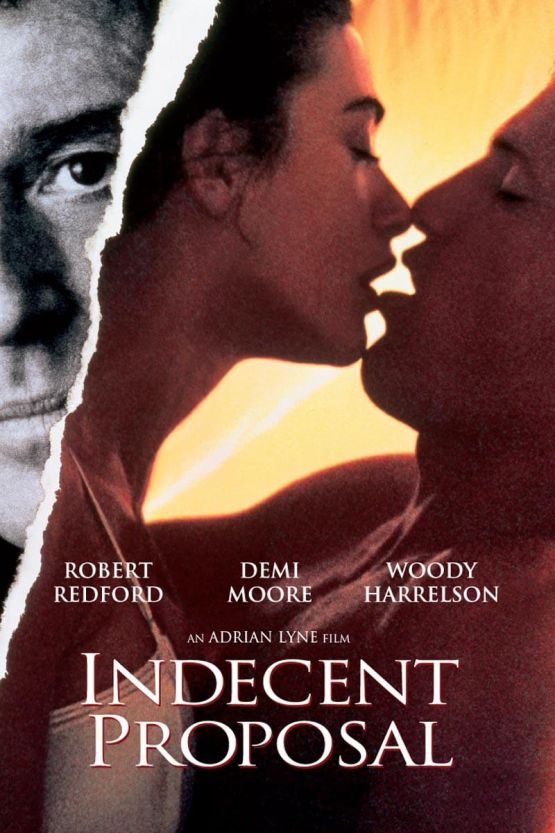
Indecent Proposal poster

Indecent Proposal

118 minutes

Cast

Selected cast credits · Film reference

Robert Redford John Gage
Demi Moore Diana Murphy
Woody Harrelson David Murphy
Oliver Platt Jeremy
Seymour Cassel Mr. Shackleford
Billy Bob Thornton Day Tripper
Rip Taylor Mr. Langford
Billy Connolly Auction emcee
Joel Brooks Realtor
Pierre Epstein Van Buren
Danny Zorn Screenwriter
Kevin West Screenwriter
Pamela Holt David’s girlfriend
Tommy Bush David’s father
Mariclare Costello David’s mother
Curt Odle David’s boss
Jedda Jones Craps woman
Myra J. Craps woman
Edwonda White Craps woman
Joseph Ruskin Pit boss
Maurice Sherbanee Citizenship student

Indecent Proposal | The Rewatchables

Explore episodeClose episode

Apex Mountain

Demi Moore; Woody Harrelson; Thierry Mugler; sex on cash; John F. Kennedy Jr.; Sade near peak

In the discussion (11)
Approx. transcript time · 00:19:06Read transcript
  • This period is proposed as Demi Moore’s peak following Ghost and A Few Good Men; the later Striptease payday is an alternative.
  • Demi Moore receives an affirmative Apex choice for the commercial success, preceding hits, celebrity position and subsequent Striptease payday; her appearance receives an additional affirmative peak assessment.
  • Harrelson receives an affirmative Apex choice for White Men Can’t Jump, this film and emerging from Cheers as a movie star; True Detective is raised as an absent colleague’s likely alternative.
  • Redford is rejected for Apex here.
  • Sade is placed near her peak.
  • Seal is rejected in favor of the later Kiss from a Rose period.
  • Thierry Mugler receives an affirmative Apex choice.
  • Sex on a large pile of money receives an affirmative Apex choice.
  • Lyne is rejected for Apex here.
  • Craps is rejected for Apex here.
  • John F. Kennedy Jr. receives an affirmative, retrospective Apex discussion for his prominence and the premise’s reported inspiration.

Roger Ebert's review

In the discussion (2)
Approx. transcript time · 00:27:07Read transcript
  • Roger Ebert awarded three stars; no rating scale is spoken.
  • Ebert praised the premise’s ability to provoke discussion about fidelity despite calling its construction artificial and manipulative.

Most Rewatchable Scene

Gage’s billiards proposition

In the discussion (17)
Approx. transcript time · 00:29:30Read transcript
  • The Vegas shopping scene leading into craps is nominated, including Diana’s refusal to be treated as another item for sale.
  • The shopping and craps sequence captures the film’s strongest Vegas stretch and establishes Gage’s interest in borrowing Diana for luck.
  • Billy Bob Thornton’s small appearance as Day Tripper is amusing in retrospect given his later Oscar.
  • The money-covered sex scene after the first successful Vegas day is considered as another scene candidate, with objections deferred.
  • The billiards proposition is praised for its iconic premise-setting line, riveting conversation and insight into Gage’s psychology.
  • Diana answers before David, and Gage insists on hearing from him, deliberately opening a wedge between the couple.
  • Pool-ball continuity undermines the scene’s metaphor: a scratched cue ball reappears, and the play lacks coherent eight-ball or nine-ball rules.
  • The lawyer’s contract negotiation is a favorite, particularly payment without consummation and the John Garfield death-during-sex clause.
  • Jeremy’s insistence that he could have negotiated at least two million dollars adds to the lawyer’s appeal.
  • The boat scene is praised, including Gage’s assurance that nothing will happen without Diana choosing it; it is called one of the film’s last good scenes.
  • The argument about whether the sex was good gives Diana an effective explanation that neither praise nor denial can satisfy her husband.
  • Her affirmative answer is disputed as unnecessarily hurtful; suggested reassuring lies draw the objection that he would not believe them.
  • Redford’s speech about the woman on the train is nominated, with Moore appearing genuinely moved by his performance.
  • The supposedly relatable missed-connection story is mocked for justifying a billionaire’s extravagant pursuit of another man’s wife.
  • The million-dollar-club revelation is praised for Shackleford’s visible effort to support Gage’s improvised story without exposing it.
  • Sam Elliott is suggested as a cooler version of Shackleford who could appear more convincingly complicit.
  • Gage’s billiards offer is the agreed final most-rewatchable scene despite the pool continuity errors.

What’s Aged the Best?

Vegas desperation; Demi Moore; return home; forgiveness; title; David with the dog; Jeremy

In the discussion (8)
Approx. transcript time · 00:41:39Read transcript
  • Going to Vegas as a desperate solution has aged well: unemployment, recession and failed home sales establish motivation, followed by the initial gambling high and collapse.
  • Demi Moore’s appearance and star presence are selected as having aged well.
  • Movie depictions of wealthy people’s parties are praised for their glamorous settings and guests, although the specific parties here draw a dissenting reaction.
  • Diana’s uneasy return after the night with Gage is effective, although David’s subsequent lipstick-smearing sexual behavior is described as gross and bizarre.
  • The line distinguishing forgiveness from forgetting is praised.
  • The title is selected as having aged well.
  • Giving David the dog after the separation creates sympathy for him when his other behavior makes him difficult to like.
  • Jeremy’s uncomfortable jokes function as an audience surrogate and provide an underrated contribution.

Recasting Couch

Sydney Sweeney; husband unresolved; Brad Pitt; gender-swapped Angela Bassett

In the discussion (7)
Approx. transcript time · 00:42:45Read transcript
  • Scarlett Johansson is raised as a contemporary Moore comparison before Sydney Sweeney is proposed for a remake.
  • For Sydney Sweeney’s husband, a younger Adam Driver is considered; Glen Powell is rejected as too attractive and Miles Teller is viewed as a better candidate.
  • Jacob Elordi and Paul Mescal are rejected as too attractive for the desired contrast; Elordi’s height is also noted.
  • A producer identified in the transcript as Linda Oakes describes Harrelson’s appeal to women as both adorable and adventurous; the name remains uncertain.
  • Rory Culkin is proposed before the Succession actor is corrected to Kieran; Jeremy Strong follows, but the age gap with Sweeney draws an objection.
  • Brad Pitt is favored over “Leo” (surname not spoken) for Gage because of his resemblance to and career association with Redford.
  • A gender-swapped Gage prompts an emphatic Angela Bassett choice; Halle Berry and Nicole Kidman are additional candidates, while Reese Witherspoon is a joking contrast.
In the discussion (3)
Approx. transcript time · 00:48:27Read transcript
  • Location candidates include the wealthy party, lavish Vegas suites, the boat and the Malibu roadside stopping point.
  • The yacht is considered underused and does not ultimately deliver as a location.
  • The craps table is the agreed location winner, described as the film’s beating heart.

The Great Shot Gordo Award for Most Cinematic Shot

Kissing the dice; imagined sex on television screens

In the discussion (2)
Approx. transcript time · 00:49:06Read transcript
  • Diana kissing the dice is nominated for most cinematic shot.
  • David imagining Gage and Diana having sex on every television screen is the other shot choice, striking for its hallucinatory intrusion from a seemingly different movie.
In the discussion (2)
Approx. transcript time · 00:50:13Read transcript
  • Bathroom-break choices are the second half generally and David’s architecture class specifically, an appealing scene that feels transplanted from another movie.
  • Cutting about fifteen minutes and concentrating more on Diana would improve the film; David’s trauma is already clear and his character draws less interest.

What’s Aged the Worst?

Flashback styling; billionaires; cash sex; gambling; suites; real estate; voiceover; spoiled separation

In the discussion (13)
Approx. transcript time · 00:51:48Read transcript
  • The youthful flashback appearances have aged poorly: Woody’s wig and Moore’s conspicuous braces.
  • The relatively sympathetic billionaire is considered harder to accept today; Tony Stark counters the suggestion that Gage might be the last billionaire audiences rooted for, while Zuckerberg prompts qualification.
  • Sex on piles of dirty cash is selected as having aged poorly, especially the bills shoved between bodies and their crumpled condition afterward.
  • The mix of twenties, fifties and hundreds is implausible casino payment; chips or larger bills would make more sense.
  • Returning to roulette after an initial rapid loss is criticized as foolish gambling and implausible strategy.
  • The supposedly luxurious early-1990s Vegas suites now look ugly.
  • Readily available enormous oceanfront property in 1993 Santa Monica is challenged as implausible.
  • The Santa Monica land is estimated at at least five million dollars in 1993; the film needs an explanation for such valuable vacant property.
  • Gage’s house value is corrected from forty to thirty million dollars, sharpening the comparison with the couple’s implausibly attainable dream property.
  • A demolished prior house could explain availability, but the lush untouched-looking site does not communicate that history.
  • Both agree the property is far more exceptional and valuable than the film acknowledges.
  • The sporadic voiceover is criticized, especially its heavy use for the opening relationship history followed by a long absence.
  • Revealing the separation at the start removes suspense about whether the marriage survives.
In the discussion (4)
Approx. transcript time · 00:59:28Read transcript
  • The absence of a Gage–Diana sex scene is criticized; Redford refusing to perform one is explicitly speculation.
  • An online claim that a porn actor served as Redford’s double is rejected as fake rather than accepted as research.
  • Withholding the yacht sex initially creates useful uncertainty, but later flashbacks of Diana remembering it would improve the film.
  • Lyne’s actual sex scenes are questioned despite his sexual subject matter, including this film’s awkward opening and recurring dishes or running water; Nine and a Half Weeks is the favorable exception.
In the discussion (3)
Approx. transcript time · 01:04:11Read transcript
  • One hot take advises Diana to try a relationship with Gage because David has failed her; the response prefers neither man and notes that she already does try Gage.
  • The other hot take says the movie needs a murder, with David attacking Gage or Shackleford killing David as possibilities.
  • A more developed alternative gives David a mysterious death or beating, leaving Diana unable to trust Gage even if he is innocent; combining this with no sex on the yacht would extend the destructive doubt.
In the discussion (4)
Approx. transcript time · 01:06:28Read transcript
  • The original reported star configuration was Tom Cruise and Nicole Kidman with Warren Beatty as the billionaire, enthusiastically compared with their later Eyes Wide Shut.
  • Julia Roberts reportedly declined Diana; her apparent youth and repeating a paid-sex premise after Pretty Woman draw objections, although the character’s age is estimated at twenty-six.
  • Harrelson reportedly left Benny and Joon and faced a lawsuit; Johnny Depp had been approached for this film before taking that role, while White Men Can’t Jump persuaded Lyne to cast Harrelson.
  • Harrelson is defended as inspired casting because David needs less overwhelming attractiveness than Cruise despite the marriage’s continuing sexual chemistry.

Half-Assed Internet Research

Reviews; parody; production; original ending; dress; casino filming

In the discussion (10)
Approx. transcript time · 01:12:44Read transcript
  • The film reportedly appears in John Wilson’s book of one hundred enjoyably bad movies and inspired a 2002 Simpsons parody.
  • Moore reportedly recalled Harrelson’s discomfort performing sex scenes with a friend’s wife.
  • Negative reviews from the Los Angeles Times, New York Times and Rolling Stone led Amy Holden Jones to publish a rebuttal; the Thelma and Louise screenwriter also criticized the film.
  • Redford’s missed-connection speech is described as substantially borrowed from Citizen Kane.
  • Moore reportedly received final approval over her sex scenes and participated in editing them.
  • The secretary reading Susan Faludi’s Backlash is identified as a deliberate thematic detail.
  • The original script let Diana leave independently; Beatty reportedly refused because his character would not get the woman.
  • Lyne and Moore reportedly argued over the character before he conceded that she was right.
  • The five-thousand-dollar Thierry Mugler dress became a widely copied sensation.
  • Vegas casino filming reportedly began at three in the morning for several weeks.
In the discussion (2)
Approx. transcript time · 01:17:52Read transcript
  • Racehorse-name choices include Indecent Proposal, Million Dollar Club, Even a Brick Wants to Be Something, Paradise Cove, Table Shoes and The Griffin; Million Dollar Club receives the closing preference.
  • David’s dirty shoes on the table are criticized.

Picking Nits

Billionaire plausibility; casino procedures; Diana’s competence; bathroom hygiene

In the discussion (9)
Approx. transcript time · 01:18:27Read transcript
  • A billionaire as handsome as Redford is questioned; the defense argues that charm and confidence could facilitate his business success, while his lack of public notoriety remains implausible.
  • Gage is defended as a believable billionaire through his assured gambling, effortless requests for money and personal aide.
  • A billionaire gambling enormous sums should have a private casino area instead of mingling at public tables; the need to meet Diana does not excuse the staging.
  • A pit boss breaking his coffee cup over a million-dollar win is criticized as unlike professional casino behavior.
  • The million-dollar craps bet is challenged as exceeding a plausible table limit, even for Gage.
  • The two-person poker game and unusual chips are confusing.
  • Diana trying to pull back a losing chip pile should result in immediate expulsion.
  • Diana’s real-estate competence is questioned because she misses the mortgage deadline, fails to identify their house as an asset and has sold nothing in six months despite her boss’s praise.
  • The bathroom conversation is criticized for Diana’s robe draping over the toilet while David leans against her; closeness does not excuse the hygiene.

Sequel, Prequel, Limited Series, or All-Black Remake

All formats; especially all-Black cast, reality show or prestige TV

In the discussion (2)
Approx. transcript time · 01:24:10Read transcript
  • The premise is considered adaptable in every proposed format, with particular enthusiasm for an all-Black cast, a reality show or prestige television.
  • A television remake should improve the dream-house design, mocked as a grain silo above a dilapidated garage.
In the discussion (1)
Approx. transcript time · 01:25:26Read transcript
  • Wayne Jenkins would improve the film; possibilities include Gage, Jeremy, an expanded Shackleford or a casino onlooker, with his negotiating more money and crabs imagined.

Probably Unanswerable Questions

Gere; Gage’s morality; TV format; contract boundaries; dogs; Shackleford; business card

In the discussion (10)
Approx. transcript time · 01:26:52Read transcript
  • Richard Gere as Gage is rejected because he has already played adjacent roles; Redford’s unexpected casting provides useful disorientation.
  • Gage’s morality remains disputed: one view calls the proposition unequivocally bad despite complexity and consent, while the other sees a flawed man whose willingness to let Diana leave mitigates the judgment.
  • The Million Dollar Club is proposed as an anthology or reality show, potentially an extreme evolution of The Bachelor.
  • The contract should specify permitted sexual conduct and boundaries, rather than only payment and death contingencies; freeze-framing reveals little beyond the capitalized term Act.
  • Specific unanswered contractual boundaries include positions, kissing and oral sex, with possible extended activity reinforcing the desire for flashbacks.
  • A counterargument says withholding the sex scene lets viewers imagine something more extreme than the film could show.
  • The fate of the two dogs Gage acquired to create a welcoming home is raised as a question.
  • Whether Gage keeps and cares for the dogs after Diana leaves remains unanswered; their disposal is dark speculation, not a plot fact.
  • Whether Shackleford has actually killed someone is debated, including possible indirect responsibility rather than a deliberate murder.
  • Diana is thought to have kept Gage’s business card willingly after enjoying the night, rather than Shackleford secretly planting it; the alternative remains the question’s premise.

Producer review

Entertaining; Gage is a loser

In the discussion (4)
Approx. transcript time · 01:34:47Read transcript
  • The invited producer review calls the film sufficiently good, entertaining and absorbing enough to delay going to bed.
  • The producer sees Gage as a pathetic pickup artist rather than merely a bad man, emphasizing stalking, his empty life and the manipulative two-headed coin.
  • The coin’s appeal and Gage’s lack of a known life draw further debate; a television adaptation could gradually reveal this unpleasant side, with a Don't Worry Darling comparison.
  • The concluding assessment agrees that Redford’s appeal initially obscures Gage’s strange, unappealing behavior.

More from the conversation

The episode marks the film’s thirtieth anniversary and introduces Adrian Lyne’s film.
Approx. transcript time · 00:01:36Read transcript
The provocative million-dollar premise generated widespread marital and cultural debate; the first hour remains compelling, while the second half feels like a different film and could lose about fifteen minutes.
Approx. transcript time · 00:02:36Read transcript
The film prompted competing feminist interpretations, including charges of sexism and arguments for the woman’s agency.
Approx. transcript time · 00:04:54Read transcript
Pretty Woman, Honeymoon in Vegas and Basic Instinct provide comparisons for contemporary arguments about sex and gender; a reported 2018 remake discussion never became a film.
Approx. transcript time · 00:06:02Read transcript
A modern television adaptation, compared with The White Lotus, could explore the premise’s class, sex, marriage and morality more extensively.
Approx. transcript time · 00:07:23Read transcript
Oliver Platt’s lawyer treats his fee as the relevant morality and objects that the couple did not negotiate more money.
Approx. transcript time · 00:08:18Read transcript
Possible modern versions include a gay couple or a female billionaire pursuing a married man.
Approx. transcript time · 00:08:33Read transcript
Screenwriter Amy Holden Jones reportedly framed the premise through an irresistible celebrity proposition and described a female fantasy of being loved by both men and ultimately recovering the husband; that interpretation draws reservations.
Approx. transcript time · 00:09:26Read transcript
The bedroom conversation after the offer is compelling because each spouse wants the other to admit wanting the arrangement first; the discussion distinguishes sexual agency from being forced to rescue a husband financially.
Approx. transcript time · 00:10:18Read transcript
A daughter’s reaction illustrates the premise’s continuing offensiveness; the source novel is described as involving a wealthy Saudi man and a Jewish-Arab conflict.
Approx. transcript time · 00:12:24Read transcript
Redford’s rare movie-star appeal is central to the casting; an unattractive billionaire would substantially change the film and the wife’s plausible attraction.
Approx. transcript time · 00:13:04Read transcript
The billionaire’s charm softens behavior that otherwise resembles stalking, including appearing at her citizenship class, drawing her through work to his home and buying the dream property.
Approx. transcript time · 00:14:06Read transcript
The dress-shop encounter combines offense and attraction; hiding the prior encounter from her husband introduces a trust problem, while Redford’s established appeal complicates a straightforward villain reading.
Approx. transcript time · 00:14:59Read transcript
The millionaire-club story could have led into a darker kidnapping thriller, but the film continues to protect the billionaire’s likability.
Approx. transcript time · 00:15:46Read transcript
The billionaire’s decision to release Diana makes him more sympathetic, although his admission that she will never look at him as she looks at her husband also makes the gesture self-interested.
Approx. transcript time · 00:16:34Read transcript
Warren Beatty reportedly rejected the movie because the billionaire does not end up with the woman.
Approx. transcript time · 00:16:34Read transcript
Adrian Lyne reportedly considered the husband less forgivable than the wife; the screenwriter preferred an ending in which Diana leaves both men.
Approx. transcript time · 00:17:50Read transcript
Woody Harrelson’s momentum combines the end of Cheers with his breakthrough in White Men Can’t Jump.
Approx. transcript time · 00:19:41Read transcript
Redford is described as near the end of the period in which he could plausibly play this romantic leading role; his handsomeness and compelling performance soften the premise’s creepiness.
Approx. transcript time · 00:20:18Read transcript
Redford’s later leading roles in Up Close and Personal, The Horse Whisperer, The Last Castle and Spy Game are discussed as a less straightforward continuation of his stardom.
Approx. transcript time · 00:20:36Read transcript
His later Captain America: The Winter Soldier role is contrasted as a clearer embrace of villainy.
Approx. transcript time · 00:21:41Read transcript
Lyne’s recurring interests include desire, broken trust and whether relationships can survive choices driven by sexual attraction.
Approx. transcript time · 00:22:44Read transcript
Fatal Attraction, Unfaithful, this film, Nine and a Half Weeks and Lolita each explore people who cannot contain the consequences of desire or a supposedly isolated decision.
Approx. transcript time · 00:23:44Read transcript
Deep Water follows a lengthy directing gap; Jacob’s Ladder is identified as an exception to Lyne’s sex-centered films, with earlier Flashdance and Foxes also discussed.
Approx. transcript time · 00:25:45Read transcript
Reported reception and business figures are 34 percent Rotten Tomatoes, a $38 million budget and $266 million gross; the hosts compare The Vanishing while praising 1993’s rewatchable mainstream films.
Approx. transcript time · 00:27:44Read transcript
The discussion criticizes the disproportionate number of architects in movies compared with those the participants encounter in life, while recognizing the profession’s cinematic appeal.
Approx. transcript time · 01:36:57Read transcript
More plausible work for David could be bartending while aspiring to a small business, teaching or running a surf shop; his initial beach-bum presentation clashes with successful architecture.
Approx. transcript time · 01:38:04Read transcript
The closing credit explicitly identifies producer Craig Horlebeck, an ASR spelling to reconcile with official metadata.
Approx. transcript time · 01:38:48Read transcript