
‹ All movies
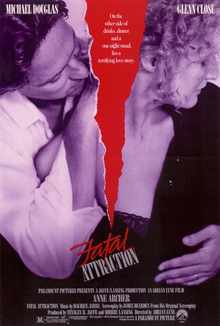
Fatal Attraction poster

Fatal Attraction

120

Cast

Selected cast credits · Film reference

Michael Douglas Dan Gallagher
Glenn Close Alex Forrest
Anne Archer Beth Gallagher
Fred Gwynne Arthur
Ellen Hamilton Latzen Ellen Gallagher
Ellen Foley Hildy
Meg Mundy Joan Rogerson
Tom Brennan Howard Rogerson
Lois Smith Martha
Mike Nussbaum Bob Drimmer
J. J. Johnston O'Rourke
Michael Arkin Lieutenant
Sam Coppola Fuselli
Eunice Prewitt Receptionist
Jane Krakowski Babysitter [Christine]
Justine Johnston Real estate agent
Mary Joy Teacher
Marc McQue Chuck
James Eckhouse Man in Japanese restaurant
Faith Geer Nurse
Carol Schneider Waitress
David Bates Executive
Anna Levine Secretary
Alicia Perusse Ellen's friend
Thomas Saccio Bartender
Greg Scott Bar patron
Chris Manor Doorman
Jonathan Brandis Party guest
Joe Chapman Party guest
Judi M. Durand Party guest
Lillian Garrett Party guest
J. D. Hall Party guest
Barbara Harris Party guest
Barbara Iley Party guest
Angelo Bruno Krakoff Party guest
Carlo Steven Krakoff Party guest
Amy Lyne Party guest
David McCharen Party guest
Larry Moss Party guest
Mio Polo Party guest
Jan Rabson Party guest
Marilyn Schreffler Party guest
Vladimir Skomarovsky Party guest
Dennis Tufano Party guest
Lynnanne Zager Party guest

Fatal Attraction | The Rewatchables

Explore episodeClose episode

Producer credits not yet identified.

Most Rewatchable Scene

The kitchen-sink sex scene

In the discussion (8)
Approx. transcript time · 00:42:42Read transcript
  • The kitchen sequence is called the obvious winner: the water, dirty dishes, Douglas’s reactions and Close’s physical control are praised alongside the elevator scene.
  • The restaurant conversation rationally establishes a supposedly consequence-free affair, creating later tension.
  • The wet blouse, movement to the bed and relieved post-coital response are discussed as sexual spectacle and validation.
  • The progression through running, sex, dancing and the elevator conveys Alex’s appetite for life; both endings are criticized for diminishing that quality.
  • The park date brings Dan’s dog and ordinary life into the affair; physical play, a faked heart attack and Alex’s contradictory account of her father are examined.
  • Possessiveness and self-harm mark a frightening tonal turn, but the abruptness and incomplete psychological explanation are challenged.
  • Alex’s real-estate visit builds palpable tension, and the subsequent confrontation demands that Dan take her seriously.
  • The boiled-rabbit reveal is memorable and expertly constructed but explicitly rejected as rewatchable by one participant; a real dead rabbit was reportedly used.

Most Rewatchable Scene

The kitchen-sink sex scene; the ending; no settled overall choice

In the discussion (4)
Approx. transcript time · 01:01:52Read transcript
  • Dan confessing to Beth is praised for Archer’s reaction, especially the pregnancy disclosure; Ellen’s kidnapping is another tense sequence.
  • The kidnapping and rabbit killing are debated as attacks on the family unit Alex cannot have.
  • The recorded car message is praised as suspenseful but rejected as uncomfortable by another participant.
  • One participant wants to choose sink sex but settles on the ending; others cannot pick because the whole movie is rewatchable. The bathtub climax combines Psycho homage and a horror resurrection device.

What’s Aged the Best?

Hydration during sex; Michael Douglas; Anne Archer and her hair; styling; Bedford house; Volvo; bunny trope; Meatpacking District; father’s reaction; Playland; casting

In the discussion (4)
Approx. transcript time · 01:05:37Read transcript
  • Douglas’s flustered characterization and Archer’s appearance, especially her softer 1980s hair, are praised.
  • Alex’s white wardrobe and wild hair support her character; the Bedford home exemplifies an ideal country house.
  • The early-1980s Volvo, enduring bunny jokes and period Meatpacking District are singled out.
  • Beth’s father glaring at Dan, Playland and the chemistry among the three leads are praised.

Most Rewatchable Scene

The elevator; the initial affair conversation

In the discussion (1)
Approx. transcript time · 01:08:43Read transcript
  • A later preference is the elevator, with the initial restaurant conversation also praised for its clear negotiation.

What’s Aged the Worst?

Dan’s animal care and accountability; smoking; fertility deadline; school pickup security; outdated technology; Play Misty for Me similarities; Alex’s characterization

In the discussion (7)
Approx. transcript time · 01:16:33Read transcript
  • Dan leaves Quincy alone too long, takes him to the affair, feeds him discarded spaghetti and meatballs to conceal his absence, and places the rabbit beside acid fumes.
  • The rabbit’s death is upsetting, though visible blood suggests it was killed before boiling.
  • Office smoking and Close’s smoking performance are criticized; stopping may reflect pregnancy. Alex’s age-based reproductive deadline feels dated.
  • The school casually releasing Ellen to an unfamiliar woman is criticized, including the role of presumed trust in a white woman.
  • Landlines and information operators date the story; cameras and digital messages would change evidence and secrecy.
  • The premise is criticized as borrowing heavily from Play Misty for Me, though the earlier film lacks this movie’s contemporary 1980s pleasures.
  • Dan’s limited accountability and the incomplete account of Alex’s life remain central objections.
In the discussion (2)
Approx. transcript time · 01:24:54Read transcript
  • Quincy’s dog performance is the initial choice; Ellen is proposed in response, and each candidate’s substantial screen time is noted.
  • Sharing the award is suggested, with praise for what the child and dog are asked to do; whether Quincy is judging Dan is debated.

Apex Mountain

Michael Douglas; Glenn Close commercially; Anne Archer; Bedford; Adrian Lyne; gated elevators

In the discussion (5)
Approx. transcript time · 01:27:41Read transcript
  • Douglas’s combination of this film, Wall Street and an Oscar is endorsed as his career peak.
  • Close’s commercial peak is distinguished from her best acting, with Dangerous Liaisons favored for performance and its Oscar loss lamented.
  • Archer is endorsed for her performance and appeal; swapping her and Close would undermine the film.
  • Bedford receives a yes. Female thriller villains are considered through the film’s influence, with concern about less sophisticated successors.
  • Lyne is endorsed for his best film, director nomination and proximity to Nine 1/2 Weeks; gated elevators win over Unfaithful.

Sequel, Prequel, Limited Series, or All-Black Remake

A modern limited series, preferably six episodes

In the discussion (2)
Approx. transcript time · 01:41:40Read transcript
  • A contemporary version with modern technology could deepen the relationship and characters; one initial no is followed by support, with six episodes preferred to ten.
  • A 2015 Fox television plan and 2014 London play are reported.