‹ All movies
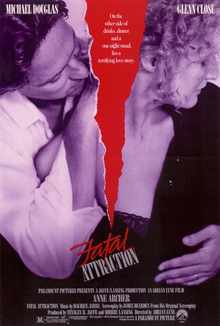
Fatal Attraction poster

Fatal Attraction

120

Cast

Selected cast credits · Film reference

Michael Douglas Dan Gallagher
Glenn Close Alex Forrest
Anne Archer Beth Gallagher
Fred Gwynne Arthur
Ellen Hamilton Latzen Ellen Gallagher
Ellen Foley Hildy
Meg Mundy Joan Rogerson
Tom Brennan Howard Rogerson
Lois Smith Martha
Mike Nussbaum Bob Drimmer
J. J. Johnston O'Rourke
Michael Arkin Lieutenant
Sam Coppola Fuselli
Eunice Prewitt Receptionist
Jane Krakowski Babysitter [Christine]
Justine Johnston Real estate agent
Mary Joy Teacher
Marc McQue Chuck
James Eckhouse Man in Japanese restaurant
Faith Geer Nurse
Carol Schneider Waitress
David Bates Executive
Anna Levine Secretary
Alicia Perusse Ellen's friend
Thomas Saccio Bartender
Greg Scott Bar patron
Chris Manor Doorman
Jonathan Brandis Party guest
Joe Chapman Party guest
Judi M. Durand Party guest
Lillian Garrett Party guest
J. D. Hall Party guest
Barbara Harris Party guest
Barbara Iley Party guest
Angelo Bruno Krakoff Party guest
Carlo Steven Krakoff Party guest
Amy Lyne Party guest
David McCharen Party guest
Larry Moss Party guest
Mio Polo Party guest
Jan Rabson Party guest
Marilyn Schreffler Party guest
Vladimir Skomarovsky Party guest
Dennis Tufano Party guest
Lynnanne Zager Party guest

Fatal Attraction | The Rewatchables

Explore episodeClose episode

Producer credits not yet identified.

Roger Ebert's review

In the discussion (2)
Approx. transcript time · 00:30:54Read transcript
  • The review praises a compelling psychological thriller but argues the ending sacrifices character and plausibility for slasher-movie mechanics.
  • The hosts question whether the original ending would have earned more stars and argue the released film merits at least three.

Most Rewatchable Scene

The kitchen-sink sex scene

In the discussion (8)
Approx. transcript time · 00:42:42Read transcript
  • The kitchen sequence is called the obvious winner: the water, dirty dishes, Douglas’s reactions and Close’s physical control are praised alongside the elevator scene.
  • The restaurant conversation rationally establishes a supposedly consequence-free affair, creating later tension.
  • The wet blouse, movement to the bed and relieved post-coital response are discussed as sexual spectacle and validation.
  • The progression through running, sex, dancing and the elevator conveys Alex’s appetite for life; both endings are criticized for diminishing that quality.
  • The park date brings Dan’s dog and ordinary life into the affair; physical play, a faked heart attack and Alex’s contradictory account of her father are examined.
  • Possessiveness and self-harm mark a frightening tonal turn, but the abruptness and incomplete psychological explanation are challenged.
  • Alex’s real-estate visit builds palpable tension, and the subsequent confrontation demands that Dan take her seriously.
  • The boiled-rabbit reveal is memorable and expertly constructed but explicitly rejected as rewatchable by one participant; a real dead rabbit was reportedly used.

Most Rewatchable Scene

The kitchen-sink sex scene; the ending; no settled overall choice

In the discussion (4)
Approx. transcript time · 01:01:52Read transcript
  • Dan confessing to Beth is praised for Archer’s reaction, especially the pregnancy disclosure; Ellen’s kidnapping is another tense sequence.
  • The kidnapping and rabbit killing are debated as attacks on the family unit Alex cannot have.
  • The recorded car message is praised as suspenseful but rejected as uncomfortable by another participant.
  • One participant wants to choose sink sex but settles on the ending; others cannot pick because the whole movie is rewatchable. The bathtub climax combines Psycho homage and a horror resurrection device.

What’s Aged the Best?

Hydration during sex; Michael Douglas; Anne Archer and her hair; styling; Bedford house; Volvo; bunny trope; Meatpacking District; father’s reaction; Playland; casting

In the discussion (4)
Approx. transcript time · 01:05:37Read transcript
  • Douglas’s flustered characterization and Archer’s appearance, especially her softer 1980s hair, are praised.
  • Alex’s white wardrobe and wild hair support her character; the Bedford home exemplifies an ideal country house.
  • The early-1980s Volvo, enduring bunny jokes and period Meatpacking District are singled out.
  • Beth’s father glaring at Dan, Playland and the chemistry among the three leads are praised.

Most Rewatchable Scene

The elevator; the initial affair conversation

In the discussion (1)
Approx. transcript time · 01:08:43Read transcript
  • A later preference is the elevator, with the initial restaurant conversation also praised for its clear negotiation.

Casting What-Ifs

Glenn Close’s casting challenge; Sharon Stone and other Alex candidates; Christopher Reeve; Andie MacDowell; Brian De Palma; John Carpenter

In the discussion (6)
Approx. transcript time · 01:09:45Read transcript
  • The producers doubted Close’s sexual suitability until her hair and chemistry with Douglas helped establish the role.
  • Stone auditioned and was passed over; the panel argues Alex should be Douglas’s contemporary. Field, Alley and Thompson are reported as considered, with uncertainty.
  • Elisabeth Shue’s candidacy is doubted because of her age; Carrie Fisher is mentioned, and Field’s ability to play Alex is debated through Sybil.
  • Reeve reportedly declined Dan; the panel doubts his fit for spontaneous moral compromise. MacDowell was considered for Beth.
  • MacDowell is described as a later market replacement for Archer, with hypothetical Archer roles in Sex, Lies, and Videotape, Groundhog Day and Short Cuts.
  • De Palma reportedly wanted Douglas replaced; Carpenter then declined over similarities to Play Misty for Me and objections to the original ending.

What’s Aged the Worst?

Dan’s animal care and accountability; smoking; fertility deadline; school pickup security; outdated technology; Play Misty for Me similarities; Alex’s characterization

In the discussion (7)
Approx. transcript time · 01:16:33Read transcript
  • Dan leaves Quincy alone too long, takes him to the affair, feeds him discarded spaghetti and meatballs to conceal his absence, and places the rabbit beside acid fumes.
  • The rabbit’s death is upsetting, though visible blood suggests it was killed before boiling.
  • Office smoking and Close’s smoking performance are criticized; stopping may reflect pregnancy. Alex’s age-based reproductive deadline feels dated.
  • The school casually releasing Ellen to an unfamiliar woman is criticized, including the role of presumed trust in a white woman.
  • Landlines and information operators date the story; cameras and digital messages would change evidence and secrecy.
  • The premise is criticized as borrowing heavily from Play Misty for Me, though the earlier film lacks this movie’s contemporary 1980s pleasures.
  • Dan’s limited accountability and the incomplete account of Alex’s life remain central objections.
In the discussion (2)
Approx. transcript time · 01:24:54Read transcript
  • Quincy’s dog performance is the initial choice; Ellen is proposed in response, and each candidate’s substantial screen time is noted.
  • Sharing the award is suggested, with praise for what the child and dog are asked to do; whether Quincy is judging Dan is debated.

Half-Assed Internet Research

Marriage-saving reactions; Year of the Rabbit; Diversion title; Close’s injuries and pregnancy; overlapping Wall Street filming

In the discussion (3)
Approx. transcript time · 01:26:11Read transcript
  • Close reportedly still hears that she frightened men or saved marriages; the release year coincided with the Year of the Rabbit, and Diversion was an earlier title.
  • Repeated underwater takes reportedly caused infections; a reshoot concussion led to a hospital visit and discovery of Close’s pregnancy.
  • The panel condemns the treatment of Close and the rabbit, then discusses a report that Douglas alternated filming days with Wall Street.

Apex Mountain

Michael Douglas; Glenn Close commercially; Anne Archer; Bedford; Adrian Lyne; gated elevators

In the discussion (5)
Approx. transcript time · 01:27:41Read transcript
  • Douglas’s combination of this film, Wall Street and an Oscar is endorsed as his career peak.
  • Close’s commercial peak is distinguished from her best acting, with Dangerous Liaisons favored for performance and its Oscar loss lamented.
  • Archer is endorsed for her performance and appeal; swapping her and Close would undermine the film.
  • Bedford receives a yes. Female thriller villains are considered through the film’s influence, with concern about less sophisticated successors.
  • Lyne is endorsed for his best film, director nomination and proximity to Nine 1/2 Weeks; gated elevators win over Unfaithful.

Picking Nits

Missed warning signs; self-harm treatment; traumatic scrapbook; Alex’s job; bathtub eyes; Beth staying home

In the discussion (5)
Approx. transcript time · 01:31:52Read transcript
  • Suggested warning points range from the first meeting and dress to the park lie, possessiveness, self-harm and opera invitation; the panel does not agree.
  • The lack of immediate hospital treatment after self-harm is questioned, though Dan later tells Alex to see a doctor.
  • Keeping a scrapbook of traumatic events is criticized as a thriller convenience.
  • Alex appears to stop working; weekend timing is a tentative explanation.
  • The whites of Alex’s eyes in the tub look poor, and Beth should consider leaving the unsafe house.

Picking Nits

Unsafe home; abandoned knife; unnoticed pursuit; fast leak; sleeping child; clock, broker and tape continuity; self-cutting

In the discussion (8)
Approx. transcript time · 01:35:58Read transcript
  • Beth staying is defended as reclaiming her homemaker identity but challenged as practically unsafe.
  • Dan leaves a knife within reach and exits too slowly after being attacked; shock is offered as an explanation.
  • Alex follows the entire long commute without Dan noticing, although the tape distracts him.
  • Water leaks through the floor too quickly; Quincy drinks it rather than helping, with his poor diet offered in defense.
  • Ellen sleeping through screaming, breaking glass and a gunshot is questioned; another participant says young children sleep that deeply.
  • An afternoon dinner clock, no real-estate broker and inconsistent tape wording are questioned, with repetition a possible explanation for the tape.
  • Dan asking whether Alex lives in the apartment after already visiting it may be an editing error or failed flirtation.
  • Alex cutting her dress and herself in the reshot climax is rejected as unconvincing; Close reportedly kept the knife.

Sequel, Prequel, Limited Series, or All-Black Remake

A modern limited series, preferably six episodes

In the discussion (2)
Approx. transcript time · 01:41:40Read transcript
  • A contemporary version with modern technology could deepen the relationship and characters; one initial no is followed by support, with six episodes preferred to ten.
  • A 2015 Fox television plan and 2014 London play are reported.

Probably Unanswerable Questions

Forgiveness; Ellen’s future; erotic-thriller influence; modern casting; Dan’s partnership and marriage; prior affairs; Alex’s date and car-rental knowledge

In the discussion (6)
Approx. transcript time · 01:42:22Read transcript
  • Mistreating the dog and wasting Beth’s dinner are jokingly proposed as unforgivable; a sequel could follow a traumatized adult Ellen.
  • The film’s role in lower-budget erotic thrillers is considered, with Scorned cited as a later extreme.
  • The original stars are preferred for a remake; Aniston is doubted, and Obsessed illustrates an already similar recasting approach.
  • Whether Dan made partner remains unresolved; the marriage is expected to survive because of Beth’s priorities, despite wishing better for her.
  • Whether Dan cheated before is unknown; his face after sex suggests a dream coming true to one participant.
  • Alex’s claimed canceled date may be invented, but her romantic history is underexplained; how she found the rental-car location is also questioned.

More from the conversation

The film is discussed as a major influence on attitudes to adultery and a successful return of adult sexual thrillers.
Approx. transcript time · 00:02:25Read transcript
Close’s earlier maternal roles and doubts about her erotic appeal make her casting striking; the pairing works through Alex’s forcefulness and Dan’s fumbling ordinariness.
Approx. transcript time · 00:05:55Read transcript
The film is treated as a model for the “from hell” thriller, with later examples including spouses, nannies, tenants, cops, teenagers and boyfriends.
Approx. transcript time · 00:09:55Read transcript
The hosts praise the film’s efficiency and emotional richness while considering whether a modern version would need Alex’s perspective and a more nuanced account of her behavior.
Approx. transcript time · 00:11:43Read transcript
Close’s investment in Alex conflicts with the revised ending; the panel debates commercial necessity and sympathy for the villain, compares her treatment to Jaws and questions the food-strewn portrait of loneliness.
Approx. transcript time · 00:14:24Read transcript
A roughly twelve-year Douglas filmography, not a ranked Top Ten List, supports an argument that his flawed, magnetic ordinary men are a truer American everyman than the idealized Tom Hanks image.
Approx. transcript time · 00:19:38Read transcript
Douglas’s self-preserving vulnerability, strong female counterparts and lack of a direct modern successor are discussed; Dominic West is suggested as a television analogue, with disagreement.
Approx. transcript time · 00:23:51Read transcript
Lyne is characterized as a filmmaker of sensation, pleasure and conflict more than moral argument; the film’s major Oscar nominations are reviewed.
Approx. transcript time · 00:28:25Read transcript
The original ending had Alex kill herself to frame Dan, with a tape potentially clearing him; test audiences wanted Beth to kill her. The hosts debate catharsis, punishment and Close’s opposition to the reshoot.
Approx. transcript time · 00:32:34Read transcript
The panel challenges audience sympathy for Dan despite adultery, evasion and violence, and argues the revised ending restores control to the family and minimizes his consequences.
Approx. transcript time · 00:35:52Read transcript
Beth is praised as blameless and appealing; Dan’s infidelity is read through insecurity, status and the excitement of Alex’s interest rather than a deficiency in his marriage.
Approx. transcript time · 00:40:44Read transcript
Close’s reported consultations with psychiatrists are contrasted with the writer’s account of loneliness; the hosts criticize the film’s working-woman versus homemaker opposition.
Approx. transcript time · 00:55:12Read transcript
More ordinary scenes of Alex’s life, or better explanation of her lack of friends, could deepen the character without sacrificing entertainment.
Approx. transcript time · 00:58:51Read transcript
Repeated boundary violations give this film more escalating suspense than many imitators; the comparison prompts a defense of other “from hell” films.
Approx. transcript time · 01:13:16Read transcript