
‹ All movies
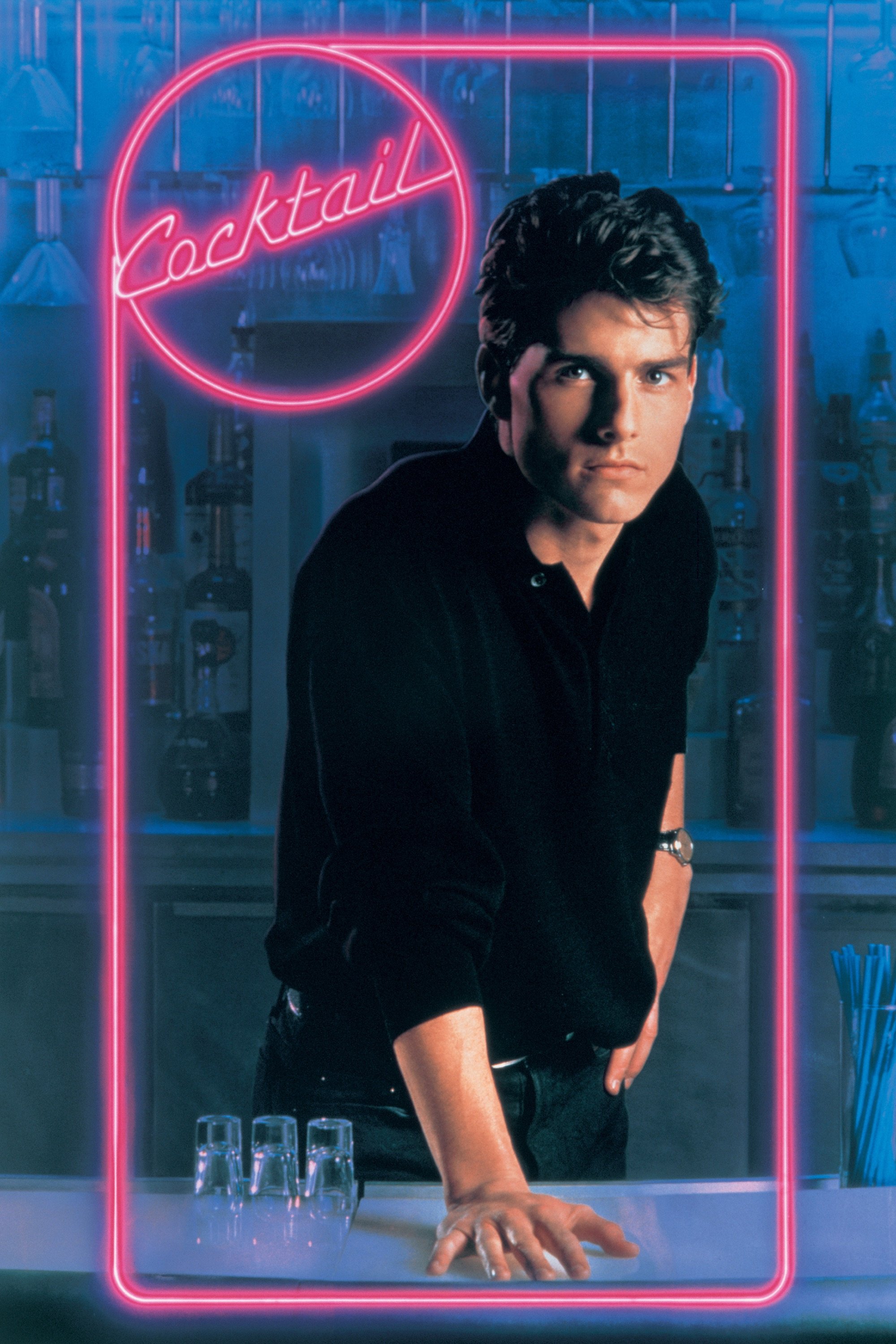
Cocktail poster

Cocktail

103 minutes

Cast

Selected cast credits · Film reference

Tom Cruise Brian Flanagan
Bryan Brown Doug Coughlin
Elisabeth Shue Jordan Mooney
Lisa Banes Bonnie
Laurence Luckinbill Richard Mooney
Kelly Lynch Kerry Coughlin
Gina Gershon Coral
Ron Dean Uncle Pat
Paul Benedict Finance Teacher
Gerry Bamman Tourist
James Eckhouse Tourist

Cocktail | The Rewatchables

Explore episodeClose episode

Producer credits not yet identified.

Most Rewatchable Scene

Coughlin giving Flanagan tips; Addicted to Love bottle flipping; late-night Coughlin's laws stair fall; Cell Block barman poet; Jamaica bar reunion with Coughlin; first Bonnie scene; last Flanagan-Coughlin scene; showdown with Jordan's dad

In the discussion (28)
Approx. transcript time · 00:29:29Read transcript
  • The first entry lumps together Coughlin giving Flanagan tips, and possibly Uncle Pat giving Flanagan advice before he starts bartending.
  • Uncle Pat is a very familiar figure; Monty's father in 25th Hour is compared as another Uncle Pat who runs a New York bar and is cheap. — Sean Fennessey
  • Uncle Pat being cheap is the opposite of how to run a bar, answered by the point that he only has six people in his bar.
  • Coughlin's law "Anything else is always something better" is followed by Flanagan's first good night clicking with the waitresses, which is when the movie starts cooking.
  • Director Roger Donaldson is imagined asking Cruise whether he can dial it up another level.
  • A movie set entirely at TGI Fridays is floated; that stretch is called the best part, but a whole movie of it would be a good YouTube video rather than a movie.
  • TGI Fridays is praised as a realistic New York bar compared with movie bars like Cell Block; bartending there suggests Coughlin is not a life winner.
  • Coughlin may have just served time or been in a money-laundering scheme and is trying to regroup; "Coughlin's Law" is joked about as a prison movie.
  • Cruise bartending to Addicted to Love is called one of the five most 80s moments captured on film.
  • Cruise looks like he is hearing Addicted to Love, or music, for the first time, cheering it like a game; Robert Palmer's reaction is imagined.
  • The late night where Coughlin falls down the steps while streaming Coughlin laws and they do the Hippy Hippy Shake is really funny; Coughlin writes the laws around his own behavior.
  • Cell Block is called the greatest bar set ever built, a three-story prison cell like the set of Oz; Rembrandt reacted to it in real time on a Grantland video.
  • Cell Block is compared to the multi-level Terminal 5 concert venue in New York.
  • Nobody at Cell Block drinks; they wait for poems, and Flanagan delivers the world's last barman poet speech ending with the bar being open.
  • Gina Gershon ordering an orgasm and the Coughlin-Flanagan routine to All Shook Up complete an unassailable five minutes; the Cell Block scene is called hysterical.
  • The barman poet may have invented Steve Austin's "that's the bottom line" gimmick.
  • In Jamaica, Cruise keeps giving Shue the Rock Bottom by throwing her into the ocean. — Sean Fennessey
  • Cruise's two romantic interactions, the ocean throws and tickle-attacking Gina Gershon among feathers, suggest he had never done these things before.
  • The Jamaica bar scene with Shue, Eckhouse hovering and Coughlin showing up is magic, ending with the success-manual bet and the revelation that he married a rich girl.
  • Whether Coughlin sought out where Flanagan was is questioned; maybe he guessed from Flanagan talking about Jamaica and the poster.
  • Coughlin convincing Flanagan to open a bar should have been in the list too.
  • The Jamaica bar is a bummer full of lonely regulars rather than sunburned tourists.
  • Coughlin's "there's my wife" cuts to Kelly Lynch clearly shot in another location, which is very funny.
  • The first Bonnie scene is great, and Flanagan then screws up things with Shue because he is a dirtbag.
  • The last Flanagan-Coughlin scene is the final pick, since the first half is much better than the second.
  • A self-described first-half guy calls Brian's showdown with Elizabeth's dad the funniest scene in the movie by far; another voice adds that the showdowns with the dad and with the sculptor are both excellent.
  • Another personal pick is the entire Cell Block scene, plus the electrifying Addicted to Love sequence.
  • The accountant-looking guy at the bar who owns the hottest spot in New York raises the question of why he is at a TGI Fridays.

What’s Aged the Best?

Cruise and Coughlin bartending; Uncle Pat's never-buy-a-drink rule; Addicted to Love; Elisabeth Shue; the passed-out friend diagnosis; Roger Donaldson's late-80s run; Cruise playing basketball; the soundtrack

In the discussion (17)
Approx. transcript time · 00:44:20Read transcript
  • Cruise and Coughlin bartending comes first: nothing beats Cruise fired up in a quirky role, and nobody else would have taken bottle flipping so seriously.
  • Of all Cruise's mastered skills, this participant would most want to see him play nine ball. — Chris Ryan
  • Cruise approaches roles by asking what skill he can acquire, unlike Daniel Day Lewis asking who he can become.
  • Brian and Coughlin are called really bad, slow bartenders who make drinks for no one while 80 people wait.
  • A nit pulled forward: the claim that bartenders make money for bars by pouring less, but they spill liquor everywhere while flipping bottles.
  • Uncle Pat's rule never to buy anyone a drink has aged well and is a smart business strategy.
  • New York buybacks are common; as a former bartender, topping up drinks for bigger tips steals from the bar, which is why an owner like Pat would not do it.
  • Pat had no real growth plan: he accepts free labor from Brian and takes a dollar or two off the bar as tips.
  • Addicted to Love and Shue, an 80s goddess, are listed, with Cocktail as a more adult Shue after The Karate Kid and Adventures in Babysitting.
  • Cruise leaving 40 paying customers to glance at Shue's passed-out friend and declare her fine always gets a laugh.
  • Funnier still, Shue abandons that friend for days, and the friend turns out to have gone home to New York.
  • Roger Donaldson's late 80s, No Way Out and Cocktail, is listed; No Way Out is called perhaps the most rewatchable 80s action thriller.
  • Cruise playing basketball is listed, part of a tour of his screen athletics from All the Right Moves to The Firm's running and tumbling.
  • Cruise is judged undeniably a good athlete but the fit, uncoordinated crew-type rather than a varsity basketball player, compared with a high-school swimmer.
  • The basketball scene has Cruise going perfect from the field; the Philip Seymour Hoffman scene is called a direct parody, and "Ryan's Law" is proposed as never going five for five in a movie basketball scene.
  • The soundtrack did very well and made the Bobby McFerrin song a thing; it pairs 1950s rock callbacks with 80s songs like Kokomo.
  • Asked for a final aged-best answer, the music is chosen.

What’s Aged the Worst?

A young man obsessed with being rich; Coughlin's bet on an old Foreman-Norton fight; Bonnie's aerobics; Uncle Pat's walk-away advice; the violent doorman; the penthouse climax; blousy shirts; two rich-girl love interests

In the discussion (8)
Approx. transcript time · 00:57:09Read transcript
  • A young person obsessed with being rich is a theme that feels weird now.
  • Coughlin loses $50 on a George Foreman-Ken Norton fight said to have happened in 1973, 15 years earlier.
  • Bonnie doing aerobics in a leotard in front of a tiny TV reflects an 83-to-88 movie trope.
  • Uncle Pat's advice, after Cruise learns his Jamaica fling is pregnant, to walk away from the whole thing has Neil McCauley vibes.
  • The unfriendly, violent doorman in Jordan's building has weird energy for a Park Avenue building.
  • The penthouse climax, punching out the doorman and butler and the "it didn't have to be this way" line, is ridiculous but loved.
  • The big, baggy blousy shirts, especially in Jamaica, are an 80s thing.
  • Both female leads being rich girls with disapproving dads is called a flaw; they basically have the same story.

The Coach Finstock Award for Best Life Lesson

"Never trust a chick named after an inanimate object"

In the discussion (8)
Approx. transcript time · 00:59:46Read transcript
  • A new category is announced for this episode only: Best Coughlin lessons, with the laws run through one by one.
  • "Anything else is always something better" gets a no.
  • Nobody follows these laws and they are all bad; the waitress-crabs and aristocrat-of-the-working-class laws each get a no.
  • "Never trust a chick named after an inanimate object", advice about Coral, is liked.
  • Remaining laws include never showing surprise, the workers versus the hustlers, and burying the dead.
  • Asked which law Craig should live by for ten years, the crabs one is suggested, and the inanimate-object rule is backed as strong.
  • A Coughlin's Laws podcast is joked about; the laws are ridiculous but delivered with Confucius-like conviction.
  • A participant plans to adopt Coughlin as a Slack persona with laws like never asking a podcaster if he is available before 11 a.m.

The Joey Pants “That Guy” Award

No affirmative selection

In the discussion (3)
Approx. transcript time · 01:03:35Read transcript
  • The field is narrowed to Uncle Pat, played by Ron Dean, or Jordan's dad, played by Laurence Luckinbill, who goes for it in every scene.
  • Gerry Bamman, who gets a long tracking shot asking for a free drink, is added and recognized as Kevin McCallister's uncle in Home Alone.
  • James Eckhouse is ruled not on the board; seeing the Yuppie Poet on screen is called validating.

Apex Mountain

Bartending

In the discussion (11)
Approx. transcript time · 01:07:19Read transcript
  • The case for Cruise: Rain Man and Cocktail as huge hits with Born on the Fourth of July coming, making him the top star under 40.
  • Cruise's apex is instead 1996: Jerry Maguire and Mission: Impossible. — Sean Fennessey
  • That placement is said to match what was agreed on the Jerry Maguire episode.
  • Bryan Brown would say please no; his apex is F/X, or arguably marrying Rachel Ward.
  • Elisabeth Shue gets a no, since she won an Oscar.
  • Jamaica gets a no; its cinematic apex is Belly, perhaps with a Bob Marley connection.
  • Bartending: with Cheers still a hit, the film adds athletic achievement to bartending, so the answer is yes for bartending.
  • Coughlin's Law is called maybe the apex of people saying weird things and calling them laws, hedged as "the answer might be yes".
  • How many Coughlin's laws one would tolerate from a stranger in a bar is asked; some bad ones probably hit the cutting room floor.
  • Kelly Lynch's apex is placed at Three of Hearts, around 92, rather than this movie.
  • American greed's apex is Wall Street, not this movie.